
The Hidden Ergonomic Hero: Why Seat Depth Adjustment Matters
Imagine wearing a pair of shoes that are half a size too small. By the end of the day, your feet ache, and you can't wait to kick them off. Now, imagine sitting in an office chair with a seat that's too long or too short for your legs. The result is similar: discomfort, poor circulation, and a desperate search for a comfortable position that never comes. This is the reality for millions of office workers who don't realize that the solution lies in a simple, often overlooked feature: seat depth adjustment.
The "Goldilocks" Zone of Seating: A study published in the journal "Applied Ergonomics" found that improper seat fit, particularly seat depth, is a leading contributor to lower back discomfort and reduced productivity. Workers using chairs with adjustable seat depth reported a 40% decrease in thigh pressure and a significant improvement in their ability to focus on tasks for longer periods. It's not just about comfort; it's about creating a workstation that works with your body, not against it.
This guide dives deep into the world of the office chair with seat depth adjustment. We'll explore why this feature is critical, how to determine the correct depth for your body, and what to look for when shopping for your next ergonomic investment. Whether you're a seasoned executive or setting up your home office, understanding seat depth is your first step toward a pain-free workday.
Understanding the Mechanics: More Than Just Sliding a Seat
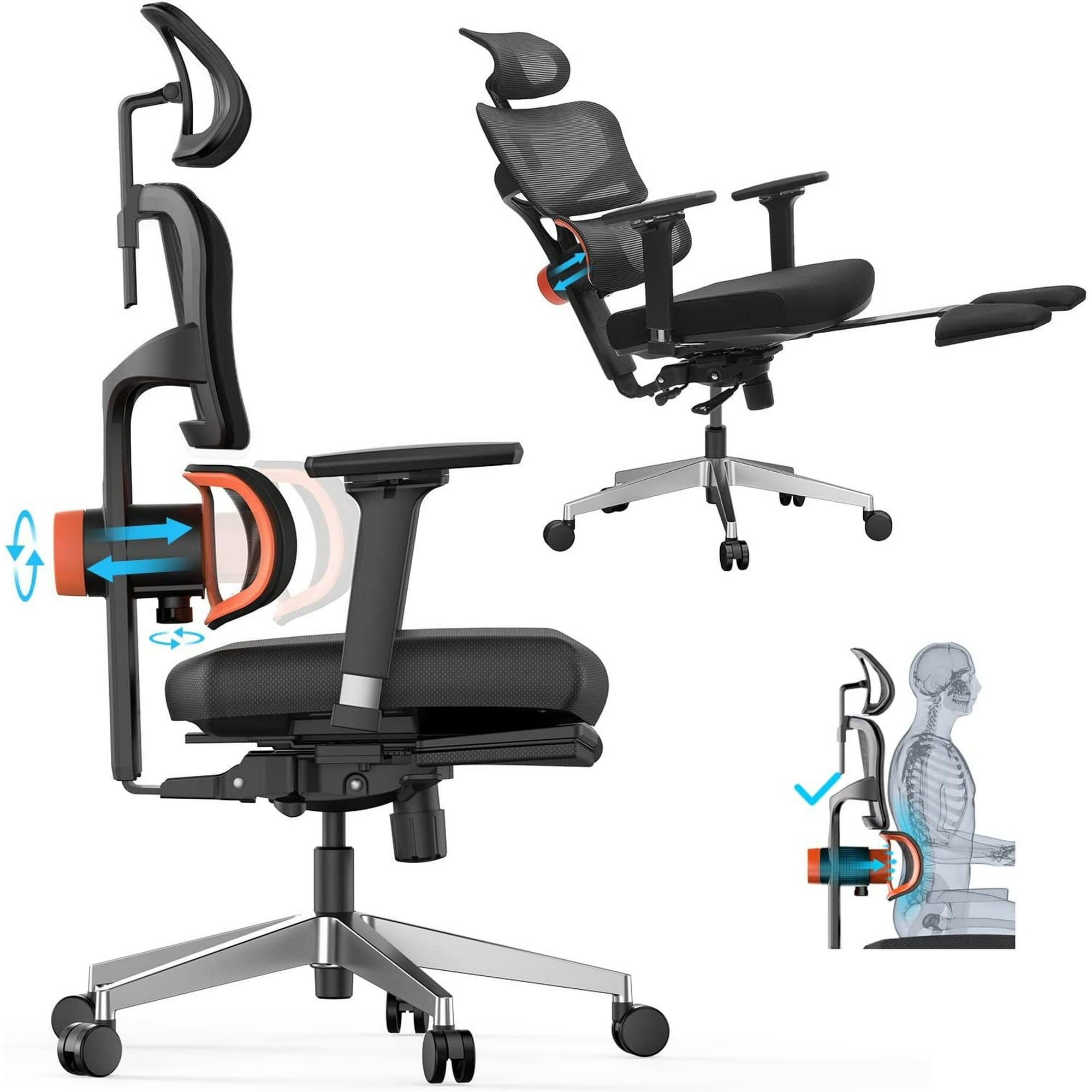
Seat depth adjustment, often referred to as a "seat slider" or "adjustable seat pan," is the mechanism that allows you to move the seat forward or backward. This seemingly simple action has profound effects on your entire sitting posture. Let's break down the anatomy of a proper fit.
The "Two-Finger Rule": Your Guide to Perfect Depth
How do you know if a chair's depth is right for you? Ergonomic specialists swear by a simple test known as the "two-finger rule."
- Sit correctly: Sit upright with your back firmly against the backrest of the chair. Ensure your feet are flat on the floor.
- Check the gap: With your legs relaxed, reach down and feel the space between the edge of the seat pan and the back of your calf, just behind your knee.
- Measure the space: You should be able to comfortably fit two to four fingers (approximately 2-3 inches or 5-7 cm) in that gap.
If there's no gap and the seat edge is pressing into the back of your knees, the seat depth is too long. This compresses blood vessels and nerves, leading to numbness, tingling, and restricted circulation. If the gap is larger than your fist, the seat is too short. You'll likely find yourself sliding forward to gain thigh support, which rounds your lower back and negates any lumbar support the chair might offer.
Who Benefits Most from Adjustable Seat Depth?
The short answer: everyone. But certain body types find it absolutely essential.
- Shorter Individuals (typically 5'4" and under): Standard office chairs are often designed for an "average" male body. For shorter users, the seat pan is frequently too long, forcing them to sit on the edge. A chair with seat depth adjustment allows them to shorten the pan, providing full thigh support without cutting off circulation.
- Tall Individuals (typically 6'2" and over): Conversely, tall users often find standard seats too short. This leaves their thighs unsupported, creating pressure points and fatigue. Extending the seat depth provides the necessary support for longer femurs.
- People with Thigh or Knee Issues: For anyone with sciatica, arthritis, or previous knee injuries, the wrong seat depth can be agonizing. Adjustability allows you to find the precise position that minimizes pressure on sensitive areas.
- Pregnant Individuals: As posture and center of gravity change during pregnancy, the ability to adjust seat depth can provide crucial comfort and support, accommodating shifting needs.
The Ripple Effect: How Seat Depth Impacts Your Whole Body
Think of your spine as a chain of dominoes. A misalignment at one point (like your pelvis due to improper seat depth) will affect the rest of the chain—your upper back, shoulders, and neck. When the seat depth is correct:
- Lumbar Support Works: Your lower back stays in contact with the lumbar mechanism, maintaining the spine's natural inward curve.
- Shoulders Relax: With your pelvis properly positioned, your shoulders are less likely to hunch forward, reducing upper back and neck tension.
- Breathing Improves: An upright, supported posture opens up the chest cavity, allowing for deeper, more efficient breathing, which can boost energy and focus.
Beyond Depth: Other Critical Ergonomic Features
While seat depth is our star player, it doesn't work alone. A truly great office chair with seat depth adjustment will be part of a symphony of adjustments. Here’s what to look for to ensure your chair is a complete ergonomic solution.
1. The Seat Pan Itself: Material Matters
The material of the seat pan influences comfort and durability.
- High-Density Foam: Look for foam that is firm enough to provide support but soft enough for comfort. It should not "bottom out" after a few hours of sitting. A density rating of 2.5-3.0 lbs/ft³ is a good indicator of quality.
- Contoured "Waterfall" Edge: This is non-negotiable. The front edge of the seat should curve gently downward (like a waterfall). This design relieves pressure on the underside of the thighs, promoting healthy blood flow to the legs and feet.
- Breathable Upholstery: Whether you choose mesh, fabric, or leather, ensure it allows for some airflow to prevent overheating. Mesh is the champion of breathability, while high-quality fabric offers a good balance of comfort and temperature regulation.
2. Synchronized Mechanisms: Tilt and Tension
A chair that only offers seat depth adjustment is like a car with only a steering wheel. For dynamic sitting, you need a synchronized mechanism. This allows the seat and backrest to move in harmony as you recline.
- Tilt Tension Adjustment: This controls how much force is needed to recline. You should be able to adjust it so you can lean back easily but still feel supported.
- Multi-Lock or Angle Adjustment: The ability to lock the chair in multiple recline positions gives you flexibility for different tasks—sitting upright for typing or slightly reclined for reading or thinking.
3. Armrests: The 4D Ideal
Armrests that adjust in multiple directions (height, width, depth, and pivot) are called 4D armrests. Once you've set your perfect seat depth, you'll want your armrests to follow. Adjustable depth armrests allow you to move them forward or back so your elbows are supported at a 90-degree angle while your shoulders are relaxed, no matter your torso length.
Ergonomic Insight: A 2021 survey by the American Chiropractic Association found that 68% of office workers who invested in a chair with comprehensive adjustability (including seat depth) reported a significant reduction in daily lower back pain within just four weeks of use. This highlights that it's not just one feature, but the combination of proper adjustments that creates a healthy sitting experience.
A Step-by-Step Guide to Buying Your Chair
Ready to find your perfect match? Follow this checklist when evaluating an office chair with seat depth adjustment.
- Measure Yourself: Before you even start browsing, measure your popliteal length (the distance from the back of your knee to your buttocks). Sit on a hard surface with your feet flat, and have someone measure from the back of your knee to the end of your buttock. This is your ideal seat depth range.
- Check the Adjustment Range: Look for the chair's specifications. Does the seat depth adjust by at least 2-3 inches (5-7 cm)? A good range is typically 16" to 20" (40-50 cm).
- Test the Mechanism: Is the slider smooth and easy to use? Some chairs have levers, others have paddles. You should be able to adjust it while seated.
- Sit for 15 Minutes: In-store or upon arrival, spend a solid 15-20 minutes in the chair. Apply the two-finger rule. Adjust all the features. Do you feel any pressure points? Can you easily reach the floor? Does your back feel supported?
- Read the Warranty: A good warranty (10+ years on the frame and mechanism) is a sign that the manufacturer trusts the durability of their moving parts, including the seat slider.
Common Myths About Seat Depth Adjustment
Let's debunk a few misconceptions that might be holding you back from finding the perfect chair.
- Myth: "It's only for very tall or very short people." Reality: While critical for extremes, correct seat depth improves posture and comfort for people of all statures by ensuring optimal back support and circulation.
- Myth: "All ergonomic chairs have it." Reality: Many chairs labeled "ergonomic" focus only on lumbar and height. Seat depth is often reserved for mid-to-high-end models. Always check the spec sheet.
- Myth: "Once you set it, you never need to change it." Reality: Your needs can change with different shoes (heels vs. flats), after an injury, or even with subtle shifts in your body over time. Having the adjustment available is a long-term benefit.
Frequently Asked Questions About Seat Depth Adjustment
Conclusion: Invest in the Fit, Not Just the Chair
In the quest for the perfect office setup, it's easy to get distracted by aesthetics, brand names, or premium materials. But the true measure of a great office chair is how well it fits you. An office chair with seat depth adjustment is not a luxury; for anyone serious about their comfort, health, and productivity, it is a fundamental necessity.
Think of it as tailoring for your workspace. Just as a bespoke suit fits you perfectly, a chair with adjustable seat depth molds itself to your unique dimensions. It transforms a generic piece of furniture into a personal support system that works for your body, hour after hour. By prioritizing this feature, you're not just buying a chair—you're investing in years of focused work, free from the distraction of physical discomfort. Take the time to find the right one; your back, and your productivity, will thank you.