
Why Your Home Office Chair Matters More Than Ever
Working from home has blurred the lines between living space and workspace. You might be sitting at a kitchen table, a makeshift desk in the corner of your bedroom, or a dedicated home office. But one thing remains constant: the chair you use dictates your comfort, focus, and even your long-term physical health. Think of your office chair as the foundation of a house – if it's shaky, everything built on top suffers. A quality office chair for work from home isn't a luxury; it's a tool that pays for itself in saved chiropractor bills and increased daily output.
Unlike corporate offices where facilities managers select chairs, you're now the decision-maker. With endless options online, it's easy to get overwhelmed. This guide strips away the jargon and helps you understand exactly what features matter for a home environment: space constraints, variety of flooring (hardwood vs. carpet), and the need for a chair that doesn't scream "office" in your living room. We'll walk through materials, ergonomic must-haves, and specific use-cases so you can buy with confidence.
Anatomy of a Perfect WFH Chair: Beyond the Basics
Selecting an office chair for remote work is different from choosing one for a corporate cubicle. At home, you're the only user, so personalization is key. Also, your chair might be visible to family or on video calls, so aesthetics matter. Let's dissect the core components.
1. Ergonomic Adjustability: The Non-Negotiable Foundation
Just like you adjust your car seat before driving, your office chair must adapt to your unique body. The goal is to maintain a neutral spine – ears over shoulders, shoulders over hips. Here’s what to look for:
- Seat height adjustment (pneumatic): Your feet should rest flat on the floor, thighs parallel to the ground. Standard ranges work for most, but if you're very tall or short, check the minimum/maximum seat height.
- Lumbar support (both height & depth): Lower back pain is the #1 complaint among WFH workers. Adjustable lumbar that moves up/down and in/out lets you fine-tune the curve. Some chairs use a tension dial; others have a pump or lever.
- Seat depth (slide): You want 2-3 finger widths between the back of your knee and the seat edge. A seat slider (or waterfall edge) prevents circulation cutting off.
- Armrest adjustability (4D ideal): Arms that move up/down, sideways, forward/back, and pivot allow you to support your elbows at 90 degrees, taking strain off shoulders. If your desk surface is high, you may even want to remove arms to slide chair under.
According to the Occupational Safety and Health Administration (OSHA), proper chair adjustment can reduce musculoskeletal disorders by up to 60%. Don't just buy a chair – buy one you can tune.
2. Material Selection: Comfort vs. Durability at Home
Your home environment dictates the best material. Use the comparison below to decide:
Mesh
- Breathable: Ideal for long hours or warmer rooms – no sticky back.
- Modern look: Sleek, professional, and visually lightweight.
- Low maintenance: Dust can be vacuumed; spills wipe easily.
- Con: Less padding; you rely on the mesh tension for support.
Fabric
- Plush comfort: Feels warmer and more "furniture-like".
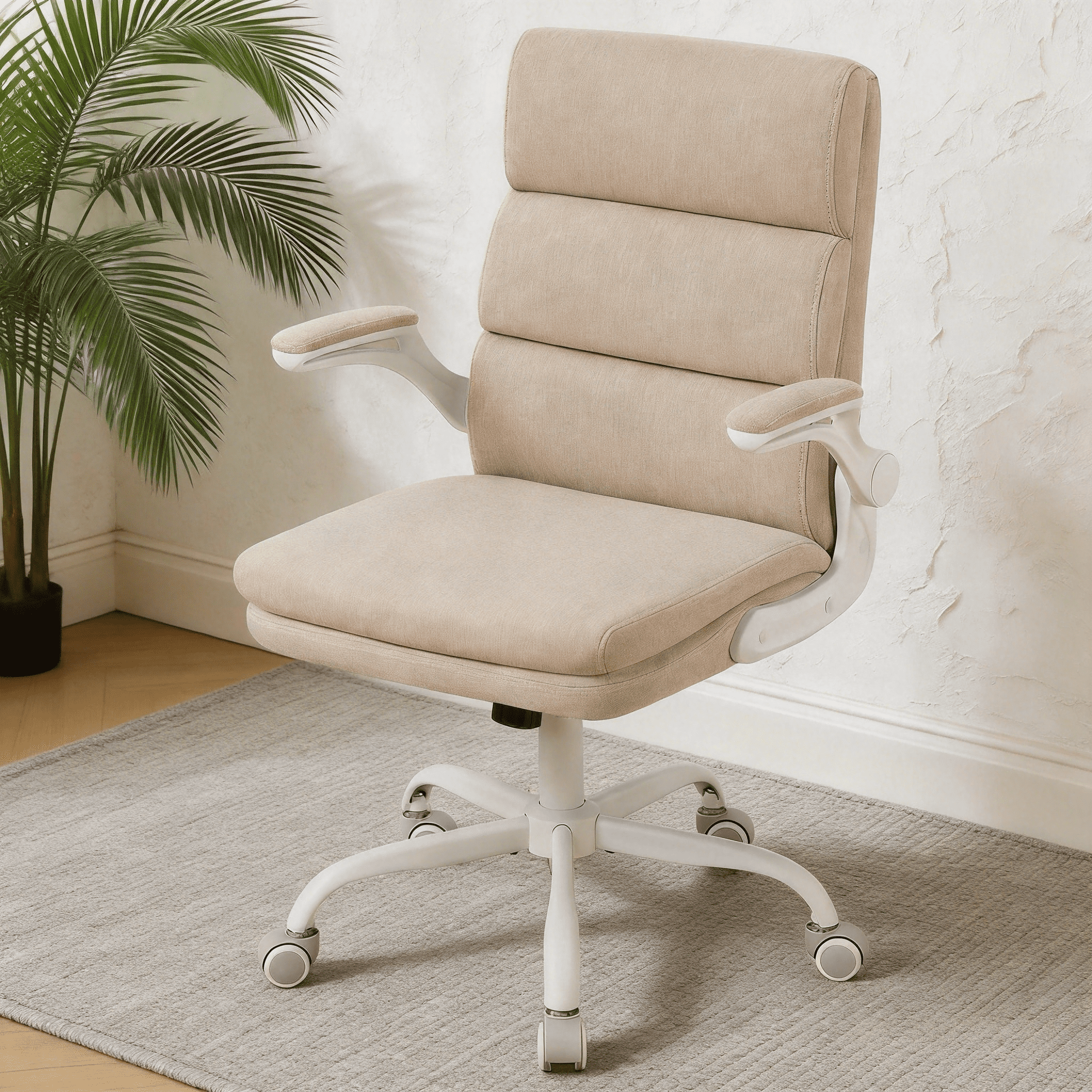
- Color variety: Fits home decor – from neutral tweeds to bold colors.
- Quiet: No squeaking like some leather.
- Con: Can trap odors, pet hair, and stains; needs occasional deep clean.
Leather / Faux Leather
- Easy wipe-clean: Perfect if you eat at your desk or have kids/pets.
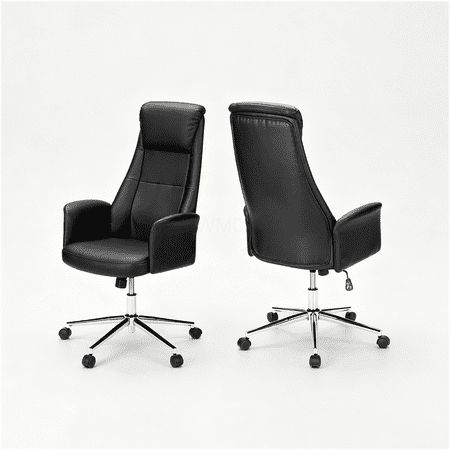
- Executive style: Looks sharp on video calls.
- Durable: Quality PU leather can last 5-7 years.
- Con: Can get sticky in summer, cold in winter; may crack if not conditioned.
Hybrid (mesh back + fabric/leather seat)
- Best of both: Breathable back, cushioned seat.
- Popular in modern ergonomic chairs.
- Often includes advanced lumbar.
- Con: Usually higher price point.
3. Small-Space & Flooring Considerations
Home offices come in all sizes. If you're tight on square footage, look for these features:
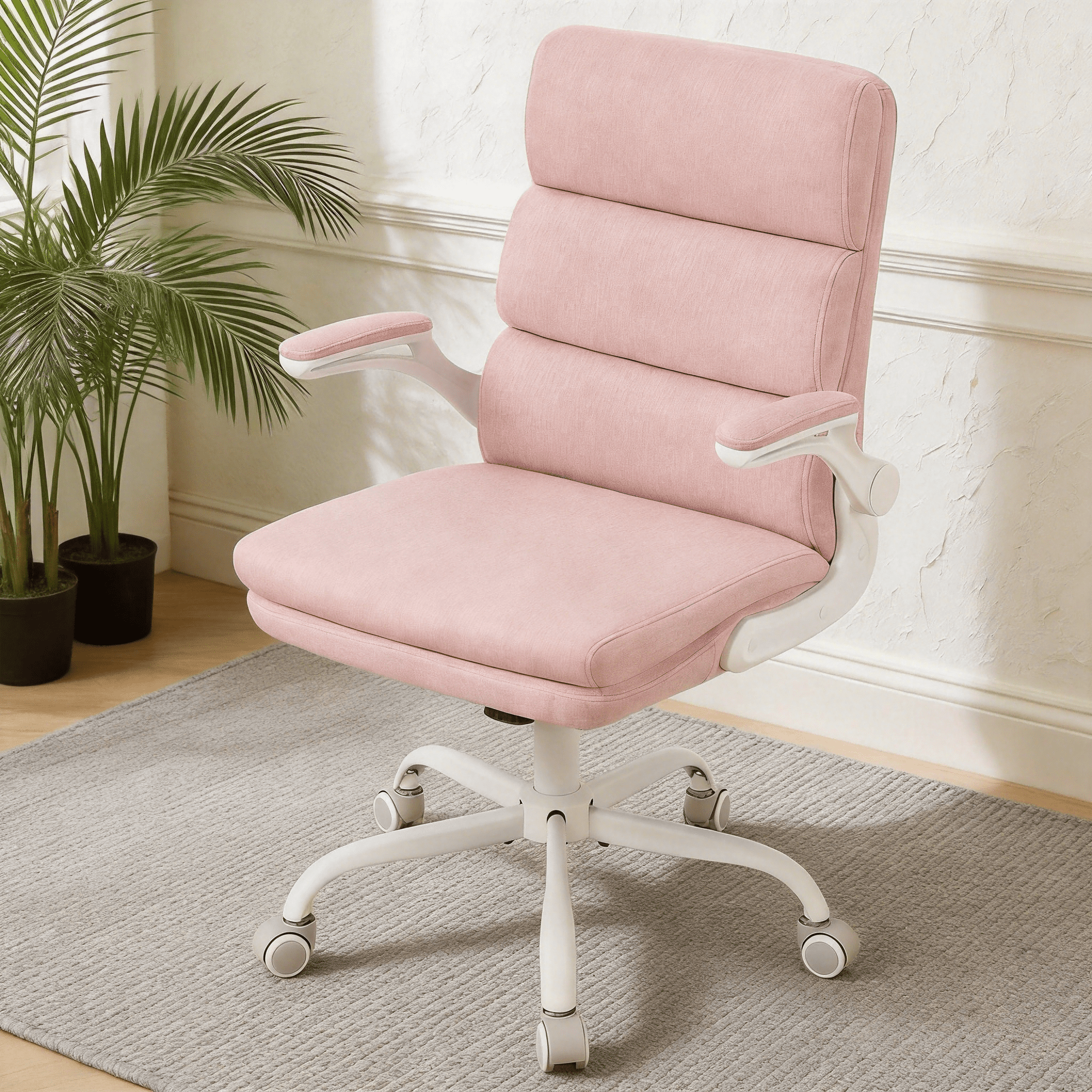
- Flip-up or removable arms: Allows you to push the chair fully under a desk when not in use.
- Compact base: Some chairs have a smaller wheelbase (e.g., 26" diameter vs. 28"), which matters in a cramped corner.
- Caster wheels: Hard floors? Look for soft rubber casters (often labeled "hardwood floor safe") to prevent scratches and rolling noise. For carpet, standard casters work, but you might upgrade to rollerblade-style wheels for easier movement.
A survey by FlexJobs noted that 34% of remote workers use a dining chair at least occasionally – don't be that statistic. A dedicated task chair transforms your posture.
4. Special Features That Enhance Work-From-Home Life
Beyond the basics, certain extras can boost your daily routine:
- Synchro-tilt mechanism: The seat and back move together as you recline, keeping your posture aligned and reducing "shirt pull".
- Adjustable tension control: Lets you set how much force is needed to recline – lighter for relaxed leaning, firmer for upright focus.
- Headrest: Great for occasional leaning back during calls or reading. Only get one if it's adjustable; a fixed headrest can push your neck forward if poorly placed.
- Built-in lumbar pump: Some higher-end chairs (like those from Steelcase or Haworth) use an air bladder to dial in lower back support precisely.
5. Quick Guide: Chair Types for Different Home Setups
| Home Office Type | Recommended Chair Style | Key Focus |
|---|---|---|
| Dedicated spare room / full-time | High-back ergonomic mesh or hybrid | Adjustable lumbar, 4D arms, long warranty |
| Corner of living room / multifunctional | Stylish fabric or leather chair with flip-up arms | Aesthetics, compact footprint, easy-clean fabric |
| Shared desk (partner or kids) | Mid-back with easy height adjustment | Tool-less adjustments, durable mechanism |
| Studio apartment / very small | Armless task chair or stool with back | Slides under desk, light weight, maybe no casters |
6. Long-Term Investment: Warranty and Total Cost of Ownership
A decent home office chair should last 5-10 years. Check the warranty: parts (especially gas lift and mechanism) should be covered for at least 3-5 years. Some premium brands offer 10-12 years on frames. Spending a bit more upfront often means you won't be shopping again next year. Also, note the weight capacity – even if you're not heavy, a higher rating (275lb+) usually indicates stronger materials.
Did you know? A study by Cornell University found that for every hour spent sitting with poor posture, the risk of chronic back pain increases by 8%. Think of your chair as a "posture coach" – it gently encourages you to sit well without you having to think about it.
Choosing an office chair for work from home is like picking a good mattress. You spend a third of your day in it. The right choice reduces fatigue, keeps your spine happy, and even helps you sleep better because you're less achy. Don't rush – use this guide to match features to your routine.
Frequently Asked Questions – WFH Office Chairs
Final Thoughts: Invest in Your Daily Headquarters
Your home office is your command center, and the chair is the throne. But unlike a decorative piece, a great office chair for work from home actively supports your body through deadlines, video marathons, and creative brainstorming. By focusing on adjustability, material suited to your environment, and a few smart features, you'll create a workspace that energizes rather than drains you. Remember to measure your space, check the return policy, and if possible, test similar models in local stores to feel the difference. Your back – and your productivity – will thank you.