
Beyond the Squeak: Engineering a Quieter Workday
Imagine this: you're on an important Zoom call with a client, and with every slight shift in your chair, a high-pitched eeek punctuates your sentences. Or perhaps you're deep in concentration, writing a report, when a loud creak shatters your focus. A squeaky office chair is more than just an annoyance; it's a productivity killer and can even project an unprofessional image.
Finding an office chair that doesn't squeak feels like searching for a needle in a haystack. Many chairs start quiet but develop a symphony of noises within months. This guide dives deep into the anatomy of a silent chair, helping you understand what to look for and how to choose a model engineered for enduring quietness. We'll move beyond simple fixes and explore the core design principles that separate a whisper-quiet throne from a noisy nuisance.
Did you know? A study on workplace distractions found that intermittent noises, like a chair squeak, can be more disruptive than constant background hum. They trigger an orienting response in our brains, pulling our attention away from the task at hand. Eliminating these sounds can lead to a noticeable boost in cognitive performance.
The Anatomy of Silence: What Makes an Office Chair Squeak-Proof?
A chair doesn't squeak by magic; it's a mechanical failure or a design flaw. To find a truly silent chair, you must understand its components. Here’s a breakdown of the critical areas that separate quiet from calamitous.
1. The Foundation: Frame and Base Material
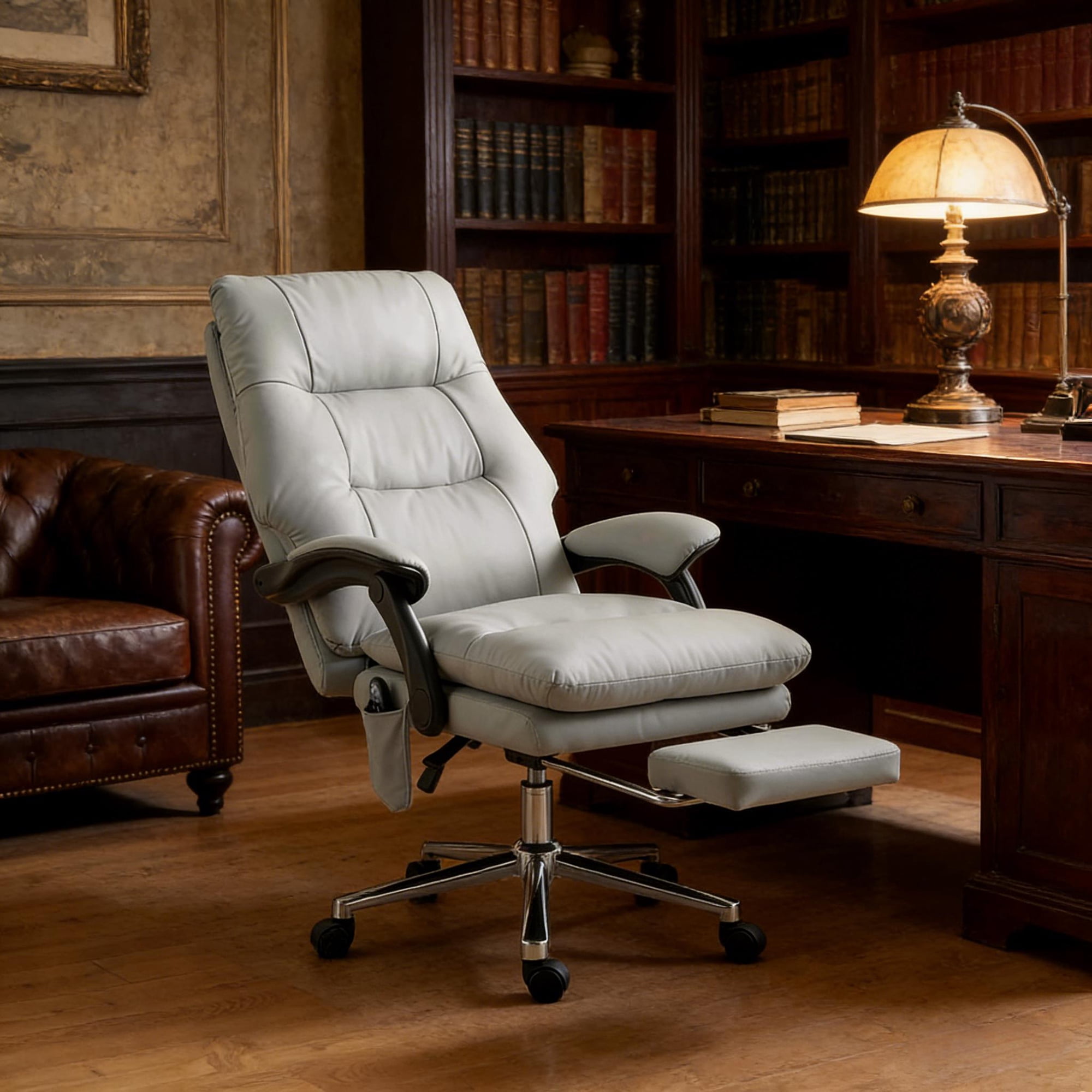
The frame is the skeleton of your chair. A chair built on a solid, one-piece steel frame is inherently more stable and less prone to twisting and flexing, which are primary causes of squeaks. Cheaper chairs often use multiple pieces bolted together or even plastic components in the base. Over time, these joints loosen and plastic can warp, creating friction and noise. Look for chairs that boast a "unibody" construction or a heavy-gauge steel frame. The base (the "spider" that holds the casters) should ideally be aluminum or heavy-duty nylon, not thin plastic.
2. The Heart of the Matter: The Gas Lift Mechanism
The gas lift cylinder is the piston that allows you to adjust your chair's height. A low-quality gas lift is a prime suspect for squeaks and jerky movements. Chairs that don't squeak use Class 3 or Class 4 gas lifts. These are built to higher standards with better seals and smoother internal operation. A quality lift will move up and down with a quiet "whoosh" of air, not a grating squeak. While you can't see the lift before buying, reputable manufacturers and detailed reviews will often specify the lift class.
3. The Control Center: The Tilt Mechanism
This is the complex metal box under the seat that controls your recline and tilt. It's a nexus of springs, levers, and pivot points—a prime location for future squeaks. In a well-engineered chair that doesn't squeak, these pivot points are fitted with nylon bushings or sealed bearings. These components act as buffers between metal-on-metal contact, allowing for smooth, silent movement. Cheaper chairs rely on metal grinding against metal, which will inevitably start to squeak as the surfaces wear down.
🔩 Frame
Quiet Sign: One-piece steel.
Squeak Sign: Multi-piece bolted or plastic.
⬆️ Gas Lift
Quiet Sign: Class 3 or 4, smooth motion.
Squeak Sign: Basic cylinder, jerky motion.
⚙️ Mechanism
Quiet Sign: Nylon bushings, sealed bearings.
Squeak Sign: Metal-on-metal pivot points.
🔄 Casters
Quiet Sign: Soft polyurethane on hardwood/rug.
Squeak Sign: Hard plastic, debris in wheels.
4. The Point of Contact: Wheels and Casters
A squeak isn't always from the chair's body; sometimes it's the wheels. Standard hard plastic casters can be noisy on tile or hardwood floors, creating a rattling or scraping sound. For a truly quiet experience, look for chairs with polyurethane-coated casters. These wheels are softer and roll silently, much like a high-quality inline skate wheel. They also protect your floors. Furthermore, the stem where the caster inserts into the chair base can be a source of squeaks. Quality chairs have a snug fit, often with a metal sleeve to prevent rattling.
5. The Assembly: Precision and Fit
Finally, the way a chair is put together matters. A chair that doesn't squeak is assembled with precision. Tolerances are tight, meaning parts fit together with very little wiggle room. Loose bolts are the enemy of silence. When evaluating a chair, look for details about "precision engineering" or "tight tolerances." User reviews that mention a "solid" and "creak-free" feel even after months of use are gold-standard proof.
Your Step-by-Step Guide to Choosing a Silent Chair
Now that you know what makes a chair quiet, here’s how to apply that knowledge when shopping.
Step 1: Prioritize the Mechanism Over the Upholstery
Don't be seduced by a beautiful leather or mesh back if the underlying mechanism looks flimsy. Focus your research on the chair's construction. Look for spec sheets that mention "steel frame" and "class 4 gas lift." These are the non-negotiables for long-term silence.
Step 2: Read Reviews for "Quiet" and "Solid"
Go beyond the average star rating. Use your browser's search function (Ctrl+F) on review pages to look for keywords like "squeak," "quiet," "noise," "creak," and "solid." If multiple long-term users mention the chair remains silent after a year, it's a great sign. Pay attention to what floor type they're using it on, as that can affect wheel noise.
Step 3: Match the Chair to Your Floor Type
A chair can be perfectly silent on a thick carpet but noisy on hardwood. If you have hard floors, your search should focus on chairs with soft, polyurethane casters. Many manufacturers now offer "hardwood floor" caster options. If the chair you love comes with hard plastic casters, factor in the cost of replacing them with aftermarket silent rollerblade-style wheels.
Step 4: Consider "BIFMA" Certification
BIFMA (Business and Institutional Furniture Manufacturers Association) is an organization that sets safety and durability standards for office furniture. A BIFMA-certified chair has been tested for longevity and structural integrity. While it doesn't guarantee zero noise, it does guarantee a level of construction quality that is far less likely to develop squeaks and wobbles over time.
Quick Comparison: What to Look For vs. What to Avoid
| Chair Component | ✅ Choose This (For Silence) | ❌ Avoid This (Squeak Risk) |
|---|---|---|
| Frame | Reinforced steel, one-piece construction | Multiple pieces bolted together, plastic components |
| Gas Lift | Class 3 or Class 4, branded mechanism (e.g., Suspa, Stabilus) | Unspecified "basic" lift, jerky movement |
| Tilt Mechanism | Nylon/steel bushings at pivot points, sealed bearings | Direct metal-on-metal contact, exposed springs |
| Casters | Soft polyurethane, roller-blade style, "quiet-roll" type | Hard, recycled plastic casters |
| Reviews | Mentions "still silent after 6 months," "solid feel" | Mentions "developed a squeak," "creaky after a few weeks" |
Frequently Asked Questions About Squeak-Proof Office Chairs
Conclusion: Invest in the Sound of Silence
A quiet office is a productive office. An office chair that doesn't squeak is an investment in your focus, your professionalism, and your sanity. While no chair is guaranteed to be silent forever, by understanding the key components—the frame, gas lift, mechanism, and casters—you can make an informed decision that pays dividends in peace and quiet for years to come.
Don't settle for a chair that will start its own annoying conversation. Use the guide above, check the product specifications, and read between the lines of user reviews. Whether you choose a heavy-duty executive model or a sleek ergonomic design, prioritizing a robust, well-engineered build will lead you to the silent partner your workday deserves. Explore the top-rated models below and take the first step toward a distraction-free workspace.