
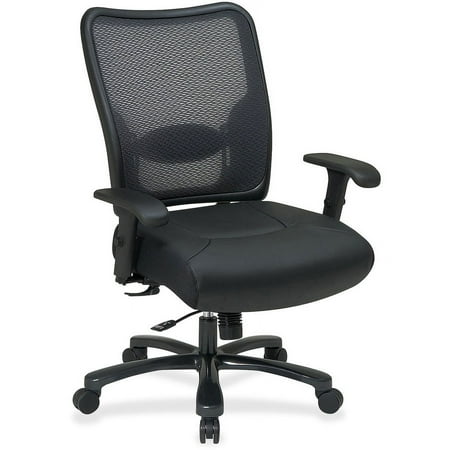
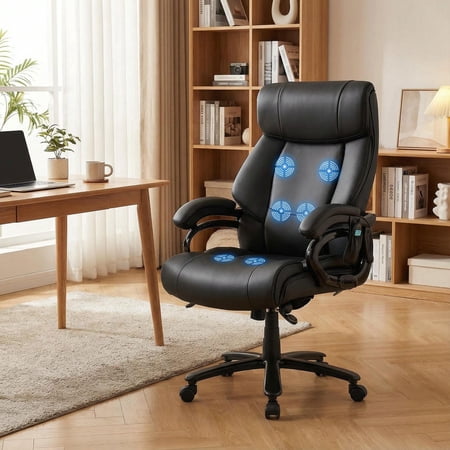
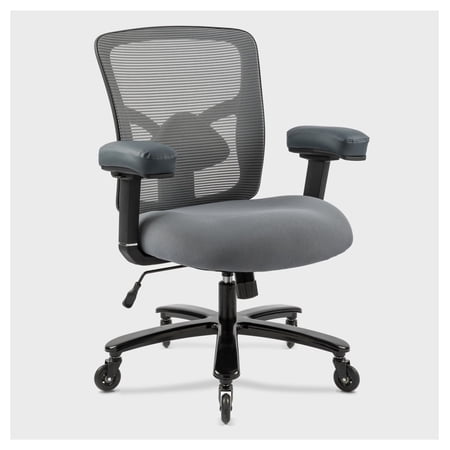
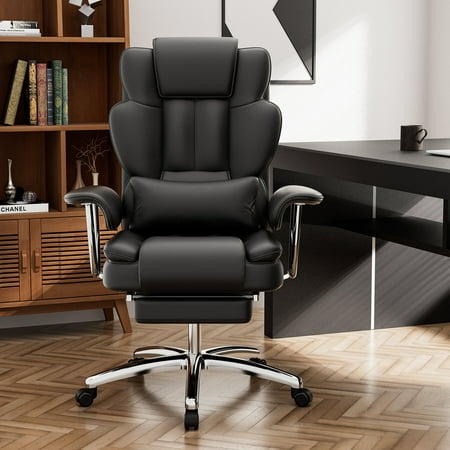
The Unique Challenge of Finding the Right Big and Tall Ergonomic Office Chair
Finding a comfortable office chair when you're over 6'2" or weigh more than 250 pounds can feel like searching for a needle in a haystack. Standard office chairs—typically designed for someone 5'9" and 170 pounds—simply weren't built for larger body types. The result? Pinched thighs, inadequate back support, failing components, and ultimately, chronic discomfort that follows you from the office to home.
The Reality Check: According to the National Institute for Occupational Safety and Health, approximately 40% of the U.S. workforce falls into the "big and tall" category, yet only 12% of office chairs on the market are specifically engineered for this demographic. This mismatch leads to a 63% higher rate of work-related musculoskeletal disorders among larger individuals.
Think of a big and tall ergonomic office chair as the pickup truck of office seating—while a standard car (regular chair) works for average commutes, you need something with more power, a reinforced frame, and extra cabin space to handle the job safely and comfortably. A properly engineered heavy-duty chair doesn't just "fit" differently; it's constructed from the ground up with thicker steel, wider bearings, and components rated for continuous heavy use.
What Actually Makes a Chair "Big and Tall" Worthy?
Before diving into specific features, it's important to understand that a "big and tall" designation isn't just marketing jargon. Genuine heavy-duty chairs undergo specific engineering changes:
- Reinforced Steel Frame: Standard chairs use 1.5mm steel; big and tall chairs use 2.5-3mm thick steel in the frame and base
- Commercial-Grade Gas Lift: Class 4 or 5 gas cylinders rated for 350-500+ pounds (vs. Class 2-3 in standard chairs)
- Wider Base Span: 28-30 inch diameter aluminum or steel base (standard is 26-27 inches) for stability
- Oversized Seat Pan: Minimum 22 inches wide and 20 inches deep, often with waterfall edge to prevent circulation restriction
- Heavy-Duty Casters: Larger 3-inch wheels with reinforced housing designed for higher loads
The Anatomy of a Quality Big and Tall Ergonomic Office Chair
Understanding how these chairs are built helps you make an informed decision. Let's break down each critical component and what to look for during your search.
1. The Foundation: Base and Casters
The base is literally the foundation of your chair—it bears the entire load and ensures stability. In big and tall chairs, this isn't an area for compromise.
Base Material Matters
Nylon/Plastic bases: Avoid these for big and tall applications. They flex under load and can crack over time. Aluminum or steel bases are non-negotiable—they provide rigid support and won't deform after months of use. Look for polished aluminum bases that combine strength with professional aesthetics.
Base Diameter
Standard chairs use 26-27 inch bases. Big and tall chairs need 28-30 inch bases. This wider footprint distributes weight more evenly and prevents tipping during reclining or leaning. Think of it like the difference between a dining chair and a wide-base office chair—stability increases exponentially with diameter.
Caster Selection
Wheels are often the first failure point in heavy-duty chairs. Look for dual-wheel casters with metal hubs rated for your floor type. Hardwood floors require soft rubber casters; carpets need harder wheels. The best big and tall chairs include casters with weight ratings clearly marked (minimum 150 pounds per caster = 600 pounds total capacity).
2. The Power Source: Gas Lift Cylinder
The gas lift is what allows you to adjust seat height—and it's the component most likely to fail in standard chairs used by heavier individuals. Imagine a car's shock absorber failing while driving; that's what happens when a gas lift gives out.
Class 2-3 Lift
Standard office chairs - Not recommended for big and tall users
Class 4 Lift
Good for most big and tall applications - Industry standard for heavy-duty
Class 5 Lift
Commercial/Industrial grade - Maximum durability and safety margin
Pro Tip: Always verify the gas lift class in the specifications. Many chairs marketed as "big and tall" still use Class 3 lifts. Look specifically for "Class 4" or "Class 5" certification. This single component determines whether your chair will last 6 months or 6 years.
3. The Seat: Width, Depth, and Cushioning
The seat is where you'll spend thousands of hours—getting this right is crucial for both comfort and health.
- Seat Width: Minimum 22 inches; ideal 24-26 inches. Measure the widest part of your hips while seated, then add 2-3 inches on each side. This prevents the "overflow" effect where your thighs press against the chair's sides.
- Seat Depth: Look for 20-22 inches of depth with adjustment. When seated properly, you should have 2-4 finger widths of space between the back of your knee and the seat edge. Adjustable seat depth (seat slider) is worth paying extra for.
- Cushion Density: Standard chairs use 1.8-2.2 lb density foam. Big and tall chairs need 2.5-3.5 lb high-density foam with memory foam toppers. Higher density prevents "bottoming out" where you feel the hard seat pan beneath.
- Waterfall Edge: The front of the seat should curve downward gently. This reduces pressure behind the knees and improves blood circulation—critical during long sitting sessions.
4. Backrest and Lumbar Support: Engineered for Larger Frames
Standard backrests often end mid-shoulder for taller users, providing zero head or neck support. Big and tall chairs address this with extended height backrests.
Backrest Height
Look for backrests measuring 28-32 inches from seat to top. This ensures the chair supports your entire spine, including the thoracic (upper back) region. High-back designs (over 30 inches) are ideal for users over 6'2" as they provide head and neck support.
Lumbar Support
Adjustable lumbar is non-negotiable. The lumbar curve needs to hit your spine's natural inward curve—which sits higher on taller individuals. Look for chairs with height-adjustable and depth-adjustable lumbar. Air bladder lumbar systems often work better than mechanical ones for heavier users as they distribute pressure more evenly.
Backrest Width
The backrest should mirror your shoulder width. Look for 20-22 inch wide backrests with slight contouring. Winged backs that curve forward can restrict shoulder movement—test this if possible.
5. Armrests: The Overlooked Support System
Armrests bear up to 25% of your upper body weight when properly adjusted. In big and tall chairs, they need extra reinforcement.
- 4D Adjustability: Height, width, depth, and pivot angle adjustment allows you to position armrests exactly where your arms naturally fall—reducing shoulder strain.
- Width Adjustment: Critical for larger users. Armrests should adjust outward to accommodate broader shoulders while still providing support when typing.
- Construction: Look for steel-reinforced arms with soft polyurethane padding. Avoid all-plastic arms that can flex or crack under load.
Weight Capacity: Understanding the Numbers Game
Chair manufacturers use different testing standards for weight ratings. Here's what those numbers actually mean:
| Rated Capacity | BIFMA Standard Test | Real-World Recommendation | Typical Lifespan |
|---|---|---|---|
| 300-350 lbs | Tested with 225 lbs | Best for users up to 250 lbs (safety margin) | 2-4 years daily use |
| 350-400 lbs | Tested with 300 lbs | Good for users 250-300 lbs | 3-5 years daily use |
| 400-450 lbs | Tested with 350 lbs | Ideal for users 300-375 lbs | 5-8 years daily use |
| 450-500+ lbs | Tested with 400+ lbs | Commercial grade for heaviest users | 8-12 years daily use |
The Safety Margin Rule: Always choose a chair rated at least 50-100 pounds above your actual weight. If you weigh 300 pounds, a 400-pound rated chair will maintain its integrity longer and provide a safety buffer for unexpected movements or leaning.
❌ Myth: "All chairs with 'big and tall' in the name are essentially the same."
✅ Fact: There's a massive quality difference between "big and tall" marketed chairs and genuinely engineered heavy-duty chairs. Look for specific component ratings—gas lift class, base material, foam density—not just marketing claims.
The Ergonomic Benefits of Properly Sized Seating
When your chair fits correctly, the health benefits extend far beyond simple comfort:
- Spinal Alignment: Proper lumbar support positioned at your natural curve reduces disc compression by up to 40%. For tall users, this means the support hits the right spot—not too high or low.
- Improved Circulation: Wider seats with waterfall edges prevent the "thigh pinch" that restricts blood flow. This reduces the risk of deep vein thrombosis during long sitting sessions.
- Reduced Pressure Points: High-density foam distributes weight evenly across the seat, preventing the "hammock effect" where cheaper chairs sag and create pressure points.
- Better Posture: When your chair provides proper support, your body naturally maintains better alignment. This reduces the "slump" that leads to forward head posture and rounded shoulders.
- Increased Productivity: A Cornell University study found that workers in properly fitted ergonomic chairs reported 17.8% higher productivity due to reduced discomfort-related breaks.
Adjustability: The Difference Between "Fits" and "Fits Perfectly"
A truly ergonomic big and tall chair offers extensive adjustability to accommodate individual body variations. Here's what to look for:
Seat Height Range
Taller users need higher minimum and maximum heights. Look for ranges from 19-24 inches (standard is 16-21 inches). Measure from floor to the back of your knee while standing in your typical shoes—your chair should adjust to that height.
Tilt Tension Adjustment
Heavier users need stronger tilt mechanisms. Look for chairs with adjustable tilt tension that can be tightened sufficiently to support your weight while reclining. Some premium chairs offer weight-activated tension that automatically adjusts.
Seat Depth Adjustment
This allows you to slide the seat pan forward or backward. Essential for tall users with longer thighs—ensures proper thigh support without pressure behind knees.
Material Selection for Big and Tall Chairs
The upholstery material affects durability, comfort, and maintenance. Each option has specific considerations for larger users:
Heavy-Duty Mesh
Premium mesh (like 3D spacer mesh) offers excellent breathability—important if you tend to run warm. However, ensure the mesh is specifically rated for heavy-duty use. Standard mesh can sag over time. Look for mesh with reinforced borders and high tension ratings.
Commercial-Grade Fabric
High-quality fabric (often a nylon-polyester blend) offers durability without the temperature sensitivity of leather. Look for fabric with high double-rub counts (100,000+ Wyzenbeek test) indicating resistance to wear. Fabric breathes better than leather and often costs less.
Premium Leather and Bonded Leather
Full-grain or top-grain leather offers unmatched durability and a professional appearance. However, bonded leather (leather particles glued together) should be avoided—it cracks and peels within 2-3 years under heavier use. If choosing leather, verify it's genuine top-grain with reinforced stitching.
Material Recommendation: For most big and tall users, high-quality mesh or commercial-grade fabric offers the best combination of breathability, durability, and value. Leather is excellent for executive settings but requires regular conditioning to prevent drying and cracking.
Assembly and Maintenance Considerations
Big and tall chairs are heavy—often 60-80 pounds. Consider these practical factors:
- Delivery: Many heavy-duty chairs ship in multiple boxes due to weight. Check delivery requirements before ordering.
- Assembly: Due to the weight, having two people assemble the chair is safer and easier. Some retailers offer white-glove delivery service—worth considering for chairs over 70 pounds.
- Maintenance: Periodically check and tighten all bolts (especially after the first month). Lubricate moving parts annually. Clean upholstery according to manufacturer guidelines.
- Warranty: Look for minimum 5-year warranties on all components, 10+ years on frame. This indicates manufacturer confidence in durability.
Common Mistakes When Buying Big and Tall Chairs
Learn from others' experiences—avoid these frequent purchasing errors:
- Buying based on weight capacity alone: A 400-pound rated chair with a 20-inch seat won't fit someone with 24-inch hips. Always check seat dimensions separately.
- Assuming "heavy-duty" means "extra wide": Some heavy-duty chairs use standard-width seats with reinforced components. Verify actual seat width.
- Ignoring the gas lift class: "400-pound capacity" with a Class 3 lift is misleading—the lift will fail long before the frame does.
- Not measuring your space: Big and tall chairs have larger footprints. Measure your desk height and clearance before purchasing.
- Prioritizing price over components: A $300 "big and tall" chair likely uses standard components with marketing claims. Invest in genuine engineering.
Warranty: Your Safety Net
The warranty tells you how long the manufacturer expects the chair to last. For big and tall chairs:
| Component | Minimum Warranty | What to Look For |
|---|---|---|
| Frame | 10 years | Lifetime frame warranty is ideal |
| Mechanism/Gas Lift | 5 years | Look for 7-10 years on moving parts |
| Upholstery/ Foam | 3 years | 5 years indicates higher quality materials |
| Casters/ Arm Pads | 2 years | 3-5 years for premium chairs |
Frequently Asked Questions About Big and Tall Ergonomic Office Chairs
Final Thoughts: Investing in Your Daily Comfort
Choosing the right big and tall ergonomic office chair isn't just about finding something that fits—it's about investing in your health, productivity, and daily comfort. Think of it this way: if you spend 8 hours a day in your car, you'd choose a vehicle with proper legroom, supportive seats, and reliable engineering. Your office chair deserves the same consideration.
The right chair should feel supportive from the moment you sit down—not something you "get used to" over time. Your thighs should rest comfortably without pressure, your lower back should feel cradled by adjustable lumbar support, and the chair should remain stable and quiet during natural movements. When you find that chair, the hours at your desk become less about enduring discomfort and more about focusing on the work that matters.
Quick Recap: Your Big and Tall Chair Checklist
Class 4-5 gas lift (350-500+ lbs) • Aluminum/steel base (28-30") • Seat width 22"+ • High-density foam (2.5 lb+) • Adjustable lumbar • 5-10 year warranty
4D armrests • Adjustable seat depth • Headrest • Tilt lock • Breathable mesh or premium fabric
Plastic base • Unspecified gas lift class • Seat width under 20" • Bonded leather • 1-year warranty
Remember, the best big and tall ergonomic office chair is the one that disappears into the background—supporting you so effectively that you forget you're sitting at all. Take your time, check the specifications carefully, and invest in a chair that will support your work for years to come.