

The Foundation of Comfort: Why 400 lbs Capacity Matters
Choosing an office chair is a personal decision, but for individuals who need a big and tall office chair 400 lbs, it's also a structural one. A standard chair, typically rated for 250-300 pounds, simply isn't built to withstand the daily demands of a larger frame. The result? Premature wear, sagging cushions, failing hydraulics, and ultimately, a chair that compromises your comfort and posture.
Think of it like this: a bridge designed for passenger cars will quickly show stress if heavy trucks constantly cross it. Similarly, your office chair needs a reinforced 'infrastructure'—a thicker steel frame, a wider base, and a heavy-duty gas cylinder—to provide stable, long-lasting support. This category of seating is not just about a higher number; it's about intelligent engineering for durability and ergonomics at scale.
Quick Stat: According to ergonomic studies, using a chair with insufficient weight capacity can lead to a 30% increase in lower back strain due to improper support and the body's subconscious effort to stabilize itself on an unstable platform. Investing in the correct capacity is an investment in your long-term musculoskeletal health.
Anatomy of a Heavy-Duty Chair: Built for 400 Lbs
What exactly makes a chair capable of safely supporting 400 pounds? It's a combination of upgraded components working in harmony. Let's break down the critical parts you should examine before purchasing.
1. The Frame: The Skeleton of Support
The frame is the chair's backbone. For a 400 lb capacity, look for chairs that boast a reinforced steel frame, often with a thicker gauge metal than standard models. Some high-end options use aluminum alloys for a balance of strength and weight. Avoid chairs with frames that are primarily plastic or composite, as they are prone to cracking under sustained heavy load. The frame should inspire confidence—no creaks or flex when you lean back.
2. The Gas Lift: The Lifting Heart
The gas lift cylinder is what allows you to adjust the chair's height. For heavy-duty applications, this must be a Class 4 or Class 5 gas lift. These are industrial-grade cylinders with thicker walls and heavier internal components. A Class 3 lift, common in standard chairs, is a weak point and a common failure mode for chairs used by heavier individuals. Always verify the lift class in the specifications.
3. The Base: A Stable Foundation
The five-point base must be made of durable materials. For 400 lbs chairs, the best options are nylon-reinforced composite, solid steel, or aluminum. These materials resist warping and cracking. Also, pay attention to the base's width; many heavy-duty chairs feature a wider span (e.g., 28" diameter) for increased stability, preventing the chair from tipping.
4. The Casters: Smooth Rolling Under Pressure
Standard casters can flatten, crack, or simply stop rolling smoothly under heavy weight. Look for chairs with large, dual-wheel casters made of hard-wearing polyurethane or nylon. These distribute the weight more effectively and roll easier on carpets or hard floors. Some heavy-duty chairs even offer roller-blade style wheels for effortless movement.
5. The Seat Cushion: Preventing Bottoming Out
A common complaint for larger users is the seat cushion 'bottoming out' after a few months. This happens when low-density foam compresses permanently. For 400 lb capacity, seek chairs with high-density foam, often with a thicker profile (5-6 inches). Some premium models incorporate a coil spring base within the foam for added resilience, much like a high-quality mattress.
Quick Feature Comparison: Standard vs. 400 Lbs Chair
| Component | Standard Office Chair (~250 lbs) | Big & Tall 400 lbs Chair |
|---|---|---|
| Frame Material | Thin steel or reinforced plastic | Thick-gauge steel or aluminum alloy |
| Gas Lift Class | Class 2 or 3 | Class 4 or 5 |
| Base Diameter | 26" - 27" | 28" - 30" |
| Seat Width | 19" - 21" | 22" - 28" (extra wide) |
| Caster Type | Single-wheel plastic | Dual-wheel polyurethane or metal |
Ergonomics at Scale: Finding the Right Fit
Beyond raw strength, a proper ergonomic fit is vital. For a big and tall office chair 400 lbs, you need adjustability that accommodates a larger frame. Here’s what to prioritize:
- Seat Width and Depth: Look for a seat pan that is at least 22 inches wide. Adjustable seat depth (sliding the pan forward/backward) is a premium feature that ensures your thighs are fully supported without pressure behind the knees.
- Adjustable Lumbar Support: Critical for maintaining the natural S-curve of your spine. Both height and depth adjustability are ideal to target your specific lumbar region, regardless of your torso length.
- 4D Armrests: Armrests that adjust in height, width, depth, and angle allow you to keep your shoulders relaxed and your elbows at a 90-degree angle, preventing neck and shoulder strain.
- Tilt Mechanism and Tension Control: A sturdy, synchronized tilt mechanism lets you recline comfortably. Ensure the tension can be dialed up sufficiently to support your weight when leaning back, preventing you from being thrown back too easily.
Material Matters: Durability Meets Comfort
The choice of upholstery affects both the chair's lifespan and your comfort throughout the day.
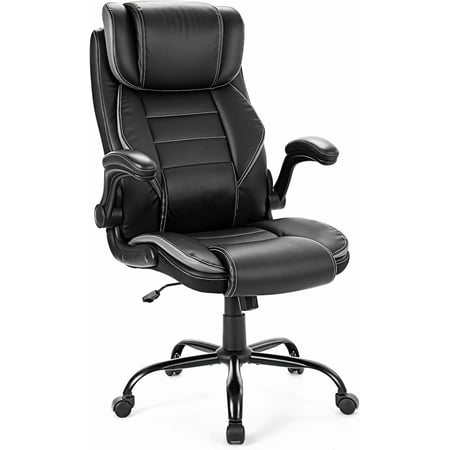
- Premium Bonded or Top-Grain Leather: Offers a professional, executive look and is easy to wipe clean. For 400 lbs, ensure the leather is thick and attached to a robust frame. The potential downside is heat retention.
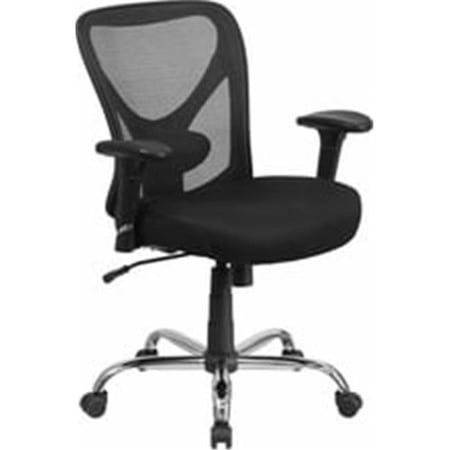
- High-Performance Mesh: An excellent choice for breathability. For heavy-duty use, the mesh must be a high-tension, tightly woven fabric (like pellicle mesh) that provides firm, even support without sagging over time. It contours to your body while allowing air to flow.
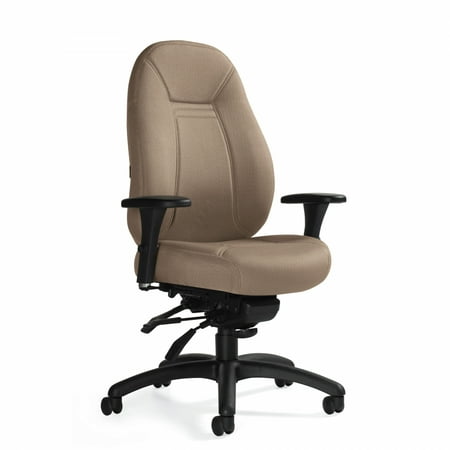
- Heavy-Duty Fabric: Often found in task-oriented chairs. Look for tightly woven, durable nylon or polyester blends with a high rub count (e.g., 100,000 double rubs). These are very durable and can offer a softer feel than leather or mesh.
Enhanced Stability
Wider base and stronger casters eliminate wobble.
Pressure Relief
High-density foam and waterfall edges improve circulation.
Longevity
Reinforced components mean 7-10 years of reliable use.
Confidence
No creaking or worrying about structural failure.
Real-World Scenario: The 9-to-5 Heavy-Duty Test
Imagine a 6'4", 380-pound executive, Sarah, who spends 9 hours a day at her desk. In a standard chair, she'd experience the seat cushion flattening within months, the chair slowly sinking throughout the day, and the armrests digging into her sides. This leads to constant fidgeting, poor focus, and lower back ache. Now, imagine her in a properly engineered 400 lb chair: the wide, plush high-density foam supports her without compressing fully. The Class 5 lift keeps her at a perfect eye level with her monitor all day. The adjustable lumbar support fills the curve of her back, eliminating strain. The difference isn't just comfort; it's productivity and well-being. That's the real value of choosing the right capacity.
Frequently Asked Questions About 400 Lbs Office Chairs
Conclusion: Invest in the Right Foundation
Selecting a big and tall office chair with a 400 lbs capacity is about more than just finding a seat that fits. It's about choosing a piece of equipment that respects your body, supports your work, and stands the test of time. By focusing on the core components—the frame, gas lift, base, and cushion—you can move beyond marketing claims and select a chair that provides genuine, lasting comfort and stability. Don't settle for a chair that might work; invest in one that's engineered to.
Whether you prioritize the breathable support of high-grade mesh or the classic luxury of leather, ensure the chair's specifications clearly state its reinforced construction. Your comfort, health, and productivity are worth the investment in a chair that's built to last.