
Why a Dedicated 500 Lb Capacity Office Chair Matters
Imagine a bridge built for cars that occasionally has to support a heavy truck. It might hold up for a while, but eventually, the stress shows—cracks appear, the structure weakens. The same logic applies to office chairs. A standard chair rated for 250–300 lbs might physically accommodate a larger user temporarily, but over time, the gas cylinder can fail, the base can crack, and the foam can compress irreversibly. A big and tall office chair 500 lbs is not just a "bigger" chair—it's a completely re-engineered piece of equipment. It uses thicker-gauge steel, wider bases, and heavy-duty pneumatics to ensure that every sit, shift, and lean is met with unwavering stability. For anyone over 300 lbs, this isn't a luxury; it's a necessity for safety and long-term comfort.
Real-world insight: According to ergonomic studies, using a chair with insufficient weight capacity increases the risk of sudden collapse by over 60%. Moreover, inadequate support can exacerbate back pain and sciatica. Investing in a chair built for your body type is an investment in your daily well-being.
The Anatomy of a 500 Lb Capacity Chair
What exactly makes these chairs different? Let's break down the key components that separate a standard task chair from a true heavy-duty throne.
- Reinforced 5-Star Base: Usually made of solid steel or heavy-duty nylon (often with a metal core), it distributes weight evenly and prevents cracking. Look for a base diameter of at least 28 inches for optimal stability.
- Class 4 or 5 Gas Lift: The cylinder is the backbone of height adjustment. For 500 lb capacity, a Class 4 or 5 lift is mandatory—it's built with thicker walls and a larger piston to handle the load safely.
- Extra-Wide & Deep Seat: Seat width typically ranges from 22 to 30 inches, providing ample room without squeezing. High-density foam (often cold-cured foam) resists sagging and maintains its shape for years.
- Oversized Backrest: Many models feature backrests 30 inches tall or more, offering support for the entire back, including the shoulders. This is crucial for taller users.
- Industrial-Grade Casters: Hardwood or carpet casters are made of durable materials like polyurethane that won't flatten under weight, ensuring smooth rolling without floor damage.
Step-by-Step: How to Choose Your Perfect 500 Lb Chair
Step 1: Measure Your Space & Body
Grab a tape measure. Note your seat width requirement (hip width + 2 inches of extra room). Measure your seat depth requirement: from the back of your knee to your hip. Also, check your desk height to ensure the chair's adjustable range (usually 20–23 inches) aligns with your work surface.
Step 2: Prioritize Critical Adjustments
For larger bodies, adjustability is key. You need:
- Seat height adjustment (with a reliable Class 4/5 cylinder).
- Tilt tension and lock to recline safely without tipping.
- Adjustable lumbar support (height and sometimes depth) to prevent lower back pain.
- 4D armrests (height, width, depth, pivot) to support arms comfortably while typing.
Step 3: Match Material to Your Environment
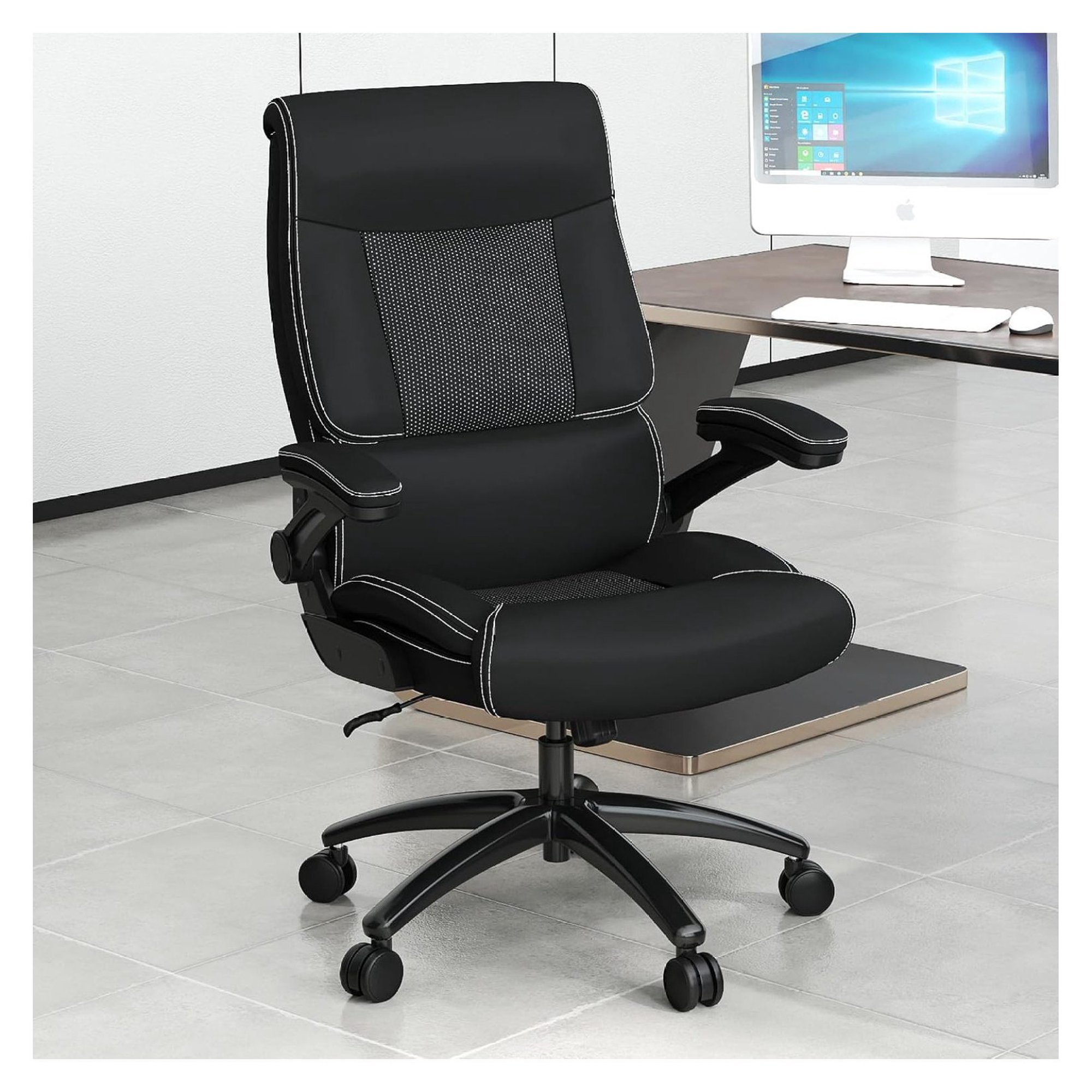
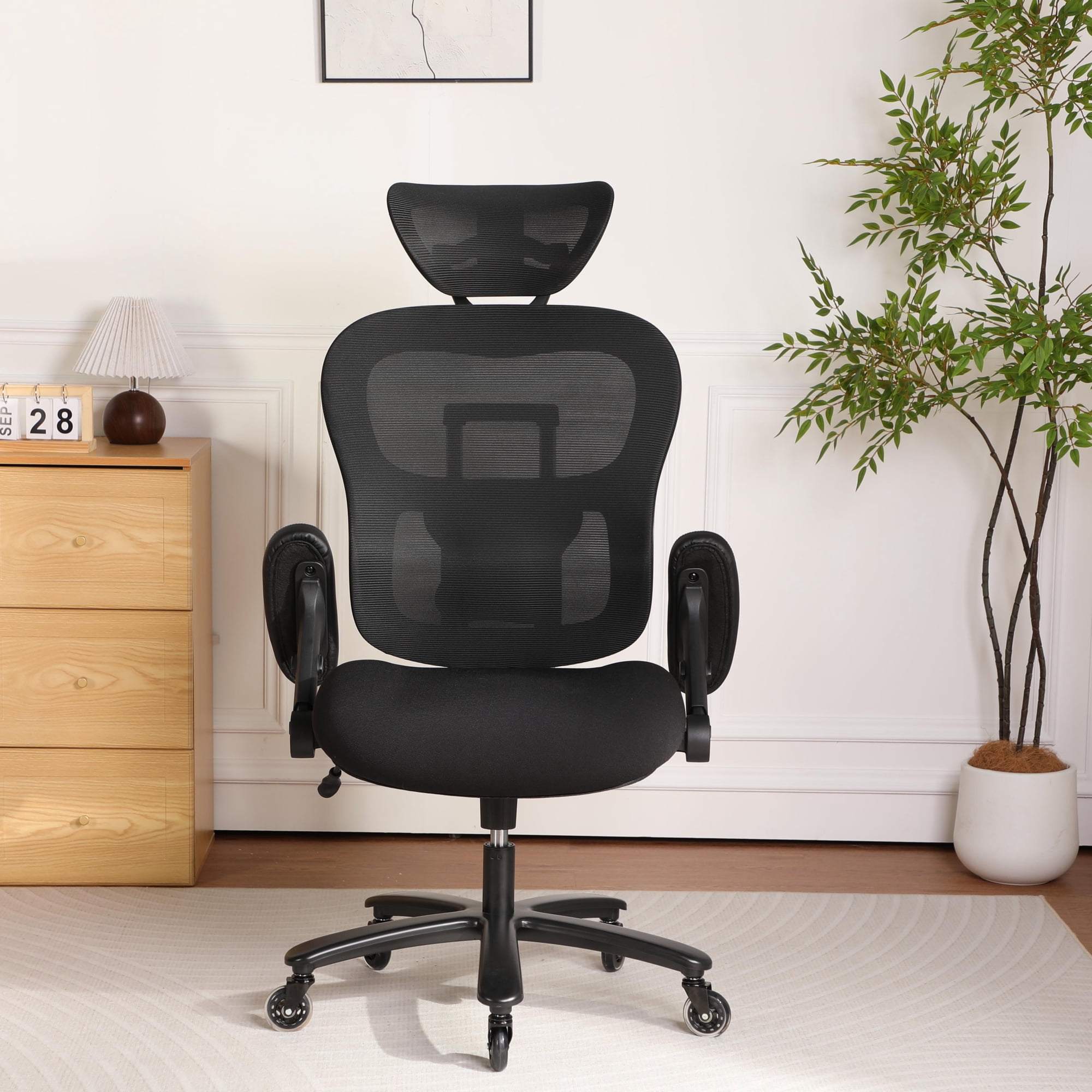
Leather (bonded or genuine) offers a professional look and is easy to clean, but can get warm. High-quality breathable mesh keeps you cool but may have less "give." Some chairs combine a mesh back with a padded leather seat—a popular hybrid for comfort and airflow.
Step 4: Check the Fine Print (Warranty & Return Policy)
A 500 lb capacity chair is an investment. Ensure the manufacturer offers at least a 2-year comprehensive warranty and a 30-day return policy. A solid warranty is a sign that the company trusts its construction.
Comparative Material Guide for Heavy-Duty Chairs
The choice of upholstery affects not only the look but also the durability and maintenance of your chair. Here’s how materials stack up specifically for a 500 lb capacity model.
Pros of Premium Bonded/Leather
- • Easy to wipe clean – resists spills and stains.
- • Looks professional and ages well if conditioned.
- • Often paired with thicker foam for a plush feel.
- • More resistant to tearing under constant pressure.
Cons of Leather
- • Can become sticky or hot in warm climates.
- • Requires occasional conditioning to prevent cracking.
- • Generally heavier and less breathable.
Pros of Heavy-Duty Mesh
- • Superior breathability – ideal for long hours and warmer offices.
- • Modern aesthetic that fits contemporary spaces.
- • Tensioned mesh conforms to the back without sagging.
Cons of Mesh
- • Mesh can eventually lose tension (less common in high-quality chairs).
- • Not as forgiving on the seat; often requires a thicker foam seat base.
- • Can be harder to clean if dust gets embedded.
Usage Scenarios: When 500 Lbs Capacity is Non-Negotiable
8–10 hours daily. Look for a chair with a 5-year warranty, thick seat cushion (at least 4 inches), and adjustable lumbar to combat fatigue.
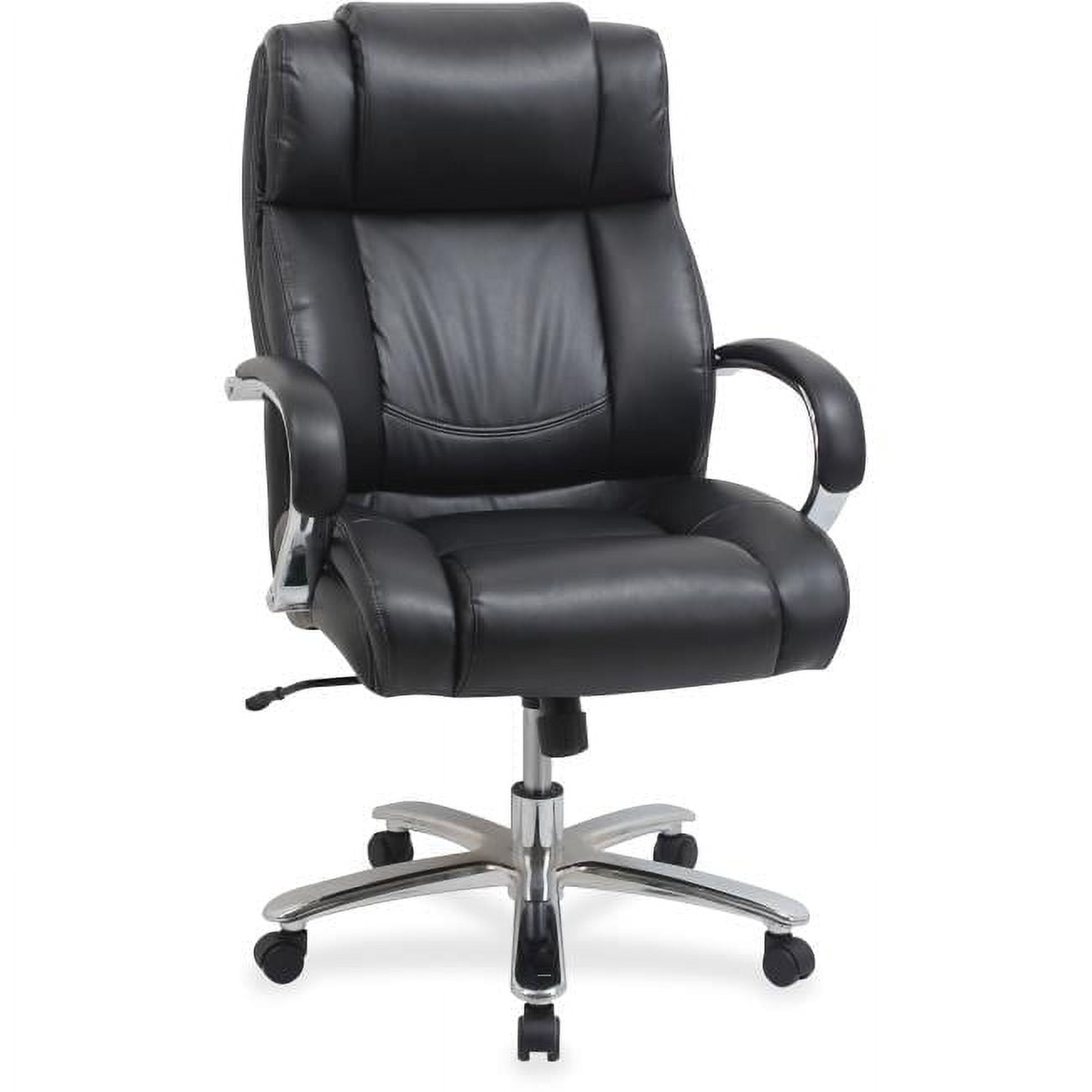
Requires a commanding presence. Choose high-back leather with polished aluminum base and wide armrests to convey authority and comfort.
Recline function, flip-up armrests, and headrest are key. Many gaming-style big and tall chairs offer racing stripes and full recline.
Durability is paramount. Opt for easy-clean surfaces (leather/vinyl) and simple pneumatic adjustments that withstand multiple users.
Quick Budget Breakdown for 500 Lb Capacity Chairs
While prices fluctuate, understanding the tiers helps set expectations. These ranges reflect the construction quality and features you can anticipate.
Essential
Basic heavy-duty frame, bonded leather, limited adjustments, suitable for occasional use.
Mid-Range
Better foam density, 4D armrests, tilt lock, and stronger gas lift. Good for full-time work.
Premium
Top-tier materials (fabric/leather), advanced ergonomics, extended warranties, and commercial-grade testing.
Ultra Heavy-Duty
Some chairs go to 600–800 lbs. These feature massive frames, extra-wide seats, and custom options.
Frequently Asked Questions: Big & Tall 500 Lb Chairs
Conclusion: Secure Your Comfort with the Right Foundation
Choosing a big and tall office chair with a 500 lb capacity is a decision that pays dividends in safety, comfort, and productivity. By now, you understand that it's not just about a higher number—it's about the engineering: the steel frame, the robust gas lift, the dense foam, and the thoughtful adjustments that accommodate a larger body.
Think of this chair as the foundation of your workspace. Just as a building needs a solid base to withstand storms, your body needs a reliable seat to carry you through demanding workdays. Prioritize chairs from reputable brands that offer transparent specifications and solid warranties. Measure your space, identify your must-have adjustments (like seat depth and lumbar support), and choose a material that suits your climate and style.
Whether you're a full-time professional, an executive, or someone who simply refuses to compromise on comfort, the market today offers excellent options that blend durability with modern ergonomics. Your search for the perfect fit ends with a chair that doesn't just hold you—it supports you, hour after hour, year after year.