
The Heavy-Duty Reality: Why Standard Chairs Fail Heavier Users
Imagine buying a car rated to carry five passengers, but every time a sixth person gets in, the suspension bottoms out and the tires struggle. That's exactly what happens when heavier individuals use standard office chairs. Most off-the-shelf chairs are designed for "average" users weighing up to 250 lbs—but "average" doesn't account for the millions of people who need reliable, safe seating beyond that threshold.
The Safety Reality: According to the Centers for Disease Control and Prevention (CDC), the average American adult male weighs 197.9 lbs, and the average female weighs 170.6 lbs. However, 40% of adults exceed these averages, and many need chairs with higher weight capacities. The Consumer Product Safety Commission receives hundreds of reports annually of chair failures—collapsing gas lifts, snapping casters, and breaking armrests—that could have been prevented with proper weight-rated equipment.
Office chairs for heavy people aren't just standard chairs with higher numbers stamped on the box. They're engineered differently from the ground up: thicker steel frames, wider bases, industrial-grade gas cylinders, high-density foam that won't flatten, and casters that can handle increased loads without cracking. Understanding these differences is the first step toward finding a chair that will serve you safely for years, not months.
This guide will walk you through the engineering, safety considerations, and comfort features that matter most when you need a chair built for heavier use. No fluff—just practical information to help you make an informed investment in your health and safety.
The Engineering Behind Heavy-Duty Chairs: What Makes Them Different
Let's lift the hood and examine what actually makes a chair capable of safely supporting heavier individuals. It's not magic—it's metallurgy, material science, and smart design.
Weight Capacity Tiers: What the Numbers Really Mean
The Critical Components: Where Quality Matters Most
Frame Construction
The Backbone: Standard chairs use plastic or thin-gauge steel. Heavy-duty chairs feature solid 14-16 gauge steel frames welded (not screwed) at stress points. This prevents twisting, wobbling, and eventual collapse. Look for "all-steel frame" in specifications—avoid chairs with plastic base plates.
Gas Lift Cylinder
The Lifter: This is the most common failure point. Standard lifts are Class 2 or 3 (rated ~250 lbs). Heavy-duty chairs use Class 4 or 5 gas lifts rated for 400-500+ lbs. The cylinder diameter is larger, and the internal pressure is higher to prevent sudden dropping.
Base (The Star)
The Foundation: Standard bases are nylon or plastic. Heavy-duty chairs require metal bases (aluminum or steel) with a wider span (26-30 inches vs standard 22-24 inches). This wider stance prevents tipping and distributes weight more evenly.
Casters (Wheels)
The Contact Point: Standard casters snap under excess weight. Heavy-duty chairs use dual-wheel casters with metal hubs and larger wheels (3 inches vs 2 inches). Some use rollerblade-style polyurethane wheels that distribute load better and roll smoothly without cracking.
Seat Cushion
The Comfort Zone: Standard foam (1.5-2.5 lb density) flattens within months. Heavy-duty chairs use high-density foam (3.5-5 lb density) that maintains resilience for years. Some add gel layers or memory foam on top of firm support cores.
Armrests
The Support Arms: Plastic armrests crack under pressure. Heavy-duty chairs feature reinforced armrests with steel mounting plates and wider, padded surfaces that don't flex when you lean on them.
Warning Signs: When a Chair Is About to Fail
- The chair slowly sinks when you sit (gas lift failure starting)
- Visible cracks in the base or armrests
- Wobbling or leaning to one side
- Loud creaking or popping sounds from the frame
- Casters that are cracking or difficult to roll
- Seat cushion that has flattened to less than 2 inches thick
Heavy-Duty Myths vs. Facts
Fact: Weight ratings mean nothing without third-party testing. Look for chairs that meet BIFMA (Business and Institutional Furniture Manufacturers Association) standards. BIFMA testing involves thousands of cycles of simulated use to verify durability.
Standard chairs are 18-20 inches wide. Heavy-duty chairs often feature 22-30 inch seat widths. This isn't just about comfort—proper width ensures the frame supports you correctly without stressing the edges.
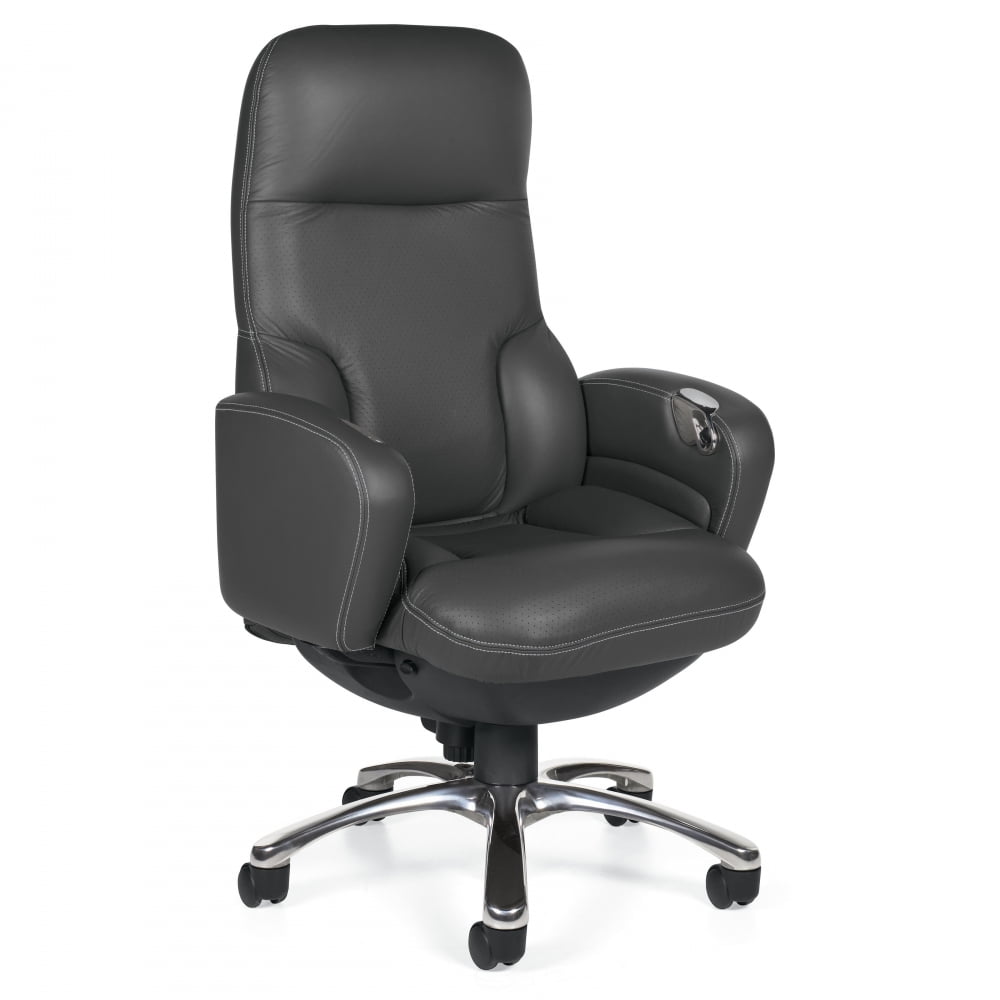
Fact: Some expensive "executive" chairs are designed for aesthetics, not weight capacity. A $1,200 leather chair might only rate 250 lbs, while a $400 heavy-duty chair rates 400 lbs. Always check specifications, not price.
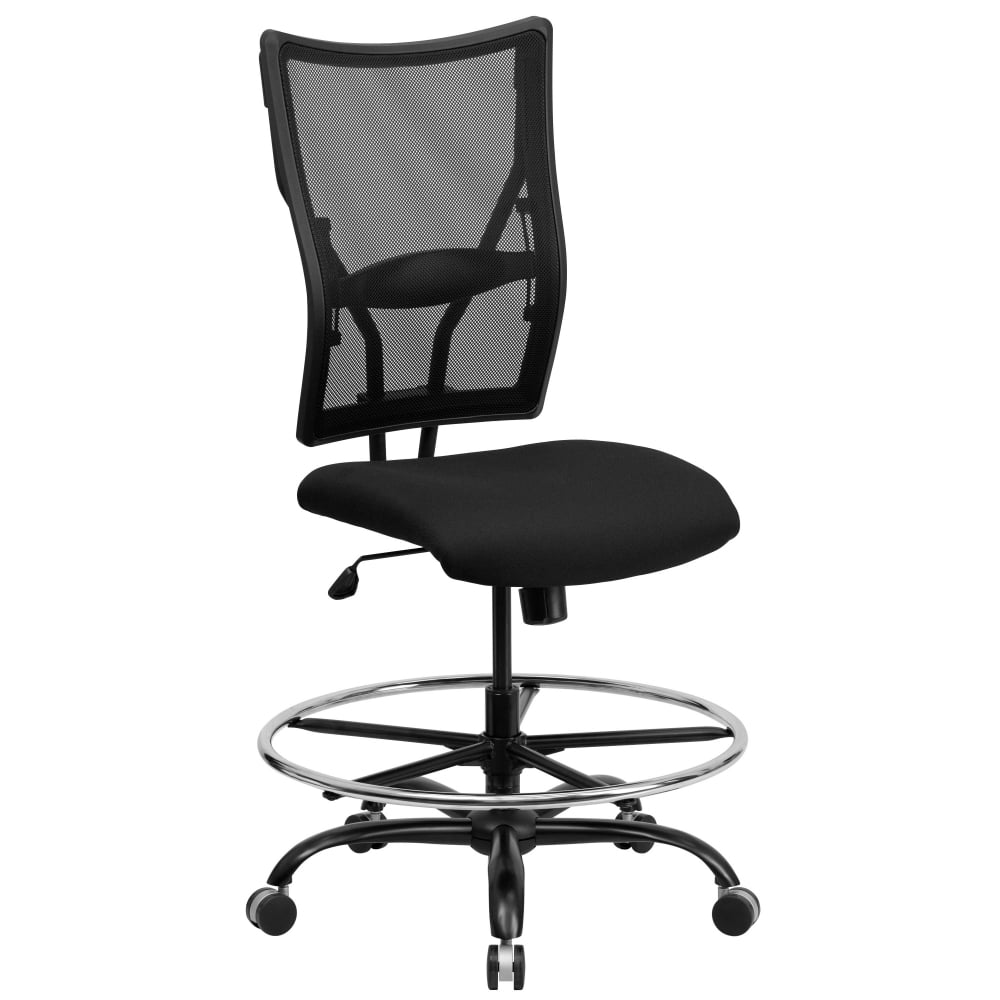
Many assume heavy users need thick padding, but high-quality mesh chairs with reinforced frames can support 400+ lbs while providing better breathability. The key is the frame, not the upholstery material.
The Engineering Deep Dive: What Heavy-Duty Construction Looks Like
Inside a Quality 500 lb Capacity Chair
These specifications aren't arbitrary—each component is selected to work together as a system. A 500 lb gas lift attached to a plastic base still fails because the base cracks. Everything must be engineered to the same standard.
Comfort Considerations for Heavier Users
Safety is non-negotiable, but comfort matters just as much for productivity and health. Here's what to look for beyond weight capacity:
- Seat Depth: Standard seats are 17-19 inches deep. Heavier users often need 20-22 inches to support the full thigh without pressure behind the knees. Look for adjustable seat depth if possible.
- Backrest Height: If you're also tall, seek backrests 25-30 inches high with adjustable lumbar support that can be positioned correctly for your spine.
- Seat Width: Measure your hip width while seated. Add 2-4 inches for comfortable movement. Standard is 18-20 inches; heavy-duty ranges 22-30 inches.
- Padding Distribution: Quality chairs use variable-density foam—firmer in the center where support is needed, softer at edges to prevent pressure points.
- Recline Mechanism: Look for synchronized recline that keeps your feet on the floor while leaning back. Avoid chairs that tilt forward at the seat edge when reclining.
Real-World Testing: What 10,000 Cycles Means
When you see "BIFMA tested," it means the chair has undergone:
- Drop Test: A 225-300 lb weight dropped onto the seat 100,000 times to simulate sitting
- Swivel Test: 200,000 rotations to test base and bearing durability
- Armrest Test: 150 lbs of force applied 50,000 times
- Gas Lift Cycle: 50,000 raises and lowers
- Backrest Flexibility: 200,000 flex cycles
This testing matters because it simulates years of actual use. A chair that passes BIFMA standards with a 400 lb rating will genuinely last years under a 350 lb user.
Weight Distribution: It's Not Just About the Number
Two people can weigh the same but place very different stresses on a chair:
- Body shape matters: Weight distributed over a wider area (pear-shaped) puts less pressure per square inch than weight concentrated in a smaller area (apple-shaped).
- Sitting habits matter: People who sit forward, lean heavily on armrests, or drop into chairs create dynamic loads that exceed static weight.
- Movement matters: Frequent shifting, rocking, and reclining cycles stress components differently than static sitting.
This is why the 50-100 lb safety margin is crucial—it accounts for these variables and ensures the chair handles real-world use, not just laboratory static loads.
Frequently Asked Questions About Office Chairs for Heavy People
Conclusion: Invest in Safety, Comfort, and Peace of Mind
Finding the right office chair for heavy people isn't just about comfort—it's about safety, durability, and respecting your body's needs. A quality heavy-duty chair is an investment in your daily wellbeing, protecting you from the physical strain of poor support and the danger of equipment failure.
Remember these key takeaways as you shop:
- Look beyond the weight rating: Check materials—steel frame, metal base, Class 4+ gas lift, high-density foam.
- Verify testing standards: BIFMA certification ensures real-world durability testing.
- Measure yourself: Seat width, depth, and back height matter as much as weight capacity.
- Read warranties: Longer warranties (5-10 years) indicate manufacturer confidence in durability.
- Don't compromise on safety: A few hundred dollars now prevents thousands in medical costs and lost productivity later.
Final Recommendations by Weight Range
Look for 350-400 lb rated chairs with steel frames and high-density foam.
Seek 400-450 lb rated chairs with metal bases and Class 4 gas lifts.
Choose 450-500 lb rated chairs with all-steel construction and wide bases.
Look for 500-600 lb rated bariatric-grade chairs with commercial warranties.
Browse our curated selection above to see today's top-rated office chairs for heavy people, with real-time pricing and availability pulled directly from Walmart's catalog. Your safety and comfort are worth the investment.