
The Hidden Problem: Why Ordinary Chair Mats Crack on Carpet
You invested in a plush carpet for your office, but after a few months, your chair mat looks like a jigsaw puzzle. Cracks, splits, and curling edges are not just ugly – they create tripping hazards and fail to protect your floor. The culprit? Most standard mats are made from brittle PVC that can’t handle the combination of rolling pressure and temperature changes. For executives and home workers who want a long-term solution, finding an office chair mat for carpet that won't crack is essential. Think of it like choosing tires for a car: all-weather, reinforced tires outperform cheap ones on rough terrain. Your carpet is that terrain.
Industry Insight: According to floor protection studies, nearly 40% of standard PVC chair mats show visible cracks within 18 months on medium-pile carpet. Polycarbonate mats, however, have a failure rate of less than 5% over five years. That’s a durability gap you can't ignore.
Anatomy of a Non-Crack Chair Mat: Material Science Explained
To understand why some mats crack and others don’t, you need to look at the molecular structure. Polycarbonate is often described as "bulletproof" plastic – it's the same material used in safety glasses and riot shields. It flexes under pressure without forming micro-fractures. High-quality PVC (vinyl) can also resist cracking if it’s thick enough and contains plasticizers that maintain flexibility. Here’s a breakdown of materials that deliver on the promise of a non-crack mat:
- Polycarbonate (PC): The gold standard for crack resistance. It remains flexible in cold temperatures, doesn’t yellow easily, and can withstand the weight of heavy executive chairs. Typically 0.08″ to 0.12″ thick, it's nearly indestructible.
- High-Density PVC (Vinyl): Good mid-range option. Look for thickness above 0.1″ (2.5 mm) and a "non-break" guarantee. Premium PVC mats often have a textured surface to prevent slipping.
- Composite/Wood Mats: Some bamboo or hard-surface mats with a clear coat are available, but they can scratch and are less common for rolling chairs on carpet.
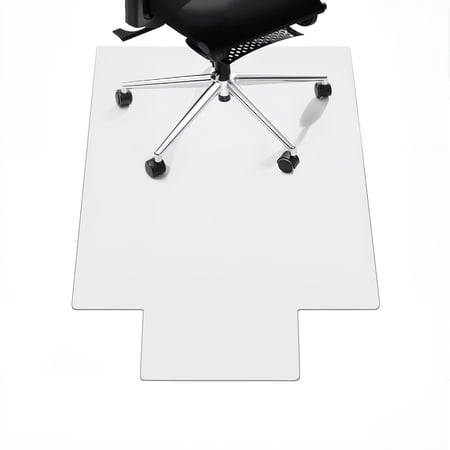
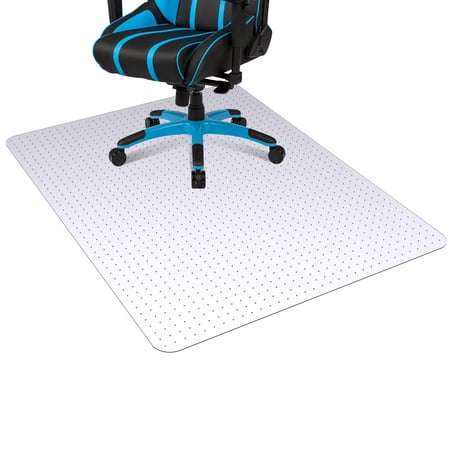
- Reinforced Cleats: Non-crack mats for carpet feature deep, grippy cleats that anchor into the carpet, preventing the mat from shifting and reducing stress points that lead to cracks.
Critical Features That Prevent Cracking
Not all "heavy-duty" mats are equal. Use this checklist when evaluating an office chair mat for carpet that won’t crack:
- Thickness matters: For polycarbonate, at least 2mm (0.08″). For PVC, at least 3mm (0.12″) for medium carpet, and 5mm (0.2″) for plush carpet.
- Edge design: Beweled or tapered edges reduce the chance of the mat catching and cracking under chair wheels.
- Temperature tolerance: If your office gets cold or has floor heating, choose polycarbonate – it won't become brittle like PVC.
- Carpet pile compatibility: Mats labeled "for low pile" will crack under the stress of high-pile carpet because they can’t grip properly, causing flex fatigue.
Why Carpet Type Dictates Mat Longevity
Imagine a mat as a bridge. On low-pile carpet (like berber), the mat has solid support underneath. On high-pile or plush carpet, the mat spans soft, uneven ground. Every time you roll, the mat flexes. If the material isn’t designed for that repeated flexing, it cracks. Therefore, selecting a mat based on your carpet type is crucial. Here's a quick guide:
| Carpet Type | Pile Height | Recommended Mat Material | Min. Thickness |
|---|---|---|---|
| Low pile / Berber | ≤ 1/4″ | PVC or Polycarbonate | 0.08″ (PC) / 0.1″ (PVC) |
| Medium pile / Textured | 1/4″ – 1/2″ | Polycarbonate or Heavy PVC | 0.1″ (PC) / 0.15″ (PVC) |
| High pile / Plush / Shag | ≥ 1/2″ | Polycarbonate only (with deep cleats) | 0.12″ (PC) – some models up to 0.2″ |
5 Myths About Non-Crack Chair Mats (Debunked)
Let’s clear up common misconceptions that lead to buying the wrong mat:
- Myth 1: "All thick plastic mats are the same." Truth: Polycarbonate and PVC have different flex fatigue points. Polycarbonate outlasts PVC by 3x on carpet.
- Myth 2: "A mat is a mat – just buy the cheapest." Truth: Cheap mats crack quickly, costing more in replacements. A quality polycarbonate mat pays for itself in 2 years.
- Myth 3: "Non-crack mats are too slippery on carpet." Truth: Premium mats have aggressive grippers (cleats) that lock into carpet fibers, preventing sliding.
- Myth 4: "You don't need a mat on carpet." Truth: Without a mat, chair wheels grind fibers, creating permanent tracks and matting. A mat preserves carpet appearance.
- Myth 5: "Glass mats are the only non-crack option." Truth: Tempered glass mats are crack-resistant but heavy, expensive, and not ideal for all carpet types. Polycarbonate offers similar durability with less weight and cost.
Step-by-Step Guide to Choosing Your Non-Crack Mat
Step 1: Measure Your Carpet Pile
Use a ruler to measure from the carpet backing to the top of the fibers. This determines the cleat depth needed. If pile > 1/2″, you absolutely need a mat rated for "high pile" or "plush carpet."
Step 2: Calculate Your Workspace
Measure under-desk area and the rolling path. Standard sizes: 36″x48″ (small), 45″x53″ (medium), 60″x60″ (large). Ensure the mat extends at least 24″ behind your chair's resting position.
Step 3: Match Material to Usage
If you have a heavy executive chair (over 300 lbs user + chair) or use the chair 8+ hours daily, prioritize polycarbonate. For light home office use, premium PVC can suffice.
Step 4: Check for Certifications & Warranty
Look for "crack-resistant" or "non-break" warranties. Some brands offer 5-year no-crack guarantees. Also, GREENGUARD certification ensures low chemical emissions.
Installation & Care: Maximizing Mat Life
Even the best office chair mat for carpet that won’t crack needs proper setup. Unroll the mat and let it flatten at room temperature for 24 hours. On carpet, press down firmly so the cleats engage. Avoid rolling heavy objects onto the mat edges. Clean with mild soap and water – never harsh chemicals that can degrade plasticizers. With care, a polycarbonate mat can last 15 years or more.
Frequently Asked Questions About Non-Crack Chair Mats
Conclusion: Invest in a Mat That Lasts
Choosing an office chair mat for carpet that won't crack is a decision that saves money, preserves your carpet, and enhances your office professionalism. Don’t settle for flimsy PVC that will crack within months. Prioritize polycarbonate or high-grade PVC with appropriate thickness and carpet grip. By following the guide above, you'll find a mat that stays flat, rolls smoothly, and protects your floor for a decade. Remember: a quality mat is like a good chair – it's a long-term investment in your comfort and workspace.