
Why Rubber Office Chair Mats Are the Smart Choice for Modern Workspaces
Think of your office floor as the foundation of your workspace—literally the ground you build your productivity upon. Just as a house needs a solid foundation, your office chair needs the right surface to perform optimally while protecting what's underneath. A rubber office chair mat isn't just an accessory; it's an investment in both your floor's longevity and your daily comfort.
Traditional plastic mats have dominated the market for decades, but they come with hidden costs. They crack over time, curl at the edges creating tripping hazards, and often contain PVC and phthalates that release volatile organic compounds (VOCs) into your breathing air. Enter rubber mats—the smarter, more sustainable alternative that's gaining traction among environmentally conscious professionals and facility managers.
Did You Know? According to the American Academy of Orthopaedic Surgeons, using a proper chair mat reduces the force required to roll an office chair by up to 40%, decreasing strain on your legs and lower back throughout the workday. Rubber mats, with their natural grip and shock-absorbing properties, take this benefit even further.
What Makes Rubber Office Chair Mats Different?
Rubber mats are engineered differently from their plastic counterparts. While PVC mats are essentially thin sheets of hardened plastic, rubber mats are manufactured through a vulcanization process that creates molecular bonds, resulting in a material that remains flexible across a wide temperature range. This fundamental difference translates into several key advantages:
- Natural elasticity: Rubber returns to its original shape after compression, preventing permanent dents from chair wheels
- Temperature stability: Unlike plastic that becomes brittle in cold or soft in heat, rubber maintains consistent performance from freezing to warm conditions
- Superior grip: The natural coefficient of friction keeps rubber mats firmly in place without sliding
- Sound dampening: Rubber absorbs the noise of rolling chairs, creating a quieter workspace
- Eco-friendly composition: Many rubber mats use recycled materials or natural rubber from sustainable sources
- Non-toxic: No PVC, phthalates, or harmful off-gassing that affects indoor air quality
Rubber vs. Plastic: A Side-by-Side Comparison
To truly understand why rubber mats are gaining popularity, let's compare them directly with traditional plastic options across the factors that matter most to office workers and home users:
| Feature | Rubber Mats | Plastic/PVC Mats |
|---|---|---|
| Durability | 10-15 years; doesn't crack or split | 3-5 years; becomes brittle and cracks |
| Edge Curling | Stays flat; no curling | Common issue, especially in temperature changes |
| Floor Safety | Non-reactive; safe for all floors | Can stain or react with floor finishes |
| Indoor Air Quality | Low-VOC or zero-VOC options available | Often contains phthalates and off-gasses |
| Recyclability | Recyclable at end of life | Difficult to recycle; often landfilled |
| Noise Reduction | Excellent sound dampening | Minimal; can amplify rolling noise |
The Science of Floor Protection: How Rubber Mats Save Your Investment
Your office flooring represents a significant investment. Hardwood floors cost anywhere from $8 to $25 per square foot installed. Commercial carpet runs $3 to $7 per square foot. Without proper protection, a single office chair can damage thousands of dollars worth of flooring in just months.
Here's the mechanical problem: when you sit in an office chair, your weight concentrates on five small casters. The pressure exerted through those wheels can reach hundreds of pounds per square inch. On carpet, this pressure crushes fibers, creates permanent tracks, and eventually wears through to the backing. On hard floors, debris caught under wheels acts like sandpaper, gradually scratching and dulling the surface finish.
A quality rubber mat acts as a protective barrier that distributes this pressure across a wider area. Think of it like snowshoes—by spreading your weight, you don't sink into the snow. Similarly, a rubber mat prevents your chair from "sinking into" and damaging your floor while providing a smooth, low-friction surface for effortless movement.
Types of Rubber Office Chair Mats by Floor Surface
Not all rubber mats are created equal. The right mat for your workspace depends primarily on your flooring type. Here's a detailed breakdown:
1. Rubber Mats for Carpeted Floors
Carpet-specific rubber mats feature a unique underside with small cleats or spikes that grip into carpet fibers. This design serves two purposes: it prevents the mat from sliding as you move, and it creates a stable platform that doesn't sink into plush carpet. For low-pile commercial carpet, a mat with smaller grippers works best. For high-pile residential carpet, look for deeper cleats that can anchor firmly.
2. Rubber Mats for Hardwood and Laminate
Hard floor mats have a completely smooth underside to prevent trapping moisture against the wood. The key feature here is the material composition—quality hardwood-specific rubber mats use non-staining compounds that won't discolor or react with floor finishes. Some premium options include a slight texture that allows air circulation to prevent moisture buildup.
3. Rubber Mats for Tile and Stone
Tile floors present unique challenges because grout lines create uneven surfaces. Rubber mats for tile are typically thicker (3/16 to 1/4 inch) to bridge grout lines and provide consistent support. They also need to be non-slip on smooth tile surfaces without using adhesives that could damage grout.
4. Heavy-Duty Commercial Rubber Mats
For high-traffic office environments or industrial settings, heavy-duty rubber mats offer enhanced durability. These are typically thicker (up to 3/8 inch) and may include reinforced edges to withstand constant rolling from multiple chairs throughout the day. Commercial-grade mats often come with beveled edges to prevent tripping and allow smooth entry from all directions.
Thickness Guide: Choosing the Right Profile
Standard Duty
Ideal for low-pile carpet and occasional use
Medium Duty
Best for medium-pile carpet and daily use
Heavy Duty
For high-pile carpet and commercial use
Industrial
Maximum durability for constant use
🔍 Pro Tip: The Quarter Test
Not sure what thickness you need? Try this simple test: Place a quarter on your carpet and press down. If the carpet compresses easily and you can feel the floor beneath, you need a mat with carpet spikes. If the quarter barely sinks in, your carpet is low-profile and a standard flat mat will work. For hard floors, measure the gap under your door—your mat thickness plus chair clearance must allow the door to swing freely.
Environmental and Health Considerations
One of the most compelling reasons to choose rubber over plastic is the environmental and health impact. Traditional PVC mats are petroleum-based products that release VOCs—chemicals that vaporize into the air at room temperature. According to the Environmental Protection Agency (EPA), indoor air can be 2 to 5 times more polluted than outdoor air, and office equipment including furniture contributes significantly to this.
Rubber mats, particularly those made from natural rubber or recycled tire rubber, offer a healthier alternative:
- Natural rubber is harvested from rubber trees (Hevea brasiliensis) in a sustainable process that doesn't harm the tree
- Recycled rubber diverts waste tires from landfills—over 290 million tires are discarded annually in the US alone
- No phthalates means you're not exposed to endocrine-disrupting chemicals commonly found in PVC
- Biodegradability varies, but natural rubber will eventually break down, unlike plastic that persists for centuries
Many rubber mat manufacturers now pursue GREENGUARD Gold certification, which ensures products meet strict chemical emissions limits and are safe for use in schools and healthcare facilities—environments with the most vulnerable populations.
Sizing Your Rubber Office Chair Mat Correctly
Choosing the right size mat is just as important as selecting the right material. A mat that's too small won't protect your floor where you need it most; one that's too large may not fit your workspace. Follow this step-by-step guide to get the perfect fit:
Measure Your Chair's Rolling Radius
Sit in your chair and extend your arms to the farthest point you need to reach—perhaps a filing cabinet, a printer, or the edge of your desk. Note how far the chair rolls in each direction. Add 12 inches to this measurement to ensure full coverage.
Account for Desk Overhang
Your mat should extend at least 6 inches under your desk to catch the chair when you push in. For L-shaped desks, you may need a corner mat or multiple mats to cover both workspaces.
Consider Door Clearance
If your workspace includes a door that swings inward, ensure your mat doesn't interfere. You may need to trim the mat (rubber cuts easily with a utility knife) or choose a smaller size.
Standard Size Reference
Common rubber mat sizes include 36" x 48" (standard desk), 46" x 60" (executive desk), and custom rectangle or lip shapes for L-desks. Measure your actual space rather than assuming standard sizes will fit.
Installation and Maintenance Best Practices
Rubber mats require minimal maintenance, but following these best practices will extend their life and keep them looking professional:
Initial Installation
When you first unroll your rubber mat, it may have a slight curl from packaging. Place it in the sun or a warm room for a few hours—rubber relaxes quickly at room temperature. For stubborn curling, place heavy books on the edges overnight. Never use heat guns or hair dryers, which can damage the rubber.
Daily Cleaning
Vacuum your mat weekly to remove abrasive dust and debris that could scratch floors or get ground into the surface. A simple once-over with a vacuum (beater bar off) is sufficient for most mats.
Deep Cleaning
Every few months, clean your mat with mild soap and water. Avoid:
- Oil-based cleaners that can degrade rubber
- Abrasive scrubbers that can mar the surface
- Bleach or ammonia that can cause discoloration
- Pressure washers that can force water into floor seams
What to Avoid
Rubber is durable but has vulnerabilities. Keep your mat away from direct sunlight through windows for extended periods—UV exposure can eventually cause fading. Also avoid placing rubber mats near heating vents or radiators where concentrated heat could soften the material.
Special Considerations: Underfloor Air Systems and Ergonomics
Modern offices increasingly use underfloor air distribution (UFAD) systems where conditioned air flows through raised floor panels. Standard solid mats can block this airflow, creating hot or cold spots. For these environments, specialized rubber mats with perforations or air channels allow continued air circulation while still protecting the floor.
From an ergonomic standpoint, rubber mats offer an unexpected benefit: slight cushioning. While not as soft as anti-fatigue mats, rubber provides enough give to reduce the impact on your joints when you push off to move. This micro-cushioning effect, combined with reduced rolling resistance, makes for a more comfortable workday, especially for those who frequently move around their workspace.
The Cost Analysis: Rubber vs. Plastic Over Time
Let's talk money. A quality rubber office chair mat typically costs $80 to $200, while plastic mats range from $30 to $100. At first glance, plastic seems more affordable. But consider the lifecycle:
| Factor | Rubber Mat | Plastic Mat |
|---|---|---|
| Initial Cost | $120 (average) | $60 (average) |
| Lifespan | 12 years | 4 years |
| Replacements Needed (12 years) | 1 | 3 |
| Total 12-Year Cost | $120 | $180 |
| Floor Damage Risk | None (safe materials) | Possible staining/cracking |
When you factor in replacement costs and potential floor damage, rubber mats actually save money over time—and that's before considering the health and environmental benefits.
Innovations in Rubber Mat Design
The rubber mat category has evolved significantly in recent years. Manufacturers are now offering:
- Hybrid mats: Combining rubber bases with polycarbonate tops for the grip of rubber with the smoothness of hard plastic
- Textured surfaces: Patterned finishes that reduce rolling resistance while maintaining grip
- Modular systems: Interlocking rubber tiles that allow custom configurations for non-standard office layouts
- Antimicrobial treatments: Rubber infused with antimicrobial agents for healthcare and food service environments
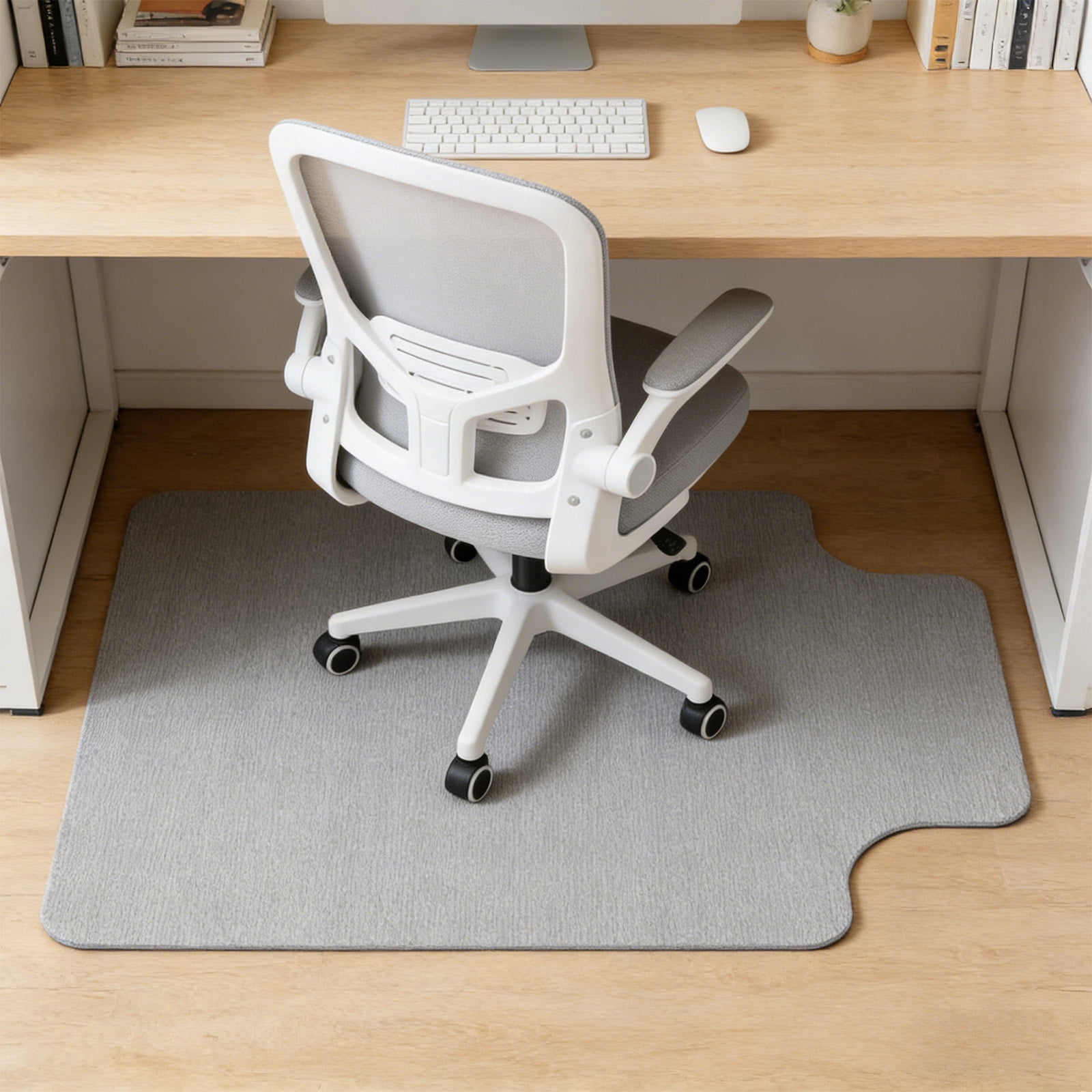
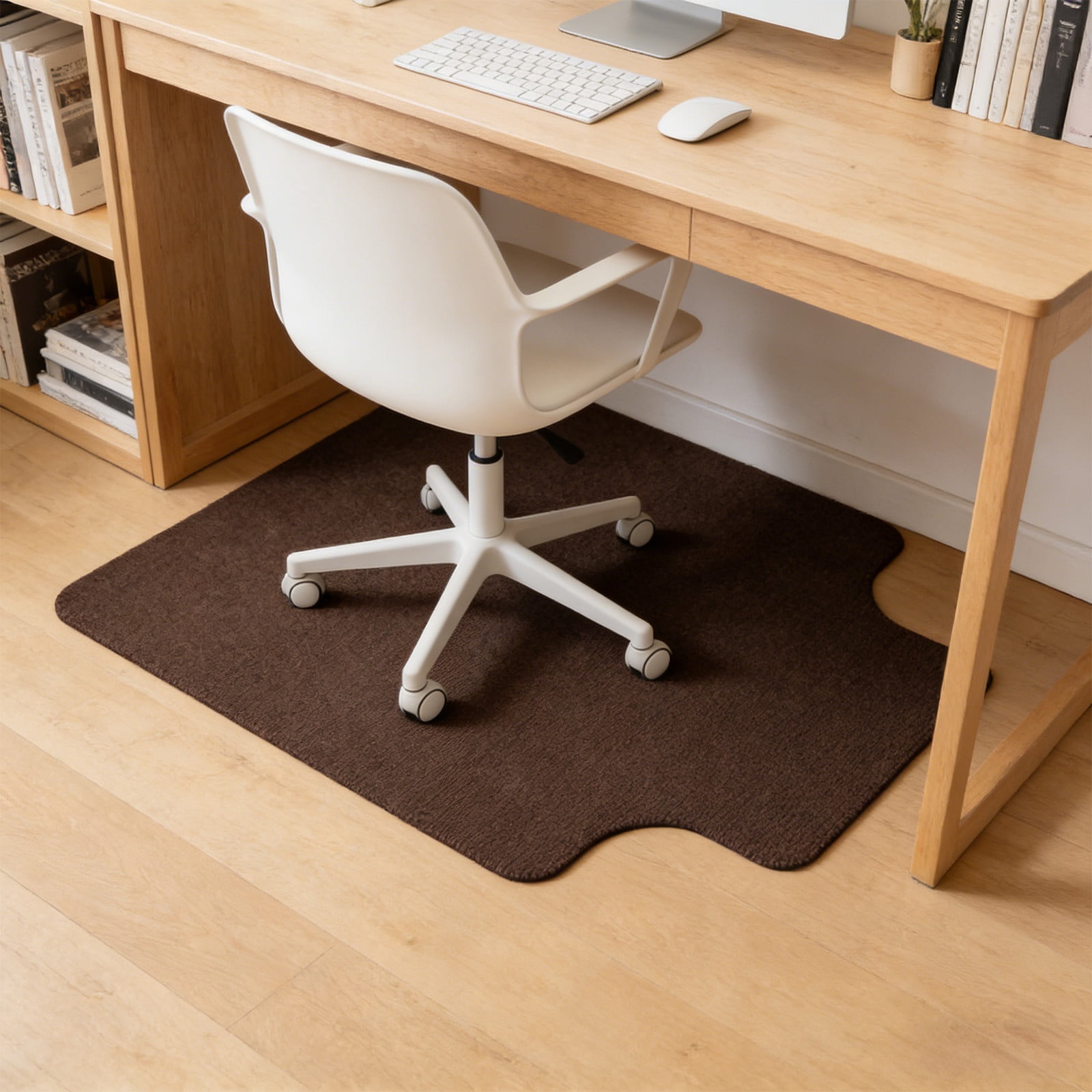
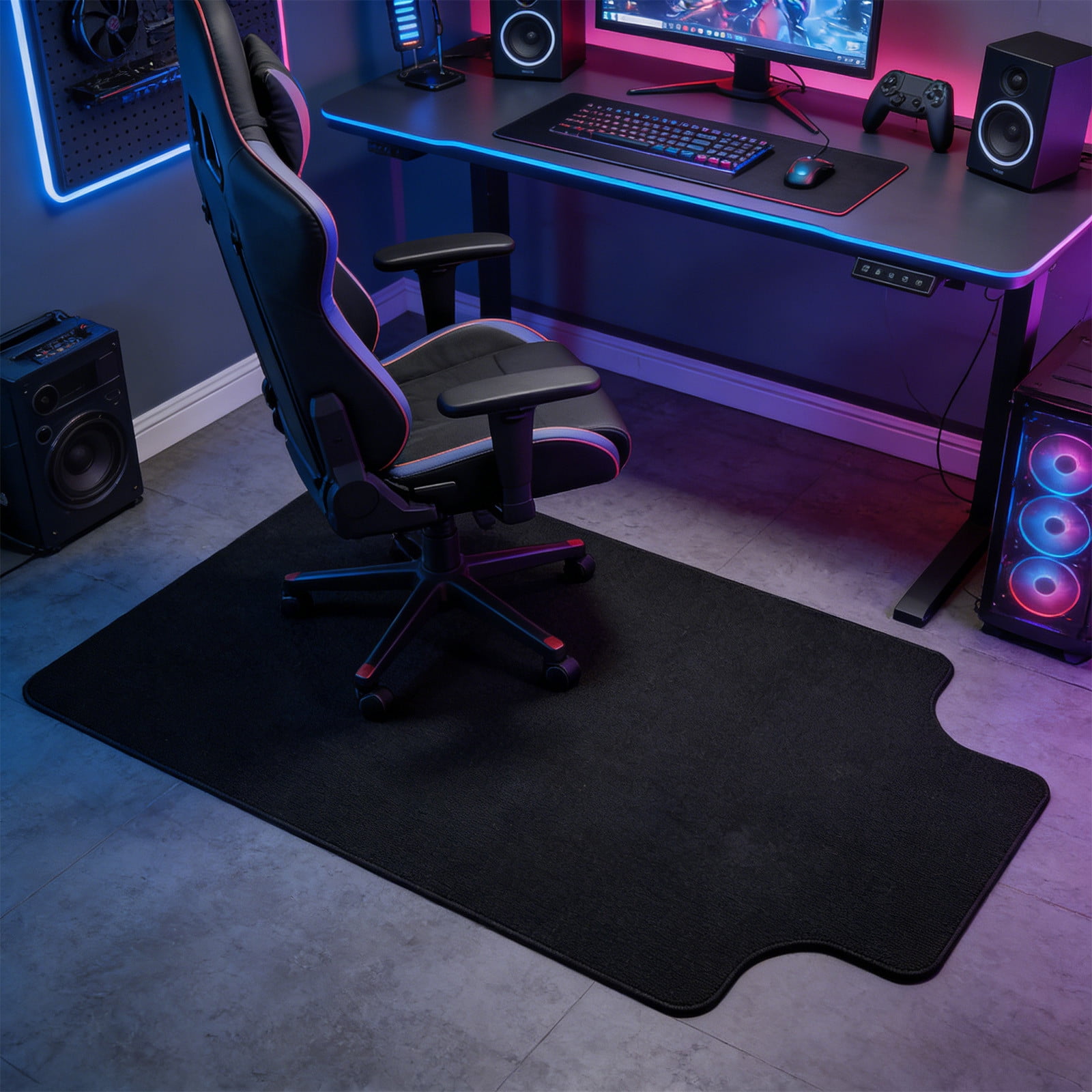
- Color options: Beyond basic black, manufacturers now offer gray, brown, and even custom colors to match office decor
Frequently Asked Questions About Rubber Office Chair Mats
Conclusion: Making the Right Choice for Your Workspace
Your office floor is more than just a surface—it's the foundation of your daily work environment. Protecting that foundation with a quality rubber office chair mat is an investment in your floor's longevity, your indoor air quality, and your daily comfort.
Rubber mats represent the evolution of floor protection technology. They address the shortcomings of traditional plastic mats—curling edges, chemical off-gassing, brittleness, and environmental impact—while adding benefits that plastic simply can't match. The natural elasticity of rubber, its superior grip, and its eco-friendly composition make it the smart choice for both home offices and corporate environments.
Final Recommendations by Workspace Type
Choose a 3/16" rubber mat with smooth underside, non-staining formula, and beveled edges. Look for GREENGUARD certification to ensure healthy indoor air quality.
Select a 1/4" rubber mat with carpet spikes and heavy-duty construction to withstand daily use by multiple users. Commercial-grade with reinforced edges is recommended.
Consider textured rubber mats that provide grip for rolling chairs while adding visual interest. Some manufacturers offer colors and patterns that complement creative environments.
Look for mats made from 100% recycled rubber or sustainably harvested natural rubber. Check for certifications like GreenGuard Gold or Cradle to Cradle.
Remember that a rubber mat isn't just protecting your floor—it's protecting you. By reducing rolling resistance, absorbing noise, and eliminating exposure to harmful chemicals, the right mat contributes to a healthier, more productive workspace. Take the time to measure your space correctly, choose the appropriate thickness for your floor type, and invest in quality that will last for years to come.