
The Foundation of a Professional Workspace: Why Your Floor Deserves a Gorilla Grip Mat
Imagine investing in a premium executive office chair—perhaps a high-back leather masterpiece with advanced lumbar support. You roll it into place, sit down, and... the chair slides out from under you every time you lean forward. The beautiful hardwood floor underneath is already showing faint scuff marks. This scenario is all too common, and it undermines both productivity and professionalism. A gorilla grip office chair mat is the unsung hero of a well-appointed executive suite. It’s not just a piece of plastic; it's a precision tool designed to anchor your workspace, protect your flooring investment, and provide a seamless, friction-free movement for your chair.
Unlike standard, flimsy chair mats that curl at the edges or slide around like a loose rug, gorilla grip variants utilize advanced backing technologies—think thousands of microscopic grippers or a high-traction coating—to lock the mat in place. This creates a stable platform that stays put, even on plush carpet or polished concrete. For the business leader who spends hours analyzing reports, taking video calls, or brainstorming with colleagues, the last distraction should be an unstable chair. This guide delves deep into the world of heavy-duty floor protectors, helping you select the perfect mat that combines functionality, durability, and a clear, professional aesthetic.
Decoding Gorilla Grip Technology: More Than Just a Sticky Backing
The term "gorilla grip" has become synonymous with superior holding power, but what does it actually mean for an office chair mat? It's a combination of material science and thoughtful design. Let's break down the core components that separate a true heavy-duty mat from a budget alternative.
1. The Backing: Micro-Grippers vs. Cleats vs. Non-Slip Coatings
The magic is on the underside. There are three primary ways manufacturers achieve that "no-budge" guarantee:
- Micro-Gripper Technology (for Hard Floors): Imagine thousands of tiny, flexible dots or ridges made from a soft, sticky polymer. These create immense surface friction against hardwood, tile, or laminate without leaving any residue. They prevent the mat from sliding, even under the vigorous movement of an active executive. Think of it like the grip on a racing tire—maximized contact for zero slip.
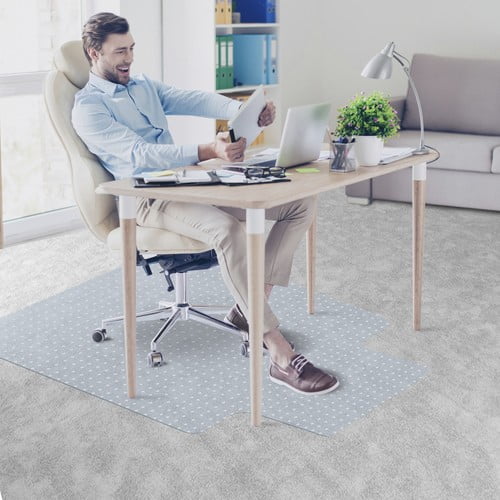
- Cleated Backing (for Carpets): For carpets, especially low to medium pile, a cleated backing is standard. These are small, pointed protrusions (cleats) that dig into the carpet fibers, anchoring the mat firmly. A true gorilla grip cleat is sharp enough to penetrate without damaging the carpet's backing, providing a secure hold that prevents the dreaded "mat creep" over time.
- Non-Slip PVC Coating: Some hybrid mats use a textured or waffle-patterned PVC coating. While effective on many surfaces, it may not offer the same long-term, heavy-duty hold as micro-grippers or aggressive cleats, especially on very smooth floors or deep carpets.
2. Material: The Backbone of Durability (Polycarbonate vs. Vinyl)
The base material determines the mat's lifespan, clarity, and resistance to cracking. This is a critical consideration for a high-end office.
Polycarbonate (The Executive Choice)
- Virtually Unbreakable: It flexes under pressure but returns to its original shape without cracking or breaking, even in cold temperatures.
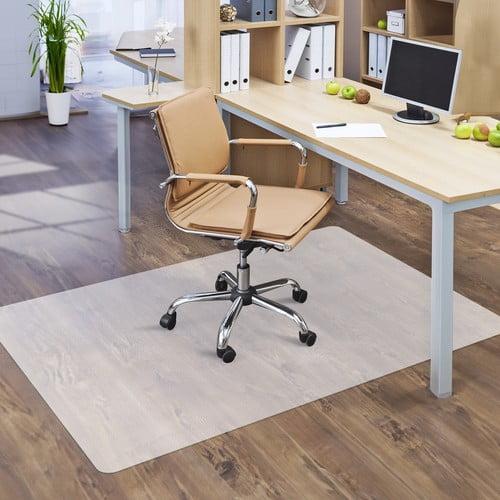
- Crystal Clarity: Maintains its transparency, allowing the beauty of your hardwood or patterned carpet to show through. It resists the yellowing that plagues vinyl.
- Durability: Lasts significantly longer (10+ years) and withstands the constant rolling of heavy executive chairs without warping.
- Eco-Friendly Option: Many polycarbonate mats are recyclable.
PVC/Vinyl (The Budget Option)
- Susceptible to Cracking: Can become brittle and crack in cold environments or under heavy, point load stress.
- Curling Edges: Prone to curling at the corners, creating a tripping hazard and an unkempt look.
- Yellowing/Clouding: Over time, exposure to light and temperature changes can cause vinyl to yellow or become cloudy.
- Shorter Lifespan: Typically needs replacement every 3-5 years in a high-use office.
Data Point: According to a 2023 survey by the Floor Covering Institute, 78% of facilities managers in commercial offices reported that polycarbonate mats outlasted their vinyl counterparts by a factor of 3:1, making them a more cost-effective long-term investment despite the higher upfront cost.
3. Mat Profile: Lip vs. Lipless
The shape of the mat's edge is a small detail with a big impact on usability.
- Lip (or Straight Edge): These mats have a straight edge designed to sit under your desk, often extending partially under your pedestal or credenza. The lip is meant to be stationary, keeping the mat perfectly positioned. This is ideal for traditional, fixed desk arrangements.
- Lipless (or Beveled Edge): All edges are beveled (sloped) to create a smooth, ramp-like transition from the floor to the mat. This is perfect for chairs that need to roll on and off the mat frequently, such as in a home office or a collaborative space. A beveled edge prevents the chair wheels from getting stuck and eliminates a tripping hazard.
4. Thickness and Weight Capacity
A true heavy-duty gorilla grip mat isn't flimsy. Thickness, measured in mils (thousandths of an inch), directly correlates with durability and the ability to support heavy loads. For executive offices housing big and tall chairs or users who shift weight frequently, a mat thickness of at least 100-120 mils (2.5-3mm) is recommended. Thicker mats provide a more stable rolling surface and resist indentation from chair casters over long periods.
Your Step-by-Step Guide to Choosing the Perfect Gorilla Grip Mat
Selecting the right mat is a straightforward process if you follow this systematic approach. Consider it an investment in your office's longevity and your daily comfort.
Step 1: Identify Your Floor Type (The Golden Rule)
This is non-negotiable. Hard floors (hardwood, tile, laminate, vinyl plank) require a mat with a smooth, micro-gripper backing. Carpeted floors require a mat with cleats. Using a cleated mat on hard floors can scratch them, and using a hard-floor mat on carpet will result in slipping. Measure your carpet pile height: low pile (commercial carpet) works with standard cleats; medium-to-high pile (plush residential) often needs a mat with longer, more aggressive cleats.
Step 2: Measure Your Workspace
Executive desks are often larger. Standard mat sizes (like 36"x48") might not suffice. You need a mat that allows your chair to roll freely without constantly falling off the edge. A good rule of thumb: the mat should extend at least 12-18 inches beyond the width of your typical work area on each side. Consider a large office chair mat or even a jumbo size if you have a sprawling L-shaped desk or frequently move between multiple work surfaces. Don't forget to account for the "lip" area under the desk.
Step 3: Match Material to Your Usage Intensity
- For the CEO or full-time executive (8+ hours/day): Invest in polycarbonate. Its unparalleled durability and clarity justify the cost. It will withstand decades of use without cracking or yellowing.
- For a part-time home office or moderate use: A high-quality PVC or vinyl mat can be a suitable and more economical choice. Just be prepared for a shorter lifespan.
Step 4: Consider Aesthetics and Additional Features
Do you want the mat to disappear, or do you prefer a textured surface? Clear polycarbonate is the go-to for showcasing beautiful flooring. For high-traffic areas where scratches might be a concern, a textured or matte-finish mat can help hide minor scuffs. Some premium mats also come with a UV-resistant coating to guarantee they won't yellow, even in sun-drenched corner offices.
Key Benefits at a Glance
Frequently Asked Questions About Gorilla Grip Office Chair Mats
Conclusion: Secure Your Workspace Foundation
Your executive office chair is a tool for leadership, but its effectiveness is compromised if its foundation is unstable. A gorilla grip office chair mat is more than a floor accessory; it's an essential component of a high-performance workspace. By investing in a mat with the right backing, material, and size for your specific floor type, you are protecting a significant financial investment in your office flooring and ensuring a smooth, distraction-free work experience.
Whether you opt for the crystal-clear durability of polycarbonate or the aggressive hold of heavy-duty cleats, the result is the same: a professional, safe, and efficient environment that reflects the quality of your work. Don't let a sliding mat undermine your authority. Choose the grip that lives up to its name and build your workspace on a foundation of stability.