
Why Your Workspace Needs a Clear Office Chair Mat
Imagine your office floor as the foundation of a house. It's the base upon which all your work happens. Now, picture a heavy executive chair with casters rolling back and forth on that foundation hundreds of times a day. Without protection, this constant motion is like a slow but steady erosion. A clear office chair mat acts as a shield, a transparent guardian that absorbs the wear and tear, keeping your beautiful carpet from matting down and your gleaming hardwood from getting scratched.
But a chair mat isn't just about protection. It's also about performance and ergonomics. A good mat provides a smooth, low-friction surface that allows you to glide effortlessly from one side of your desk to another. This ease of movement reduces the strain on your legs and back, contributing to a more dynamic and comfortable workday. Without it, you might find yourself wrestling with your chair on a high-pile carpet, a silent productivity killer.
In this guide, we'll roll out everything you need to know about selecting the perfect clear floor protector. We'll cut through the jargon, compare materials like polycarbonate and PVC, and help you find the ideal match for your floor type, style, and budget. Think of this as your roadmap to a better-protected, better-performing office.
The Anatomy of a Clear Chair Mat: Key Features Decoded
Choosing a chair mat can feel overwhelming, but it becomes simple when you break it down into its core components. Just like a car, the performance of a mat depends on what it's made of and how it's built. Here are the critical elements to consider:
1. Material Science: Polycarbonate vs. PVC vs. Glass
The material is the single most important factor determining your mat's durability, clarity, and feel. Think of it as choosing between a smartphone screen protector (thin and flexible) and a bank teller's window (thick and rigid). Here’s the breakdown:
- Polycarbonate (The Premium Choice): Often referred to as "bulletproof" plastic, polycarbonate is the top-tier material for chair mats. It is incredibly durable, resistant to cracking and yellowing over time, and remains flexible even in cooler temperatures. If you want a mat that will last a decade and stay crystal clear, polycarbonate is your best bet. It's the Lexan of chair mats.
- PVC / Vinyl (The Economical Choice): This is the most common material for budget-friendly mats. PVC is flexible and gets the job done, but it has drawbacks. It's more prone to cracking, especially in cold rooms or on thick carpet. Over time, it can also become cloudy or yellow with exposure to UV light. It's a solid entry-level option, but it's often a "buy it for now, not forever" product.
- Tempered Glass (The Modern Statement): For a truly unique and sophisticated look, tempered glass mats are unparalleled. They offer a perfectly smooth, hard surface that is a dream to roll on. They are incredibly durable and resistant to scratches and cracks. A 5mm thick glass mat can support hundreds of pounds. However, they are heavy, more expensive, and require a perfectly level floor.
Analogy: Choosing a mat material is like choosing flooring for your home. PVC is like laminate – affordable and practical. Polycarbonate is like luxury vinyl plank – durable, waterproof, and long-lasting. Tempered glass is like polished concrete – modern, sleek, and a conversation starter.
2. Floor Type Compatibility: Carpet, Hardwood, or Tile?
Using the wrong mat on your floor is like wearing soccer cleats on a basketball court – it just doesn't work and can cause damage. The underside of the mat is engineered for a specific surface.
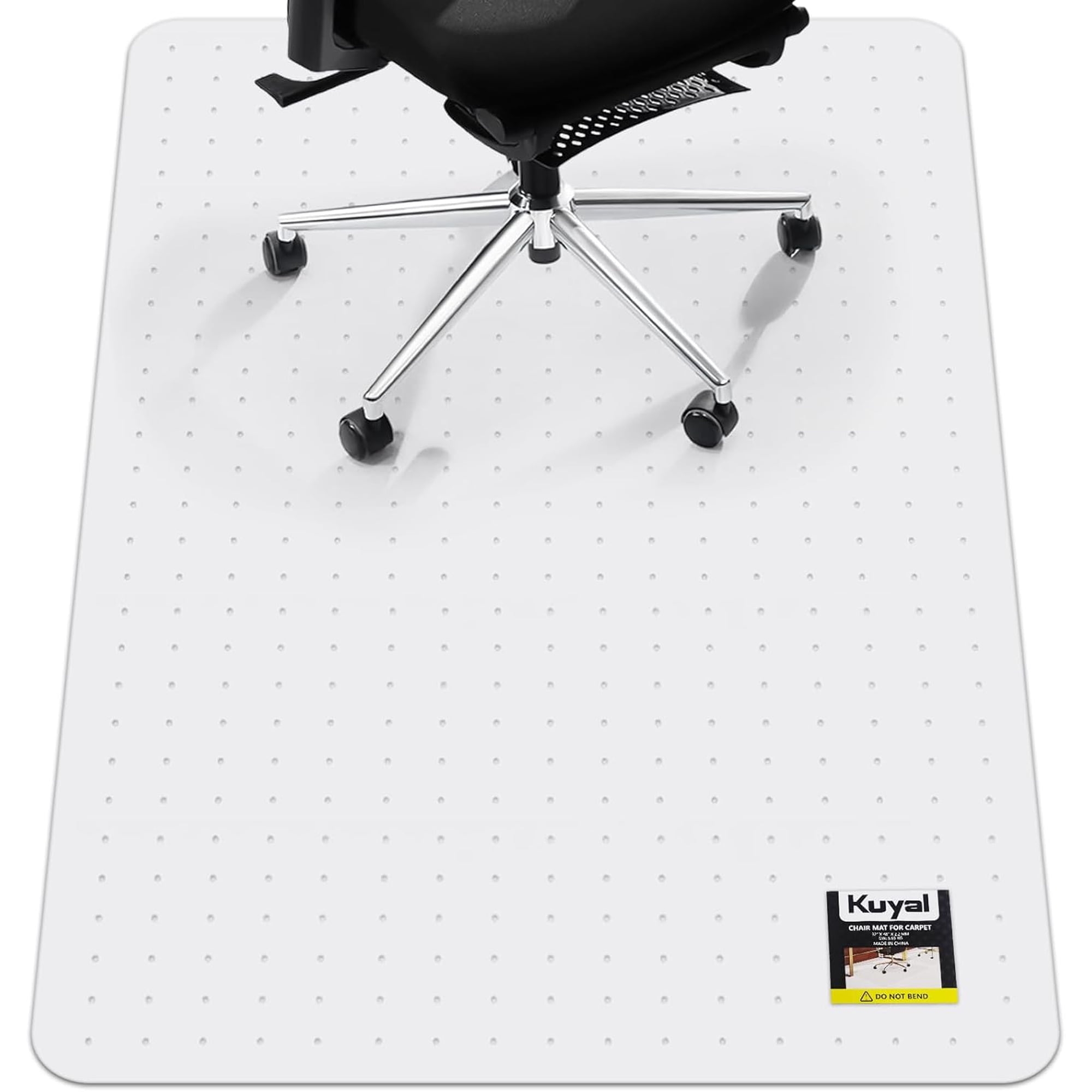
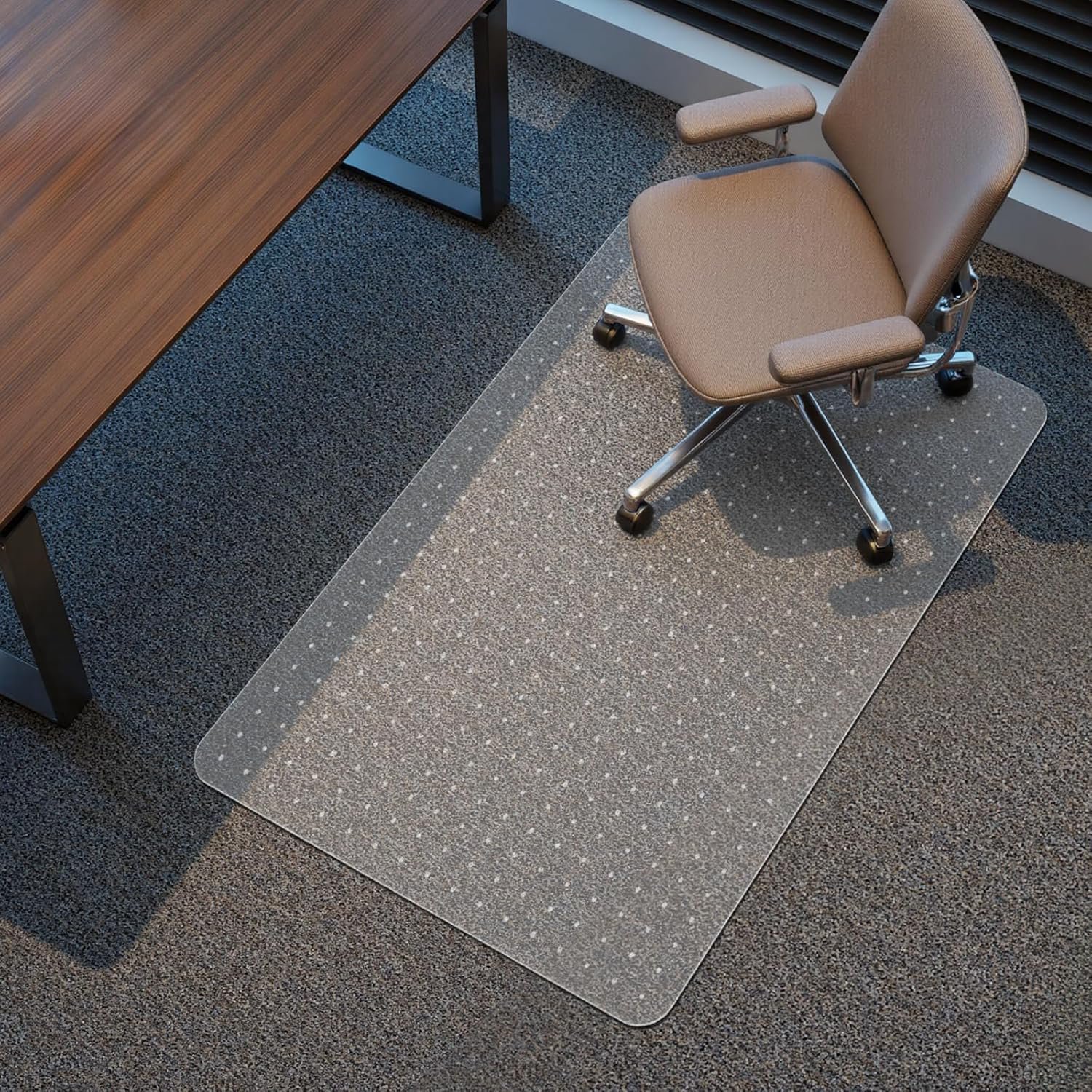
- Mats for Carpet: These mats feature a bottom surface covered in cleats or spikes. These grippers dig into the carpet fibers, anchoring the mat firmly in place so it doesn't slide around as you move. For low-pile commercial carpet, standard cleats work fine. For thick, plush residential carpet, you'll need a mat with deeper, more aggressive cleats to get a secure grip.
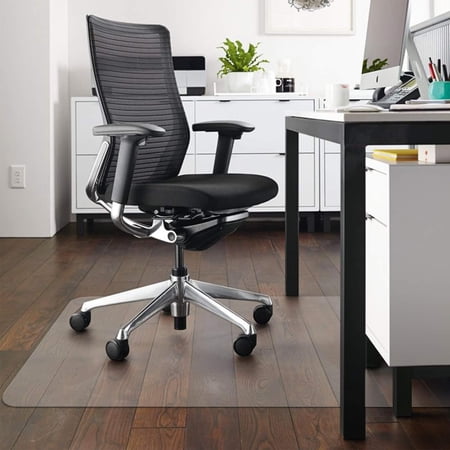
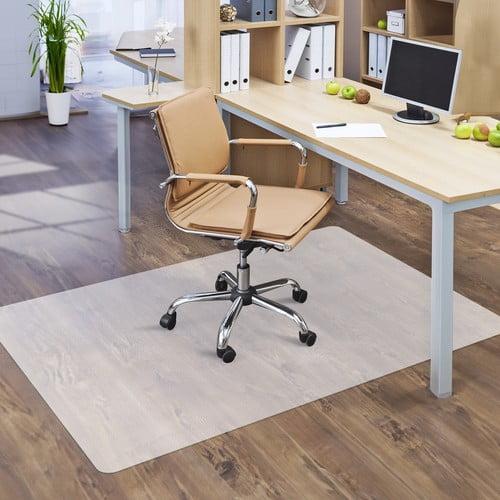
- Mats for Hard Floors: A mat for hardwood, tile, or laminate must have a completely smooth or textured non-slip underside. This provides grip without scratching the delicate floor surface. Some hard floor mats use a gel-like backing for a secure hold. Never use a carpet mat with cleats on a hard floor, as the cleats will act like sandpaper and cause permanent damage.
3. Lip Style: Straight vs. Lipped
The "lip" is the part of the mat that extends under your desk. This seemingly small feature has a big impact on ergonomics and usability.
- Straight Edge Lip: This is a simple, flat extension. It's best when your chair is pushed completely under the desk, as it provides a smooth surface for your casters to roll onto. It's a standard, functional choice.
- Lipped Edge (or Beveled Edge): This feature is a game-changer for ergonomics. The edge of the mat is angled or curved down to create a ramp. This prevents the chair's casters from getting stuck on the edge of the mat and makes it much easier to roll on and off. It also creates a smooth transition, reducing tripping hazards.
Did You Know? According to a study by the Facility Design and Management journal, using an ergonomically designed chair mat with a lipped edge can reduce the force needed to move from a standing to a sitting position by up to 30%, reducing strain on the lower back.
4. Size and Shape: Finding Your Perfect Fit
A mat that's too small will restrict your movement, while one that's too large can overwhelm a small home office. Consider your workspace layout.
- Standard Rectangle: The most common and versatile shape. Ideal for L-shaped or standard rectangular desks where your chair moves in a wide arc.
- Keyhole / Contoured Shape: These mats have a curved cutout that fits perfectly under a U-shaped or wrap-around desk. They protect the floor in the exact area where your chair moves without wasting material under the desk where you don't need it.
- Measurements: As a rule of thumb, you want at least 24-30 inches of mat behind your chair's resting position to allow for full recline and movement. Measure the width of your desk and the area where you move to ensure full coverage.
Frequently Asked Questions About Clear Office Chair Mats
Conclusion: Rolling Towards a Smarter Workspace
A clear office chair mat is an investment in the longevity of your flooring and the quality of your workday. It's a simple addition that delivers compound benefits: protecting your home or office, enabling smoother movement, and even contributing to better ergonomics.
Remember the key takeaways from our guide:
- Match the material to your needs: Choose polycarbonate for longevity and clarity, PVC for affordability, and glass for a premium look.
- Never mix floor types: A carpet mat belongs on carpet, and a hard floor mat belongs on hard floors. This simple rule prevents damage and ensures the mat stays put.
- Don't underestimate the lip: A beveled or lipped edge is a small feature with a big ergonomic payoff, making movement easier and safer.
- Measure twice, buy once: Ensure your mat is large enough to accommodate your chair's full range of motion.
By keeping these factors in mind, you'll be well-equipped to find the perfect transparent foundation for your workspace, allowing you to focus on what matters most—your work. Explore the top-rated clear office chair mats below and give your floors the protection they deserve.