
Why Standard Chairs Fail Large Persons & What Really Works
Imagine trying to fit into a suit that's two sizes too small—the fabric strains, the buttons pull, and you're constantly adjusting. That's exactly what happens when a larger individual sits in a standard office chair. The armrests dig in, the seat edges cut off circulation, and the lumbar support hits the middle of your back instead of the curve of your spine. The most comfortable office chair for a large person is not merely "wider"—it's a complete re-engineering of support, materials, and proportions.
Ergonomic Reality Check: According to the National Institute for Occupational Safety and Health (NIOSH), sitting for extended periods in ill-fitting seating increases pressure on the intervertebral discs by up to 40%. For large persons, this risk is compounded by higher forces. A dedicated heavy-duty chair with proper ergonomics can reduce spinal loading and improve circulation significantly.
Anatomy of a Truly Comfortable Heavy-Duty Chair
Let's break down the essential components that define the most comfortable office chair for a large person. It's not one single feature, but a symphony of design choices that accommodate size, weight, and posture.
- Reinforced Steel Frame: The skeleton of the chair. Look for chairs that specify a steel frame rather than plastic or wood composite. This prevents twisting or creaking over time.
- Industrial-Grade Gas Lift (Class 4 or 5): The pneumatic cylinder that raises the seat. Class 3 is standard for 250 lbs; for large persons, a Class 4 (up to 400 lbs) or Class 5 (500+ lbs) is non-negotiable for safety and smooth height adjustment.
- Extra-Wide & Deep Seat Cushion: A seat pan width of 22 to 30 inches accommodates hips comfortably. Depth should be at least 20 inches with a waterfall edge to prevent pressure behind the knees.
- High-Resiliency (HR) Foam: Standard foam collapses under higher weight. HR foam with a density of 2.5 lb/ft³ or more retains its shape and provides "lift" even after hours of sitting.
- Taller & Wider Backrest: The backrest should support the entire back, including the shoulder blades. Look for heights of 28 inches or more from the seat.
Material Science: What Upholstery Holds Up Best?
The choice of material directly impacts comfort, breathability, and longevity. Here’s a breakdown tailored for larger individuals.
🏆 Commercial-Grade Fabric
- Durability: High double-rub count (50,000+ Wyzenbeek) resists wear.
- Breathability: Natural fibers wick moisture, reducing heat buildup.
- Support: Less slippage than leather; you stay positioned.
- Best for: All-day sitting, warm climates.
👑 Premium Bonded/Top-Grain Leather
- Aesthetics: Professional, executive look.
- Maintenance: Easy to wipe clean.
- Conformity: Softens and molds over time.
- Best for: Executive offices, cooler environments.
⚠️ Mesh (Use with Caution)
- Stretch Risk: Standard mesh can sag permanently under higher weight.
- Pressure Points: May not distribute weight evenly.
- When it works: Only if it's a heavy-duty, tightly woven mesh specifically rated for 300+ lbs.
Beyond Weight Capacity: The "Goldilocks" Fit for Large Frames
A common mistake is focusing solely on weight limits. For the most comfortable office chair for a large person, the dimensions must match your body proportions.
| Body Measurement | Why It Matters | What to Look For |
|---|---|---|
| Hip Width | Prevents squeezing and pressure on thighs. | Seat width at least 22", preferably 24"-28". |
| Thigh Length | Ensures proper support without cutting off circulation. | Seat depth adjustable 18"-22", with waterfall front. |
| Torso Length | Supports upper back and shoulders. | Backrest height >28", with adjustable lumbar. |
| Shoulder Breadth | Armrests should align naturally. | Width between armrests at least 20". |
Step-by-Step Selection Guide for Large Persons
Step 1: Verify the Weight Rating & Certification
Don't just trust the marketing. Look for the BIFMA (Business and Institutional Furniture Manufacturers Association) certification. A BIFMA-rated chair for "heavy duty" has passed rigorous tests. Aim for a chair rated at least 100 lbs more than your current weight to ensure a safety margin and long-term resilience.
Step 2: Test the Cushion "Recovery"
Press firmly into the seat cushion. Does it spring back immediately, or does it leave an indent? High-density foam should feel firm but supportive. If it feels like a marshmallow, it will likely bottom out within months. The most comfortable office chair for a large person uses foam that distributes weight, not just softness.
Step 3: Check the Base and Casters
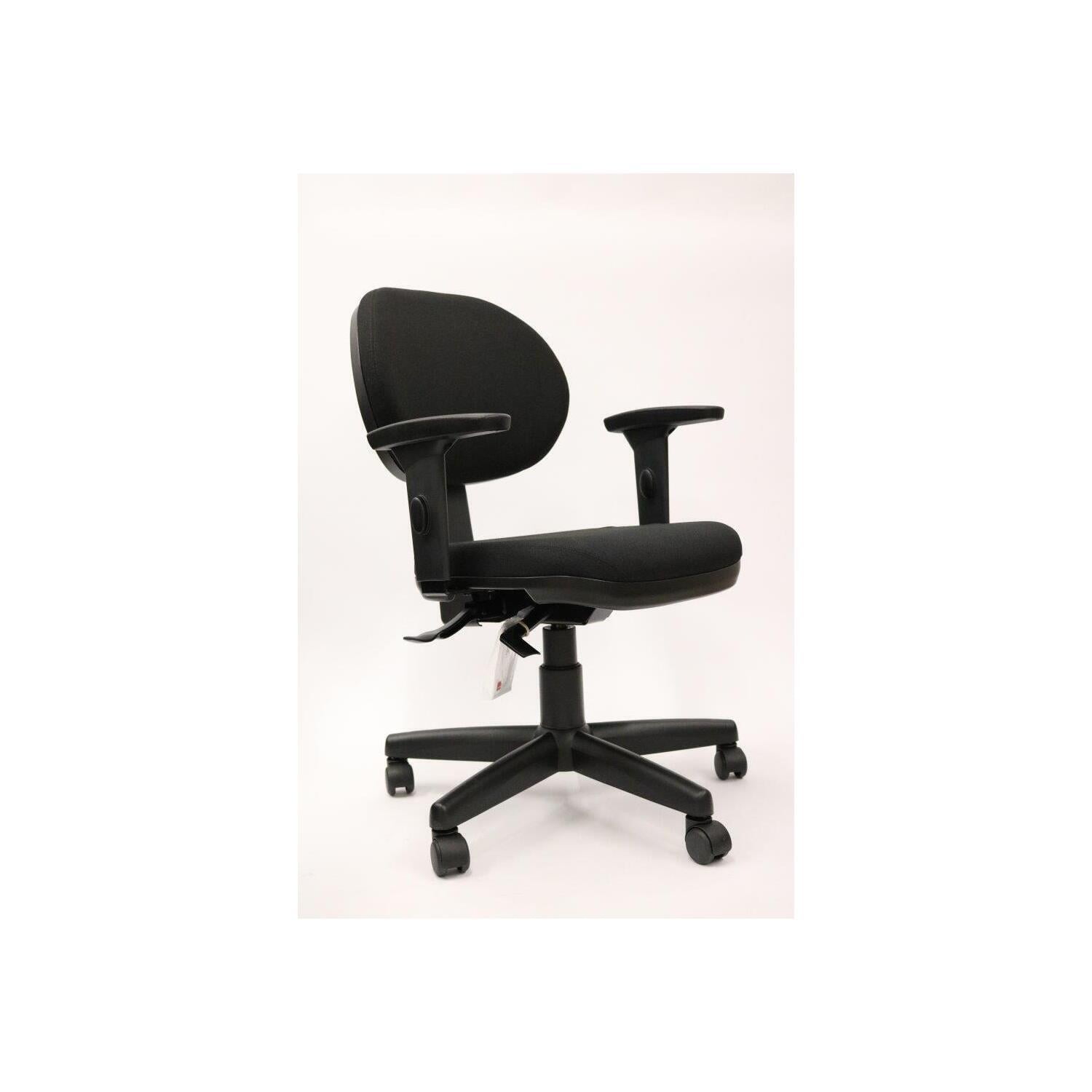
A sturdy nylon or aluminum five-star base is critical. For casters, standard hard wheels can damage floors; look for "dual-wheel" casters with a soft tread for carpet, or polyurethane for hardwood, ensuring they are rated for the total weight (chair + person).
Step 4: Prioritize Adjustable Lumbar and Armrests
Lumbar support must be adjustable in height and depth to fit the curve of your spine. Armrests should be 4D adjustable (up/down, forward/back, swivel in/out) to provide support without lifting your shoulders.
Why "One Size Fits All" Fails: Data on Seating Discomfort
According to a study published in the journal Ergonomics, individuals with a BMI over 30 reported significantly higher rates of thigh and buttock pain when using standard office chairs compared to their average-weight counterparts. The study highlighted that pressure distribution is less uniform on standard foam, leading to ischemia (lack of blood flow) in soft tissues. The solution, as identified by researchers, is the use of contoured, high-resilience foam on a wider platform—exactly what a purpose-built heavy-duty chair provides.
Investment vs. Expense: The True Cost of a Cheap Chair
It can be tempting to save money with a $200 chair that claims "supports 300 lbs." However, these often use thinner metal in the gas lift or lower-density foam. Within six months, you might face a sinking cushion, a wobbly base, or even a catastrophic failure. The most comfortable office chair for a large person is an investment in your health and productivity. Spending $600-$1200 upfront for a chair with a 10-year frame warranty often proves cheaper than replacing a $300 chair every two years, plus the added cost of doctor visits for back pain.
Frequently Asked Questions: Comfort for Large Persons
Conclusion: Your Search for the Perfect Fit Ends Here
Finding the most comfortable office chair for a large person is a journey of understanding your own body's needs and the engineering behind quality seating. It's about rejecting flimsy construction and embracing chairs built with reinforced frames, high-density foam, and thoughtful ergonomics. Whether you lean towards plush fabric or executive leather, prioritize adjustability and a weight capacity that gives you a safety buffer.
Remember, the right chair is not a luxury—it's a tool that enables you to work without distraction or discomfort. Use the checklist above, test chairs when possible, and invest in a model that promises years of reliable support. Your back, your posture, and your productivity will thank you.