
Why the Right Castors for Office Chairs Matter More Than You Think
Imagine trying to steer a car with flat, square tires. That is exactly what it feels like to use an office chair with worn-out or incorrect castors. The humble wheels under your chair are the unsung heroes of your workspace mobility. They determine how easily you move from your desk to a filing cabinet, how much noise you make, and most importantly, whether your beautiful hardwood floors will end up with permanent scratches. Upgrading your castors for office chairs is one of the most cost-effective ergonomic and protective upgrades you can make.
Ergonomic Insight: A study by the Human Factors and Ergonomics Society found that workers using chairs with high-resistance or sticking castors exerted up to 30% more effort during lateral movements. This unnecessary strain, accumulated over a day, can contribute to shoulder and back fatigue. Smooth-rolling castors reduce this micro-strain, allowing for effortless movement and better posture.
Understanding the Anatomy of an Office Chair Castor
To choose the right replacement, you need to understand a few key parts. Think of a castor like a car's suspension system — it has specific components designed for load and movement.
- The Wheel Material: This is the tire. It can be hard nylon (common on cheap chairs), soft polyurethane, rubber, or even felt. The material dictates floor safety and noise.
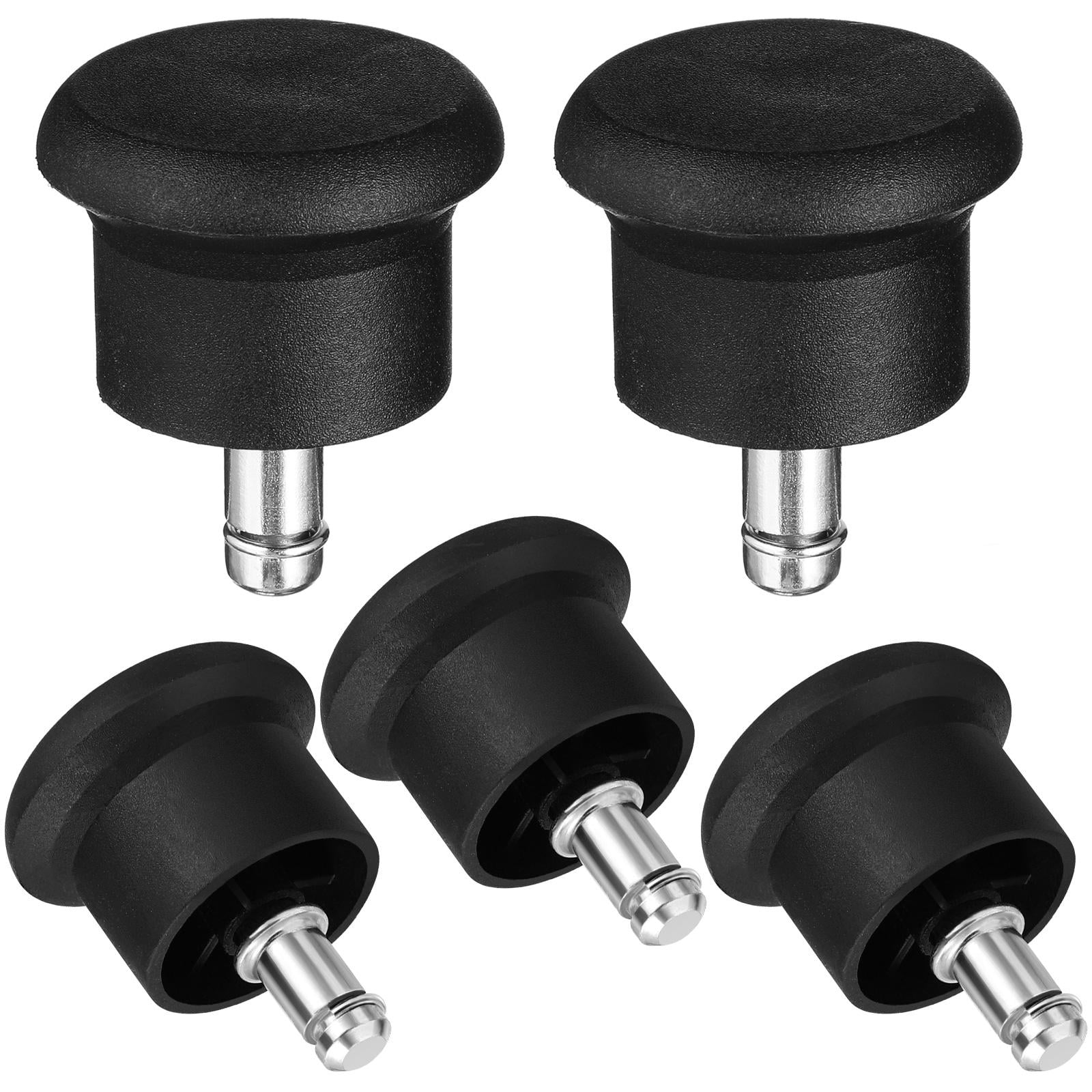
- The Stem: This is the axle that connects the wheel to your chair base. Stems come in two primary types: grip ring stems (which have ridges to hold tight) and core-insert stems (a smooth stem that fits into a socket). The diameter and length are critical for compatibility.
- The Housing / Yoke: The fork that holds the wheel and allows it to swivel 360 degrees. A robust housing, often made of metal, is a sign of a heavy-duty castor.
- The Bearing: The internal mechanism that allows the wheel to spin. High-quality castors use ball bearings for a smoother, quieter roll.
Types of Castors Based on Floor Surface
Choosing the wrong wheel for your floor is like wearing cleats on a marble floor — it simply doesn't work. Here is a breakdown of the best castors for office chairs by floor type.
1. Castors for Hardwood, Laminate, and Tile Floors
If you have hard surfaces, the standard hard plastic wheels that come with most chairs are your enemy. They act like tiny chisels, grinding dirt into the finish and leaving permanent scuff marks. The solution is a wheel made of a softer material.
- Polyurethane Castors: These are the gold standard. They have the smoothness of plastic but the gentle, non-marking grip of rubber. Look for terms like "rollerblade style wheels" — these typically use high-quality polyurethane that provides a silent, gliding motion across wood and tile.
- Rubber Castors: Very gentle on floors and offer great grip. However, on smooth surfaces, they can sometimes feel a little "sticky" or require more effort to start rolling compared to polyurethane.
- Felt Castors: These are the ultimate in floor protection. They are virtually scratch-proof and extremely quiet. However, they are not ideal for thick carpets and can wear out faster than polyurethane.
2. Castors for Carpeted Floors
On carpet, your wheels need to dig in slightly to gain traction, otherwise you'll feel like you're skating on loose sand.
- Standard Hard Nylon Castors: Believe it or not, those basic hard wheels you want to replace are often the best performers on low-pile office carpet. They have the rigidity to push through the fibers.
- Dual-Wheel Castors: These distribute the chair's weight over a wider area, preventing deep indentations in plush carpet and making it easier to roll.
- Braking Castors: For thick, plush carpet, some castors include a locking mechanism. This is useful if your chair tends to drift when you stand up, though they are less common for general office use.
3. Heavy-Duty Castors (for Big & Tall Chairs)
If your chair is rated for 300 lbs or more, the castors need to be built like a truck axle. Standard wheels can buckle or crack under sustained high weight. Heavy-duty castors feature:
- Metal Housings: Instead of plastic yokes that can snap.
- Larger Wheel Diameter: A bigger wheel rolls more easily over carpet and obstacles, distributing the load more effectively.
- Reinforced Bearings: To handle the extra rotational force without seizing up.
Step-by-Step Guide: How to Choose and Install Replacement Castors
Ready to upgrade? Follow this simple guide to ensure you get the perfect fit and enjoy a smooth transition.
- Step 1: Identify Your Stem Type and Size. This is the most crucial step. Tilt your chair and look at the post going into the wheel. Measure the diameter of the stem with a caliper or ruler. The most common size is 7/8" (22mm) for grip ring stems, but 10mm and 11mm are also common, especially for office chairs from Europe or Asia. Also, measure the length of the stem from the base of the wheel housing to the tip.
- Step 2: Determine Your Floor Type and Desired Features. Refer to the sections above. Are you on hardwood? Go for polyurethane. Low-pile carpet? Hard nylon might work, but quiet polyurethane is still a fantastic upgrade. Do you want wheels that lock? Search for "locking castors."
- Step 3: Check the Weight Capacity. Add up the weight of the heaviest person using the chair plus the chair itself. Ensure the castors you are buying have a combined weight capacity that meets or exceeds that total. A set of five castors typically shares the load.
- Step 4: Remove the Old Castors. With the chair upright, grip one wheel firmly and pull straight out while rocking it side-to-side. It often requires a surprising amount of force. If they are stuck, use a flathead screwdriver to gently pry between the stem and the chair leg. For core-insert stems, you may need to push a release tab on the wheel housing.
- Step 5: Install the New Castors. Align the stem with the socket in the chair leg and push firmly until you hear or feel it click into place. It should be snug. Do not hammer them in, as this can damage the stem or chair base. A firm push is all that's needed.
Signs It's Time to Replace Your Office Chair Castors
Like tires on a car, castors wear out. Here are the tell-tale signs that you need new castors for office chairs:
- The "Squeak Symphony": Every movement is accompanied by annoying squeaks or grinding noises.
- Visible Damage: Cracks in the wheel, flattened spots, or hair/lint wrapped so tightly around the axle that it's seized the wheel.
- Floor Damage: You notice new scuff marks or scratches on your floor. This is a clear sign the hard plastic is acting like sandpaper.
- Poor Mobility: The chair feels "sticky" and requires significant effort to push away from your desk. You find yourself leaning and straining just to move a few inches.
- Wobbling: If the housing is bent or the stem is loose, the chair will feel unstable.
Performance Comparison: Castor Materials at a Glance
| Material | Best Floor Type | Noise Level | Durability | Floor Protection | Rolling Effort |
|---|---|---|---|---|---|
| Hard Nylon/Plastic | Low-pile Carpet | High (squeaky) | Good | Poor (scratches hard floors) | Medium |
| Polyurethane | Hardwood, Tile, Laminate, Carpet | Low (silent) | Excellent | Excellent (non-marking) | Low (effortless) |
| Rubber | Hardwood, Tile (not ideal for thick carpet) | Low | Very Good | Very Good | Medium-High (sticky on smooth floors) |
| Felt | Hardwood, Tile (only) | Very Low | Fair (wears down) | Superior | Low |
Frequently Asked Questions About Castors for Office Chairs
Conclusion: Small Upgrade, Big Difference
Your office chair is your command center, and its mobility is essential for an efficient workflow. Whether you are protecting a brand-new hardwood floor, seeking a silent glide during late-night work sessions, or need the robust support of heavy-duty wheels, upgrading your castors for office chairs is a simple, affordable fix with immediate benefits. By understanding your floor type, measuring your stem correctly, and choosing a quality material like polyurethane, you can transform a sticky, noisy chair into a smooth-rolling productivity machine. Don't let worn-out wheels slow you down — make the upgrade today.