
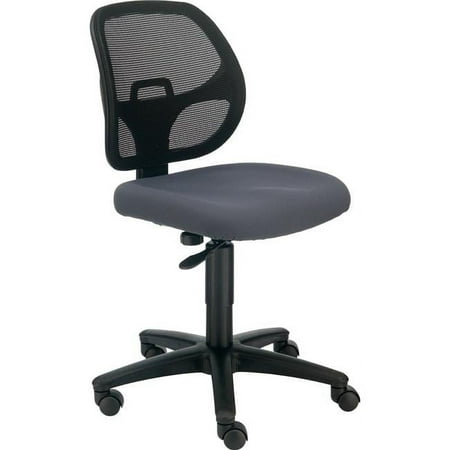
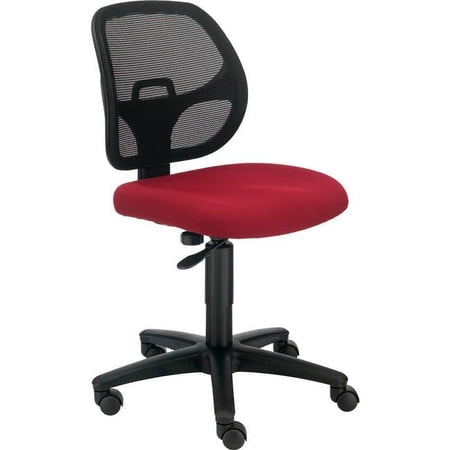
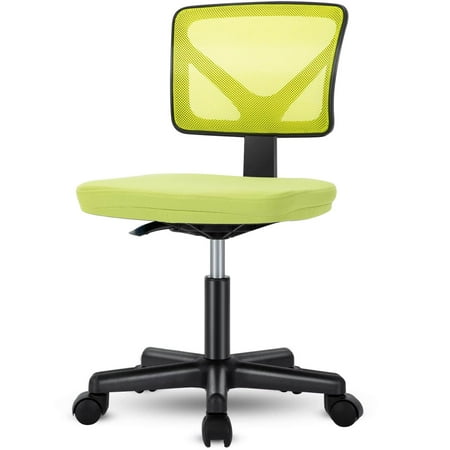
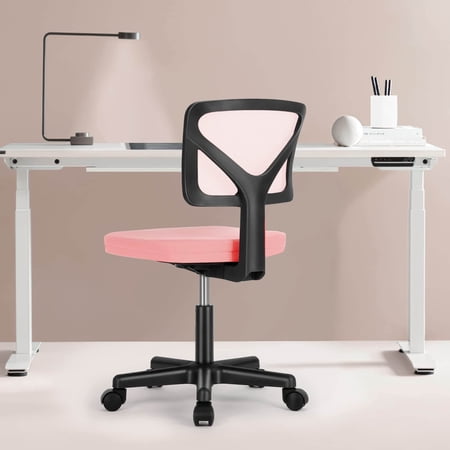
Why Consider an Armless Mesh Office Chair?
Imagine an office chair that feels less like a throne and more like a supportive, breathable extension of your body. That's the promise of an armless mesh office chair. It strips away the bulk, literally, to offer a seating experience focused on freedom, airflow, and fit. Whether you're navigating a cramped apartment workspace or simply despise the confinement of traditional armrests, this chair style is gaining momentum for good reason.
Ergonomic Insight: A study from the National Institutes of Health suggests that chairs promoting "active sitting" can increase core muscle activation by up to 15%. Armless designs naturally encourage slight positional changes, which can boost circulation and reduce fatigue.
The Unseen Advantages of Going Armless
While leather executive chairs project authority, an armless mesh chair projects agility and practicality. Its benefits go beyond just saving space. Let's break down why this might be the smartest chair you'll ever own.
1. Freedom of Movement: The "Active Sitting" Effect
Think of a drummer sitting on a stool. They need freedom to move, twist, and engage their core. An armless chair offers a similar dynamic. Without armrests blocking your sides, you can easily:
- Twist to reach side drawers or files without restriction.
- Sit cross-legged if that's your comfort zone (a common desire for many home workers).
- Shift your posture frequently, which helps distribute pressure and keeps your spine lubricated.
- Pull yourself closer to the desk for precise tasks like writing or detailed design work.
This fluidity is a game-changer for creative professionals, gamers who use low sensitivity, or anyone who doesn't sit like a statue.
2. Breathability Redefined: The Mesh Factor
Combine the armless design with a mesh back and seat, and you've created the ultimate cooling station. Unlike foam and leather which trap heat, mesh is like a net for your back. It allows constant airflow, preventing that sticky, sweaty feeling during long work sprints. According to textile engineers, high-quality mesh can wick away moisture 40% faster than standard upholstery. For warm climates or unairconditioned home offices, this is a non-negotiable feature.
Mesh Advantages
- Cooling: Maximum breathability.
- Flexibility: Conforms to your back.
- Durability: Resists sagging better than low-grade foam.
- Clean: Less likely to harbor dust mites (great for allergies).
What to Watch For
- Padding: Ensure the seat has enough cushion.
- Tension: Mesh should be firm, not saggy.
- Edge Comfort: Check for a "waterfall" front to avoid thigh pressure.
3. The Space-Saving Superpower
In an era where square footage is premium, an armless mesh office chair is a spatial genius. Without protruding armrests, it can be easily tucked completely under a desk when not in use, freeing up floor space. It also visually "shrinks" in a small room, making the area feel less cluttered. For shared workspaces or home offices doubling as guest rooms, this invisibility trick is pure gold.
4. Universal Fit: One Size Doesn't Fit All, But It Fits More
Armrests are often designed for an "average" body type. For broader individuals, they can pinch. For petite users, they're often too wide to be useful. By removing the arms, the chair accommodates a wider range of body shapes. The focus shifts entirely to the seat and back support, which are the true determinants of comfort. This makes armless chairs an excellent choice for households where multiple people use the same workspace.
Armless vs. Traditional Executive Chairs: A Snapshot
| Feature | Armless Mesh Chair | Traditional Executive Chair |
|---|---|---|
| Mobility | High (unrestricted arm movement) | Moderate (arms can hinder) |
| Breathability | Excellent (mesh) | Variable (often leather, can be warm) |
| Space Footprint | Small / tuckable | Large / prominent |
| Posture Style | Active, encourages movement | Static, supportive but can promote stillness |
| Best For | Small spaces, dynamic tasks, warm climates | Corner offices, formal settings, long static meetings |
5. Debunking the Myth: "No Arms = No Support"
This is the biggest misconception. Lumbar support is not tied to armrests. A quality armless mesh chair will have built-in, often adjustable, lumbar support within the mesh back frame. The mesh itself provides firm, yet flexible, support that cradles your spine's natural S-curve. The absence of arms simply shifts the support responsibility to where it matters most: your back and seat. Think of it like a high-end car seat — the best support comes from the backrest and cushion, not the center armrest.
Ultimate Selection Guide: Finding Your Perfect Armless Mesh Chair
Ready to make the leap? Here’s a step-by-step guide to ensure you pick a winner.
Step 1: Assess Your Mesh Quality
Not all mesh is created equal. Look for a tight, resilient weave. Press your hand into the backrest; it should give slightly but spring back firmly. High-quality mesh (like that used in Aeron-style chairs) provides gradient tension — softer where you need it, firmer where you need support. Avoid mesh that feels loose or flimsy.
Step 2: Prioritize Seat Comfort
Since you're losing armrests, the seat becomes your primary comfort zone. Look for:
- High-density foam: At least 2-3 inches thick.
- Contoured shape: A slight "bucket" helps keep you centered.
- Waterfall edge: The front of the seat should curve down gently to prevent cutting off circulation to your legs.
Step 3: Check for Lumbar Adjustability
Fixed lumbar might work if you're lucky, but adjustable is king. Look for chairs with a knob or lever that lets you increase or decrease the lumbar curve's depth. This ensures the support hits your lower back exactly where you need it, regardless of your height.
Step 4: Test the Mechanism & Base
An armless chair should still have robust mechanics. A synchro-tilt mechanism that allows the seat and back to move together is excellent. Ensure the chair has a sturdy 5-star base (nylon or polished aluminum) and smooth-rolling casters suitable for your floor type (hardwood or carpet).
Material Deep Dive: Mesh Types
While all mesh breathes, there are variations:
- Polyester Mesh: Most common, durable, and affordable. Good elasticity.
- Nylon Mesh: Often stronger and more resistant to abrasion. Can feel slightly stiffer.
- Spacer Mesh (3D Mesh): A three-layer construction with a breathable core. Excellent for pressure distribution and maximum airflow. Often found in premium chairs.
Frequently Asked Questions About Armless Mesh Office Chairs
Conclusion: Is the Armless Mesh Chair Your Perfect Match?
An armless mesh office chair isn't about sacrificing support for style; it's about redefining what support means. It’s a chair that supports your need to move, your need to stay cool, and your need to fit your workspace, not the other way around. By focusing on the essentials—a breathable, ergonomic back and a comfortable, supportive seat—it delivers a unique blend of functionality and freedom.
If your workday feels like a series of static poses you're forced to hold, it might be time to break free. Explore the models above, prioritize the features we discussed, and experience the difference that less structure can make. Your back—and your comfort—will thank you.