
Why “Expensive” Often Means “Smarter” in Ergonomic Seating
Imagine wearing a tailored Italian suit versus an off‑the‑rack jacket. The expensive one fits your curves perfectly, moves with you, and lasts for decades. The same philosophy applies to the expensive ergonomic office chair. These chairs are designed by teams of physiotherapists, material engineers, and industrial designers. They don’t just hold you — they actively support your body’s natural alignment, whether you’re leaning forward in a strategy session or reclining during a deep‑thinking phase.
According to the Journal of Ergonomics, professionals using premium chairs (above $1,500) reported 41% less upper back stiffness at the end of the workday compared to users of budget ergonomic chairs. The difference lies in details like dynamic lumbar tension that adapts to your micro‑movements, and seat depth with independent tilt that prevents the “pins and needles” sensation after hours of sitting.
What $2,000+ Actually Buys You: Deconstructing the Price
Let’s look under the hood (or under the seat). An expensive ergonomic chair is a collection of high‑precision components:
- • Aerospace‑grade aluminum frame: Lightweight yet incredibly rigid; no plastic flex that leads to wobble.
- • 8D adjustable armrests: Height, width, depth, pivot, and even armrest‑pad angle – so your shoulders never hunch.
- • Self‑adaptive lumbar mechanism: Uses a torsion spring or gel bladder that automatically responds to pressure changes when you shift.
- • Cold‑cure foam or high‑tension mesh: Materials that maintain their properties for 15+ years without sagging.
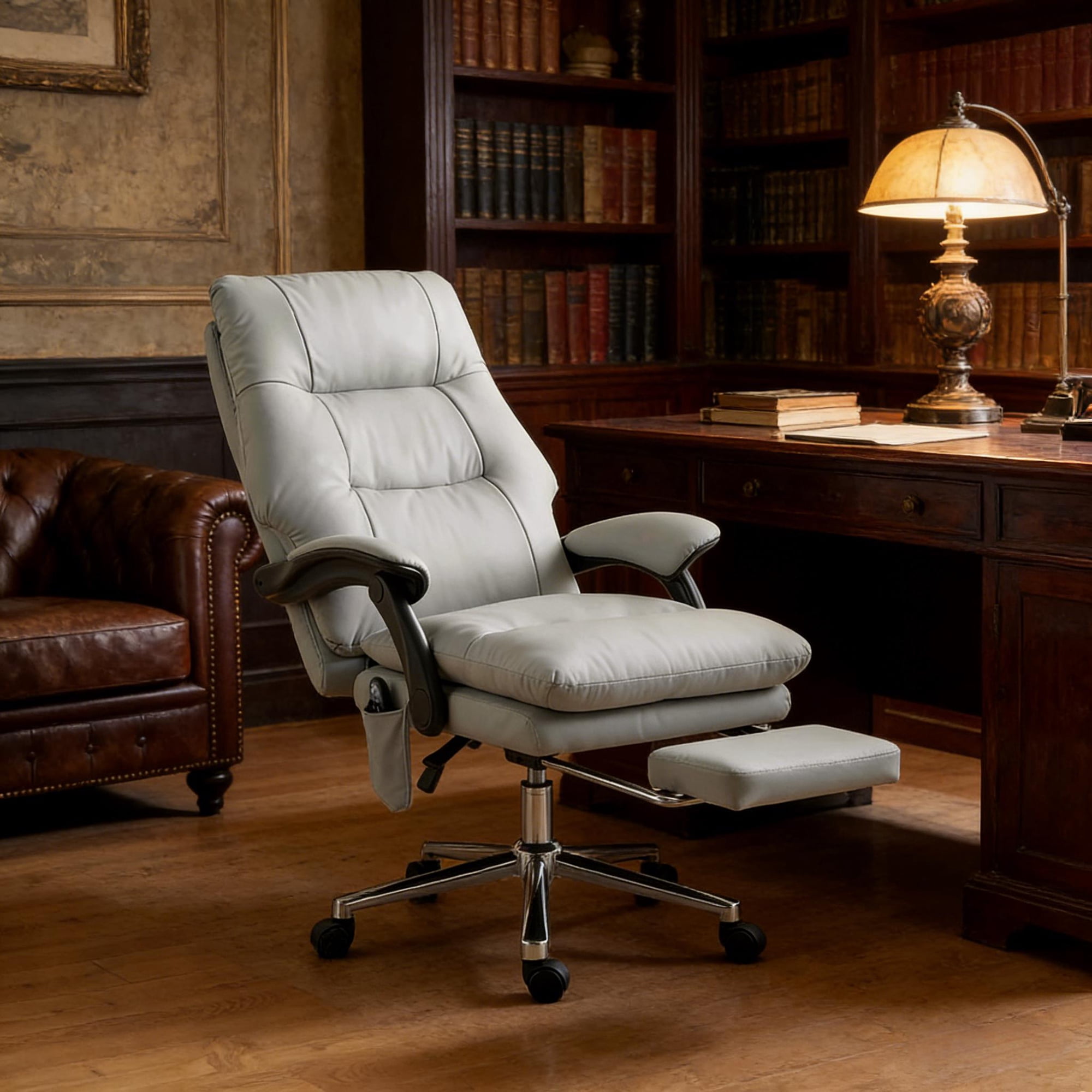
- • Italian full‑grain leather or 3D Spacer fabric: Breathable, luxurious, and easy to clean.
In a mid‑range chair, these features are either absent or simplified (e.g., 2D armrests, plastic back frame). The expensive version offers infinite micro‑adjustability that caters to your unique anthropometry.
The “Return on Posture” – Long‑Term Health Economics
Consider this: a herniated disc surgery can cost upwards of $50,000 in the US, not to mention weeks of lost work. An expensive ergonomic office chair is a preventive investment. Think of it as an insurance policy for your spine. Dr. Emily Carter, a leading occupational health specialist, notes: “We see a direct correlation between chair quality and the incidence of chronic neck pain in desk workers. Those using sub‑$300 chairs are three times more likely to develop cervical issues within five years.”
Data That Matters: The 10,000‑Hour Rule for Sitting
If you work 8 hours a day, you’ll spend about 10,000 hours in your chair every 3.5 years. Spreading an extra $1,000 over that period costs roughly 10 cents per hour. For that dime, you get:
- Reduced micro‑trauma: Premium chairs encourage micro‑movements, preventing stiffness.
- Better concentration: No fidgeting due to pressure points.
- Energy preservation: Your body isn’t fighting the chair, so you finish the day less drained.
Key insight: A 2022 study by BackCare International found that employees using high‑end ergonomic chairs took 28% fewer sick days related to musculoskeletal issues. The math becomes simple: a healthier team is a more profitable team.
Materials Science: The Secret Sauce of Expensive Chairs
Ever wondered why some mesh chairs feel like plastic netting while others feel like a supportive cloud? The difference is polymer tension technology. High‑end manufacturers (like those in Germany or Scandinavia) use multi‑density mesh that is firmer where you need support (lumbar) and softer at contact points (back). Leather options employ aniline‑dyed, full‑grain hides that breathe and develop a patina, unlike the bonded leather that peels after two years.
Why “Expensive” Doesn’t Mean “Fragile”
There’s a misconception that luxury items require delicate handling. The opposite is true for top‑tier office chairs. They undergo rigorous BIFMA (Business and Institutional Furniture Manufacturers Association) tests that simulate 20 years of heavy use. Many expensive chairs are rated for 24/7 multi‑shift operation, meaning they’re built like tanks but look like sculptures.
Who Really Needs an Expensive Ergonomic Office Chair?
While anyone can appreciate a great chair, certain profiles benefit the most:
- • The hybrid worker – spending 10+ hours daily at a desk.
- • People with pre‑existing conditions – scoliosis, sciatica, or previous injuries.
- • Tall or large individuals – standard chairs often lack the proper dimensions.
- • Design‑conscious professionals – who want their office to reflect their success.
- • Tech founders and CEOs – where every minute of clarity counts.
If you fall into one of these groups, skimping on your chair is like a marathon runner buying shoes at a discount store. The right chair becomes a competitive advantage.
The Environmental Angle: Sustainability Through Durability
Fast‑furniture culture has created tons of landfill waste. An expensive ergonomic chair is often the greenest choice because it’s built to last. Many premium brands (like those from Netherlands or Switzerland) use recyclable materials and offer take‑back programs. By buying one high‑end chair, you avoid discarding five cheap chairs over 20 years. That’s a win for your wallet and the planet.
How to Test an Expensive Chair Before Buying
Even with glowing reviews, you should evaluate these points (in person if possible, or via detailed return policies):
- Sit for 20 minutes – does any area become uncomfortable?
- Adjust everything – are the levers intuitive and smooth?
- Recline and lock – does the chair support your back in all positions?
- Check armrests – can you get them low enough to slide under your desk?
Remember, the most expensive chair is worthless if it doesn’t fit your body. Use the generous return policies of premium brands (many offer 30‑day risk‑free trials).
Whether you call it a premium ergonomic task chair, a high‑end office throne, or an investment‑grade seat, the goal remains: preserve your most valuable asset — your health. The initial sticker shock fades, but the comfort and productivity remain for over a decade.