
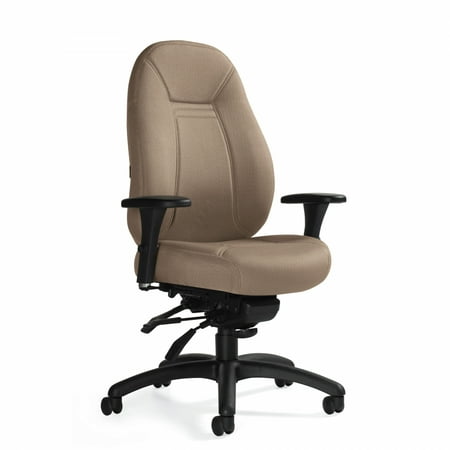
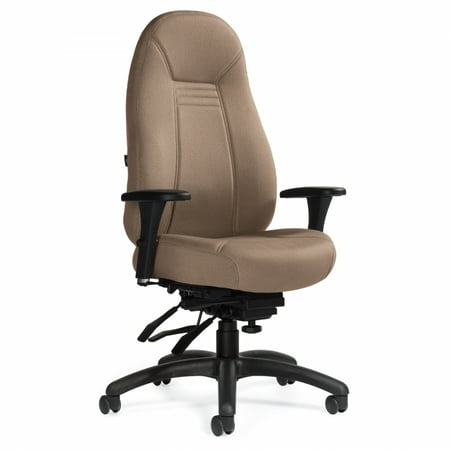
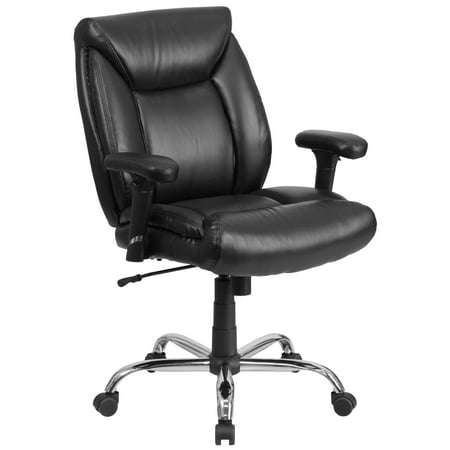
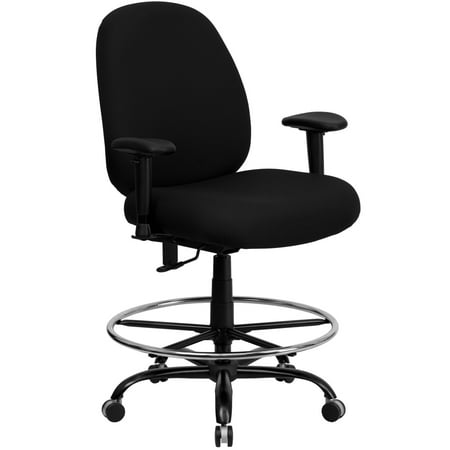
The Ultimate Guide to Office Chairs for Big and Tall Guys
If you're a larger individual, you know the struggle of finding an office chair that doesn't feel like it's built for a child. Standard chairs often pinch your hips, have backrests that end mid-shoulder, and their gas lifts can fail under the strain. This isn't just about discomfort—it's a safety risk and a long-term health hazard. A proper office chair for big and tall guys is engineered differently. Think of it like this: a standard car is fine for short trips, but you wouldn't use it to haul a heavy trailer. You need a truck. In the office world, you need a chair built on a truck chassis.
Why Standardization Fails: According to the National Institute for Occupational Safety and Health (NIOSH), poorly fitted seating is a primary contributor to workplace musculoskeletal disorders. For men over 6'2" or 250 lbs, a standard 20-inch wide seat and 19-inch high back simply cannot provide adequate support, leading to slouching, circulation issues, and chronic back pain.
The Anatomy of a Heavy-Duty Chair: What Makes It Different?
Before diving into specific models, it's crucial to understand the engineering that separates a true heavy-duty chair from a standard one. These are the non-negotiable components you should inspect:
- The Five-Star Base: Look for a base made of nylon or polished aluminum, not cheap plastic. It must have a wide footprint for stability. A 28-inch to 30-inch base diameter is standard for big and tall chairs.
- Heavy-Duty Gas Lift: This is the piston that raises and lowers the chair. It must be Class 4 or 5 rated. A Class 3 lift (found in most budget chairs) will fail quickly under heavy, continuous use.
- Dual-Wheel Hard Casters: Standard single-wheel casters can lock up or break. Large, dual-wheel casters made of hard polyurethane roll smoothly on carpet and distribute weight more evenly.
- High-Density Foam Cushion: The seat should feel firm, not soft and marshmallowy. High-density foam retains its shape and prevents you from "bottoming out," which is when you can feel the hard seat pan beneath you.
- Reinforced Frame: The internal frame, often made of welded steel, is the skeleton of the chair. A robust frame ensures the chair won't twist or creak under load.
Seat Dimensions: Finding Your Perfect Fit
Just like buying a pair of jeans, the right fit is everything. Here are the critical measurements to look for when shopping for office chairs for big and tall guys:
- Seat Width: Aim for a seat width of 22 to 30 inches. This gives your hips and thighs room to rest comfortably without being squeezed by armrests or the chair's sides.
- Seat Depth: This is the distance from the back of the seat to the front edge. You want a depth of 20 to 22 inches so that there's a 2-4 finger gap between the back of your knee and the seat edge. This prevents circulation restriction.
- Backrest Height: For tall individuals, a backrest of at least 27 to 30 inches is essential to support the entire thoracic spine. A high back with an integrated or adjustable headrest is even better for neck support.
Weight Capacity: Why More is Actually More
You might weigh 280 lbs, but buying a chair rated for exactly 280 lbs is a mistake. Think of weight capacity like a bridge's load limit: you wouldn't drive a 20-ton truck onto a bridge rated for 21 tons every single day. The margin for error is too small. Industry experts recommend purchasing a chair with a weight capacity at least 50-100 lbs greater than your actual weight. This ensures the chair's components—the gas lift, base, and casters—aren't operating at their maximum tolerance 8 hours a day, greatly extending the chair's lifespan. For optimal durability, look for chairs certified by BIFMA (Business and Institutional Furniture Manufacturers Association) standards, which involve rigorous testing.
Material & Construction: What Holds Up Over Time?
| Component | What to Avoid | What to Look For | Why It Matters |
|---|---|---|---|
| Frame Material | Thin stamped metal or plastic | Thick-gauge welded steel | Prevents twisting and structural fatigue over years of use. |
| Seat Foam | Polyurethane foam (too soft) | High-resilience (HR) foam or memory foam with high density | Maintains shape, supports weight evenly, and prevents pressure points. |
| Upholstery | Thin bonded leather (peels/cracks) | Premium-grade mesh, thick top-grain leather, or durable textile | Breathability (mesh) or durability (leather). Textile is a good middle ground. |
| Casters | Single, soft plastic wheels | Dual-wheel, hard polyurethane casters (often with metal hubs) |
Step-by-Step Selection Guide for Big and Tall Guys
Step 1: Take Precise Measurements
- Measure your seat width (from hip to hip) and add 2 inches for comfort.
- Measure your popliteal length (back of your knee to your buttocks) while sitting. Your chair's seat depth should be 1-2 inches less than this.
- Measure your sitting shoulder height (from the seat surface to the top of your shoulder). Your backrest should be at least this high.
Step 2: Prioritize Adjustability
Your body is unique, so a one-size-fits-all chair won't work. Look for these adjustable features:
- Seat Depth Adjustment: Allows you to slide the seat pan forward or backward to get the perfect thigh fit.
- 4D Armrests: Armrests that move up/down, forward/back, left/right, and pivot. This ensures your arms are supported whether you're typing or reading.
- Adjustable Lumbar Support: Both height and depth adjustment are ideal to support the natural curve of your lower back.
- Tilt Tension Control: Lets you adjust how much force is needed to recline, accommodating your weight for a smooth rocking motion.
Step 3: Set a Realistic Budget
A quality heavy-duty chair is an investment in your health. Here's what different budgets typically get you:
Entry Heavy-Duty
Good for occasional use. Often features a metal base but may have bonded leather and limited adjustments. Suitable for users up to 350 lbs.
Mid-Range
Sweet spot for most. Class 4 lift, high-density foam, better upholstery, and more adjustments. Suitable for users up to 400-450 lbs.
Premium
Commercial-grade construction. Top-grain leather, Class 5 lift, reinforced steel frame, and extensive warranties. Suitable for users up to 500+ lbs.
Mesh vs. Leather vs. Fabric: The Big & Tall Perspective
Premium Mesh
- Breathability: Keeps you cool all day—ideal for larger body types that tend to get warm.
- Durable Support: High-quality mesh conforms to your back without sagging, offering consistent lumbar support.
- Maintenance: Easy to wipe down, but can trap dust.
Leather
- Professional Look: Exudes success and fits traditional offices.
- Durability: Top-grain leather lasts for decades.
- Consideration: Can be warm; requires conditioning; bonded leather is a poor choice (it flakes).
Heavy-Duty Fabric
- Balance: Often the most cost-effective durable option.
- Comfort: Soft and warm; wide variety of colors.
- Consideration: Can stain more easily; may not be as durable as high-end leather or mesh.
Combination (Mesh Back + Leather Seat)
- Best of Both Worlds: Breathability where you need it (back) and a premium feel where you sit.
- Common in High-End: Often found in premium big and tall executive chairs.
Frequently Asked Questions About Office Chairs for Big and Tall Guys
Final Verdict: Invest in Your Comfort and Health
Choosing the right office chair for big and tall guys is not a luxury—it's a necessity for your long-term well-being and productivity. A standard chair is like wearing shoes two sizes too small; you might endure it, but the damage accumulates over time. By focusing on reinforced construction, proper dimensions, and adjustability, you're making a decision that pays dividends in comfort and focus, day after day.
Whether you're a CEO who spends hours in meetings or a developer coding through the night, your chair is your most important piece of equipment. Use this guide to navigate the options, and always prioritize a chair that makes you feel supported, not squeezed.