
Beyond Standard Seating: The Need for Large Office Chairs Plus Size
Imagine trying to fit into a suit that’s two sizes too small—restrictive, uncomfortable, and frankly, unsustainable for a full day’s work. That’s exactly what it feels like for many individuals using a standard office chair. For plus-size professionals, or anyone who simply values extra room, a regular chair can feel like a constraint rather than a support system.
Large office chairs plus size are not just about width; they represent a fundamental shift in ergonomic thinking. They acknowledge that bodies come in all shapes and sizes, and that true productivity stems from physical comfort. These chairs are engineered with reinforced frames, wider seats, taller backrests, and heavy-duty mechanisms to provide a safe, stable, and comfortable seating experience for hours on end. According to ergonomic studies, a chair that properly fits the user can reduce fatigue by up to 40% and significantly lower the risk of chronic back pain. This guide is dedicated to helping you navigate the world of oversized, heavy-duty seating, ensuring you find a chair that feels like it was built just for you.
The 5 Pillars of a Quality Plus-Size Office Chair
Choosing a large office chair requires looking beyond aesthetics. It’s about understanding the engineering that guarantees safety and longevity. Think of these pillars as the foundation of your seating investment. A failure in any one area can compromise the entire chair's performance.
1. The Frame: The Skeleton of Strength
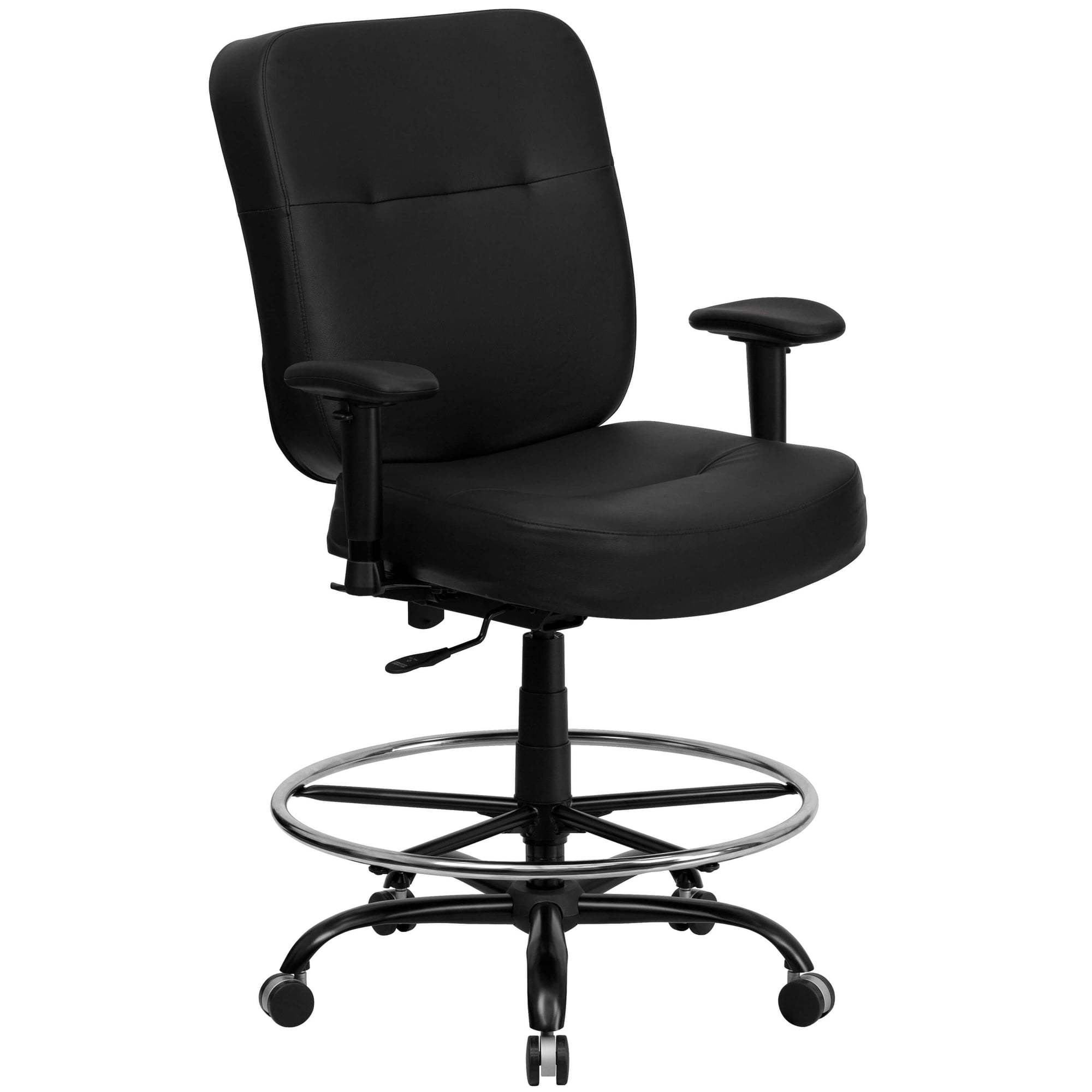
The frame is the unsung hero of any heavy-duty chair. While standard chairs often use plastic or thin metal components, quality large chairs boast a reinforced steel frame. This is the backbone that prevents twisting, creaking, and eventual collapse under sustained weight. Look for manufacturers who explicitly mention "all-steel frame" or "heavy-gauge steel construction." This isn't just about weight capacity; it's about the chair maintaining its structural integrity for years. A robust frame ensures that all moving parts—the tilt mechanism, the backrest hinge—operate smoothly and safely.
2. The Seat: Width, Depth, and Density
This is where comfort is won or lost. A large office chair plus size must offer a seat that accommodates your body without pinching or restricting movement.
- Seat Width: Look for a seat width of at least 22 inches. Many plus-size models offer 24 to 30 inches of seating space, allowing for comfortable leg movement and the ability to sit in various positions.
- Seat Depth: A standard seat depth (around 17-19 inches) can be too short for taller individuals, failing to support the thighs. An adjustable seat depth (or a deeper standard depth of 20-22 inches) ensures your thighs are fully supported without pressure behind the knees.
- Cushion Density: Forget soft, marshmallow-like foam that compresses quickly. You need high-density foam or a combination of foam and supportive coils. This type of cushion retains its shape, provides consistent support, and prevents the uncomfortable sensation of "bottoming out" against the hard seat base.
3. The Base and Casters: A Stable Foundation
A chair is only as stable as what it stands on. The five-point base is critical. For plus-size chairs, this must be made of heavy-duty materials.
- Base Material: Nylon or polypropylene bases are common, but for the highest weight capacities, a metal base (often aluminum or polished steel) is non-negotiable. It resists cracking and provides unparalleled stability.
- Casters (Wheels): Standard casters can buckle or roll poorly under heavy loads. Look for heavy-duty dual-wheel casters often made of solid metal or reinforced nylon. These distribute weight more effectively and roll smoothly on carpets or hard floors. Some chairs even offer locking casters for absolute stability.
4. The Gas Lift: The Unsung Hero of Height Adjustment
The gas lift cylinder is the component that allows you to raise and lower your seat. In a standard chair, this is a common failure point under excessive weight. High-quality large office chairs use a heavy-duty Class 4 or Class 5 gas lift. These are industrial-grade cylinders tested to withstand significantly higher pressures and repeated use. A Class 4 lift is typically rated for higher weights, ensuring your chair doesn't slowly sink down throughout the day. This is a critical safety feature you should never compromise on.
5. Backrest and Lumbar Support: Tailored to Your Frame
A taller backrest is essential for proper upper body support. Look for a high-back chair that reaches at least your shoulder blades, if not your head. This provides a surface for your entire back to rest against, promoting better posture. Integrated, adjustable lumbar support is even more crucial here. It needs to be positioned correctly for your torso length and provide firm, consistent pressure against your lower back to maintain the spine's natural 'S' curve. Without it, you’re more likely to slouch, leading to fatigue and pain.
Myths vs. Facts About Large Office Chairs
The market is filled with misconceptions. Let's clear up a few to help you make a confident choice.
| Myth | Fact |
|---|---|
| "Any chair labeled 'big and tall' is the same." | Absolutely false. Quality varies wildly. Some chairs have a reinforced frame but cheap foam. Others have a wide seat but a weak gas lift. You must evaluate all five pillars: frame, seat, base, lift, and backrest. |
| "I don't need a 500 lbs capacity if I weigh 250 lbs." | Buying a chair with a higher capacity than you need is a smart investment. It means all components are over-engineered, leading to a chair that will last significantly longer and feel more solid every single day. It's a buffer for long-term durability. |
| "Large chairs are only for comfort, not ergonomics." | This is outdated thinking. Top-tier plus-size chairs now feature the same ergonomic adjustments as premium standard chairs: 4D armrests, adjustable lumbar, seat depth adjustment, and synchronized recline mechanisms, all scaled up for larger bodies. |
📊 Industry Insight: The average weight of office workers has increased over the past two decades, yet many standard chairs are still rated for only 250 lbs. This mismatch leads to discomfort and higher rates of workplace musculoskeletal issues. The demand for large office chairs plus size has grown by over 60% in the last five years, pushing manufacturers to innovate with stronger materials and better ergonomics.
Step-by-Step: How to Choose Your Perfect Plus-Size Chair
Finding the right chair can feel overwhelming, but breaking it down into steps makes the process manageable.
- Step 1: Measure Your Space and Yourself. Measure the width of your desired chair area. Then, measure your hip width while seated to ensure the chair's seat is at least 2 inches wider on each side.
- Step 2: Determine Your Required Weight Capacity. Add a 30-50% safety buffer to your current weight. If you weigh 300 lbs, look for chairs rated for 400-500 lbs. This ensures long-term durability.
- Step 3: Prioritize Your "Non-Negotiables." Is breathability key? Focus on heavy-duty mesh. Is a plush, executive feel important? Look for thick, bonded leather with high-density foam. Make a list of must-have adjustments (e.g., adjustable lumbar, headrest).
- Step 4: Verify the Components. Don't just look at the total weight capacity. Dig into the specs: What is the base made of? What class is the gas lift? Are the armrests reinforced metal or plastic?
- Step 5: Read Reviews from Similar Users. Look for reviews from people with a similar build. Their experience with the chair's width, cushion longevity, and overall stability will be invaluable.
Materials: Durability Meets Comfort
The material of your large office chair affects everything from its look to its lifespan.
- Heavy-Duty Mesh: Ideal for those who tend to get warm. Ensure it's a "pique" or reinforced mesh specifically designed for high weight capacities to prevent sagging over time.
- Premium Bonded Leather or Top-Grain Leather: Offers a classic, executive look. Bonded leather is a cost-effective option, but top-grain leather is the pinnacle of durability and will develop a beautiful patina over years of use. Look for reinforced stitching at stress points.
- Commercial-Grade Fabric: Often used in 24-hour settings, these fabrics (like nylon or polyester blends) are incredibly durable, stain-resistant, and breathable. They offer a more casual, modern aesthetic.
Frequently Asked Questions: Large Office Chairs Plus Size
Conclusion: Invest in Your Comfort, Invest in Your Day
Choosing a large office chair plus size is more than a purchase—it's an investment in your daily well-being and long-term health. The right chair provides a stable, supportive foundation that allows you to focus on your work without the distraction of discomfort. By understanding the five pillars—the frame, seat, base, gas lift, and backrest—you are now equipped to look beyond marketing claims and evaluate a chair's true quality and suitability for your body. Remember, a chair that fits you well doesn't just support your weight; it supports your success.
Our Recommendation: Prioritize a chair with a steel frame, a Class 4 or 5 gas lift, and a seat width that gives you room to move. Whether you choose breathable mesh or luxurious leather, ensure the construction is heavy-duty. Your chair is where you spend a third of your day—make it a place of comfort and strength.