
Why Your Corner Desk Demands a Specialized Chair Mat
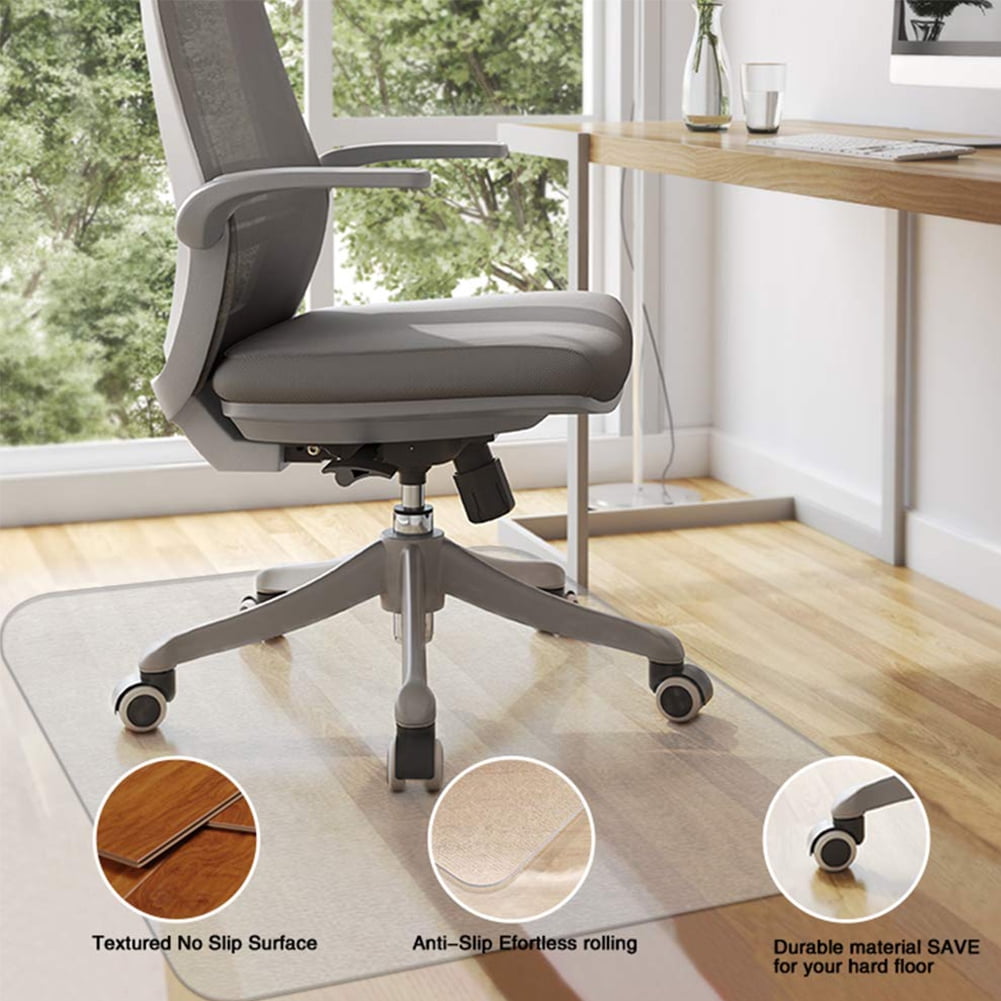
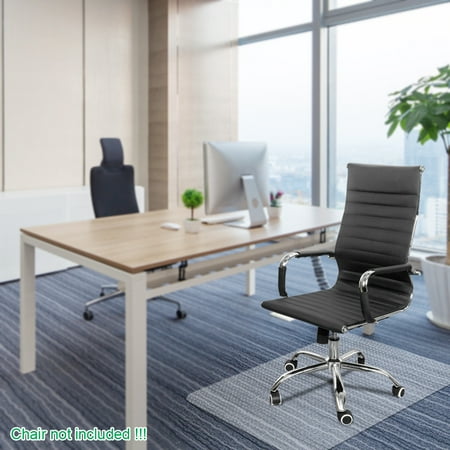
Imagine building a state-of-the-art home office, investing in a beautiful corner desk and a premium ergonomic chair, only to watch your hardwood floors become scratched or your expensive carpet develop permanent wheel tracks. This is where the humble but essential office chair mat for corner desk configurations becomes your floor's best friend.
Did You Know? According to floor protection studies, a single office chair can create over 1,000 wheel rotations per day. Without proper protection, this can wear down carpet fibers by up to 40% within the first year and create permanent indentations in hardwood floors that require professional refinishing costing thousands.
Unlike standard rectangular workspaces, corner desks (also known as L-shaped desks) present unique challenges. Their extended surface area means your chair needs to traverse a wider zone, often moving from one wing to another. Standard rectangular chair mats simply can't provide adequate coverage, leaving vulnerable floor areas exposed or creating awkward transitions that can actually trip casters and damage wheels.
The Anatomy of a Quality Corner Desk Chair Mat
Not all chair mats are created equal. When shopping for an office chair mat specifically designed for corner desks, understanding the components of quality construction helps you make an informed decision:
- Extended coverage dimensions: Typically 60" x 72" or larger to accommodate both wings of an L-shaped desk
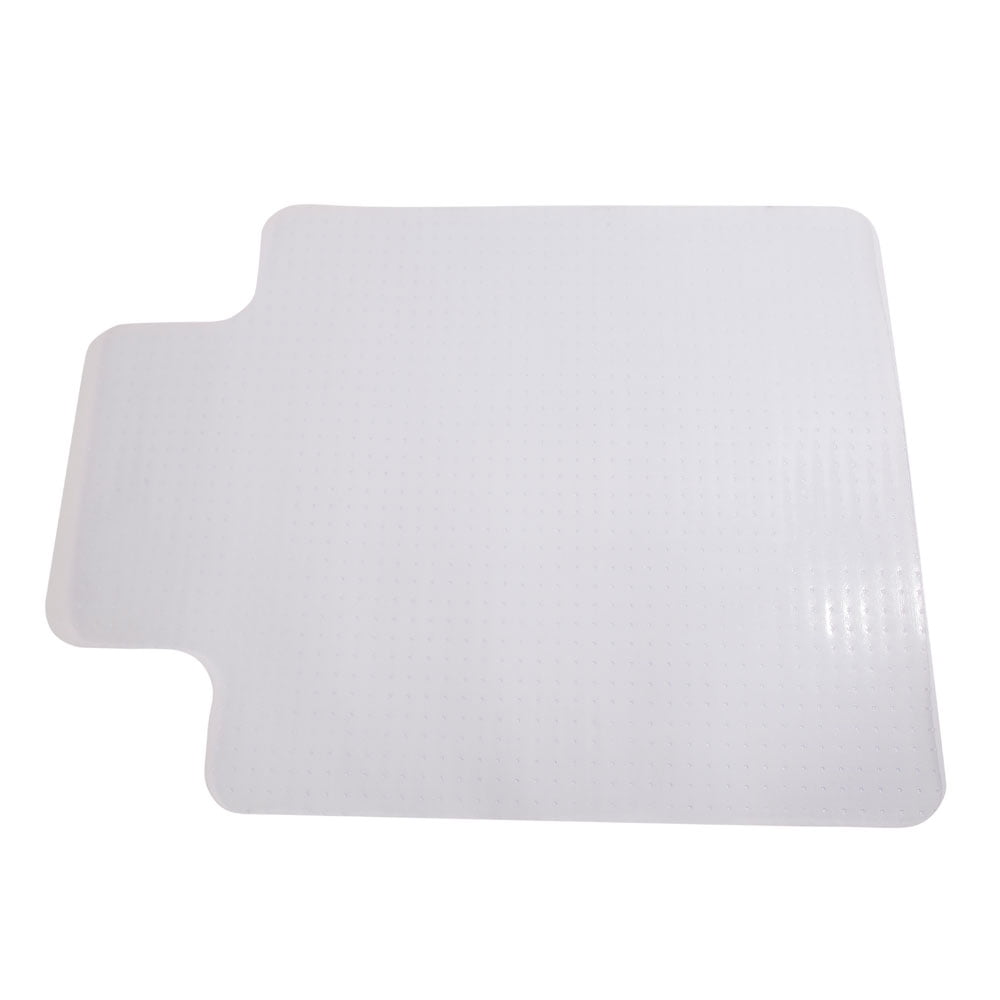
- Lip or extended edge: Designed to slide partially under the desk for seamless transition
- Stud pattern variation: Deeper cleats for carpet, smooth backing for hard floors
- Beveled edges: Prevents tripping hazards and allows smooth chair roll-on/roll-off
- Chemical-resistant surface: Protects against spills and doesn't react with floor finishes
- Anti-static properties: Reduces static buildup, protecting sensitive electronics
Material Matters: Choosing Your Mat's Foundation
The material of your chair mat determines its durability, appearance, and performance. Here's how the options stack up for corner desk applications:
Polycarbonate
The Premium Choice: Virtually unbreakable, crystal clear, and environmentally friendly. Polycarbonate mats remain flexible in cold temperatures, won't yellow with age, and resist cracking even under heavy chairs. Perfect for executive offices where appearance matters.
✅ Best for: High-traffic executive offices, glass desks, aesthetic-conscious spaces
PVC (Vinyl)
The Value Standard: Affordable and widely available. Modern PVC mats have improved significantly, offering good durability for home offices. However, they can curl at edges over time and may have an initial odor that requires off-gassing.
✅ Best for: Budget-conscious setups, guest offices, temporary workspaces
Bamboo/Wood
The Aesthetic Alternative: Beautiful natural appearance that complements wood desks and floors. These rigid mats provide excellent stability but require careful matching with caster types—roller-blade wheels are recommended to prevent scratching.
✅ Best for: Design-forward offices, matching wood tones, eco-conscious buyers
Floor Type Compatibility: One Size Doesn't Fit All
Your flooring material is the single most important factor in selecting the right office chair mat for your corner desk. Using the wrong mat can damage your floors or render the mat ineffective:
| Floor Type | Required Mat Features | What to Avoid |
|---|---|---|
| Low-Pile Carpet | Short, dense cleats (1/8" to 3/16") for grip without excessive movement | Hard floor mats with smooth backing—they'll slide and bunch |
| Medium-Pile Carpet | Medium-length cleats (3/16" to 1/4") that penetrate to the backing | Mats with insufficient stud depth—they'll float on top of carpet |
| High-Pile/Plush Carpet | Deep cleats (1/4"+), rigid construction to prevent "trampoline effect" | Flexible mats that conform too much—they create rolling resistance |
| Hardwood/Laminate | Smooth underside, possibly with small grippers; non-abrasive surface | Any mat with cleats—they'll scratch and dent wood permanently |
| Tile/Vinyl/Linoleum | Flexible, non-staining materials with anti-slip backing | Rigid mats that can crack tile or leave permanent impressions |
Thickness and Durability: The Hidden Variables
Like icebergs, most of a chair mat's quality lies beneath the surface. Mat thickness directly impacts performance:
- 1/8 inch (3mm): Suitable for low-pile carpet and light-duty use. More flexible but may crack under heavy chairs or in cold environments.
- 3/16 inch (5mm): The sweet spot for most home offices. Good durability with moderate flexibility for carpet grip.
- 1/4 inch (6mm+) : Commercial-grade durability for high-traffic executive offices. Virtually indestructible, maintains shape, supports heavy chairs (300lbs+).
Size Matters: Finding the Perfect Fit for Your Corner Desk
Corner desks come in various configurations—from compact home office units to sprawling executive command centers. Your chair mat must match not just the desk size but your actual movement patterns:
Standard Corner Desk Mat Dimensions
50" x 60"
For desks under 48" per wing60" x 72"
For most home office L-desks72" x 84"+
For commercial corner stationsShape Considerations: Some corner desk mats are true L-shaped, while others are oversized rectangles that cover the entire corner area. L-shaped mats fit more precisely but limit future desk rearrangement. Rectangular mats offer flexibility if you might reconfigure your office later.
The Ergonomics Connection: More Than Just Floor Protection
A quality office chair mat for your corner desk does more than protect floors—it becomes an integral part of your ergonomic setup. Think of it as the "foundation" of your seating system, much like a quality base for a luxury car:
- Reduced rolling resistance: Proper mats allow your chair to glide effortlessly, reducing the physical effort required to move between desk zones. This might seem minor, but over an 8-hour day, reduced friction saves energy and prevents micro-adjustment fatigue.
- Stable surface: A flat, non-warping mat ensures your chair remains level. Warped or curling mats can cause chairs to rock slightly, leading to poor posture and back strain as your body unconsciously compensates.
- Defined workspace boundary: The mat creates a psychological and physical "zone" for work. When your chair rolls off the mat, it signals a transition—a subtle cue that helps maintain work-life boundaries in home offices.
- Caster protection: Mats prevent carpet fibers from wrapping around caster wheels, which can seize wheels and force you to twist unnaturally to move. Smooth-rolling casters encourage better movement habits.
Installation and Maintenance: Getting the Most from Your Mat
Even the highest-quality office chair mat requires proper installation and care to maximize its lifespan. Follow these guidelines:
- Acclimation period: Let your mat sit flat in the room for 24-48 hours before installation. Temperature changes during shipping can cause temporary curling.
- Clean the floor beneath: Vacuum carpets thoroughly or mop hard floors. Any debris trapped under the mat can create pressure points that eventually crack the material.
- Position carefully: For corner desks, slide the mat's lip under the desk's knee area first, then smooth outward. This creates a seamless transition zone.
- Use weight for stubborn curls: If edges curl, place heavy books on corners for 24-48 hours. Never use heat to flatten—this can warp the material permanently.
- Regular cleaning: Vacuum mats weekly to remove abrasive dust and dirt. For hard floor mats, use a damp cloth with mild soap—never harsh chemicals that can cloud clear mats.
- Inspect casters: Ensure your chair wheels are clean and free of debris. Hair and string wrapped around casters can scratch even the toughest mat surfaces.
Special Considerations for Corner Desk Configurations
The L-shaped nature of corner desks introduces unique factors that standard rectangular setups don't face:
- Inside corner transition: Your chair must navigate the 90-degree interior angle. Look for mats with reinforced corners that won't crack at this stress point.
- Dual-zone coverage: You'll likely roll between the two desk wings multiple times daily. Ensure your mat provides continuous coverage without a seam or gap.
- Return wing access: Many corner desks have a return (printer/typing wing) that extends perpendicular. Your mat should extend fully under this return to allow comfortable access.
- Wall clearance: Corner desks often sit flush against walls. Choose a mat that can be trimmed (some have cut lines) or one sized to fit perfectly without climbing walls.
Environmental and Health Considerations
Modern office chair mat manufacturing has evolved significantly. Today's discerning buyers consider more than just price and appearance:
- VOC emissions: Many PVC mats release volatile organic compounds (off-gassing) that can affect indoor air quality. Look for Greenguard Gold certified mats, especially for home offices where you spend 8+ hours daily.
- Recyclability: Polycarbonate mats are often recyclable at end-of-life, while PVC can be challenging to recycle. Consider the full lifecycle of your purchase.
- Phthalate-free: If choosing PVC, look for phthalate-free formulations. These chemicals used to soften plastic can be harmful with prolonged exposure.
- Recycled content: Some manufacturers now offer mats with post-industrial recycled content, reducing environmental footprint without sacrificing quality.
Matching Mats with Chair Types
The relationship between your office chair and its mat is symbiotic. Different chair features interact with mats in specific ways:
- Hard casters (standard): Work well on most mats but can be noisy on hard surfaces. Ensure mat thickness matches caster size to prevent bottoming out on carpet.
- Soft/roller-blade casters: Ideal for hardwood floor mats as they're gentler on surfaces. On carpet mats, ensure studs are deep enough to engage with soft wheels.
- Locking casters: Some executive chairs have wheel locks for stability. Verify your mat provides enough friction for locks to engage without sliding the mat.
- Heavy-duty chairs (300lbs+): Require thicker mats (minimum 1/4") to prevent the mat from compressing and the chair from sinking into carpet underneath.