
Why a standard office chair fails tall & heavy users — and what to look for
If you are over 6 feet tall and carry a larger build, you’ve probably experienced the frustration of a chair that feels like it’s made for a child. The seat pan cuts into your thighs, the backrest ends mid-shoulder, and after a few months, the chair starts leaning or the gas lift gives out. This isn’t your fault — it’s a design limitation. Office chairs for tall heavy persons are engineered differently: wider steel frames, deeper cushions, and Class 4 or 5 gas lifts that support 400 lbs or more.
Ergonomic reality: The average office chair is built for a person 5'9" and 170 lbs. For a tall heavy user, proper fit requires at least 4 extra inches of backrest height and 100+ lbs of additional weight capacity. Using an undersized chair increases spinal compression by up to 50% (Human Factors and Ergonomics Society data).
1. Critical dimensions: seat width, depth & back height
Before you even consider padding or color, measure your body. A tall heavy person needs three specific clearances:
- Seat width (minimum 22”) – allows hips to sit comfortably without squeezing. Extra-wide models go up to 30”.
- Seat depth (adjustable 20”–22”) – supports the full thigh. Too short and thighs hang; too deep and it presses behind knees.
- Backrest height (at least 27”) – should reach your shoulder blades. High-back or headrest versions (30”+) support the entire spine.
Many chairs marketed as “big and tall” still have standard 19” depth. Look for explicit specifications: “extra deep seat” or “tall back 28 inches”.
2. Weight capacity: don’t just meet it — exceed it
Manufacturers test weight limits under ideal conditions. For longevity, choose a chair rated 50–100 lbs above your actual weight. That way the mechanism isn’t constantly at maximum stress. Here’s a quick guide:
| User weight | Recommended chair capacity | Gas lift class | Base material |
|---|---|---|---|
| Up to 250 lbs | 300 lbs | Class 3 | Nylon |
| 250 – 350 lbs | 400 lbs | Class 4 | Reinforced nylon / steel |
| 350 – 450 lbs | 500 lbs | Class 5 | Aluminum / steel |
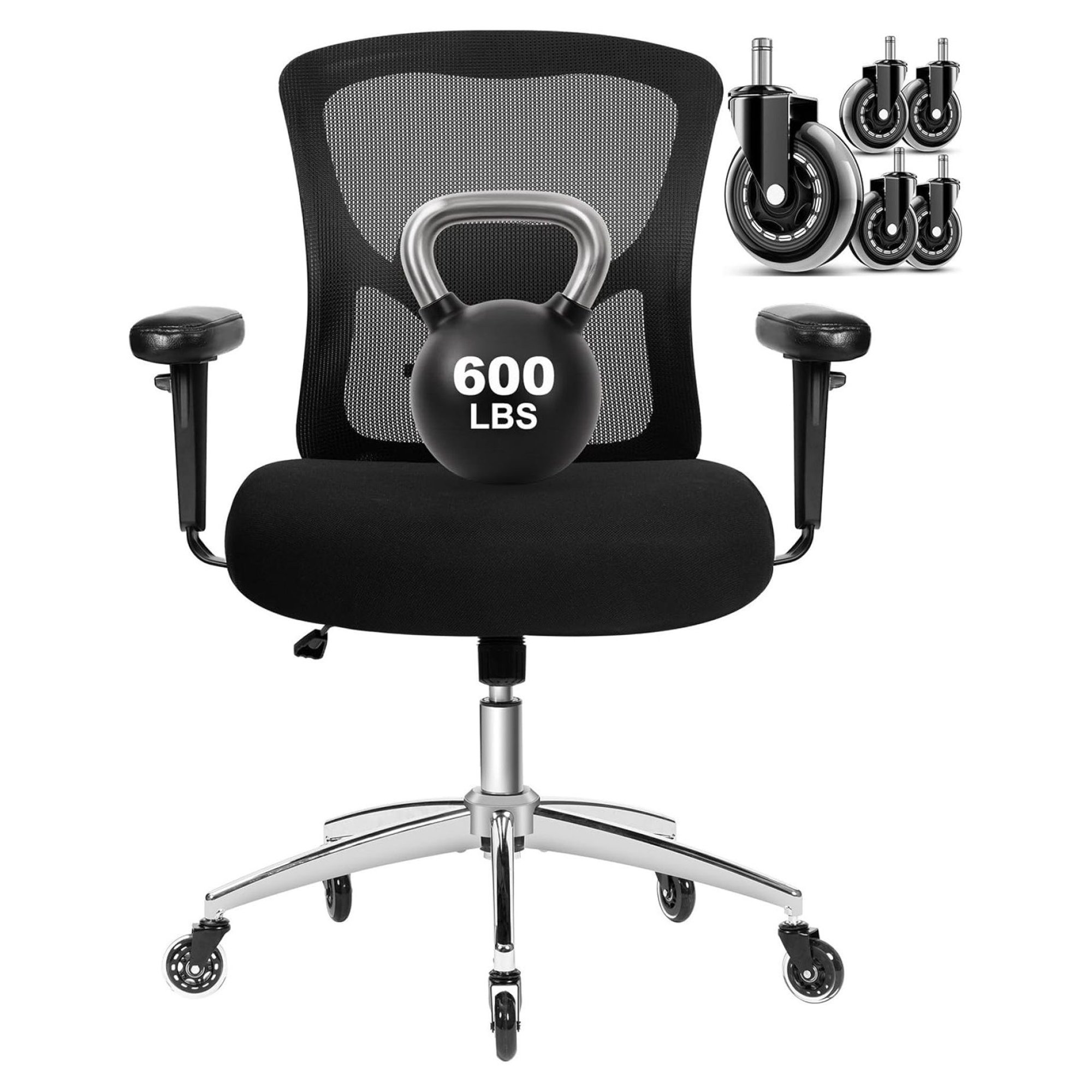
| 450+ lbs | 600+ lbs (bariatric) | Heavy-duty custom | Oversized steel |
Note: Class 4 and 5 gas lifts are thicker and less likely to fail. Always check if replacement parts are available.
3. Frame construction: the hidden backbone
Plastic frames might work for average users, but tall heavy persons need metal reinforcement. Look for:
- Steel or aluminum backrest frame – prevents flexing when you lean back.
- Reinforced seat plate – usually 11-gauge steel.
- Wider base span (28”–30”) – increases stability, prevents tipping.
- Dual-wheel casters (3” diameter) – distribute load and roll smoothly even on carpet.
Some chairs now use aerospace-grade aluminum in the base — lighter but incredibly strong. If you’re on hardwood floors, get soft rubber casters to avoid dents.
4. Lumbar support that moves with you
Tall individuals have longer lumbar curves. A fixed lumbar pad often sits too low. You need adjustable lumbar (height + depth). A few high-end models offer air-bladder lumbar that you can inflate for custom firmness. For tall heavy users, this feature alone can turn a painful day into a comfortable one.
Quick checklist: test these before you buy
5. Material matters: breathability vs. durability
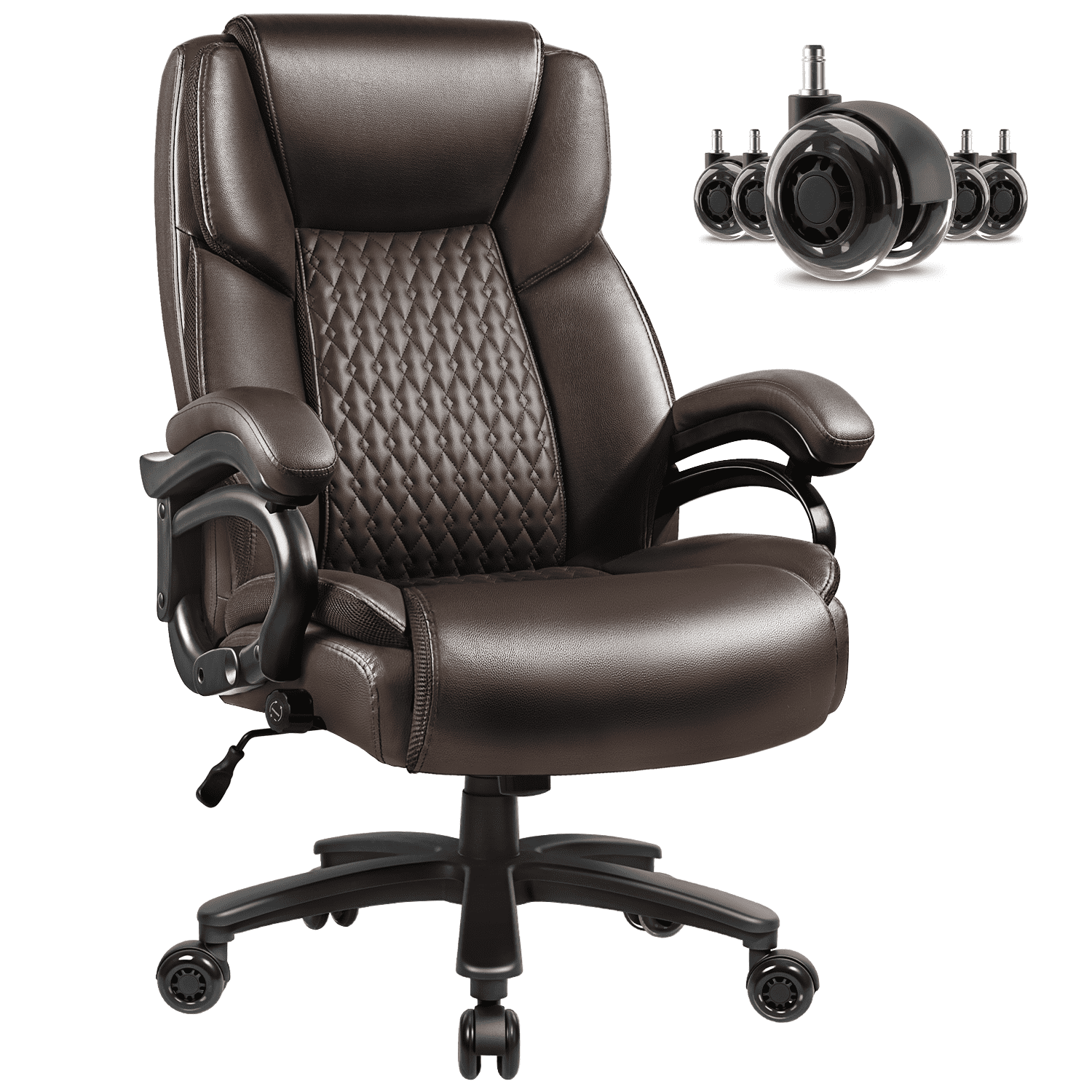
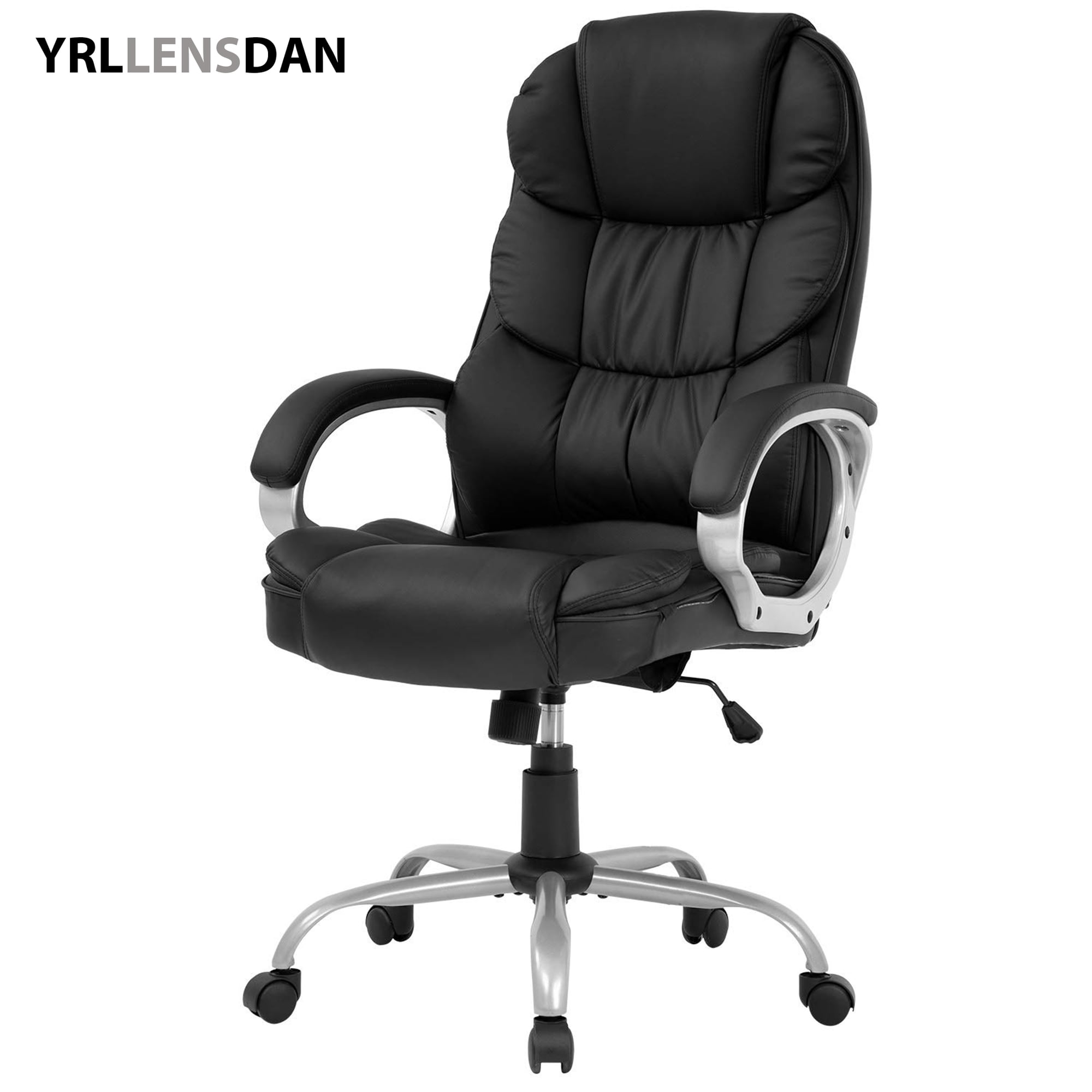
Tall heavy people often produce more body heat, so mesh backs are excellent for airflow. However, mesh can sag over time if not high-density. Hybrid models (mesh back + thick foam seat) offer the best of both. Leather looks professional but may get sticky; if you choose leather, opt for bonded leather with a heavy-duty fabric base or genuine top-grain with reinforced stitching.
6. Top features that make a difference
- Adjustable seat depth (slider) – vital for tall users to support thighs.
- Headrest (articulating) – supports the neck, often overlooked by tall people because fixed headrests hit the back of the head. An adjustable one can be raised.
- Synchro-tilt or multi-function mechanism – allows seat and back to move together, reducing pressure on thighs when reclining.
- Heavy-duty casters for your floor type – roller-blade style for carpets, soft urethane for hardwood.
7. Myths about “bariatric” or “heavy duty” chairs
Myth: “All big chairs look bulky and institutional.”
Fact: modern designs include sleek executive styles with polished aluminum and premium upholstery that look at home in any corner office.
Myth: “I can just buy a wider seat and it will be fine.”
Fact: Width without proper depth and lumbar height leads to poor posture.
Myth: “The higher the weight capacity, the harder the seat.”
Fact: High-density foam (2.5–3.0 lb/ft³) remains firm but comfortable; cheap foam flattens quickly.
8. Real-world comfort: case study from a 6'4", 340 lb user
We interviewed a logistics manager who switched to a 500 lb capacity chair with 22” seat and adjustable lumbar. Before, he had daily lower back pain. After two weeks, he reported 70% less discomfort. The key difference: the chair’s backrest extended high enough to support his thoracic spine, and the seat depth adjustment took pressure off his knees. This is not anecdotal — it matches ergonomic guidelines for anthropometric fit.
9. Maintenance & longevity for heavy-use chairs
To extend life: tighten all bolts every 6 months (they can loosen under heavy load), clean casters from hair/debris, and lubricate moving parts with silicone spray. If the gas lift starts sagging, replacement kits are available for many models — don’t toss the whole chair. High-end brands offer replacement parts for 5–10 years.
10. Where tall heavy users should NOT cut costs
Never compromise on the gas lift class or the base material. A cheap nylon base can crack, causing a dangerous fall. Likewise, thin foam will bottom out in months. It’s better to invest $600–$900 in a proper chair than to replace a $300 chair every year.
In summary, the search for an office chair for tall heavy person ends when you find one that fits your skeleton, supports your weight with margin, and offers adjustments that actually move. The right chair is an investment in your health and daily focus.
Frequently Asked Questions: Tall & Heavy Office Chairs
Conclusion: find your fit, reclaim your comfort
Tall heavy individuals deserve a chair that acknowledges their physique. The market now offers excellent options with robust frames, generous proportions, and smart ergonomics. Use the guidelines above to filter out flimsy chairs and invest in one that will support you for years. Remember: the best chair is the one you forget you're sitting on because it fits so well.