
Why Your Office Chair Needs Heavy Duty Wheels
Imagine trying to steer a shopping cart with a twisted wheel—frustrating, right? That's exactly how it feels to work on a chair with flimsy, standard casters. For anyone who spends hours at a desk, the office chair wheels heavy duty upgrade is not just an accessory; it's a productivity tool and a floor-saving investment. Whether you're a big and tall user, have delicate hardwood floors, or simply want a smoother glide, upgrading your casters can transform your workspace.
Did You Know? A study by the Ergonomics Research Society found that poor chair mobility can lead to increased reaching and twisting, contributing to lower back strain by up to 30%. Heavy duty wheels ensure effortless movement, promoting better posture and reducing unnecessary stress on your body.
Signs You Need a Heavy Duty Upgrade
Not sure if your current wheels are up to the task? Here are tell-tale signs it's time for an upgrade:
- Scuff Marks: You notice black marks or scratches on your hardwood, laminate, or tile floors.
- Stiff Rolling: The chair feels like it's stuck in mud, especially on carpet, requiring significant effort to move.
- Frequent Jams: Hair, dust, and debris constantly get tangled in the wheels, locking them up.
- Visible Wear: The hard plastic is cracking, or the wheels wobble, indicating the axle is worn out.
- Weight Concerns: You or a colleague are near or over the standard 250-pound weight limit for many stock casters.
Anatomy of a Heavy Duty Caster: What Makes Them Different?
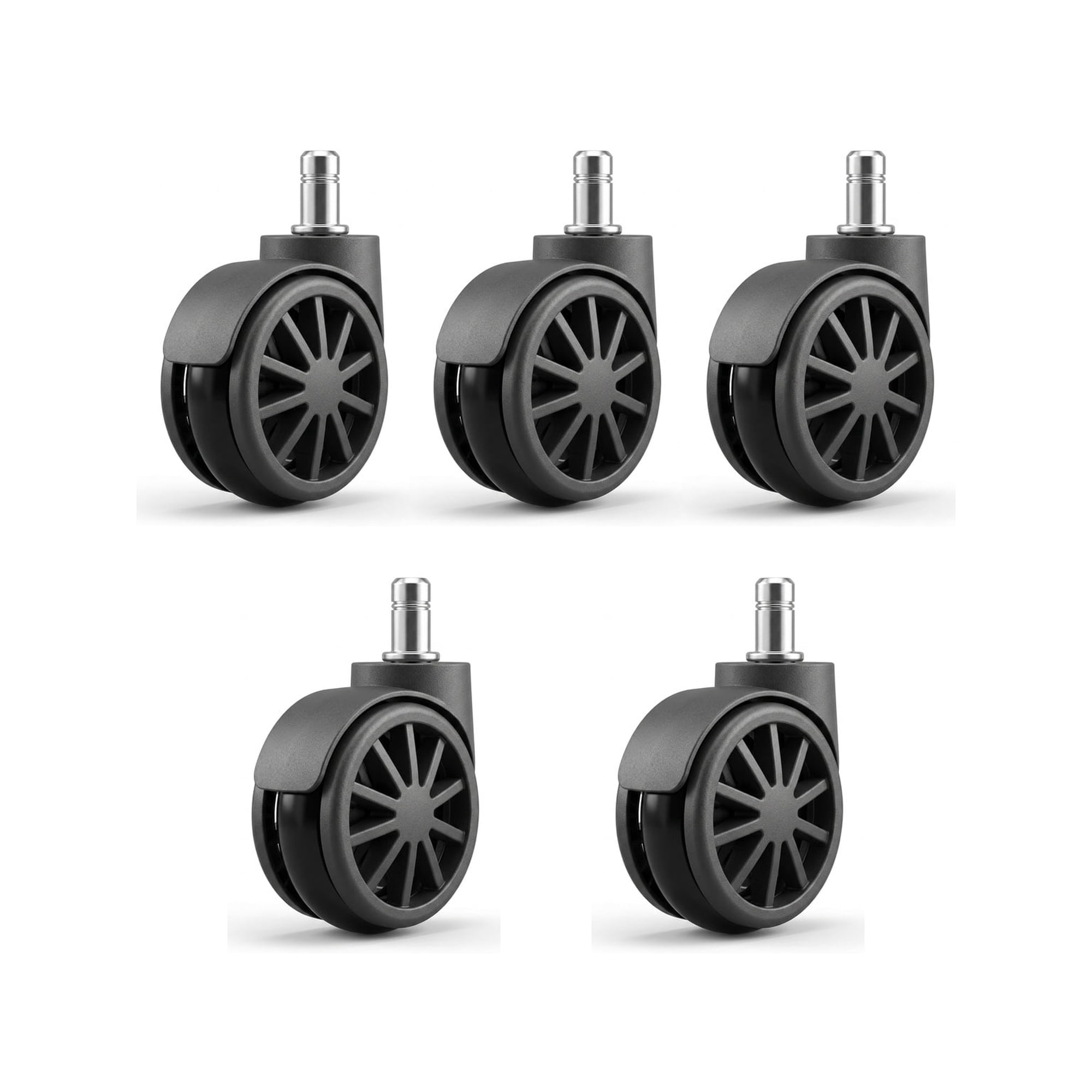
Standard chair wheels are often made of hard nylon plastic. They're cheap to produce but offer poor traction and can act like sandpaper on floors. Heavy duty wheels are engineered differently.
1. Material: Polyurethane vs. Nylon
The material is the most critical factor. Heavy duty polyurethane wheels (often called rollerblade wheels) are the gold standard. They are softer than nylon, providing grip without sticking. This softness absorbs shock and rolls silently. Nylon wheels, while durable, are hard and can skid or damage floors. For office use, especially on hard surfaces, polyurethane is superior.
2. Weight Capacity & Construction
Heavy duty wheels feature reinforced cores—often brass or hardened steel—that can withstand significant force. While a standard wheel might be rated for 200-250 lbs per set of five, a quality heavy duty set is often rated for 300 lbs, 400 lbs, or even 500 lbs. This ensures the wheel doesn't deform under pressure, maintaining a smooth roll.
3. Wheel Size and Tread
Larger wheels (typically 3 inches in diameter) roll over carpet fibers and floor imperfections more easily than smaller ones. The tread pattern also matters. A smooth, slightly rounded tread is best for hard floors, while a deeper tread can provide extra grip on thick carpet.
Quick Comparison: Wheel Materials
| Material | Best For | Durability | Floor Protection | Rolling Ease |
|---|---|---|---|---|
| Hard Nylon (Standard) | Low-pile carpet, budget chairs | Good | Poor (can scratch hard floors) | Fair (can be jerky) |
| Polyurethane (Heavy Duty) | Hardwood, tile, laminate, all carpets | Excellent | Excellent (non-marking) | Excellent (smooth, silent) |
| Rubber | High-grip on smooth floors | Good | Good | Good (can be slightly tacky) |
Step-by-Step Guide to Choosing the Right Heavy Duty Wheels
Selecting the perfect replacement wheels doesn't have to be complicated. Follow this simple guide:
Step 1: Identify Your Floor Type
- Hardwood, Laminate, Tile: Your only choice should be soft, non-marking polyurethane wheels. They are specifically designed to protect these surfaces.
- Low-Pile Carpet: Polyurethane wheels still work great. Hard nylon wheels can dig in and make rolling difficult.
- High-Pile/Thick Carpet: Look for larger diameter wheels (3 inches) with a slightly wider tread to prevent sinking.
Step 2: Check Your Chair's Stem
Most chairs use a standard 7/16-inch diameter stem (about 11mm) that pushes straight in. Some older or specialized chairs might have a grip ring stem. Universal replacement sets usually include adapters or are designed to fit both. Simply pull one of your current wheels out to inspect the stem type.
Step 3: Determine Weight Requirements
Add your weight plus any gear you might hold (like a heavy tool belt or equipment). Choose a set of five wheels with a total capacity exceeding that number. For example, if you weigh 250 lbs, a set rated for 300 lbs provides a safe and durable margin. For heavier individuals (300 lbs+), look for sets explicitly rated for 400-500 lbs.
Standard Duty
Heavy Duty
Extra Heavy Duty
Step 4: Consider Braking vs. Non-Braking
Most office chairs use non-braking casters that swivel 360 degrees. If you work on an incline or need the chair to stay absolutely still at certain times, you might consider dual-wheel casters with a locking mechanism, though these are less common for standard office use.
Installation: A Simple 5-Minute Upgrade
One of the best things about upgrading to heavy duty office chair wheels is the ease of installation. You don't need any tools.
- Lay the chair on its side to access the wheels.
- Pull out the old wheels. Grip the wheel firmly and pull straight out from the chair base. They may be tight, so a firm tug is needed. If they're stuck, a gentle twist while pulling helps.
- Insert the new heavy duty wheels. Align the stem with the hole in the chair leg and push firmly until you hear or feel a click. Ensure it's fully seated.
- Repeat for all five legs. Stand the chair upright and give it a test roll. Enjoy the newfound smoothness!
Frequently Asked Questions About Heavy Duty Office Chair Wheels
Conclusion & Final Recommendation
Upgrading to office chair wheels heavy duty is one of the most cost-effective ergonomic improvements you can make. It's a small change that delivers big results: effortless movement, peace of mind for your floors, and enhanced durability. Whether you're protecting a beautiful hardwood floor or need a caster that can handle daily use on thick carpet, the right set of polyurethane wheels will transform your sitting experience.
Final Recommendations
Prioritize soft, non-marking polyurethane wheels (rollerblade style). They offer the best protection and a whisper-quiet glide.
Look for wheels with reinforced brass or steel hubs explicitly stating a high weight limit (400-500 lbs per set).
Choose larger 3-inch wheels with a wider footprint to prevent sinking and make rolling effortless.
Browse the product grid above to find the perfect set of heavy duty wheels for your chair. Your back—and your floors—will thank you.