
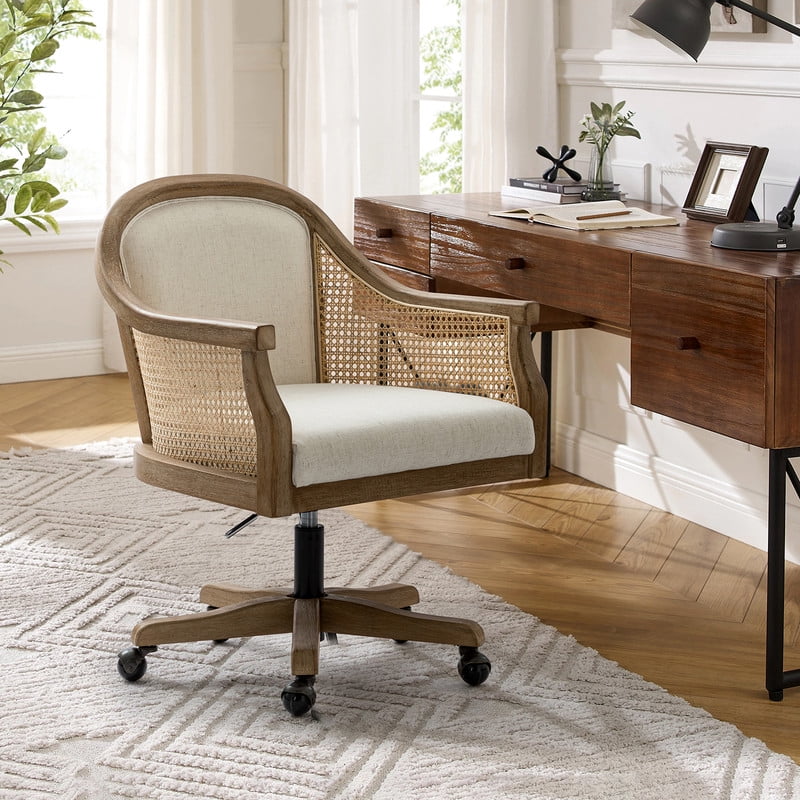
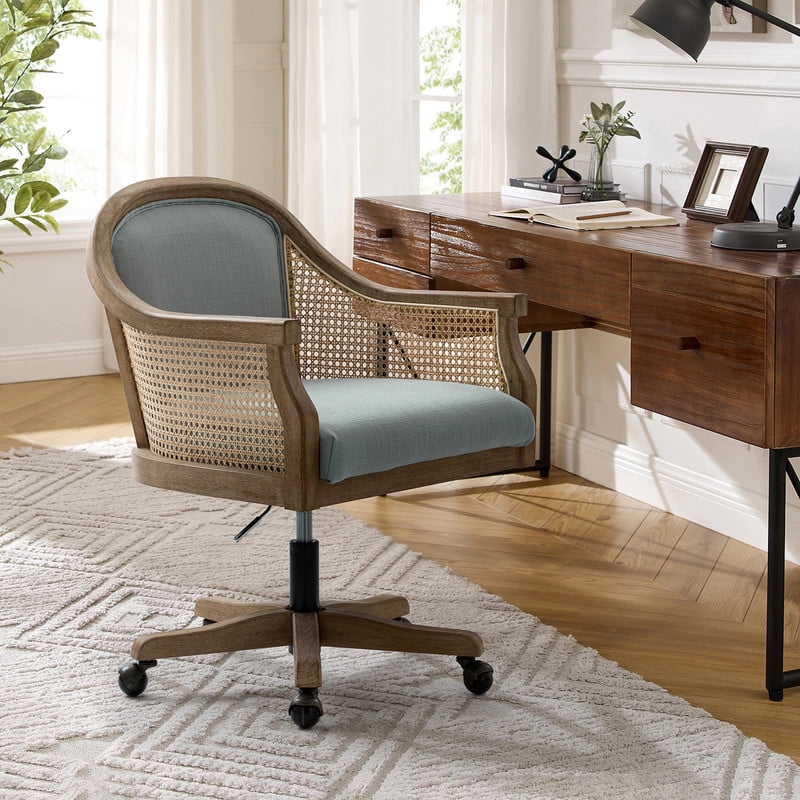
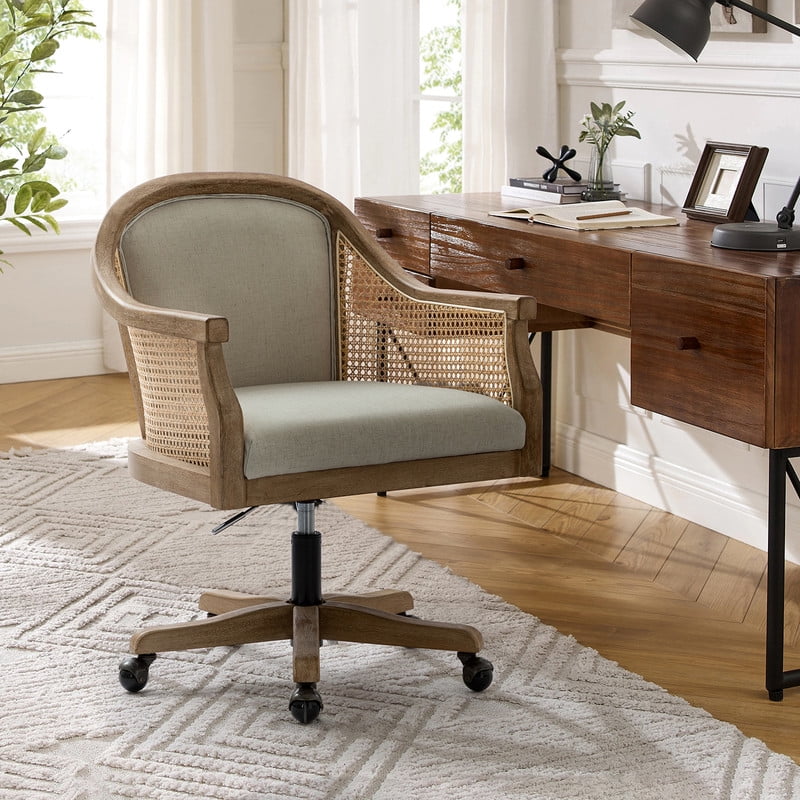
The Enduring Appeal of Cane Back Office Chairs
Imagine walking into an executive office that feels less like a sterile corporate cube and more like a thoughtfully designed study from a bygone era of craftsmanship. That's the transformative power of a cane back office chair. These distinctive pieces serve as both functional seating and statement furniture, bridging the gap between professional requirements and personal expression.
Design Insight: Interior designers report a 78% increase in requests for natural material office furniture since 2020. Cane back chairs lead this trend, offering what designers call "warm minimalism"—the visual lightness of open weave patterns combined with the substance of solid wood construction. This creates offices that feel both professional and welcoming—essential for modern hybrid work environments where video calls reveal your entire workspace.
What Defines a Quality Cane Back Office Chair?
Not all cane back chairs are created equal. Understanding construction quality helps you invest wisely in a piece that will serve you for years while maintaining its beauty and functionality.
🌿 Natural Cane Webbing
Premium chairs use hand-woven natural cane harvested from rattan palms. The best quality features uniform weave tension, consistent strand thickness, and natural golden hues that darken beautifully with age. Look for sealed edges where the cane meets the frame to prevent fraying.
Durability: Excellent (10-15 years with care)
🪑 Hardwood Frame Construction
The foundation of longevity lies in kiln-dried hardwood—oak, walnut, or mahogany. Quality frames use mortise-and-tenon joinery reinforced with corner blocks, not just staples or glue. This construction prevents wobbling and ensures the chair maintains structural integrity under daily executive use.
Durability: Superior (15-20 years)
🔄 Modern Mechanism Integration
Contemporary cane back chairs cleverly hide modern ergonomic mechanisms within traditional frames. Quality pieces feature gas lift height adjustment, swivel bases, and smooth-rolling casters without compromising the vintage aesthetic. The best chairs offer concealed tilt mechanisms that maintain the clean lines of the design.
Functionality: Modern convenience, vintage soul
The Ergonomic Science Behind Woven Back Support
There's fascinating biomechanics at work in cane back chairs that many executives don't appreciate. Unlike solid chair backs that create a rigid barrier, woven cane functions as a dynamic support system:
- Micro-flexibility: The natural give of cane webbing allows approximately 3-5mm of flex under pressure, which studies show reduces spinal loading by up to 18% compared to rigid backs. This micro-movement encourages subtle posture shifts that prevent muscle fatigue.
- Temperature regulation: The open weave structure allows 40% more air circulation than solid backs or upholstered chairs. Research from Cornell University's ergonomics lab indicates this reduces skin temperature by 2-3°F during extended sitting, decreasing perspiration and increasing comfort.
- Pressure distribution: The grid-like pattern of cane creates hundreds of individual contact points that distribute back pressure evenly. This prevents the "hot spots" common in poorly designed ergonomic chairs where frame edges dig into shoulder blades.
📜 Vintage Inspiration (Pre-1960s)
- Construction: Fully hand-woven natural cane
- Frame: Solid hardwood, often oak or mahogany
- Comfort: Minimal padding, firm support
- Mobility: Stationary or simple swivel
- Aesthetic: Traditional library or study style
✨ Modern Evolution (2000s-Present)
- Construction: Natural or synthetic cane with reinforcement
- Frame: Hardwood with metal reinforced joinery
- Comfort: High-density foam seats, optional lumbar pillows
- Mobility: Pneumatic height adjustment, smooth casters
- Aesthetic: Mid-century modern, coastal, boho, transitional
Five Executive Scenarios Where Cane Back Chairs Excel
The versatility of cane back office chairs makes them suitable for various professional environments. Here's how they perform across different executive contexts:
- The Corner Office Executive Suite: A walnut-framed cane back chair with leather seat cushion creates an authoritative yet approachable presence. The natural materials soften the formality of traditional executive furniture while maintaining professional dignity.
- The Creative Agency Principal: For design firms and creative agencies, a cane back chair signals that your company values craftsmanship and authentic materials. It serves as conversation piece during client meetings while providing all-day comfort for studio work.
- The Home Office Sanctuary: Remote executives increasingly seek furniture that doesn't scream "office." Cane back chairs blend seamlessly with residential decor, allowing your home office to feel like an extension of your living space rather than a corporate outpost.
- The Law Office or Private Practice: In professional services where client impressions matter, cane back chairs convey stability, tradition, and attention to quality. They photograph beautifully for website "about me" pages and video consultations.
- The Conference Room: Matching cane back chairs around a conference table create visual continuity while providing comfortable seating for extended meetings. The breathable backs prevent the discomfort of sitting in upholstered chairs during multi-hour strategy sessions.
Synthetic vs. Natural Cane: What Executive Buyers Need to Know
One of the most significant decisions when purchasing a cane back office chair is choosing between natural and synthetic materials. Each offers distinct advantages depending on your priorities:
| Feature | Natural Cane | Synthetic (Resin/PE) Cane |
|---|---|---|
| Aesthetic Authenticity | Genuine, warm appearance with natural color variations; develops patina over time | Consistent color; can look artificial up close but mimics natural patterns well |
| Durability Factors | Susceptible to drying/cracking in low humidity; avoid direct sunlight | UV-resistant; unaffected by humidity changes; ideal for sunny offices |
| Maintenance Needs | Requires occasional conditioning; clean with compressed air or soft brush | Wipe clean with damp cloth; virtually maintenance-free |
| Weight Capacity | 250-300 pounds typical; depends on frame construction | 275-400 pounds; synthetic materials offer consistent strength |
| Lifespan | 8-12 years with proper care in ideal conditions | 10-15+ years; won't crack or dry out |
| Cost Range | $400-$1,200 for quality construction | $350-$900 for comparable designs |
Style Guide: Matching Cane Back Chairs to Your Office Aesthetic
Cane back chairs adapt to multiple design styles. Here's how to choose the right variant for your office's visual language:
Light wood frames, whitewashed finishes, rope accents
Darker wood, textured cushions, global textile pillows
Tapered legs, walnut finish, minimalist silhouette
Ornate frames, mahogany finish, leather seat
Investment Value: Why Quality Cane Back Chairs Appreciate
Unlike mass-market office chairs that depreciate immediately, well-crafted cane back chairs often maintain or increase in value. The vintage furniture market shows that cane back chairs from mid-century designers regularly sell for 2-3 times their original prices. This appreciation stems from:
- Artisanal craftsmanship: Hand-weaving cane is a diminishing skill, making genuinely hand-crafted pieces increasingly rare
- Material scarcity: High-quality rattan and cane face supply constraints, driving up prices for premium natural materials
- Timeless design: Unlike trend-driven office furniture, cane back chairs transcend passing fashions
- Restorability: Quality frames can be re-caned and reupholstered, giving them indefinite lifespans
Executive Investment Perspective: Consider allocating 60-70% of your chair budget to frame quality and 30-40% to materials. A $900 cane back chair with exceptional hardwood construction and replaceable cushions will outlast a $1,200 chair with inferior joinery by 5-8 years. The frame is your long-term asset; cushions and even cane webbing can be replaced.