
The Ultimate Guide to Protecting Your Hardwood Floors
Your hardwood floors are an investment. They add warmth, value, and timeless beauty to your home or office. But if you use a standard office chair, those beautiful floors are under constant assault. Every time you roll from your desk to a filing cabinet, your chair's standard plastic casters are grinding dirt and debris into the finish, potentially leaving permanent scratches and scuff marks. The solution isn't a new chair; it's upgrading to the right office chair casters for hardwood floors.
Did you know? According to floor maintenance studies, a person in an office chair can move back and forth over 5,000 times in a single workday. With standard hard plastic wheels, that's 5,000 opportunities to micro-abrade your floor's protective layer. Upgrading to floor-friendly casters can extend the life of your hardwood finish by years.
Why Standard Casters Are the Enemy of Hardwood
Think of standard, hard plastic casters like a shoe with a hard, dirty sole. They're designed for carpet, where they can grip fibers. On a smooth, hard surface, they behave differently:
- The Abrasion Factor: Hard plastic is porous on a microscopic level. It picks up tiny particles of dust and dirt, turning the wheel into a piece of sandpaper that scratches the floor's finish.
- The Pressure Point: Your body weight plus the chair's weight is concentrated on four small wheels. This pressure, combined with hard plastic, can create permanent divots or dents, especially in softer wood types.
- The Slipping Hazard: Ironically, hard casters don't always roll smoothly. They can slide or skid, causing jerky movements that are bad for your posture and can unexpectedly move the chair, leading to trips or falls.
The Science of a Safe Roll: Polyurethane vs. Rubber
When searching for office chair casters for hardwood floors, you'll primarily encounter two superior materials: polyurethane and soft rubber. They are not the same, and understanding the difference is key.
Polyurethane (Rollerblade Style)
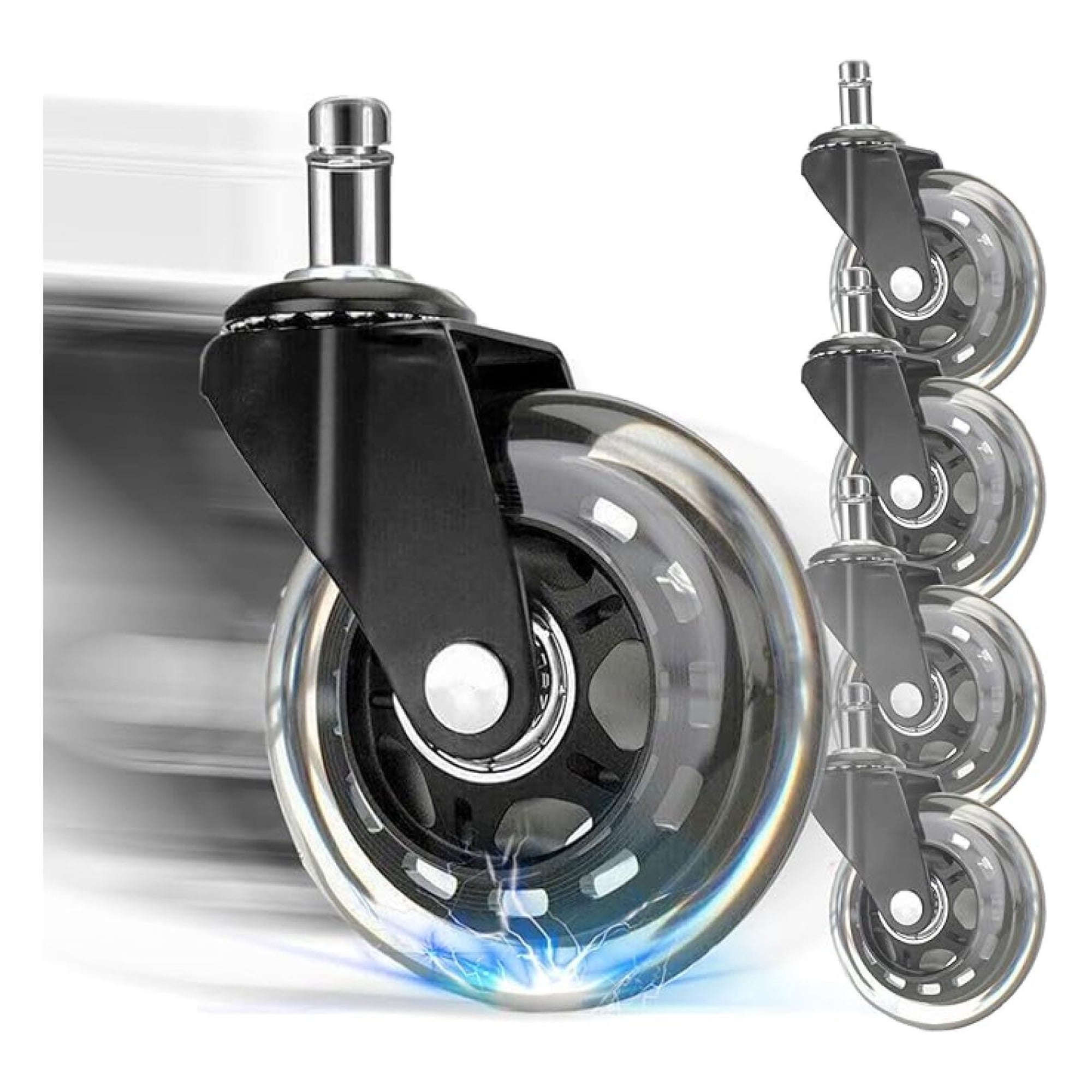
The Premium Choice. These wheels feature a hard nylon core (for strength and easy rolling) with a soft, transparent polyurethane tire. They offer the lowest rolling resistance, meaning you can glide with a pinky finger. They are non-marking, extremely durable, and resistant to flattening over time. They are widely considered the best all-around upgrade.
Soft Rubber Casters
The Grippy Choice. These are made entirely of a soft, flexible rubber compound. They provide excellent traction, which can be good if you want your chair to stay put when you stand up. However, the increased friction means they require more force to start rolling. They can also attract and hold onto dust and hair more easily than polyurethane.
Quick Analogy: Polyurethane casters are like a high-quality inline skate wheel—fast, smooth, and durable. Soft rubber casters are like a car tire—great grip, but you need more gas to get moving.
5 Signs It's Time to Replace Your Chair Casters
Not sure if you need an upgrade? Look for these tell-tale signs:
- Visible Scratches: You see fine lines or scuff marks on your floor emanating from your chair area.
- Dirt Accumulation: Your casters are caked with dust and hair, which act as an abrasive paste on your floor.
- Noisy Rolling: Your chair sounds like a rock tumbler every time you move. Quality floor-friendly casters are virtually silent.
- Stiff Movement: You have to really push or pull to get your chair to move, indicating high friction.
- Worn Wheels: Your current casters have flat spots, cracks, or have become misshapen.
How to Choose the Right Replacement Casters
Buying replacement casters is simple, but you need to get the right fit. Follow this guide:
Step 1: Measure Your Chair's Stem
Most office chairs use a standard stem size, but you must verify. The most common is 7/8" (22mm) diameter for the socket in the chair base, and 3/8" (10mm) diameter for the metal pin itself. Check if you have a grip ring (a small ring around the stem that provides friction) or a brake stem (used mainly for carpet). Universal casters often accommodate both.
Step 2: Choose Your Material
For hardwood, always choose polyurethane for the best combination of floor protection and effortless glide, or soft rubber if you prioritize maximum grip and have a perfectly flat, smooth floor.
Step 3: Check the Load Capacity
Ensure the casters are rated for your weight plus the weight of your chair. Most high-quality replacement casters are rated for 250-300 lbs per set of five, which covers most users.
Step 4: Installation
Replacement is a breeze. Simply pull the old casters straight out of the chair base (a little force may be required). Then, firmly push the new casters in until they click or are fully seated.
Beyond Casters: Protecting Your Floors Holistically
While upgrading your casters is the single most important step, combine it with these habits for ultimate floor care:
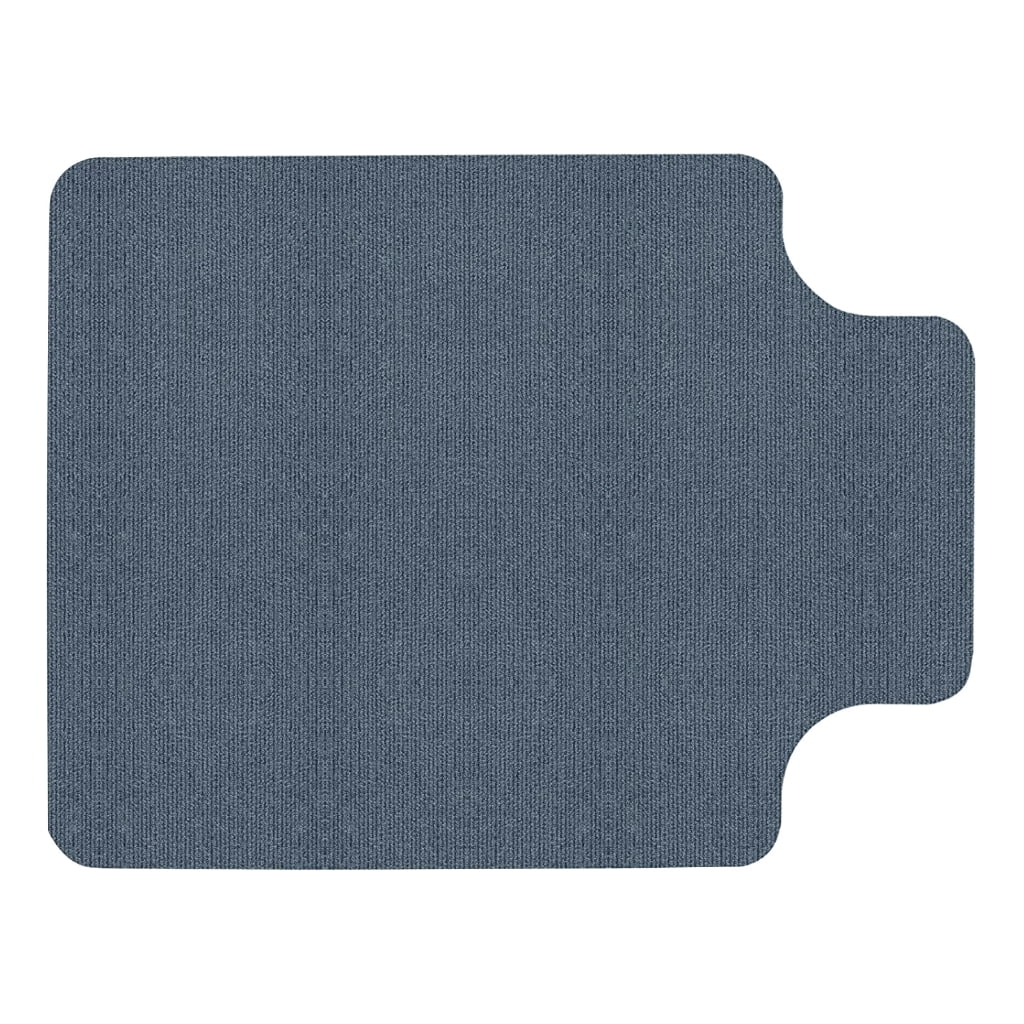
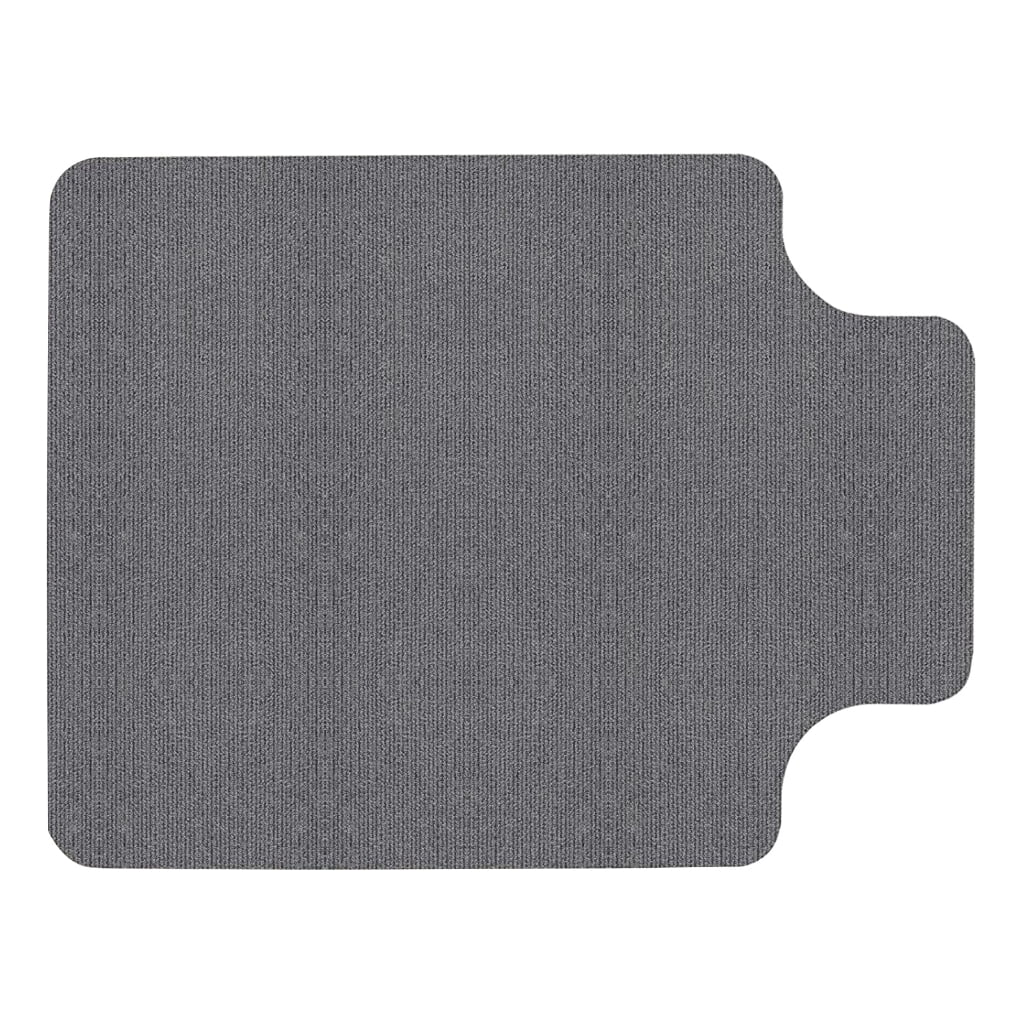
- Use a Chair Mat: A clear polycarbonate chair mat provides a seamless, protective barrier. However, ensure the mat is designed for hardwood to avoid trapping moisture. For the best of both worlds, use floor-friendly casters on a mat for maximum protection.
- Clean Your Floors Regularly: Sweep or vacuum the area under and around your chair frequently to remove the abrasive particles that casters can pick up.
- Clean Your Casters: Occasionally check your new casters and remove any hair or debris wrapped around the axle to keep them rolling smoothly.
Frequently Asked Questions About Hardwood Floor Casters
Final Verdict: Small Change, Big Impact
Protecting your hardwood floors doesn't require a complete office overhaul. It comes down to one small, affordable, and highly effective upgrade: your chair's casters. By swapping out those standard plastic wheels for high-quality office chair casters for hardwood floors, you are investing in the longevity of your flooring, the ergonomics of your movement, and the peace of mind that comes from a scratch-free workspace.
Our Recommendation: For 99% of users, a set of polyurethane rollerblade-style casters is the perfect solution. They offer the smoothest ride, the best floor protection, and the highest durability. Check the product grid above for our top-rated picks to get started today.