
Why an Office Chair Ergonomic With Lumbar Support Is Non-Negotiable
Think of your spine as a suspension bridge. Without proper support at the lower curve—the lumbar region—the entire structure sags under pressure. That's exactly what happens when you sit in a flat-backed or poorly designed chair for hours. An office chair ergonomic with lumbar support acts as that crucial pillar, maintaining the bridge's integrity and preventing long-term damage.
Ergonomic Insight: Studies from the National Institutes of Health indicate that unsupported sitting can increase disc pressure in the lower back by up to 40% compared to standing. Using a chair with targeted, adjustable lumbar support helps redistribute this load, keeping your spine in its natural, healthy S-shape.
The Anatomy of True Lumbar Support
Not all lumbar supports are created equal. A simple pillow or fixed curve might offer temporary relief, but a truly ergonomic solution is adjustable and adaptive. Here’s what distinguishes high-quality lumbar systems:
- Height-adjustable mechanism: Allows you to move the support up or down to perfectly align with your lumbar curve (usually between the bottom of your ribcage and the top of your pelvis).
- Depth-adjustable (tension) control: Lets you increase or decrease how much the support pushes into your back, accommodating your preferred sitting posture and spinal curvature depth.
- Dynamic response: Some advanced chairs feature lumbar systems that move and flex as you shift, providing continuous support whether you're typing upright or reclining slightly.
- Integrated design: The best lumbar support isn't an add-on; it's seamlessly built into the backrest's frame and mesh or foam, ensuring it works with the chair's overall ergonomics.
Lumbar Support vs. General Back Support: A Crucial Distinction
Many chairs claim to offer back support, but there's a significant difference between a padded backrest and targeted lumbar support. General back support cradles your upper and middle back, which is comfortable. Lumbar support, however, focuses on the L1-L5 vertebrae—the area that bears the brunt of seated stress. Without this specific focus, your lower back muscles must constantly engage to keep you upright, leading to fatigue, tension, and eventually, chronic pain. An ergonomic chair with lumbar support actively offloads these muscles, allowing them to relax.
3-Step Guide: Testing Lumbar Support Before You Buy
Since you can't always test chairs in person, use this mental checklist when researching online:
- Identify adjustment types: Look for chairs that offer at least height adjustment. Depth adjustment is a premium feature worth seeking. Avoid chairs with 'fixed' lumbar if you have any specific back concerns.
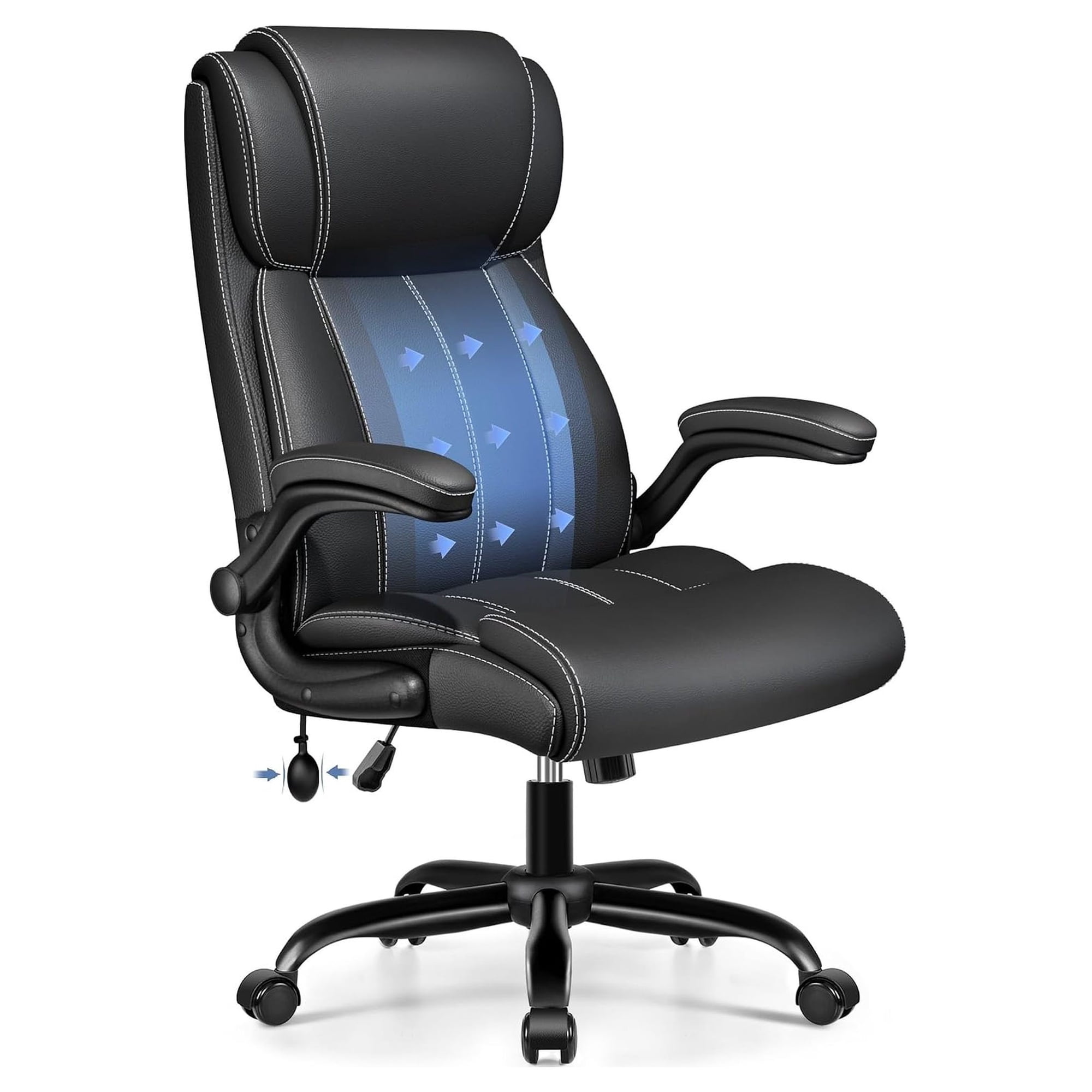
- Check the material: Lumbar support can be delivered via a firm foam pad, a tensioned mesh, or an inflatable air bladder. Mesh is breathable, foam provides a firmer 'hold', and air bladders offer micro-adjustability.
- Read user reviews for 'fit': Search reviews for comments from people with similar height or body type. See if they mention the lumbar support hitting the right spot or being too high/low.
Quick Comparison: Lumbar Support Technologies
| Lumbar Support Type | Common in Chair Type | Best For | Adjustability Level |
|---|---|---|---|
| Fixed Lumbar Pad | Budget to mid-range task chairs | General users with average build; temporary relief | None (static) |
| Height-Adjustable Lumbar | Mid-range ergonomic chairs | Users of different heights sharing one chair | Good (vertical only) |
| 4D (Height + Depth) Lumbar | High-end ergonomic / executive chairs | Individuals with specific spinal curves or back issues | Excellent (vertical & horizontal) |
| Air-Bladder / Dynamic Lumbar | Premium ergonomic / 'smart' chairs | Users wanting micro-adjustability and active support | Superior (infinite adjustability) |
Health Benefits Beyond Pain Relief
Improved Posture Automatically
When your lower back is supported, your shoulders naturally roll back, and your head aligns over your spine. Good lumbar support acts as a posture coach, making correct alignment the path of least resistance.
Enhanced Breathing & Focus
Slouching compresses your diaphragm, restricting lung capacity. By keeping your torso open, proper lumbar support allows for deeper, more oxygenating breaths, which can directly improve concentration and reduce fatigue.
Reduced Hip and Knee Strain
Spinal alignment affects your entire kinetic chain. Correct lumbar support helps maintain a balanced pelvis, which in turn promotes better weight distribution through your hips and thighs, reducing pressure points.