
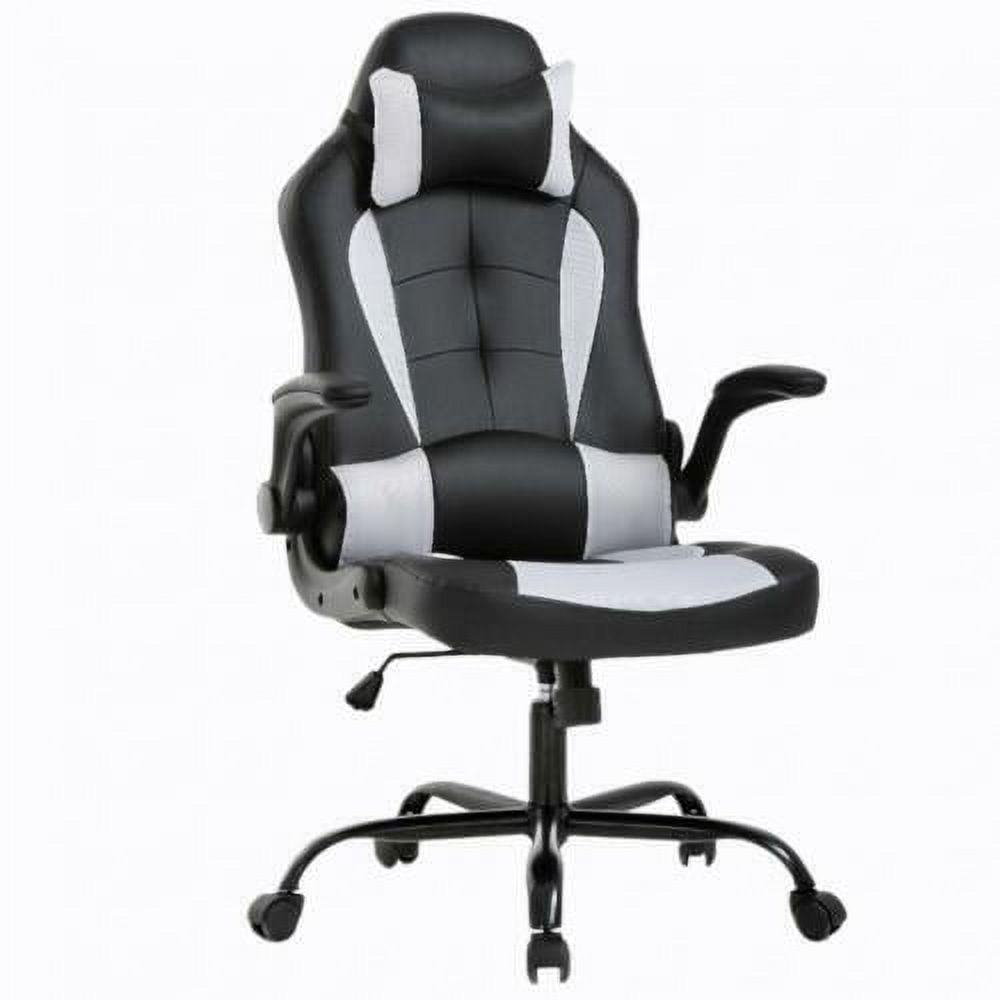
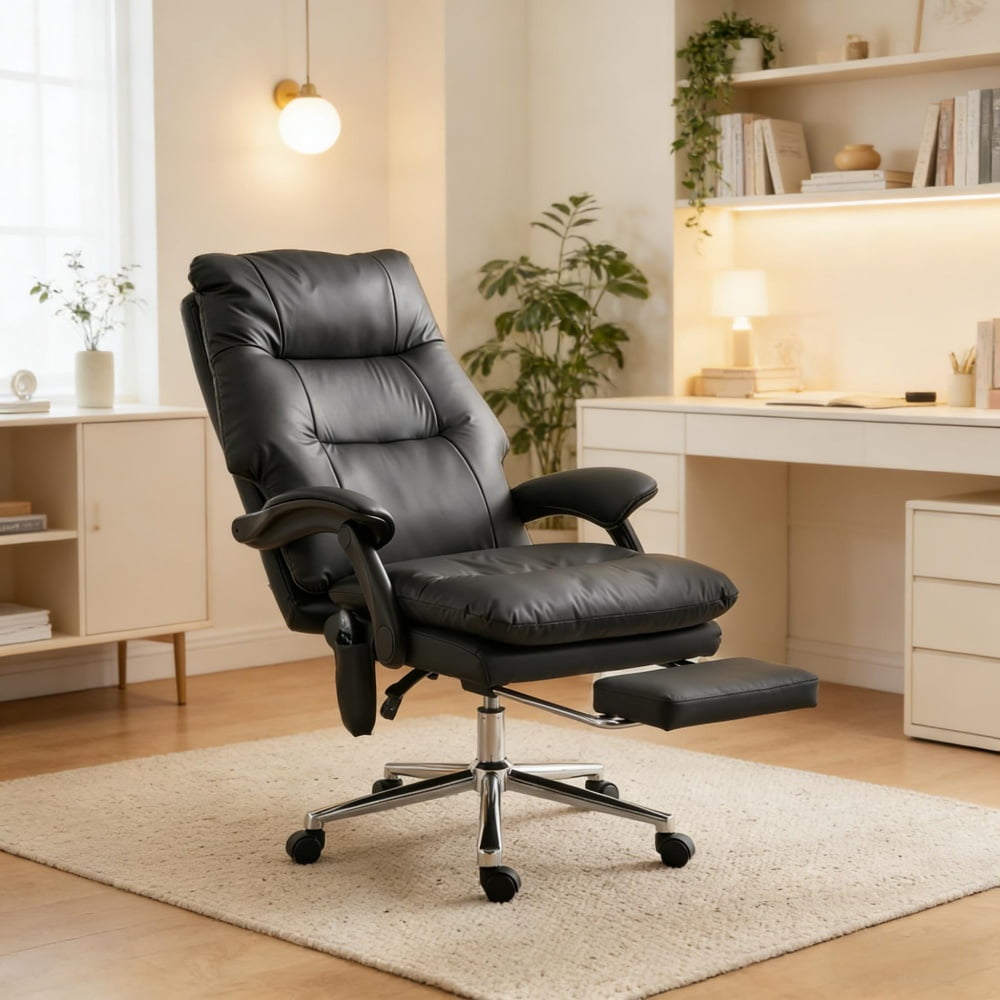
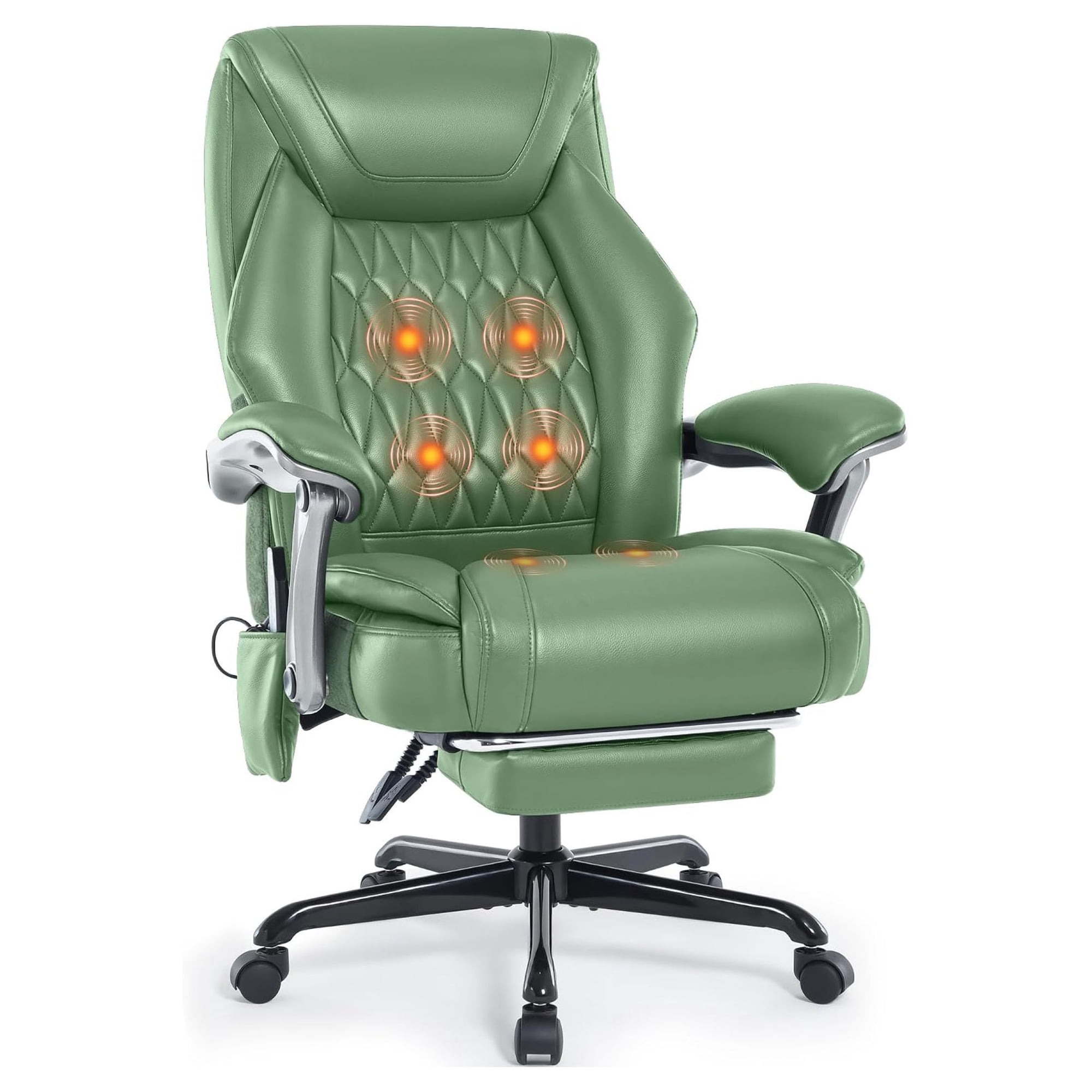
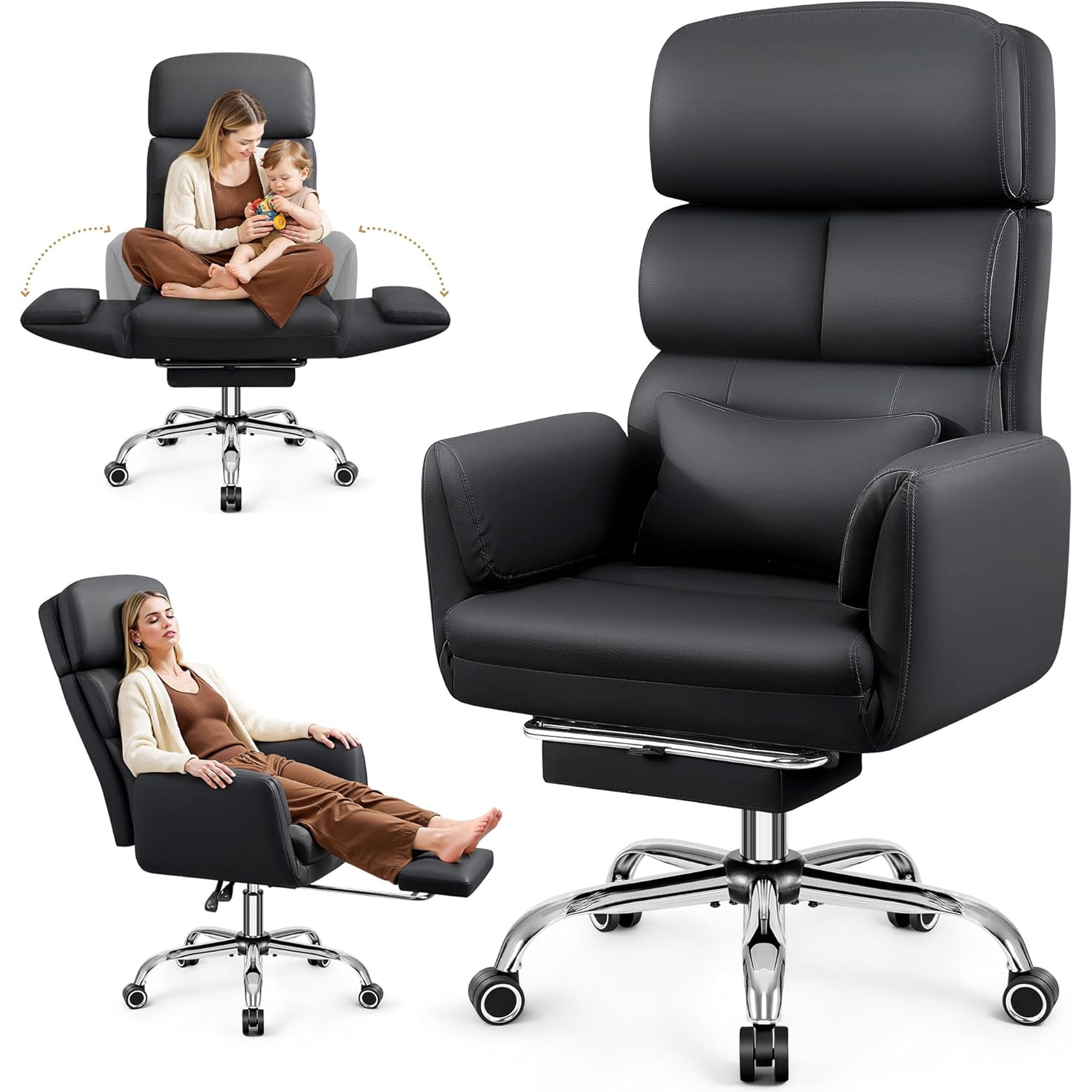
Reimagine Your Workday: The Rise of the Leather Reclining Office Chair
The traditional image of an executive—rigidly upright, dictating memos from a stiff-backed throne—is fading. Today's leaders understand that peak performance is intertwined with physical well-being. Enter the leather reclining office chair: a piece of furniture that bridges the gap between high-powered professionalism and the human need for movement and rest. It’s like having a first-class seat on an airplane, but for your office—a place where you can conquer spreadsheets, then lean back to think strategically without a squeak or a groan.
For years, the choice was binary: a professional-looking leather chair with limited movement, or a comfortable recliner that looked out of place in a business setting. Modern engineering has dissolved that boundary. We're now seeing chairs that marry top-grain leather with aerospace-grade aluminum mechanisms, offering smooth, synchronized recline that supports your body from upright task mode to a near-horizontal resting position. This isn't just about luxury; it's a response to ergonomic research showing that dynamic sitting—changing your posture throughout the day—is crucial for spinal health.
Decoding the Leather Recline: What Sets These Chairs Apart
Not all leather chairs that lean back are created equal. The magic lies in the synergy of three core components: the material, the mechanism, and the ergonomic intent. Let's dissect what makes a true leather reclining office chair a worthwhile investment.
The Anatomy of a Premium Recline Mechanism
Think of the recline mechanism as the chassis of a sports car. A cheap mechanism will feel jerky, may tilt unevenly, and could wear out within a year. A premium mechanism is engineered for fluidity and durability.
- Synchronous vs. Knee-Tilt: In a synchronous mechanism, the backrest and seat move together at a predetermined ratio (e.g., for every 3 degrees the back goes back, the seat lifts by 1 degree). This keeps you supported and prevents the dreaded "shirt ride-up." A knee-tilt mechanism pivots from the front, allowing your feet to stay planted while your entire body reclines—great for active sitting. High-end leather recliners often use a hybrid system.
- Locking Positions & Tension Control: The best chairs allow you to lock the recline at any angle, not just a few preset positions. This is crucial for finding your perfect "thinking" or "reading" posture. Equally important is tilt tension adjustment—a knob that lets you dial in the resistance based on your body weight. A 250lb executive needs a firmer spring than a 150lb manager.
- Wall-Hugger Technology: A common concern is space. "Wall-hugger" mechanisms are designed so that as you recline, the seat base slides forward, allowing the backrest to tilt back without banging into the wall behind you. If your office is compact, this feature is non-negotiable.
Leather Grades: From "Genuine" to "Full-Grain"
The term "leather" on a product page can be misleading. It's like the difference between a fast-food burger and a dry-aged steak—both are beef, but the experience is worlds apart.
Full-Grain / Top-Grain Leather
This is the cream of the crop. Full-grain retains the natural surface texture, developing a beautiful patina over time. Top-grain is sanded and finished for a more uniform look. Both are incredibly durable, breathable, and will last 15+ years. They feel supple and smell like luxury. A chair with this leather is an heirloom piece.
Bonded Leather / PU Leather
Bonded leather is made from leather scraps mixed with polyurethane—it looks like leather initially but can peel and crack within a few years. PU (polyurethane) leather is entirely synthetic. While easier to clean and more affordable, it doesn't breathe as well and lacks the prestige and longevity of genuine hides. For a reclining chair you'll use daily, investing in top-grain pays off in comfort and appearance.
Ergonomics Meets Relaxation: The Hidden Health Benefits
Reclining isn't just about napping at your desk (though that 20-minute power nap is scientifically proven to boost productivity!). It's about dynamically changing the load on your spine. According to a study from the University of Alberta, sitting at a 135-degree recline puts significantly less stress on spinal discs and muscles than hunching forward at 90 degrees. A quality leather reclining office chair facilitates this healthier posture.
📉 Reduced Disc Pressure
Leaning back opens up the angle between your thighs and torso, reducing pressure on lumbar discs by up to 40% compared to upright sitting.
🩸 Improved Circulation
Reclining takes pressure off the backs of your thighs, allowing blood to flow more freely to your lower legs, reducing the risk of swelling and fatigue.
🧠 Enhanced Cognitive Breaks
A quick recline signals a mental shift. It allows for micro-breaks that reset focus, combating the afternoon slump more effectively than coffee alone.
📏 Better Spinal Alignment
Chairs with headrests integrated into the recline support your neck and head, maintaining a neutral spine alignment even when you're tilted back.
Frequently Asked Questions About Leather Reclining Office Chairs
Final Verdict: Is a Leather Reclining Chair Your Next Smart Purchase?
Choosing a leather reclining office chair is a declaration that you value both your professional image and your personal health. It's an acknowledgment that the best work doesn't always happen at a rigid 90-degree angle. These chairs represent a shift towards a more holistic view of the workplace—one where comfort fuels productivity and style never takes a backseat.
Before you click "buy," remember to assess your space, prioritize a genuine leather and a robust mechanism, and consider the ergonomics that matter most to you. Whether you're closing deals or drafting next quarter's strategy, the right chair will support you through every lean and every power pose. It's more than furniture; it's an investment in your daily performance.