
The Executive’s Choice: Dark Brown Leather
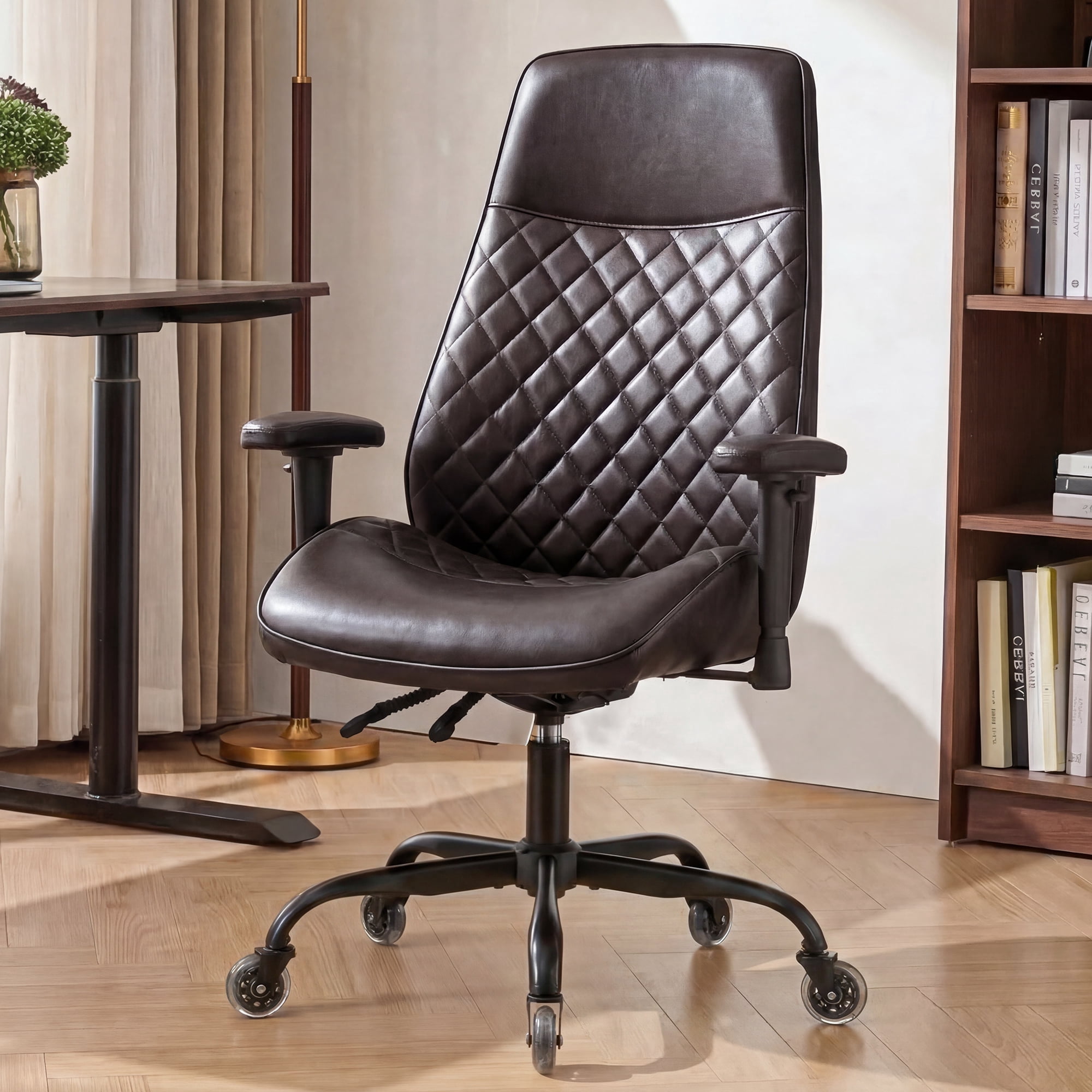
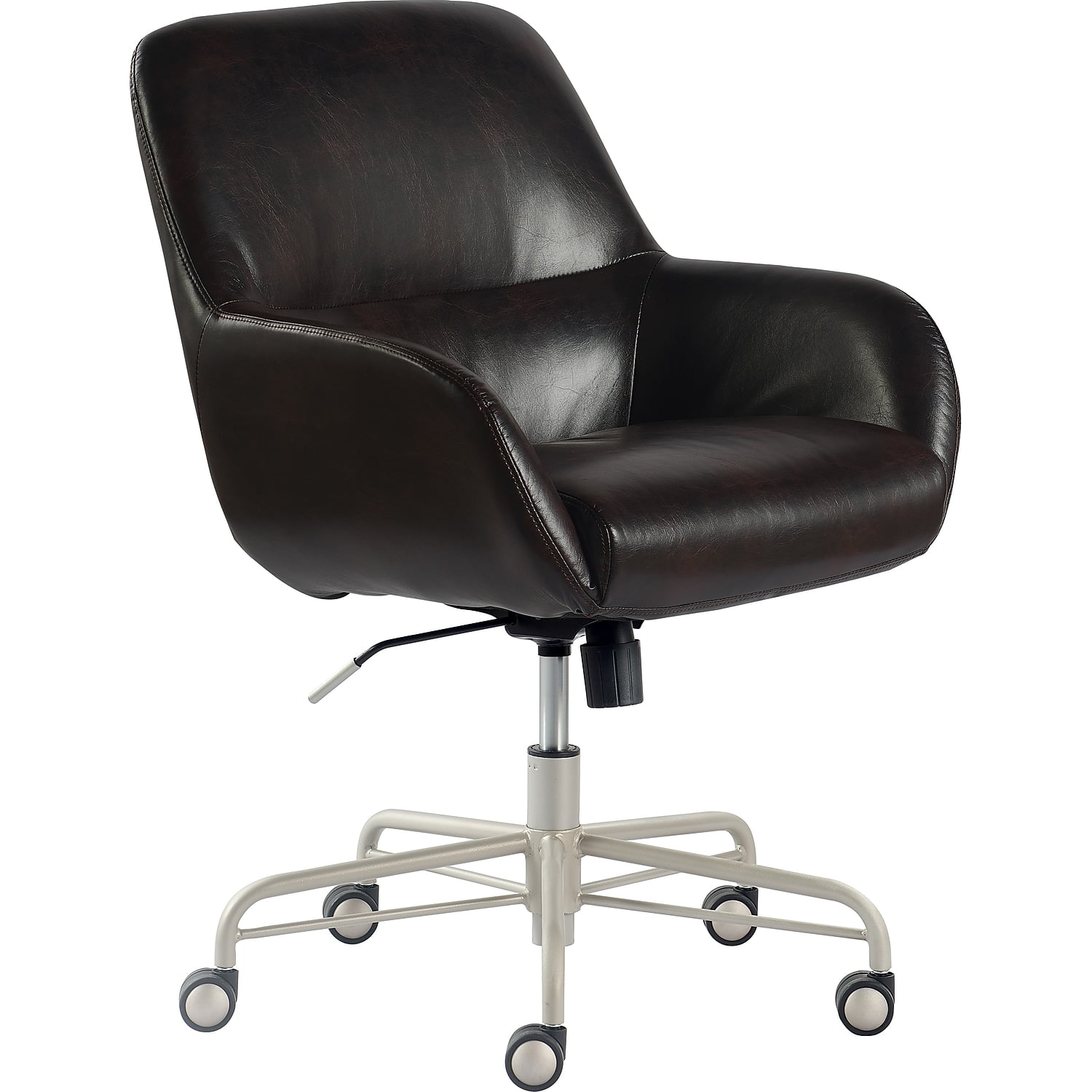
A dark brown leather office chair is more than a place to sit—it’s a statement. Picture a traditional law office with floor-to-ceiling bookshelves, or a modern CEO’s suite with a walnut desk: the deep, rich tones of brown leather anchor the room. Unlike black, which can feel stark, or gray, which can seem reserved, dark brown conveys grounded confidence. It’s the color of well-worn saddles, classic library armchairs, and heirloom-quality furniture. For the professional who values both heritage and comfort, this chair becomes a silent partner in every decision.
But aesthetic appeal is only half the story. Today’s dark brown leather chairs integrate advanced ergonomics—adjustable lumbar, synchronized recline, and waterfall seats—hidden beneath that timeless hide. Whether you’re negotiating deals or diving into deep work, the right chair supports your body while reinforcing your personal brand. In this guide, we’ll explore why dark brown leather remains a top-tier choice, how to select the perfect one, and how to make it last for over a decade.
The Anatomy of a Premium Dark Brown Leather Chair
Unlike generic office seating, a true executive-grade dark brown leather chair is built around four pillars: leather grade, ergonomic core, construction integrity, and design harmony. Let’s break each down.
1. Leather Grades: From Bonded to Full-Grain
Full-Grain
The pinnacle. Retains the natural grain, markings, and strength. Develops a beautiful patina. Expect to pay $1,200+ but lasts 15–20 years.
Top-Grain
Sanded and finished for uniformity. More stain-resistant, slightly less breathable. Excellent for daily use with 10–15 year lifespan.
Bonded/“Genuine”
Leather fibers bonded with polyurethane. Often looks like leather initially but peels and cracks in 3–5 years. Avoid if you want longevity.
Key insight: For a dark brown office chair, full-grain or top-grain leather is non-negotiable. The depth of color in top-grain can be more uniform, while full-grain offers natural variation that many executives find appealing.
2. Ergonomic Features Hidden Under Leather
Because leather is less forgiving than mesh, the underlying mechanism must be superior. Look for these non-negotiable features:
- Independent lumbar adjustment – both height and depth. Your lower back needs support that stays put, even when leaning back.
- Seat depth slider – a 2-4 inch adjustment ensures proper thigh support without pressure behind the knees.
- 4D armrests – height, width, depth, and pivot. You’ll be surprised how much shoulder tension they relieve.
- Synchro-tilt mechanism – allows the seat and back to move at a balanced ratio, keeping your feet planted while reclining.
3. Construction That Carries Weight
A dark brown leather chair often has a wider, more substantial frame. Evaluate these structural points:
- Base material: Polished aluminum or heavy-duty nylon. Aluminum is lighter and more premium; reinforced nylon is still strong but less expensive.
- Gas lift: Class 4 or 5 (rated for heavy use). A Class 3 lift may fail under 8+ hours of daily use.
- Casters: Dual-wheel casters (often 3” diameter) roll smoothly on carpets and hard floors. For hardwood, ensure they’re soft rubber.
- Frame construction: Plywood or metal seat pan? Metal lasts longer; high-quality plywood with webbing can be comfortable but may sag over a decade.
4. Design Harmony: Matching Your Workspace
Dark brown leather ranges from milk chocolate to espresso to cognac undertones. Consider your office palette:
- • Espresso (nearly black-brown): Pairs with black, white, and chrome. Very modern.
- • Mahogany/chestnut (reddish-brown): Complements cherry wood and brass accents. Traditional law/executive.
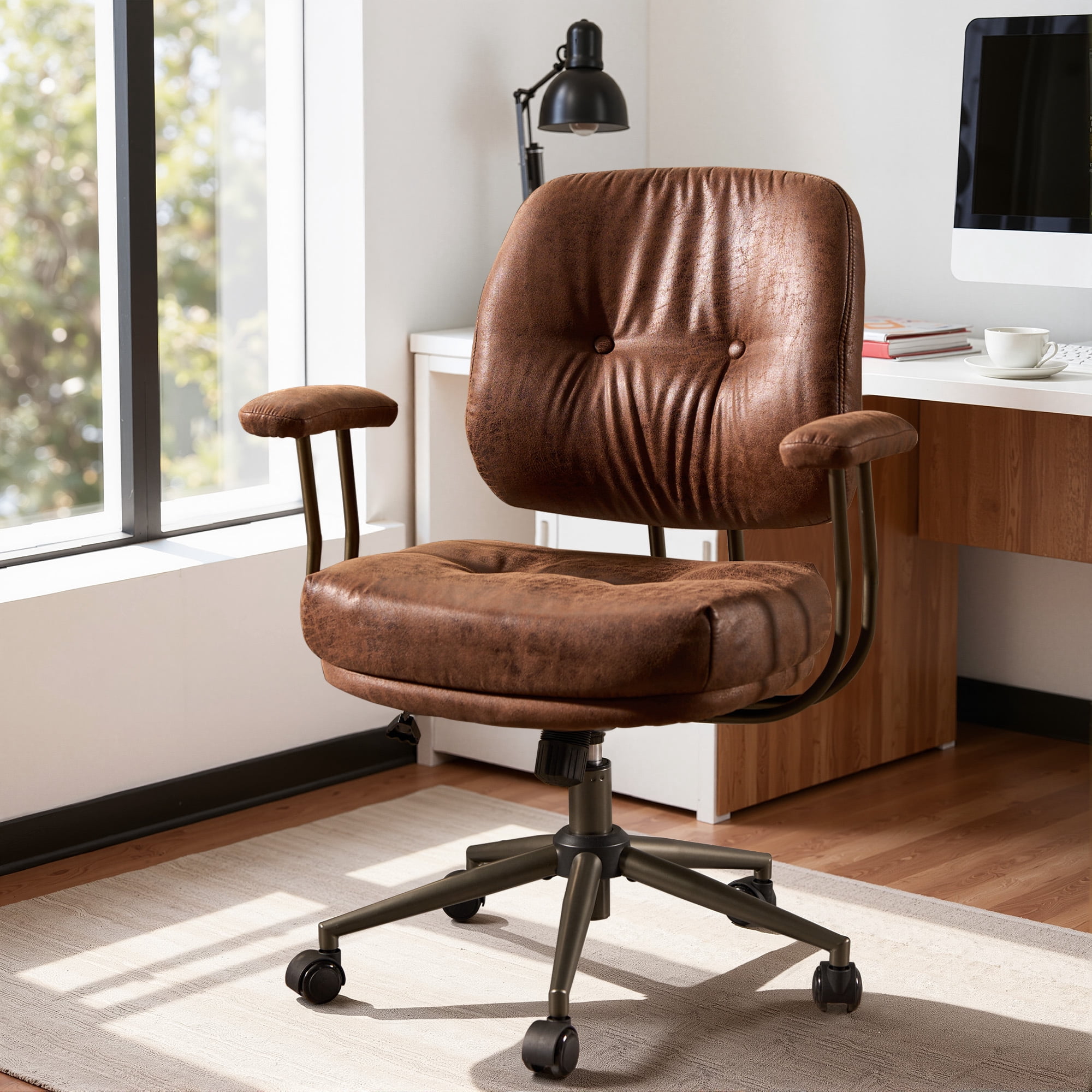
- • Saddle/tobacco (warmer, lighter brown): Works with light oak, cream walls, and plants. Inviting.
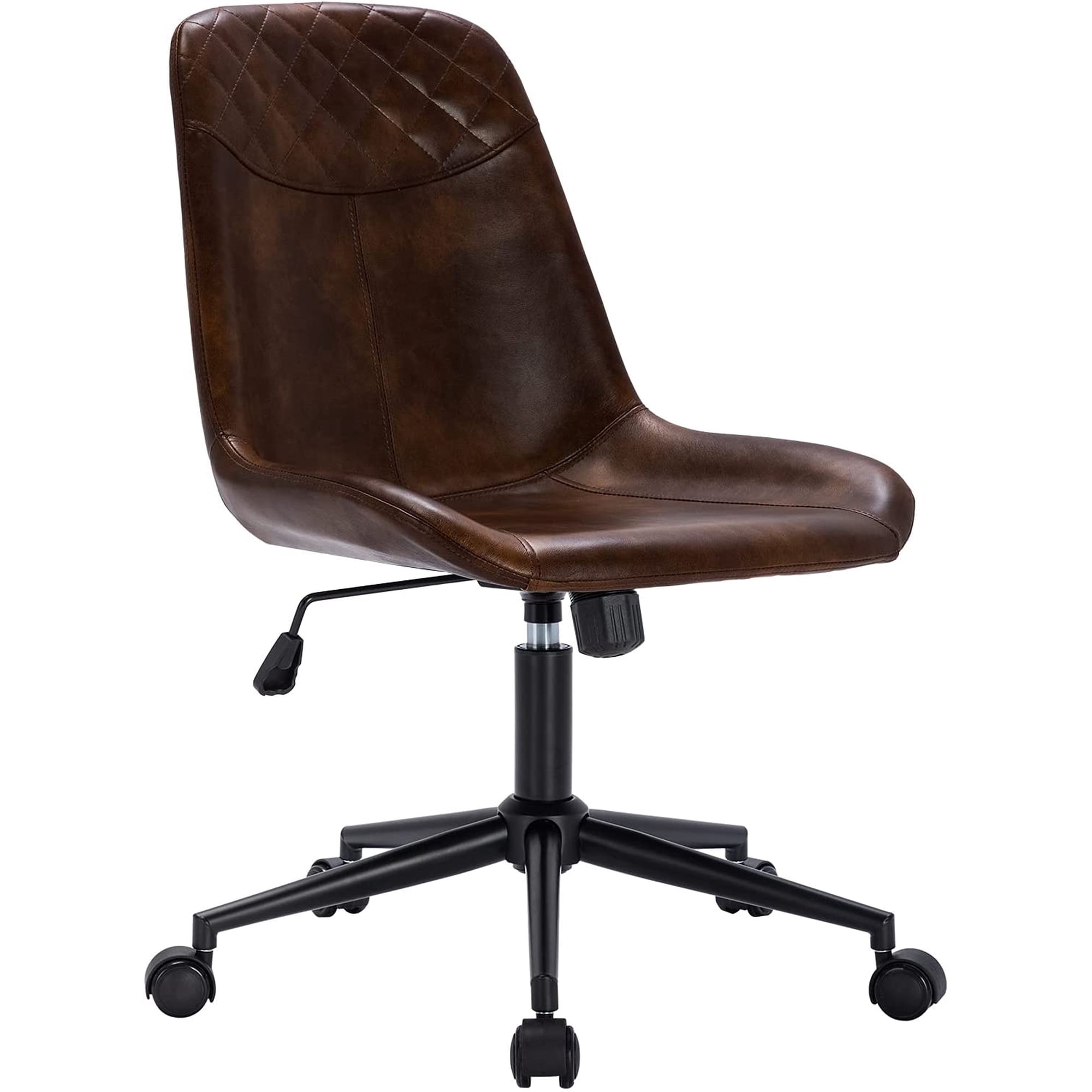
Also examine stitching: contrast stitching (cream or tan) gives a rugged, artisanal look; tonal stitching is sleeker and more formal.
Quick Comparison: Dark Brown Leather vs Other Finishes
| Feature | Dark Brown Leather | Black Leather | Fabric/Mesh |
|---|---|---|---|
| Warmth perception | High – inviting | Neutral/cool | Varies |
| Hide scuffs/dust | Excellent (brown hides light marks) | Moderate (dust visible) | Poor (stains show) |
| Traditional office fit | Perfect with wood | Better with modern | Casual |
| Aging character | Patina (improves) | Can fade to gray | Fading/pilling |
Selecting Your Dark Brown Leather Chair: A 5-Step Framework
Step 1: Assess your “seat time” & body
If you sit 8+ hours, prioritize ergonomics over looks. Measure your hip width and thigh length. Most executive chairs have 20-22” seat width; if you need more, seek “wide seat” models (available in dark brown leather, often under “big and tall” categories).
Step 2: Choose your leather type
For daily use in a private office, top-grain is the smart balance of durability and cost. For a corner office where impression matters, full-grain aniline (semi-aniline for stain resistance) is the ultimate.
Step 3: Test the mechanism (in person or via reviews)
Read independent reviews focusing on “tilt tension range” and “lumbar support.” A common complaint with leather chairs is that the lumbar is fixed—avoid those. You want at least height-adjustable lumbar.
Step 4: Verify the return policy & warranty
Since you can’t “feel” online, ensure at least 30-day returns. Look for 10+ years on frame, 5 years on mechanics, 2-3 years on leather.
Step 5: Match your flooring and desk height
Measure your desk underside height. Executive chairs often have a seat height range of 18-22”. Ensure you can sit with thighs parallel to floor and feet flat.
Analogy: Choosing a dark brown leather chair is like selecting a classic leather briefcase. You don’t buy it for one season—you buy it for a career. The leather will soften, the brass (if any) will patina, and it will become unmistakably yours. Skimping on quality here means replacing it in a few years, which is both wasteful and less sustainable.
Frequently Asked Questions: Dark Brown Leather Office Chairs
Final Verdict: Invest in Timeless Elegance
A dark brown leather office chair is not merely a purchase; it’s an investment in your daily comfort and professional legacy. By choosing a chair with full-grain or top-grain leather, robust ergonomic adjustments, and solid construction, you create a workspace that inspires confidence. The right chair will support thousands of hours of work, quietly signaling your attention to quality. As you browse the options above (updated via our Walmart feed), remember to prioritize your physical needs alongside aesthetics. A chair that looks perfect but doesn’t fit your body will become an expensive regret. Use the framework in this guide, test if possible, and welcome a piece of furniture that will age as gracefully as you do.