
Why Your Standing Desk Needs a Dedicated Ergonomic Chair
Standing desks have become a staple in modern, health-conscious offices. They offer a powerful antidote to the health risks associated with prolonged sitting. However, the real secret to a successful and sustainable standing desk setup lies in having the right ergonomic office chair for a standing desk. It's not just about standing; it's about giving yourself the option to transition smoothly. This dynamic duo of stand and sit is the key to boosting energy, sharpening focus, and protecting your long-term musculoskeletal health.
💡 Expert Insight: Studies show that alternating between sitting and standing every 30-45 minutes can burn up to 60 more calories per hour and significantly lower the risk of back and neck pain. Having the right chair encourages this healthy cycling.
Key Features of an Ergonomic Standing Desk Chair
An ergonomic office chair for a standing desk is distinct from a traditional office chair. It's engineered to function at higher heights. Here's what to look for:
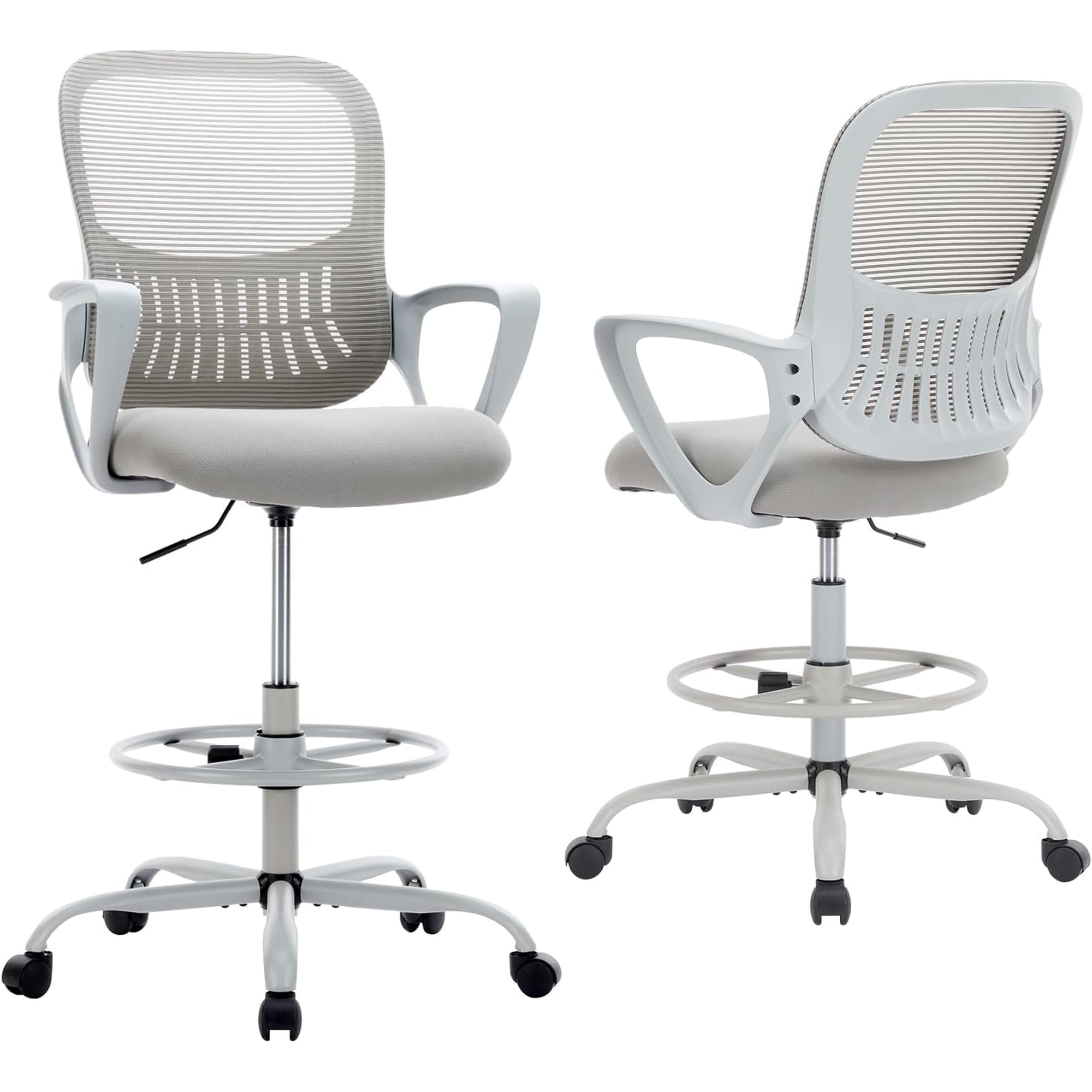
- Extended Height Range: A taller gas lift is the most crucial feature, allowing the seat to elevate to your standing desk's height (typically 22" - 30").
- Supportive Footrest Ring: Because your feet may not touch the floor at the highest setting, a footrest ring is essential for taking pressure off your legs and allowing your body to relax into the seat.
- Dynamic Lumbar Support: Good support that moves with you is vital. Look for adjustable lumbar support that can be fine-tuned to support your unique spine curve, especially when you're leaning back or forward.
- Seat Depth Adjustment: This allows you to adjust the distance between the front of the seat and the backrest, ensuring you can sit with your back firmly supported while leaving a fist-sized gap at the back of your knee for proper circulation.
Choosing the Right Ergonomic Chair for Your Standing Desk
Selecting the perfect match for your adjustable desk involves a few key considerations. Use this guide to make an informed choice:
| Feature | Why It Matters for a Standing Desk | What to Look For |
|---|---|---|
| Height Range | Must match your standing desk height to maintain ergonomic posture. | Seat height that reaches your desk level. Look for a cylinder that adjusts at least 8 inches. |
| Footrest Ring | Provides critical leg support when the chair is at standing height, preventing dangling feet and reducing pressure on thighs. | A sturdy, adjustable footring that supports your feet comfortably at the highest settings. |
| Lumbar Support | Prevents slouching and lower back pain, especially important when leaning back during seated breaks. | Adjustable height and depth to fit the natural curve of your spine. |
| Seat Comfort | Ensures you can sit comfortably for the periods you're not standing, encouraging you to alternate postures. | High-density foam or a contoured mesh seat that promotes airflow and reduces pressure points. |
Health Benefits of a Sit-Stand Workstation
A high-quality ergonomic office chair designed for a standing desk unlocks a range of significant health benefits:
Spinal Health
Alternating postures reduces static stress on your spine, lowering the risk of chronic back pain by up to 32%.
Better Circulation
Moving between sitting and standing promotes healthy blood flow, reducing the risk of cardiovascular issues.
Increased Focus
The ability to change positions helps combat the mid-afternoon energy slump, leading to a 45% boost in productivity.
Postural Awareness
The dynamic nature of a sit-stand desk encourages you to be more aware of your posture, leading to long-term improvements.
Standing Up to the Challenge: Common Myths About Standing Desk Chairs
Choosing an ergonomic chair for a standing desk often comes with a few questions. Let's debunk some common myths and clarify what really makes a chair work for you.
Myth 1: Any tall chair will work.
No. A generic drafting chair might have the height, but it lacks the *ergonomic* features. A proper chair for a standing desk provides targeted lumbar support, seat depth adjustment, and a comfortable footring, all of which are essential for short or long seated periods.
Myth 2: I'll just stand all day, so I don't need a good chair.
This is a common pitfall. Research suggests that prolonged standing is just as detrimental as prolonged sitting. A quality ergonomic chair enables you to shift postures, which is the core benefit of a standing desk. It's about movement, not a single fixed position. Having a comfortable, supportive chair is what makes the "sit" part of your sit-stand routine actually beneficial.
Myth 3: A footrest ring is a luxury, not a necessity.
For a standing desk chair, a footring is arguably as important as the seat itself. When the seat is elevated to 24-30 inches, your feet simply won't reach the floor. This pressure on the underside of your thighs can cut off circulation and lead to leg fatigue. A footring provides the necessary support, allowing you to relax in the chair and maintain a comfortable, ergonomically sound position.