
Why Your Choice of Office Executive Chair Matters
Imagine your office executive chair as the command center of your professional life. It's not just a place to sit; it's the platform from which you make decisions, lead meetings, and drive projects forward. For many leaders, the search for the perfect office executive chair is a quest for the ideal balance between representing authority and maintaining personal well-being during long hours of work.
The right chair does more than just look impressive. It actively supports your physiology. According to the American Posture Institute, professionals who use ergonomically optimized seating can experience up to a 40% reduction in lower back pain and a significant boost in concentration. A poorly chosen chair, on the other hand, can be a silent contributor to fatigue, distraction, and long-term health issues, undermining the very focus you need to excel.
Leadership Insight: Your environment shapes your mindset. An office executive chair that fits you perfectly sends a subconscious signal of preparedness and control, both to yourself and to everyone who enters your office. It's an investment in your most valuable asset—yourself.
Anatomy of an Office Executive Chair: Beyond the Leather
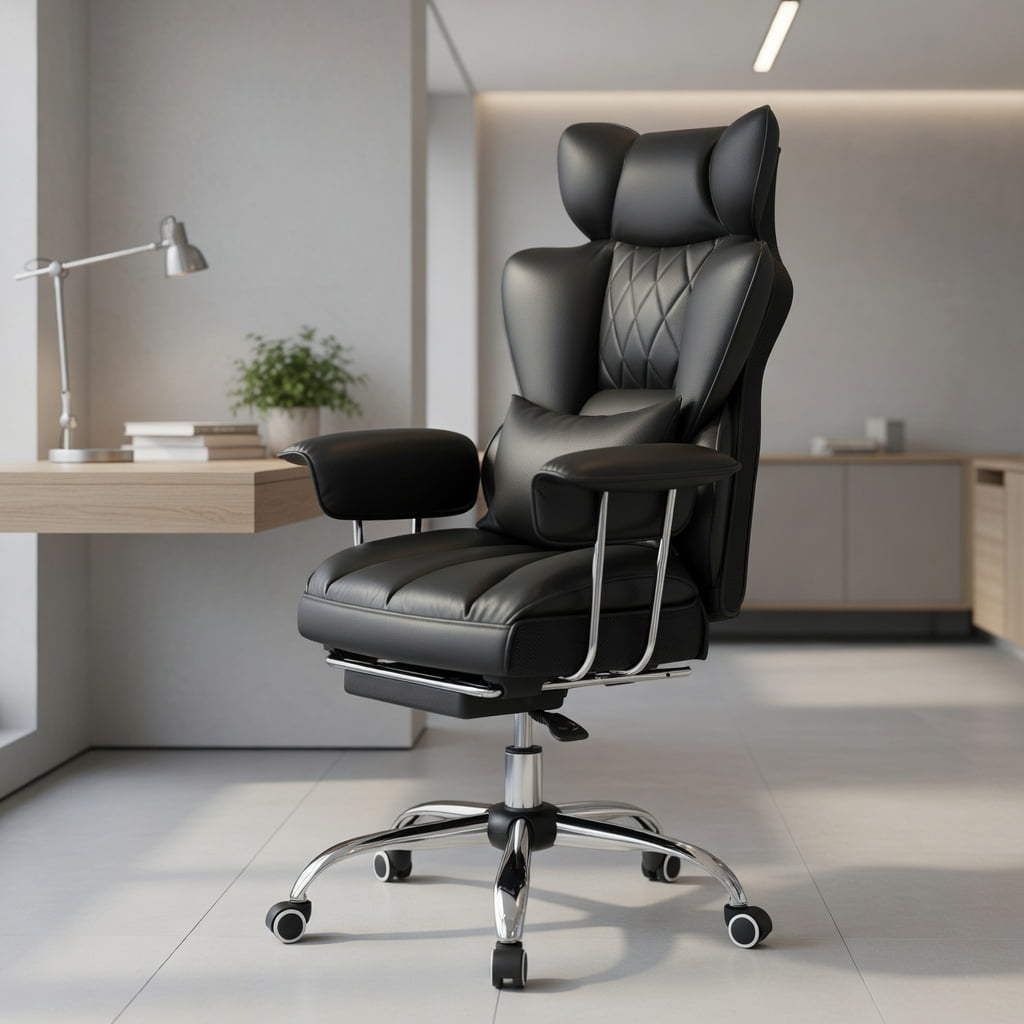
To make an informed choice, it helps to understand the components that define a true office executive chair. It's more than just a high back and plush padding. Let's break down the key elements that contribute to its function and feel.
🔧 Deconstructing the Chair: Core Components
- High-Performance Base: Usually a 5-star design made of polished aluminum or heavy-duty nylon for stability.
- Premium Casters: Designed for your floor type (hardwood vs. carpet) to ensure smooth, quiet movement.
- Gas Lift Mechanism: The pneumatic cylinder that allows for smooth seat height adjustment, certified for safety (e.g., BIFMA or TÜV).
- Multi-Layer Cushioning: High-resilience foam or memory foam that provides comfort without bottoming out over time.
- Synchronized Tilt Mechanism: Allows the backrest and seat to move in a coordinated, supportive way as you recline.
- Upholstery Grade: From full-grain leather that develops a patina to high-quality mesh that prioritizes airflow.
1. The Support System: Your Chair's Inner Strength
The internal mechanics of an office executive chair are its unsung heroes. A common pitfall is focusing solely on looks and neglecting the engineering inside. Look for chairs with a solid steel frame and a robust tilt mechanism. The "synchronized tilt" feature is particularly valuable for executives. It allows the chair to move with your body, keeping your feet planted on the floor and your line of sight steady, which is essential for maintaining focus during deep thought or video calls.
2. Material Selection: The Language of Your Space
The material of your office executive chair speaks volumes before you even say a word.
- Leather (Genuine & Top-Grain): The classic choice for corner offices. It conveys tradition, success, and permanence. It's durable and molds to your body over time. However, it can be warm and requires occasional conditioning to prevent cracking.
- Premium Fabric: A rising trend in modern executive suites. High-quality fabrics offer breathability, a vast array of colors and textures, and a softer, more approachable feel. They can be easier to maintain with stain-resistant treatments.
- High-Grade Mesh: Perfect for the executive who prioritizes cool comfort and a forward-thinking, tech-savvy image. Modern mesh chairs have evolved significantly, offering excellent lumbar support without sacrificing a sophisticated look.
Choosing a material is like choosing a business suit: it should fit well, be appropriate for your environment, and make you feel confident.
3. Ergonomics: The Science of Sustained Performance
Ergonomics in an office executive chair isn't about having many levers; it's about having the right adjustments that actually get used. A study by Cornell University found that workers whose chairs were properly adjusted reported 17% higher productivity. Here are the adjustments that matter most:
- Independent Lumbar Support: Not just a built-in curve, but a pad that you can raise and lower to fit the small of YOUR back.
- Seat Depth (Slider): Crucial for ensuring you have a fist-width gap between the back of your knee and the seat edge, promoting proper circulation.
- 4D Armrests: Armrests that adjust in height, width, depth, and pivot angle allow you to support your arms whether you're typing, reading, or taking a call, relieving shoulder tension.
- Adjustable Headrest: Often overlooked, but vital for executives who lean back to think or take calls, providing crucial support for the neck and head.
4. Aesthetics and Professional Presence
An office executive chair is a piece of power furniture. Its design contributes to the overall atmosphere of your office. A chair with clean lines and polished chrome might suit a minimalist, modern space, while a tufted leather chair with rich walnut arms feels at home in a traditional, wood-paneled office. The visual weight and silhouette of the chair should complement your desk and the overall brand image you wish to project.
Data Point: The Global Ergonomic Office Chair Market is projected to grow significantly, driven by increased awareness of workplace wellness. Executives are leading this charge, recognizing that a superior office executive chair is a tool for attracting and retaining top talent—for themselves.
5. The "Goldilocks" Principle: Finding Your Fit
Not every impressive-looking chair will be the right fit for your body. Just as you wouldn't buy a suit off the rack without trying it on, you shouldn't select an office executive chair based on a photo alone. Here's a simple checklist for your search:
- Check the Width: Ensure the seat pan comfortably supports your thighs without pressing on the sides.
- Test the Back Height: A high-back executive chair should support your entire spine, including your shoulders. If you're taller, you may need an "extra tall" version.
- Feel the Cushion: Sit for at least 10-15 minutes. Does the cushion feel supportive or do you sink to the hard base? High-resilience foam should spring back quickly.
- Operate the Controls: Are the levers and paddles easy to reach and use while seated? You shouldn't need to be a contortionist to adjust your chair.
- Consider the Long Haul: If you spend 8+ hours in your chair, prioritize advanced ergonomics and breathability over pure aesthetics.
Think of your search for an office executive chair like choosing a high-performance vehicle. The exterior (design) gets your attention, but the engine (ergonomics), suspension (support), and interior (materials) determine the quality of the ride.
Frequently Asked Questions About Office Executive Chairs
Conclusion: Your Leadership Throne Awaits
Selecting the right office executive chair is a decision that marries form and function. It's about choosing a partner for your workday that will support your physical health, enhance your focus, and reflect your professional standing. Don't rush the process. Consider how you work, the image you want to project, and the features that will genuinely make a difference in your daily comfort.
The market offers an incredible range of options, from time-honored leather classics to innovative, ergonomic marvels. By focusing on the quality of materials, the range of adjustability, and the chair's overall build, you can find a seat that not only looks the part but also keeps you performing at your best for years to come. Your leadership journey deserves a foundation of comfort and support—start by building it with the perfect chair.