
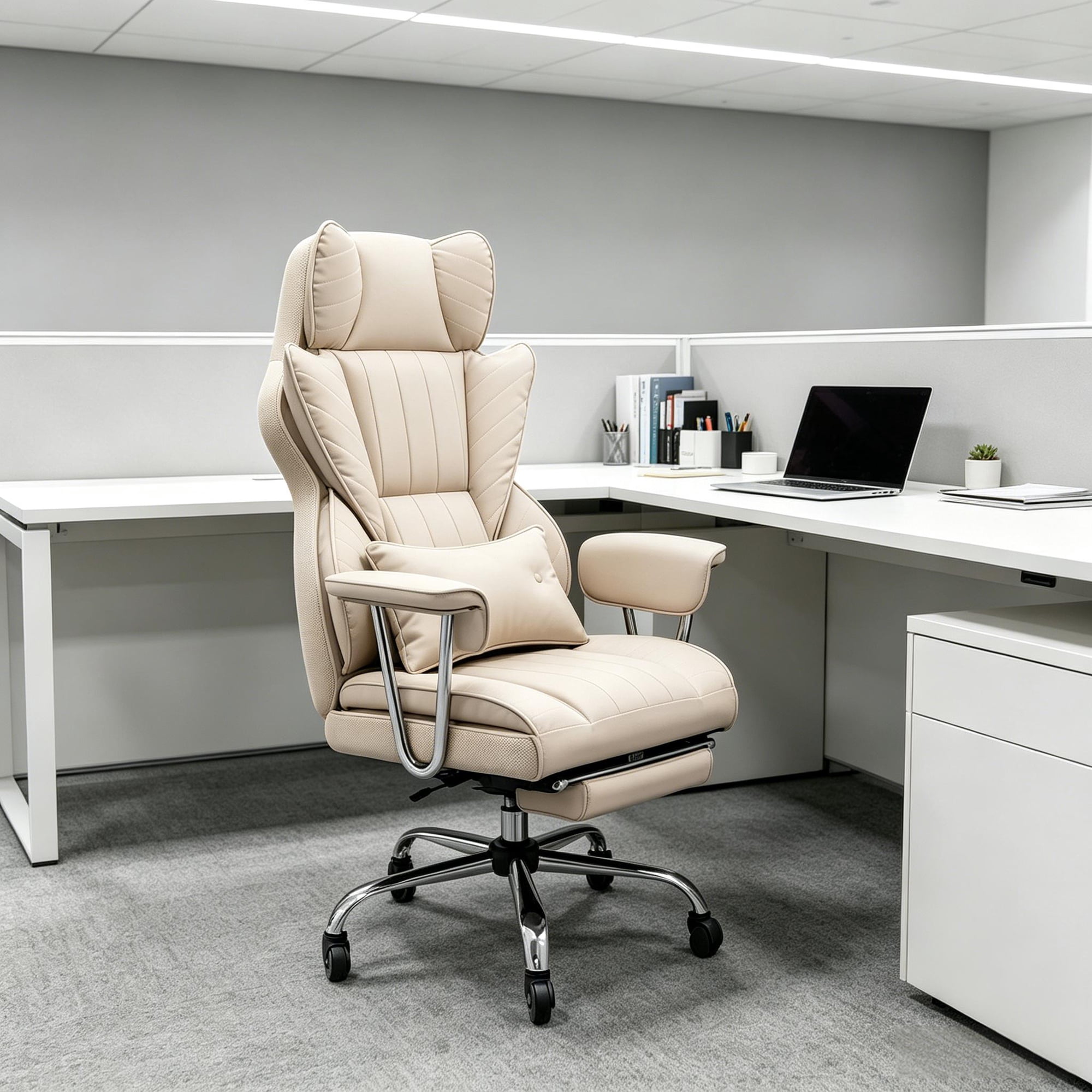
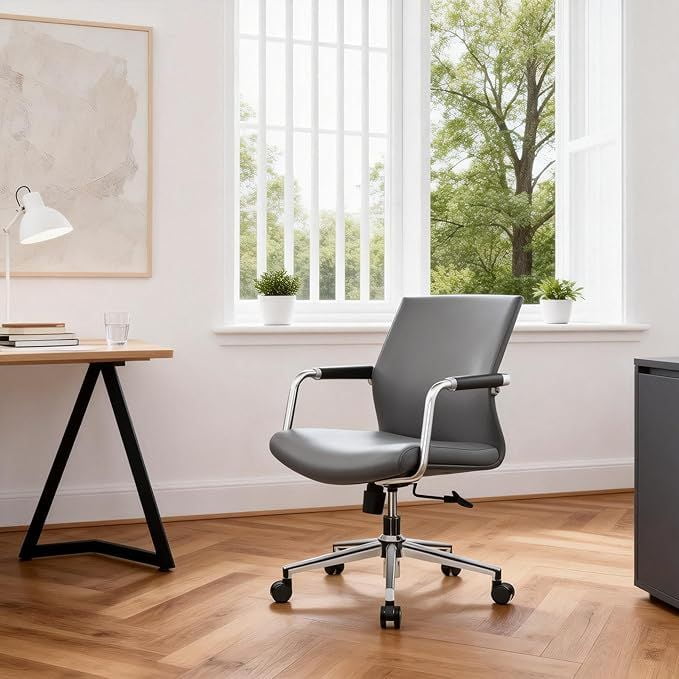
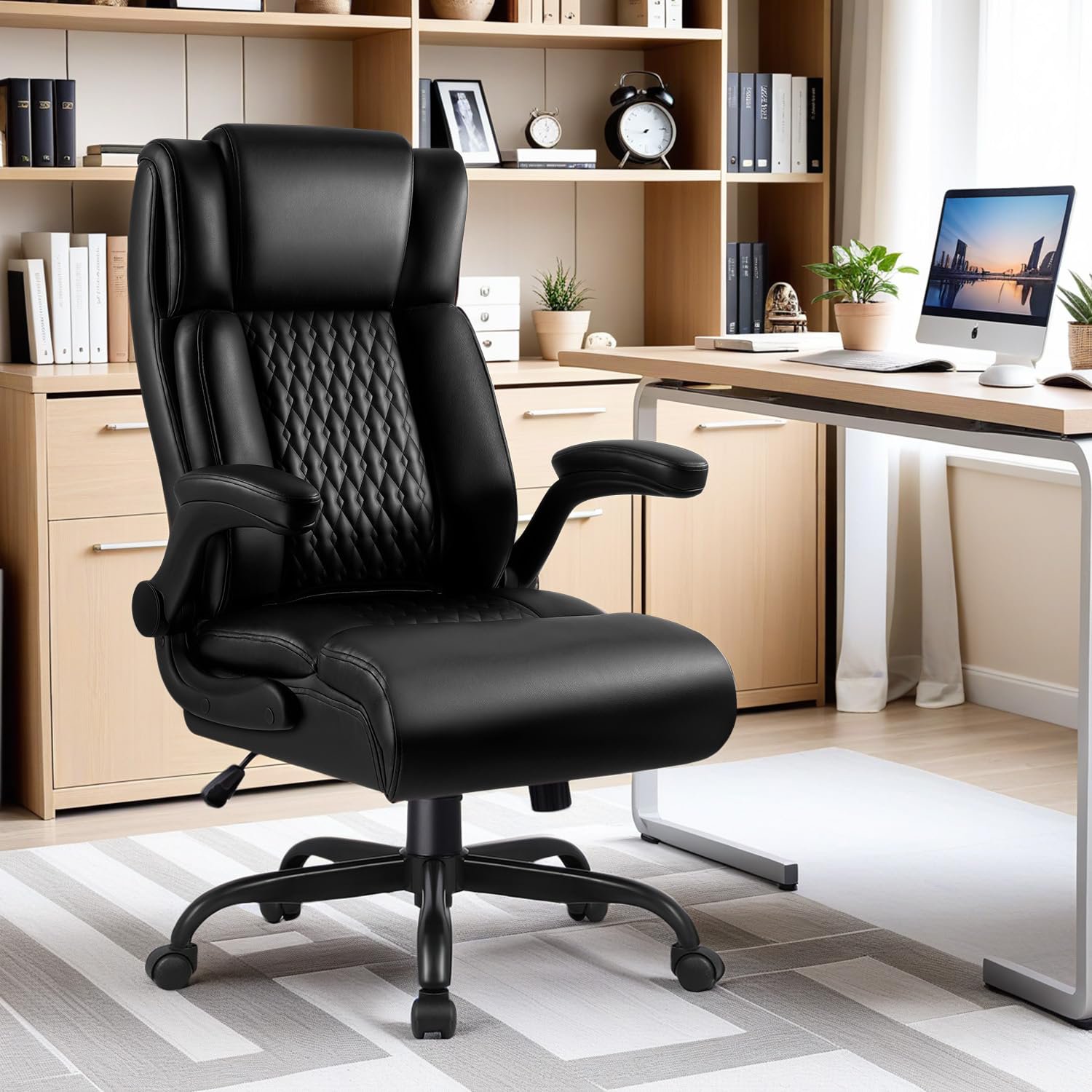
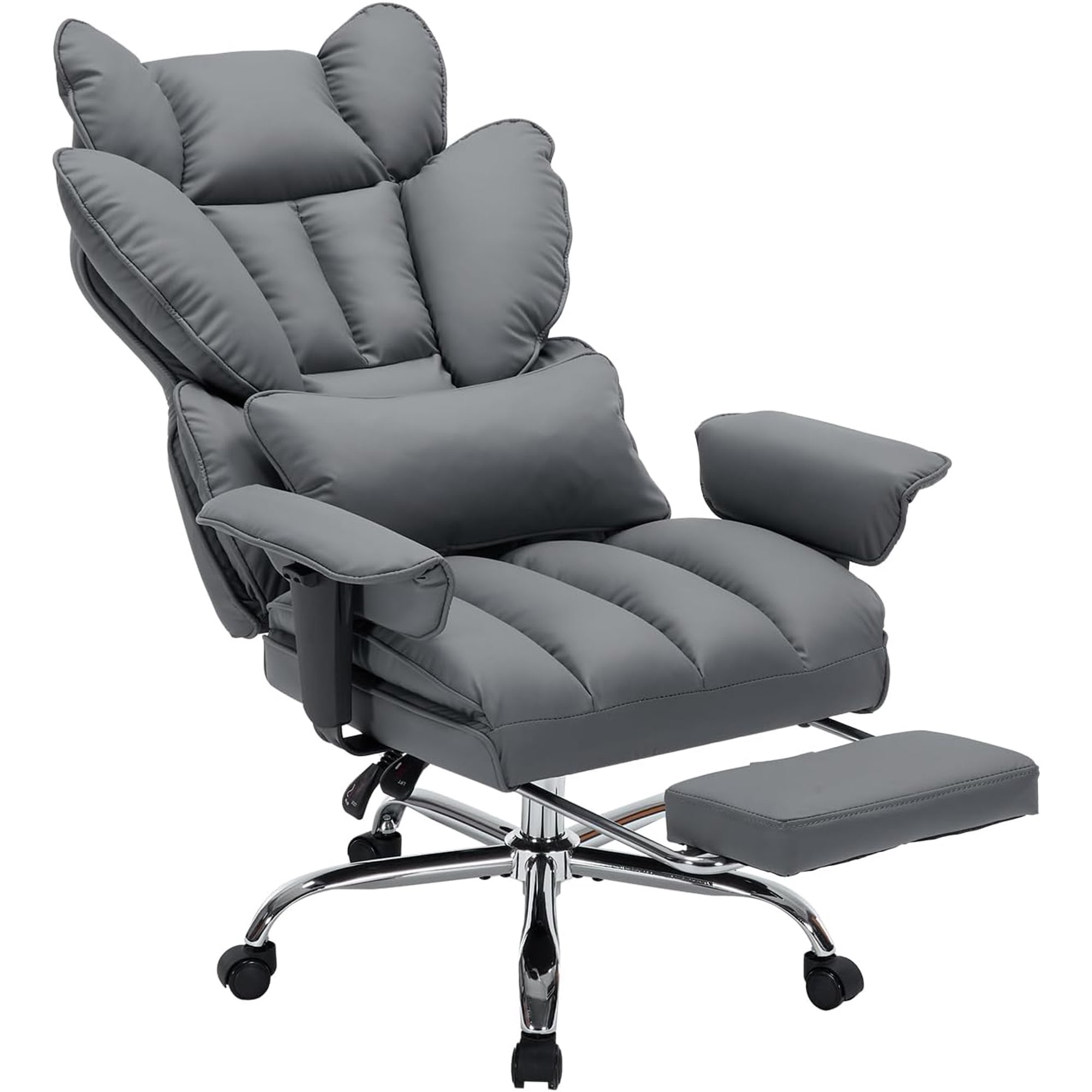
The Engineering Behind Heavy Duty Executive Office Chairs
Imagine the difference between a standard office chair and a heavy duty executive chair like comparing a compact car to a heavy-duty pickup truck. Both will get you from point A to point B, but the truck is built to handle heavier loads, rougher terrain, and years of punishing use. This analogy perfectly captures why executives with higher weight requirements or those seeking maximum durability need specialized seating solutions.
Market Insight: According to the Office Furniture Institute, the demand for heavy duty executive chairs has grown 47% since 2020, driven by the rise of home offices and professionals seeking furniture that can withstand 24/7 use. The average executive now spends 11.2 hours seated daily, making chair durability as critical as comfort.
A heavy duty executive office chair isn't simply a standard chair with a higher weight limit sticker. It represents a fundamental rethinking of every component—from the gas cylinder that would fail in a standard chair to the casters that would crack under sustained pressure. Understanding these engineering differences helps you make an investment that serves you for a decade or more.
🔬 BIFMA Testing Standards Explained
Heavy duty executive chairs undergo rigorous BIFMA (Business and Institutional Furniture Manufacturers Association) testing:
- Static Load Test: 2,500 pounds applied to seat for 1 minute – simulates extreme stress
- Drop Test: 150-pound weight dropped from 6 inches – 100,000+ cycles
- Swivel Test: 150,000 rotations under 225-pound load
- Arm Durability: 250-pound vertical load applied 100,000 times
- Base Stability: 300-pound tipping force at maximum recline
Commercial-grade heavy duty chairs exceed BIFMA standards by 20-40% on these tests.
1. The Anatomy of a True Heavy Duty Executive Chair
When manufacturers claim "heavy duty," what components are actually being reinforced? Let's dissect a genuine heavy duty executive chair piece by piece:
1.1 The Foundation: 5-Star Base Engineering
The base is the chair's foundation, and in heavy duty models, this isn't an afterthought. Standard chairs often use nylon bases with thin ribs. Heavy duty executive chairs feature:
- Reinforced Nylon with Steel Insert: 20-30% glass-fiber reinforced polymer with a steel core plate – distributes weight evenly across all five legs
- Polished Aluminum Alloy: Aerospace-grade 6061 aluminum, heat-treated for maximum strength-to-weight ratio
- Leg Thickness: 4-5mm at stress points vs 2-3mm in standard chairs
- Span Width: 28-30 inches diameter vs 24-26 inches standard – prevents tipping
The engineering principle here is load distribution. A wider base with thicker construction spreads the force across a larger surface area, reducing stress on any single point.
1.2 Gas Cylinders: The Heart of Height Adjustment
Gas cylinders (or pneumatic lifts) are graded by class, and this is where many "heavy duty" claims fail. The cylinder must lift not just the seat but also absorb shock during sitting and adjusting.
Standard Office
Up to 250 lbs
Heavy Duty
250-400 lbs
Commercial Heavy Duty
400-500 lbs
Industrial
500+ lbs
Class 4 and 5 cylinders use larger piston diameters (50mm vs 40mm), thicker cylinder walls (2.5mm vs 1.8mm), and higher-grade nitrogen pressure (300+ psi). They're also tested for 50,000+ lift cycles under full load.
1.3 Frame Construction: The Skeleton
The frame determines how forces transfer through the chair. Heavy duty executive chairs use:
- 14-16 gauge steel: 1.9-2.7mm thickness vs 18-20 gauge (0.9-1.2mm) in standard chairs
- Continuous weld construction: Robotic welding ensures no weak points in the frame
- Reinforced stress points: Extra gussets at armrest mounts and backrest hinges
- Dual torsion springs: For recline mechanisms, handling 2x the torque of single springs
1.4 Seat Construction: Where Comfort Meets Durability
The seat must resist compression and maintain shape over years of use:
- High-density foam: 2.5-3.0 lb density vs 1.8-2.2 lb standard – resists sagging 3x longer
- Cold-cured foam: Maintains resilience in varying temperatures
- Reinforced seat pan: Plywood or steel base instead of webbing
- Waterfall edge: Extended with internal reinforcement to prevent breakdown
2. Weight Capacity Ratings: Decoding the Numbers
Manufacturers use different testing protocols for weight ratings. Understanding these helps you compare chairs accurately:
| Rating Type | Description | Safety Margin | What It Means For You |
|---|---|---|---|
| Static Load | Maximum weight chair can hold without moving | 2x dynamic rating | Chair won't collapse under static weight |
| Dynamic Load | Maximum weight during normal use (sitting, leaning) | 1.5x recommended user weight | Most important number for daily use |
| Impact Load | Resistance to dropping/sitting heavily | 3x dynamic rating | Durability for "plopping" down |
| Cycle Tested | Number of sit/rise cycles under load | 100,000-300,000 cycles | Long-term reliability indicator |
Pro Tip: Always look for chairs tested to BIFMA X5.1 standards with certification documentation. A chair rated for 400 lbs that's BIFMA-certified is significantly more reliable than an uncertified chair with the same rating.
3. Material Selection for Maximum Durability
The choice of upholstery and finishing materials dramatically impacts longevity:
Commercial-Grade Leather
Thickness: 1.2-1.4mm vs standard 0.9-1.1mm
Finish: Pigmented with protective coating
Backing: Reinforced with polyester mesh
Life expectancy: 10-15 years
Heavy-Duty Mesh
Weave: 8-way stretch with reinforced borders
Frame attachment: Double-stitched with Kevlar thread
Tension: Adjustable with metal ratchets
Life expectancy: 7-10 years
Premium Fabric
Double rubs: 100,000+ Wyzenbeek test
Back coating: Acrylic backing for stability
Stain treatment: Teflon or Nano-tech coating
Life expectancy: 5-8 years
Reinforced Vinyl
Thickness: 40-60 oz commercial grade
Backing: Woven polyester scrim
Cold crack: -20°F resistance
Life expectancy: 5-7 years
4. Ergonomic Features in Heavy Duty Chairs
Contrary to outdated beliefs, heavy duty chairs can offer exceptional ergonomics. Modern engineering allows for full adjustability even in reinforced frames:
4.1 Lumbar Support Systems
- External lumbar adjustment: Pneumatic or mechanical controls with reinforced mounting brackets
- 4-way lumbar: Height and depth adjustment with memory foam padding
- Dynamic lumbar: Automatically adjusts as you recline, with heavy-duty tension springs
4.2 Armrest Engineering
Standard armrests are common failure points. Heavy duty chairs feature:
- Steel reinforcement plates: Inside the armrest pad mounting area
- Metal height adjustment mechanisms: Not plastic ratchets that strip over time
- Wider armrest pads: 3-4 inches wide for better weight distribution
- 4D adjustments: Height, width, depth, and angle with locking metal components
4.3 Recline and Tilt Mechanisms
- Synchronized mechanism: Backrest and seat move in a 2:1 or 3:1 ratio with reinforced gears
- Multi-position lock: Metal locking pawls instead of friction-based systems
- Tilt tension adjustment: Heavy-duty coil springs with 2-3x the tension range
- Knee tilt mechanism: Pivots at front of seat, reducing pressure on thighs – with reinforced pivot points
5. The 7-Point Inspection Checklist for Heavy Duty Executive Chairs
Before purchasing, use this professional inspector's checklist:
- Check the gas cylinder class: Look for Class 4 or 5 markings on the cylinder itself (not just the marketing material)
- Inspect the base material: Flip the chair over – is it solid aluminum or nylon with visible steel reinforcement ribs?
- Test the armrests: Apply firm downward pressure – do they flex or remain solid?
- Examine the casters: Are they dual-wheel with metal bearings? Soft rubber for hardwood or hard nylon for carpet?
- Check the foam density: Press firmly into the seat – does it spring back immediately or feel mushy?
- Verify the warranty: Minimum 10 years on frame, 5 years on mechanisms, 3 years on upholstery
- Look for certifications: BIFMA, ANSI, or GREENGUARD certifications indicate legitimate testing
6. Weight Distribution and Posture Considerations
Heavy duty chairs must account for different body types and weight distribution patterns:
6.1 Seat Width and Depth Considerations
- Standard seat width: 19-21 inches – suitable for up to 250 lbs
- Wide seat (big & tall): 22-24 inches – for 250-350 lbs
- Extra-wide seat: 25-28 inches – for 350-500+ lbs
- Seat depth adjustment: Minimum 3 inches of travel to accommodate different thigh lengths
Ergonomic principle: When seated, you should have 2-4 finger widths between the back of your knee and the seat edge. Heavy duty chairs maintain this even with thicker foam through extended seat pans.
6.2 Backrest Height and Support
- Mid-back: 18-22 inches – adequate lumbar support, less shoulder support
- High-back: 23-27 inches – full back support including shoulders
- Executive high-back: 28-32 inches with headrest – complete spinal support
7. Long-Term Value Analysis
Let's calculate the true cost of ownership:
| Chair Category | Initial Cost | Expected Lifespan | Annual Cost | Replacement Frequency |
|---|---|---|---|---|
| Budget Office Chair | $150-$300 | 2-3 years | $50-$150/year | Every 2-3 years |
| Mid-Range Heavy Duty | $400-$800 | 5-7 years | $57-$160/year | Every 5-7 years |
| Commercial Heavy Duty | $800-$1,500 | 10-12 years | $67-$150/year | Every 10-12 years |
| Premium Industrial | $1,500-$2,500 | 15-20 years | $75-$167/year | Once or twice in career |
The analysis reveals that premium heavy duty chairs often cost less per year of use than budget alternatives, while providing superior comfort and fewer replacement headaches.
8. Maintenance and Care for Longevity
Extend your heavy duty chair's life with proper maintenance:
Monthly Checks:
- Tighten all visible bolts and screws (gas lift mechanism, armrest mounts, backrest attachment)
- Clean casters and remove hair/debris from wheels
- Wipe down upholstery with appropriate cleaner
Quarterly Maintenance:
- Apply silicone lubricant to moving mechanisms (not oil, which attracts dust)
- Check gas cylinder for smooth operation
- Inspect upholstery for signs of wear
Annual Professional Inspection:
- Have a furniture technician check internal mechanisms
- Re-torque all fasteners to manufacturer specifications
- Condition leather upholstery (if applicable)
Frequently Asked Questions About Heavy Duty Executive Office Chairs
Conclusion: Investing in Your Professional Foundation
A heavy duty executive office chair is more than furniture—it's the foundation of your daily work life. Just as a building requires a robust foundation to withstand decades of use, your body deserves a seating platform engineered for your specific needs and built to last.
The engineering behind these chairs—from Class 5 gas cylinders to 14-gauge steel frames and commercial-grade upholstery—represents a commitment to quality that pays dividends in comfort, health, and productivity. When you choose a properly rated heavy duty executive chair, you're not just buying a place to sit; you're investing in your physical well-being and professional presence for the next decade.
Your Heavy Duty Executive Chair Investment Strategy
Choose Class 4 gas lift chairs with reinforced nylon bases and high-density foam. Budget $600-$1,000 for quality construction that lasts 7-10 years.
Invest in Class 5 gas lift chairs with aluminum or steel-reinforced bases and commercial-grade mechanisms. Budget $1,200-$1,800 for 10-15 year durability.
Select industrial-grade chairs with Class 6 lifts, full steel frames, and bariatric-rated components. Budget $1,800-$2,500 for 15-20 year service life.
Remember: The best heavy duty executive chair is the one that disappears beneath you—providing support without distraction, durability without compromise, and comfort without question. Take the time to evaluate your needs, test chairs when possible, and invest in a solution that will serve you through countless hours of focused work and strategic thinking.