
The Connection Between Your Office Chair and Spinal Health
Your spine is the central pillar of your body, and when you spend 8+ hours a day seated, the chair you choose becomes the foundation of your musculoskeletal health. A standard office chair often fails to provide the necessary support, leading to slouching, forward head posture, and gradual spinal misalignment. This is where an office chair with spine support makes a profound difference. These specialized chairs are engineered to mirror the natural curves of your spine, distributing your weight evenly and minimizing stress on your vertebrae and discs.
Ergonomic Insight: Research indicates that poor seating posture can increase pressure on spinal discs by up to 40% compared to standing. A quality ergonomic chair with dedicated spine support can reduce this pressure by actively maintaining the spine's natural S-curve, helping to prevent the onset of chronic back and neck pain.
Anatomy of a Spine-Supportive Office Chair
To truly understand what you're looking for, let's break down the key components of a chair designed for spinal health. These elements work in harmony to create a supportive environment for your back.
- Dynamic Lumbar Mechanism: More than just a cushion, this system actively pushes into the lumbar curve. Look for chairs with depth and height adjustability for personalized fit.
- Contoured Backrest: A backrest shaped to follow the thoracic (upper) and lumbar (lower) spine prevents the shoulders from rounding forward.
- Seat Depth Adjustment: A seat that is too long can compress circulation behind your knees, while a seat that is too short won't support your thighs. Adjustable depth ensures proper thigh support and pelvic alignment.
- Synchro-Tilt Mechanism: This allows the backrest and seat to move together at a ratio that keeps your spine aligned while you recline, promoting movement and reducing static muscle fatigue.
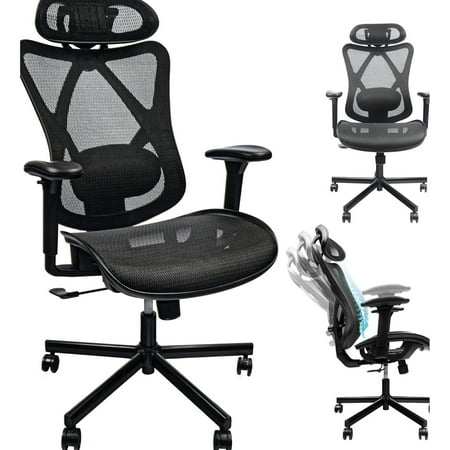
- Adjustable Headrest: For complete spine support, a headrest supports the cervical spine (neck), preventing strain from looking down at monitors.
Why Static Sitting is the Enemy of Your Spine
The human spine is designed for motion. Static sitting, even with good posture, reduces the flow of nutrient-rich fluid to your spinal discs and can lead to muscle stiffness. A premium office chair with spine support addresses this by encouraging dynamic sitting. Features like a flexible backrest, adjustable recline tension, and a seat that allows for subtle weight shifts are crucial. They transform your chair from a passive resting place into an active tool that works with your body, not against it.
Key Ergonomic Features That Protect Your Spine
When evaluating an office chair for spine support, not all features are created equal. Focusing on these core elements will help you select a chair that truly prioritizes your spinal health.
1. Independent Lumbar Adjustment
Static lumbar pillows are a starting point, but true spine support comes from independent adjustment. Look for a mechanism where the lumbar support can move both forward/backward and up/down. This allows you to target the exact spot where your lumbar curve is most pronounced.
2. Pelvic Support & Seat Angle
The foundation of a healthy spine is a stable pelvis. A seat that allows for a slight forward tilt can help rotate your pelvis into a neutral position, which naturally promotes the lumbar curve. This is often overlooked but is vital for long-term comfort.
3. Thoracic Support
Upper back and shoulder pain are common among desk workers. A chair with a backrest that extends to support the thoracic spine (mid-back) helps prevent slouching and rounded shoulders, contributing to a more upright, energized posture.
4. Material Matters: Mesh vs. Foam
High-quality mesh offers breathability and dynamic support that moves with you, ideal for maintaining support over long periods. High-density foam, especially in a contoured shape, provides a more traditional, plush feel but must be durable enough to not break down quickly. Both can be effective when combined with a strong internal support structure.
Common Spine Issues & How the Right Chair Helps
| Spine Condition | Chair Feature That Helps | How It Works |
|---|---|---|
| Lower Back Pain (Lumbar) | Adjustable lumbar support (depth & height) | Fills the gap between the chair and your lower back, maintaining the natural inward curve and reducing disc pressure. |
| Upper Back & Neck Pain | High-back design & adjustable headrest | Supports the thoracic and cervical spine, reducing forward head posture and strain on the neck and shoulder muscles. |
| Sciatica & Hip Pain | Seat depth adjustment & waterfall seat edge | Prevents pressure on the hamstrings and sciatic nerve by ensuring proper thigh support and eliminating a hard edge behind the knees. |
| Poor Posture (Kyphosis/Slouch) | Synchro-tilt & active lumbar support | Encourages dynamic movement and provides constant, gentle pressure to support an upright, engaged posture. |
Your Spinal Health Checklist: 5-Step Chair Test
Before you commit to a chair, use this quick checklist to evaluate its potential for supporting your spine:
- Sit and Feel the Lumbar: Does the lumbar support naturally fit into your lower back curve? Can you adjust it to fit perfectly?
- Check Your Thighs: With your back against the chair, can you fit 2-3 fingers between the edge of the seat and the back of your knee? This ensures proper seat depth.
- Test the Armrests: Can you adjust the armrests so your shoulders are relaxed and your elbows are at a 90-degree angle? This prevents shoulder hunching.
- Evaluate the Recline: Does the chair recline smoothly, allowing you to lean back without feeling like you're falling? Does it support your spine in various angles?
- Assess Material Tension: For mesh chairs, ensure the material is taut but gives slightly. For foam chairs, check that the foam is dense and supportive, not too soft.
Frequently Asked Questions About Office Chairs With Spine Support
Conclusion: Prioritize Your Spine, Enhance Your Life
Choosing the right office chair with spine support is one of the most impactful decisions you can make for your long-term health and daily productivity. The initial investment in a chair with robust, adjustable ergonomic features is a direct investment in your physical well-being. You are not just buying a piece of furniture; you are acquiring a tool that will help protect your spine from the cumulative strain of daily seated work.
Remember that the best chair for you is one that can be tailored to your unique body. A chair that forces you to adapt to it will never be as effective as a chair that adapts to you. By prioritizing features like adjustable lumbar support, seat depth, and dynamic recline, you are taking a proactive step towards a healthier, more comfortable, and more focused work life. Pair your new chair with a commitment to regular movement breaks, stretching, and mindful posture, and you'll be well on your way to a stronger, happier spine.
Final Recommendation for Spinal Health Seekers
Prioritize chairs with advanced, independent lumbar adjustment (both depth and height) and a waterfall seat edge. A model with a 'forward tilt' seat function can also help achieve the ideal pelvic position.
A high-back chair with an adjustable headrest is non-negotiable. Look for a chair that offers a wide range of armrest adjustments to keep your shoulders relaxed and your neck free from tension.
Consider a chair with a flexible back frame or a 'kneeling' style mechanism. High-quality mesh chairs also promote movement and provide excellent breathability for those who run warm.