
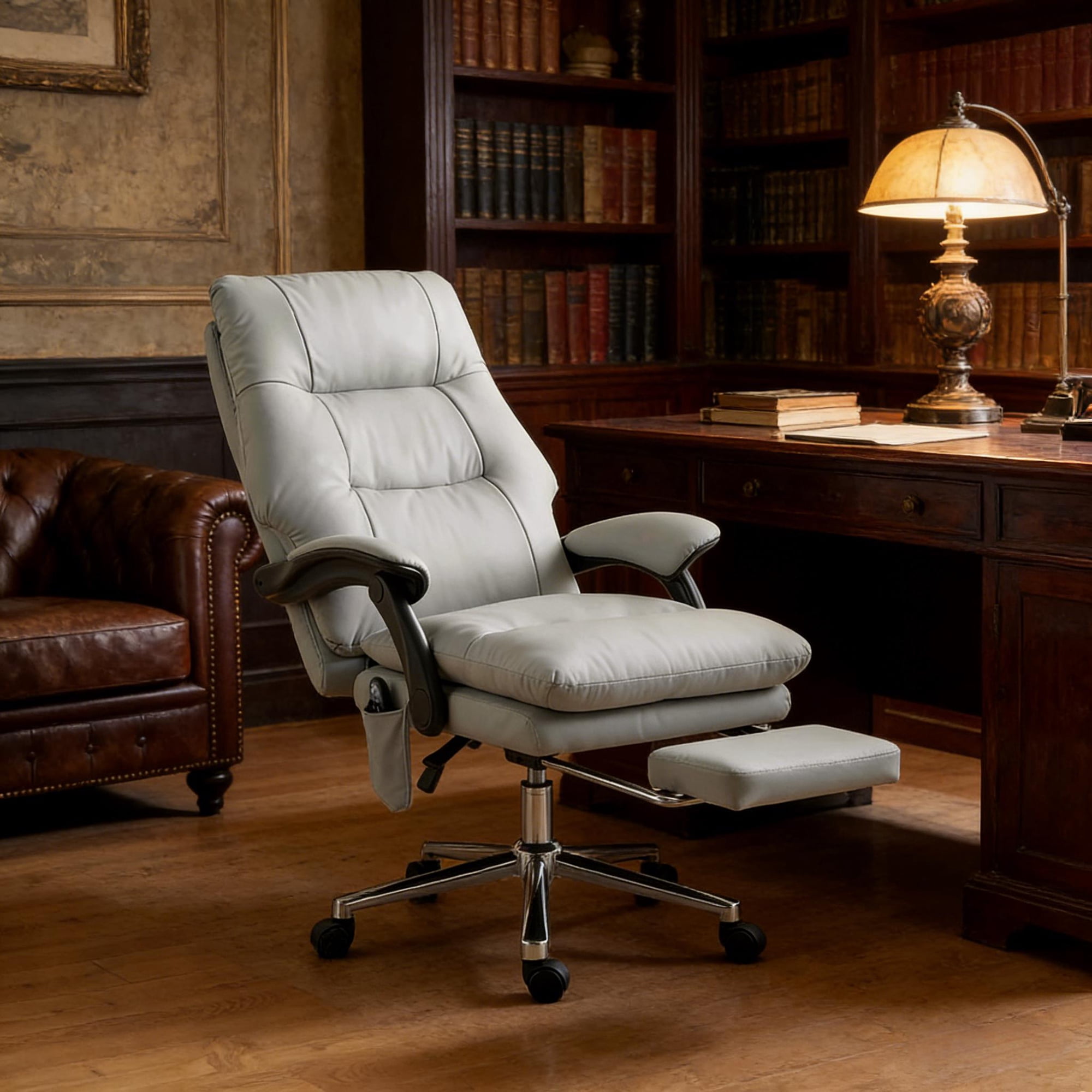


More Than Just a Seat: Your Gateway to Better Workdays
In the modern work environment, the line between the office and home has blurred, but one constant remains: we spend a significant portion of our lives sitting. The chair you choose isn't just a piece of furniture; it's the foundation of your productivity, a key player in your physical health, and a statement about your professional style. Whether you're an entrepreneur, a remote employee, or a corporate leader, finding the right office chair is a critical decision.
Industry Insight: Studies by the American Chiropractic Association indicate that over 80% of the population will experience back pain at some point in their lives, with sedentary lifestyles and poor posture being major contributing factors. The right office chair is a proactive investment in your musculoskeletal health.
Decoding the Perfect Office Chair
Navigating the world of office chairs can be overwhelming. From "ergonomic" and "mesh" to "executive" and "task," the terminology can feel like a foreign language. To simplify your search, let's break down the core elements that define a truly great office chair:
- Ergonomic Support: This is non-negotiable. An ergonomic chair is designed to support the natural curve of your spine. Look for features like adjustable lumbar support, a waterfall seat edge to reduce pressure on your thighs, and a seat depth that allows you to sit with your back against the backrest while leaving a few inches between the seat edge and your knees.
- Material Matters: The material of your chair impacts both comfort and durability. Mesh chairs are celebrated for their breathability, keeping you cool during long work sessions. Fabric chairs offer a wide range of colors and a cozy, soft feel. Leather and leatherette chairs provide a classic, polished look and are easy to clean, making them a popular choice for executive offices.
- Adjustability is Key: A one-size-fits-all chair doesn't exist. Your chair must adapt to you, not the other way around. Key adjustable features include:
- Seat Height: Allows you to position your legs at a 90-degree angle.
- Armrests: Adjustable armrests (height, width, and pivot) allow you to keep your shoulders relaxed and your arms supported.
- Recline Tension: Controls the resistance when you lean back, allowing for comfortable, supported movement.
- Lumbar Support: Adjustable support for your lower back to prevent slouching.
- Sturdy Construction: The base, gas lift, and casters (wheels) are the unsung heroes of a good chair. A five-point base provides stability. High-quality casters glide smoothly on your floor, whether it's carpet or hardwood, and a durable gas lift ensures the chair maintains its height over time.
Finding the Right Fit for Your Workspace
Choosing an office chair is also about context. The best chair for a fast-paced, collaborative startup might differ from the ideal chair for a quiet, focused home office. Consider these scenarios:
| Workspace Type | Recommended Chair Features | Why It Works |
|---|---|---|
| Home Office | Comfort, adjustability, style | Your home office is a personal space. Prioritize a chair that keeps you comfortable for 8+ hours, offers full ergonomic adjustments, and complements your home's aesthetic. |
| Corporate/Executive | Premium materials (leather), high-back support, professional aesthetic | These chairs convey authority and success. Focus on a polished look, durable, high-quality materials, and advanced ergonomic features to support long hours of meetings and desk work. |
| Tech/Startup | Breathable mesh, modern design, high-performance ergonomics | The modern tech office values agility and health. Mesh chairs with dynamic lumbar support and a sleek, minimalist design are the most popular choices, promoting movement and preventing overheating. |
| Collaborative/Shared Space | Durability, easy-to-clean materials, simple adjustments | Chairs in shared spaces need to withstand heavy use by different people. Opt for durable fabrics or mesh, simple and intuitive adjustment levers, and a robust construction. |
The Health & Productivity Connection
Investing in a quality chair is an investment in yourself. The health benefits are significant and directly translate to better work performance.
Reduced Back Pain
Proper lumbar support and a neutral posture can alleviate and prevent chronic back and neck pain.
Improved Focus & Energy
When you're not distracted by discomfort, your mental energy is freed up to concentrate on the task at hand.
Enhanced Circulation
A well-designed seat pan and proper height prevent pressure points that can restrict blood flow to your legs.
Long-Term Musculoskeletal Health
Consistent support from an ergonomic chair helps maintain healthy spinal alignment, reducing the risk of long-term issues like disc degeneration and muscle imbalance.