
Beyond the Ordinary: Why Your Workspace Deserves a High Back Swivel Office Chair
Imagine this: you're deep in a project, the hours slip by, but when you finally stand up, your back doesn't ache, and your shoulders aren't stiff. That's the promise of a well-designed high back swivel office chair. Unlike low or mid-back chairs that stop at your shoulder blades, a high back extends upward, offering a supportive surface for your entire spine—including the often-neglected thoracic and cervical regions. Think of it as the difference between a sports car seat that holds you firmly in place during a long drive and a simple stool that leaves you exhausted. For anyone spending more than a few hours at a desk, this type of chair isn't a luxury; it's a tool for preserving your body's most critical framework.
1. The Anatomy of Support: Deconstructing the High Back Chair
To make an informed choice, you need to understand what sets a quality high back swivel chair apart. It's more than just a tall backrest. It's a carefully engineered system designed to work with your body's natural movements.
The Backrest: Your Spine's Best Friend
The defining feature, the backrest, should ideally be contoured to follow the natural 'S' curve of your spine. Look for these elements:
- Integrated Lumbar Support: Many high back chairs have a pronounced lumbar curve. The best ones offer adjustable lumbar support (height and depth) so you can dial in the exact pressure point that fills the gap in your lower back.
- Shoulder and Upper Back Contour: The upper portion should flare out slightly to support your shoulder blades without hunching them forward. This encourages an open chest and better breathing.
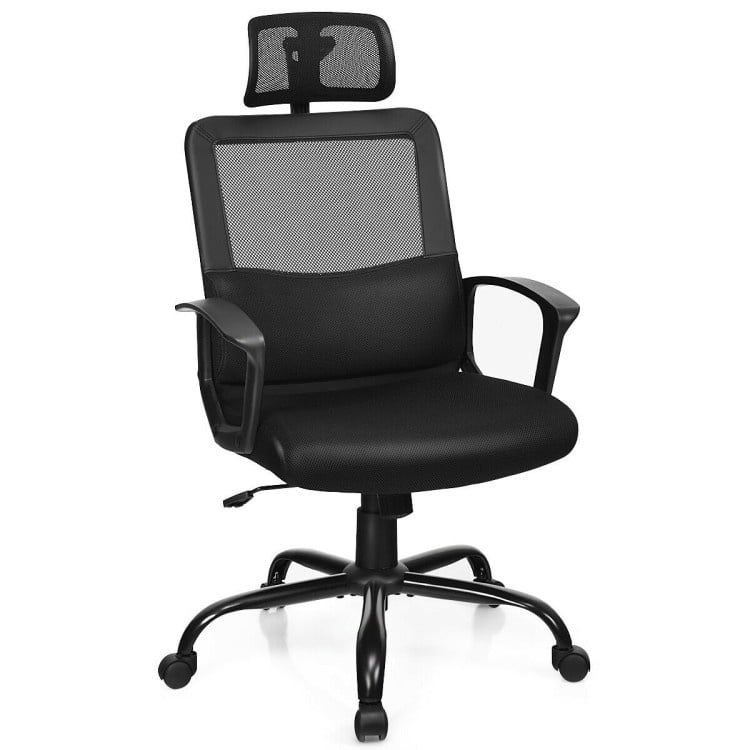
- Headrest Integration: Some high backs are one solid piece, while others have a separate, adjustable headrest. An adjustable headrest is a game-changer for neck support, especially if you tend to lean back while on the phone or thinking.
The Seat: Your Foundation for Stability
A comfortable seat is just as crucial as the backrest. Key factors include:
- Seat Depth and Width: A good chair allows you to sit with your back against the backrest while leaving 2-3 finger widths of space between the back of your knee and the seat edge. This is called the "waterfall edge" and prevents circulation cutoff.
- Cushion Density and Material: High-density foam retains its shape and provides consistent support for years. Avoid cushions that feel too soft initially, as they can "bottom out" after a few months.
The Swivel Base and Mechanism: The Engine Room
The "swivel" part is about dynamic movement. A high-quality mechanism allows you to:
- Adjust Tilt Tension: Control how much force is needed to recline. Heavier individuals need a stronger tension setting.
- Lock Recline Angles: Being able to lock the chair in an upright position for focused work, or in a slightly reclined position for relaxed tasks, adds versatility.
- Syncro-Tilt Mechanism: Found on premium chairs, this feature allows the seat and backrest to move together at a specific ratio, keeping you supported through the entire recline range. This mimics your body's natural pivot point.
2. Material Matters: Matching Your High Back Chair to Your Environment
The material covering your chair dictates not only its look but also its feel, breathability, and longevity. Let's break down the main contenders based on your personal "microclimate" and style.
✅ Breathable Mesh
- Best for: Warm climates, people who run hot, modern aesthetics.
- Why: The open weave allows air to circulate, preventing that sticky, sweaty feeling. It's also lightweight and often offers good tensioned support.
- Consideration: While some premium meshes are very durable, cheaper mesh can sag over time.
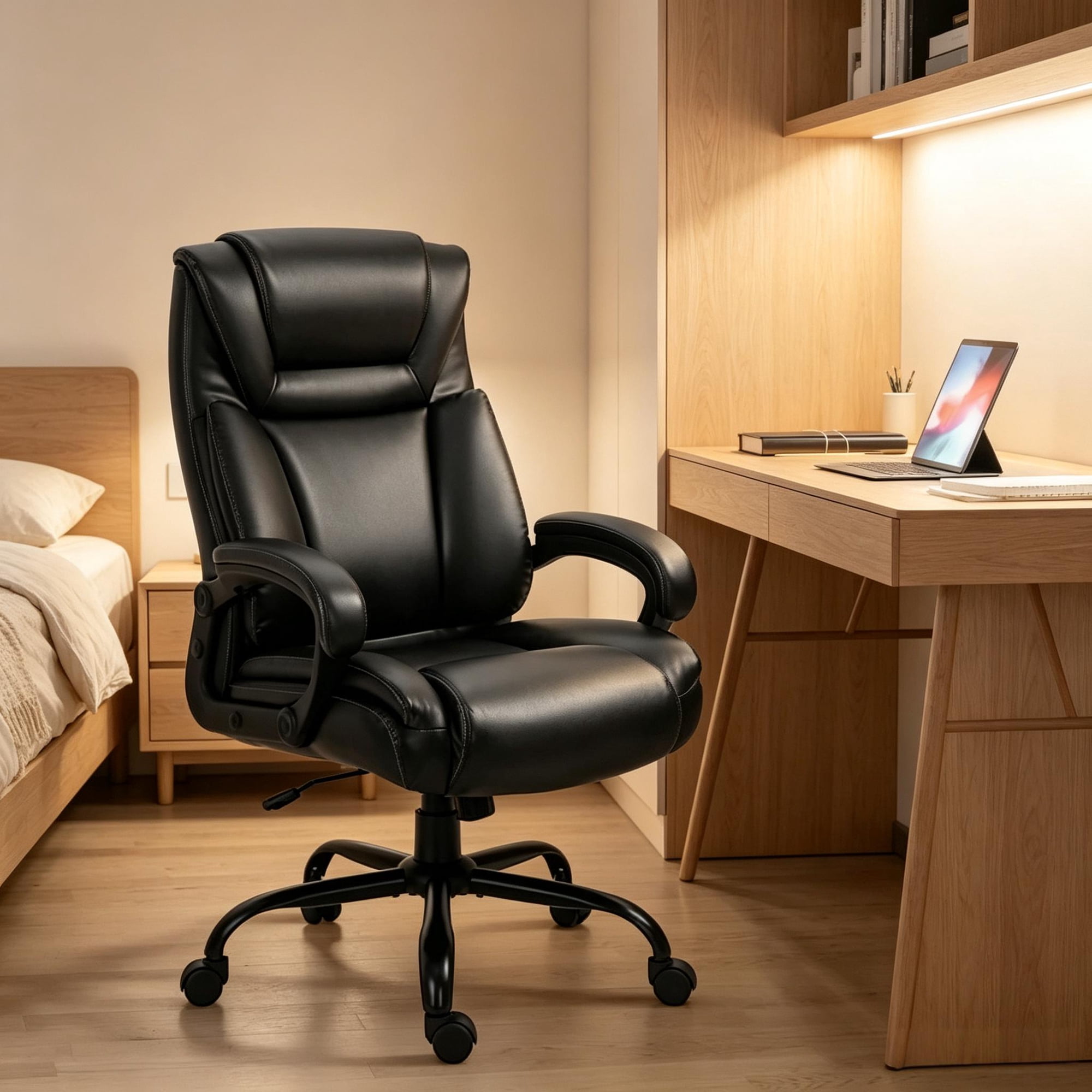
✅ Luxurious Leather
- Best for: Cooler offices, executive settings, classic style lovers.
- Why: Leather (especially top-grain) softens and conforms to your body over time, creating a personalized feel. It's durable and easy to wipe clean.
- Consideration: It can be cold in winter and sticky in summer without air conditioning. Bonded leather or PU leather is less breathable and can crack.
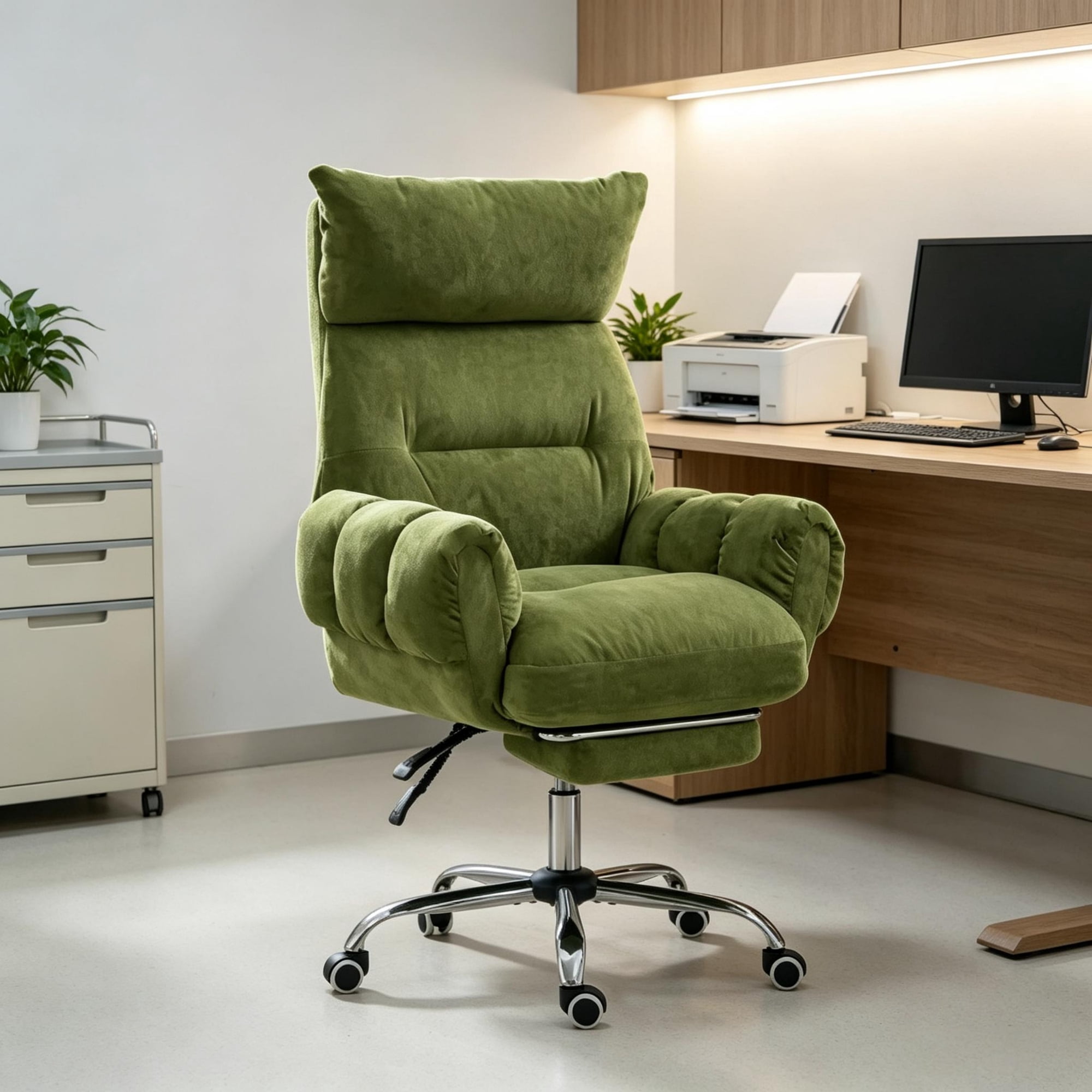
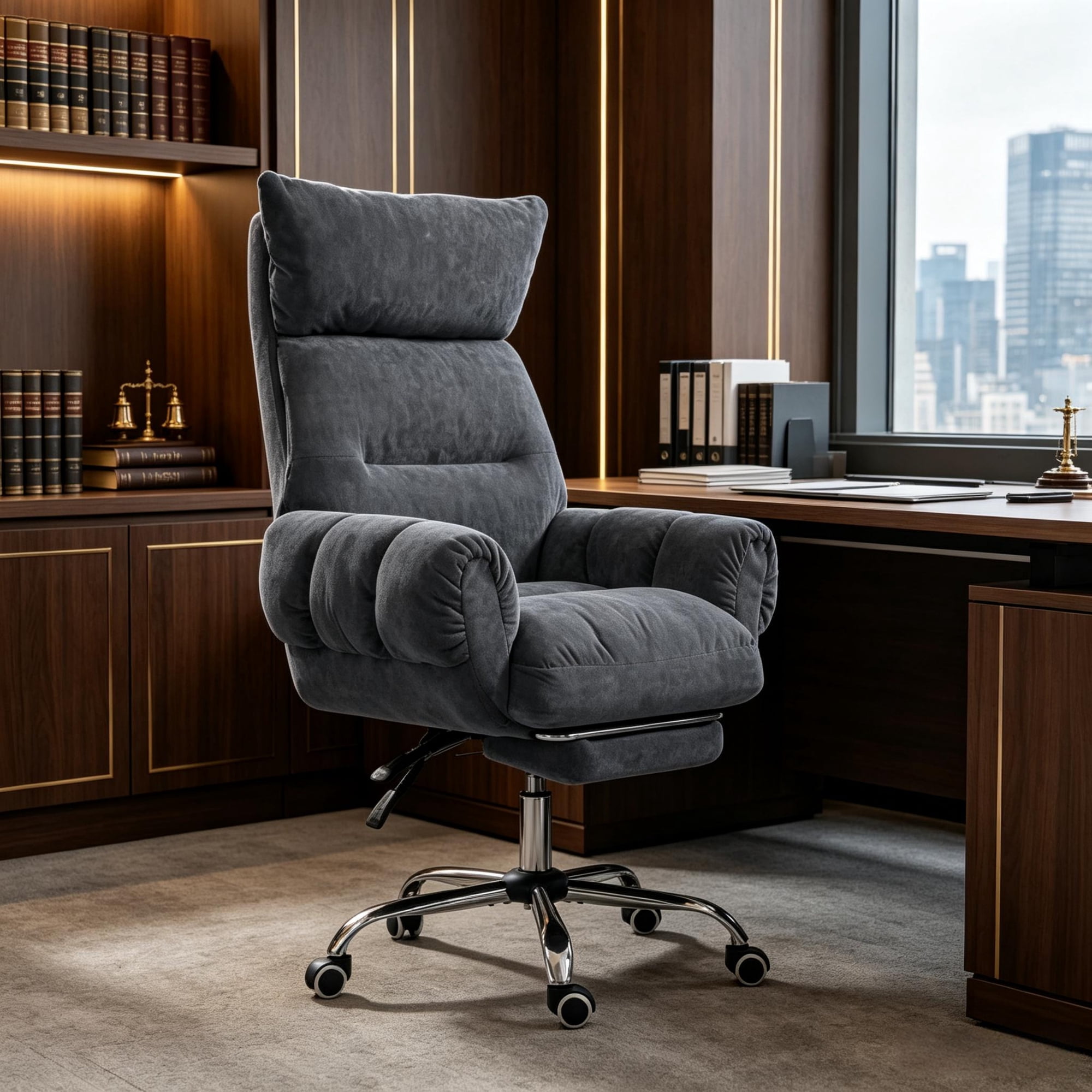
And don't forget fabric: Modern performance fabrics are making a comeback. They offer the softness of fabric with stain-resistant treatments, making them a great middle-ground option for a cozy, quiet home office.
3. Your Personal Fit Checklist: 5 Steps to the Perfect High Back Swivel Chair
Buying a chair online can feel like a leap of faith. Use this checklist to narrow down your choices and ensure a great fit.
Step 1: Measure Your Space and Yourself
Grab a tape measure. Note the height of your desk (from floor to underside). This determines the maximum seat height you need. Also, measure from the back of your knee to your heel—this helps you assess seat depth. Pro tip: Most chairs have a minimum seat height of around 17-18 inches. If you're shorter, look for a chair with a lower minimum height.
Step 2: Prioritize Your "Non-Negotiables"
List your top three needs. Is it an adjustable headrest for neck pain? Is it a mesh back to stay cool? Is it a weight capacity over 350 lbs? Filtering by these non-negotiables will cut through the noise. For example, if you have chronic lower back pain, adjustable lumbar support must be at the top of your list.
Step 3: Test Adjustability Range
Look for a chair that offers at least: seat height adjustment, tilt tension control, and recline lock. For advanced ergonomics, seek out 4D armrests (up/down, forward/back, pivot, and width adjustment) and seat depth adjustment. This level of customization ensures the chair adapts to you, not the other way around.
Step 4: Research Construction and Warranty
A chair's frame is its skeleton. Look for terms like "reinforced nylon base" or "aluminum base"—these are more durable than plastic. Check the warranty: a 5-year warranty on parts and mechanism is a good sign of manufacturer confidence; a 10-year warranty is even better. Pneumatic gas lifts from reputable brands (like Class 3 or Class 4) ensure smooth and safe height adjustment.
Step 5: Read Reviews for "Real World" Feedback
Product descriptions tell you what the chair should be. User reviews tell you what it is. Look for patterns in reviews. Do several people mention the seat cushion is too firm? Do many tall users say the headrest hits them at the right spot? This real-world data is invaluable.
4. The Ripple Effect: How a High Back Chair Boosts Productivity and Health
Choosing the right chair is an investment that pays dividends beyond just physical comfort. When your body is properly aligned, your mind can focus better on the task at hand. Studies in ergonomics suggest that discomfort is a major distraction, leading to micro-breaks and loss of concentration. By eliminating that distraction, a supportive high back chair can help you enter a state of 'flow' more easily.
Furthermore, maintaining good posture throughout the day has long-term health implications. It reduces the risk of developing chronic conditions like herniated discs, sciatica, and rounded shoulders—problems that can significantly impact your quality of life and require costly medical intervention. Think of a high-quality chair as a proactive health measure, similar to a good mattress. You spend a third of your life at work; making that time supportive for your body is one of the best decisions you can make.
Frequently Asked Questions About High Back Swivel Office Chairs
Final Thoughts: Making the Right Choice for Your Future Self
Selecting a high back swivel office chair is a personal journey. There's no single "best" chair for everyone, but there is a best chair for you. By understanding the key components—the backrest, seat, materials, and mechanisms—and following a structured approach to fit, you can confidently choose a chair that will support your work and well-being for years to come. Remember, every hour you spend in your chair is an investment. Make it a comfortable one.