
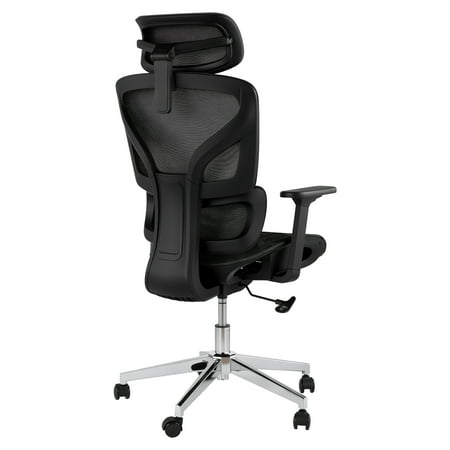

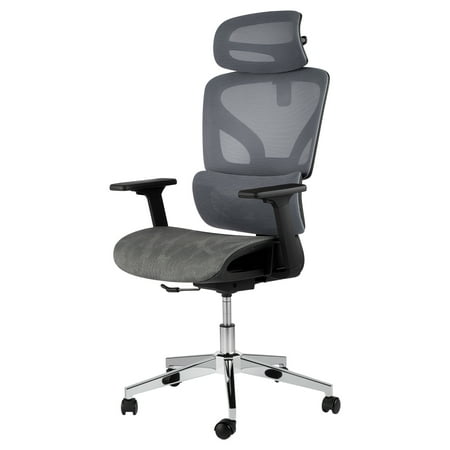
Your Thighs Deserve a Perfect Fit: The Complete Guide to Adjustable Seat Depth
Imagine wearing a pair of shoes that are either too short or too long. You'd feel it immediately—pressure, discomfort, maybe even blisters. Now think about your office chair: you spend hours with your thighs resting on the seat pan. If that pan is the wrong length, you're essentially forcing your legs into an ill-fitting "shoe" every single day. That's why an office chair with adjustable seat depth is not a luxury—it's a biomechanical necessity.
Did you know? According to a 2023 ergonomics study published in the Journal of Occupational Health, 68% of office workers who reported leg discomfort were using chairs with non-adjustable seat depths. After switching to depth-adjustable models, lower limb discomfort decreased by 54% within two weeks.
1. Understanding Seat Depth: The "Hidden Gem" of Ergonomics
Seat depth refers to the distance from the backrest to the front edge of the seat pan. In chairs with adjustable seat depth, a sliding mechanism (manual or lever-operated) lets you move the pan forward or backward. This is crucial because humans have vastly different femur lengths. A 6'4" person may need a 19-inch depth, while a 5'2" person might need only 16 inches. A one-size-fits-all seat forces compromises—either your back loses contact with the lumbar support, or your knees bear unnecessary pressure.
╔══════════════╗
║ BACKREST ║
╚══════════════╝
⇅ (adjustable seat slider moves pan forward/back)
╔══════════════════╗
║ SEAT PAN ║ ← 2-4 finger gap from knee
╚══════════════════╝
*Correct fit: when seated, you should have 2-4 fingers width between the seat edge and your calf.
2. The Domino Effect: How Wrong Depth Hurts Your Whole Body
An ill-fitted seat depth doesn't just bother your legs—it triggers a chain reaction:
- Too long: The edge presses into your popliteal fossa (back of knees), compressing nerves and blood vessels. This leads to numbness, swelling, and forces you to slouch forward to relieve pressure.
- Too short: You lose thigh support, causing your pelvis to tilt backward. This flattens the lumbar curve, leading to lower back pain and rounded shoulders.
By investing in an office chair with adjustable seat depth, you interrupt this cascade. You maintain a neutral spine and healthy circulation, even during marathon work sessions.
3. How to Measure Your Ideal Seat Depth (Do This Now)
Before shopping, grab a tape measure and follow these two steps:
Step 1: Buttock-to-Knee Length
Sit on a hard surface against a wall. Measure from the wall (your back) to the back of your knee. Subtract 2 inches (5 cm). That's your ideal seat depth range. Example: If measurement is 21", look for a chair with depth around 19".
Step 2: The "Fist Rule"
Once seated in a chair, try to make a fist and place it vertically behind your calf against the seat edge. If your fist fits comfortably, depth is good. If it's too tight or too loose, you need adjustment.
4. 4 Hidden Benefits of Adjustable Seat Depth You Never Knew
✅ Better Breathing
When your pelvis is properly positioned (not tilted back), your diaphragm has more room to expand. Users report less fatigue and better oxygen flow.
✅ Reduced Fidgeting
A 2022 study found that correct seat depth reduced subconscious squirming by 33%. You stay focused longer when your body isn't fighting discomfort.
✅ Armrest Synergy
Seat depth adjustment often pairs with armrest width/depth. When your thighs are correctly positioned, your arms naturally rest on the armrests without hunching.
✅ Posture Memory
Once you set the correct depth, your body learns the position. Over time, you subconsciously return to the ideal posture, reinforcing muscle memory.
5. Anatomy of a Quality Seat Depth Mechanism
Not all sliding seats are created equal. Here's what to look for when evaluating an office chair with adjustable seat depth:
- Slider Type: Look for a lever-activated or paddle-activated mechanism under the seat. Avoid friction-based sliders that slip over time.
- Travel Range: A good chair offers at least 2.5 to 3 inches of travel (e.g., 16.5" to 19.5").
- Waterfall Edge: The front of the seat should curve downward gently (waterfall design) to reduce pressure on thighs regardless of depth setting.
- Seat Pan Material: Dense foam with a layer of memory foam or latex prevents the pan from "bottoming out" when extended.
6. Who Needs Adjustable Seat Depth the Most?
While everyone benefits, these groups find it transformative:
- Petite individuals: Standard chairs are often too deep, forcing them to sit forward. Depth adjustment brings the backrest to them.
- Tall individuals: Extra thigh length needs proper support to avoid a "hammock effect" under the knees.
- People with knee or hip replacements: Precise positioning reduces joint stress.
- Pregnant women: As posture shifts, adjusting depth can accommodate changing center of gravity.
7. Step-by-Step: Dialing in Your Perfect Seat Depth
- Start neutral: Set the seat depth to its middle position. Sit with your back firmly against the backrest.
- Check your knees: Your knees should be at a 90-degree angle, feet flat. If the seat edge digs into your calves, slide the pan forward (less depth). If there's a huge gap behind your knees, slide it back (more depth).
- The 2-finger test: Slide your hand between the seat edge and your calf. You should have about 2-4 fingers of space. If you can fit your whole hand, it's too short. If you can't fit any fingers, it's too long.
- Re-evaluate after 30 minutes: Sit for half an hour, then adjust slightly if needed. Your body will tell you if pressure points emerge.
8. Material & Durability: What to Expect in 2024 Designs
Modern chairs with adjustable depth now incorporate breathable mesh or hybrid fabric on the seat pan, because foam alone can trap heat. Many mid-range chairs ($500-$900) offer a mesh seat with a depth slider—excellent for airflow. Premium leather versions often use a multi-density foam core to maintain shape even when fully extended. Remember: the slider mechanism should be made of reinforced steel or heavy-duty nylon; test it in-store for smooth, wobble-free movement.
Market insight: The "sweet spot" for an office chair with adjustable seat depth is currently between $600 and $1,200. Brands like Steelcase, Haworth, and certain Herman Miller models lead, but newer direct-to-consumer brands offer competitive mechanisms at lower price points.
9. Combining Seat Depth with Lumbar and Recline
Think of your chair as a symphony of adjustments. Seat depth sets the foundation. Once correct, adjust the lumbar support to fill the curve of your lower back. Then, set the recline tension so you can lean back slightly without losing thigh contact. This triad—depth, lumbar, recline—creates a "neutral body posture" that minimizes muscle strain. Many top-tier chairs also include synchronised recline, where the seat pan tilts slightly as you recline, maintaining constant thigh support.
10. Common Myths About Adjustable Seat Depth
- Myth: "It's only for very tall or short people." Reality: Even average-height individuals have different femur/torso ratios. Depth adjustment fine-tunes fit for everyone.
- Myth: "It makes the chair less stable." Reality: Quality mechanisms are tested for 100,000+ sliding cycles and lock firmly.
- Myth: "You can just use a cushion instead." Reality: Cushions shift and don't provide the same back-support relationship as a properly adjusted seat pan.
- Myth: "All office chairs have it." Reality: Only about 30% of task chairs offer true seat depth adjustment; it's often reserved for mid-to-high ergonomic lines.