
Your Guide to the High Back Office Chair with Headrest
Imagine driving a car without a headrest—every bump would jolt your neck. The same logic applies to your workday. A high back office chair with headrest acts as a protective cocoon for your spine, from your pelvis to the base of your skull. For professionals spending 8+ hours seated, it’s the difference between leaving work energized or with a stiff neck.
Ergonomic Insight: The cervical spine (neck) is designed to curve slightly inward. Without support, this curve flattens, leading to "forward head posture." A well-designed headrest maintains this natural curve, potentially reducing headache frequency by 27% according to occupational health journals.
1. Anatomy of a Superior Headrest: What to Look For
Not all headrests are created equal. Many budget chairs offer a fixed pad that misses the mark. A truly effective headrest is adjustable in multiple directions. Think of it like a car seat—you wouldn't share a seat setting with a driver of a different height. Your headrest must be personal.
• 2D vs. 3D vs. 4D Adjustability
The 'D' stands for dimensions of movement. Here's a quick breakdown:
- 2D (Height & Angle): Basic but essential. Allows you to raise/lower and tilt the headrest forward or back. Suitable for shared offices.
- 3D (Height, Angle, Depth): Depth adjustment moves the headrest closer or further from your neck. Ideal for varying arm lengths and preferred recline positions.
- 4D (Height, Angle, Depth, & Lateral/Side Adjustment): Premium feature allowing left-right pivot, perfect for those who shift position often or have specific asymmetrical support needs.
• Contour and Padding Density
The shape should cradle, not push your head forward. Look for a slight concave curve. High-density memory foam (often used in premium brands) conforms to your unique shape without going flat, providing consistent support. A headrest that is too hard creates pressure points; too soft offers no support.
2. Synergy: How Headrest, Backrest, and Lumbar Work Together
A high back chair is a system. The headrest supports the neck, the backrest supports the thoracic spine, and lumbar support maintains the lower back curve. If one element is off, the whole posture suffers.
• The Domino Effect of Poor Support
Imagine your lumbar support is weak. You slump. Your shoulders round. To keep your eyes level with the screen, your chin juts forward. This is "tech neck" in action. A high back chair with an integrated, adjustable headrest counteracts this by giving your upper spine a target to lean back against, encouraging better alignment from the pelvis up.
• Recline Synchronization
Premium chairs feature synchronized mechanisms where the backrest and seat tilt at a ratio (often 2:1 or 3:1). In such chairs, a good headrest should move with you. Look for chairs where the headrest angle automatically adjusts as you recline, maintaining a constant gap between your head and the rest. This prevents the feeling of "losing" the headrest when you lean back.
3. Material Matters: Breathability, Durability, and Feel
The material of both the chair and the headrest affects comfort, especially during long hours.
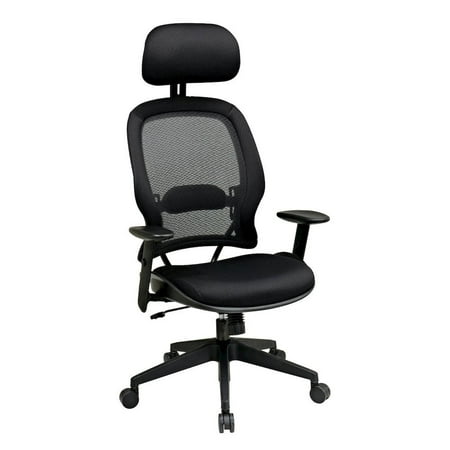
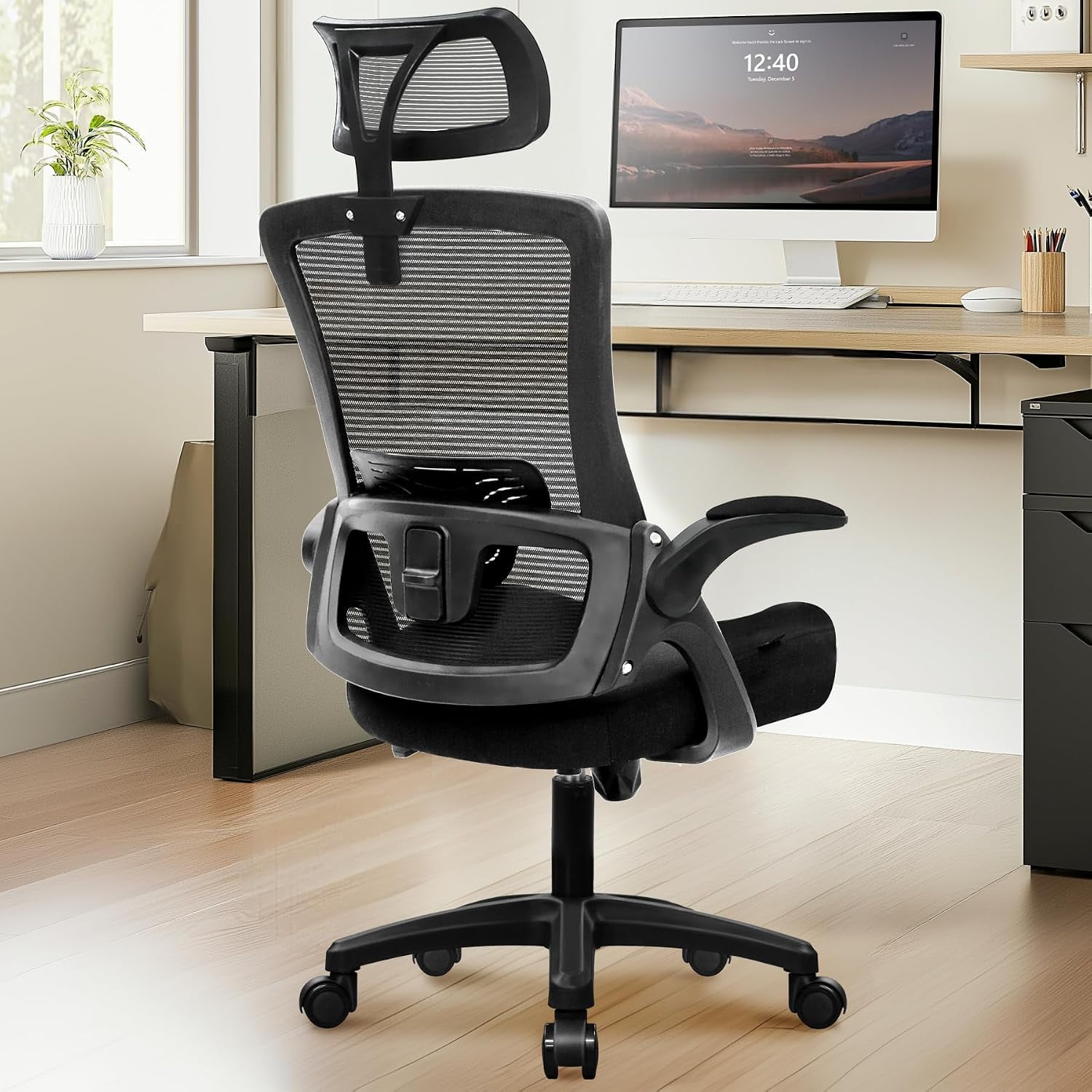
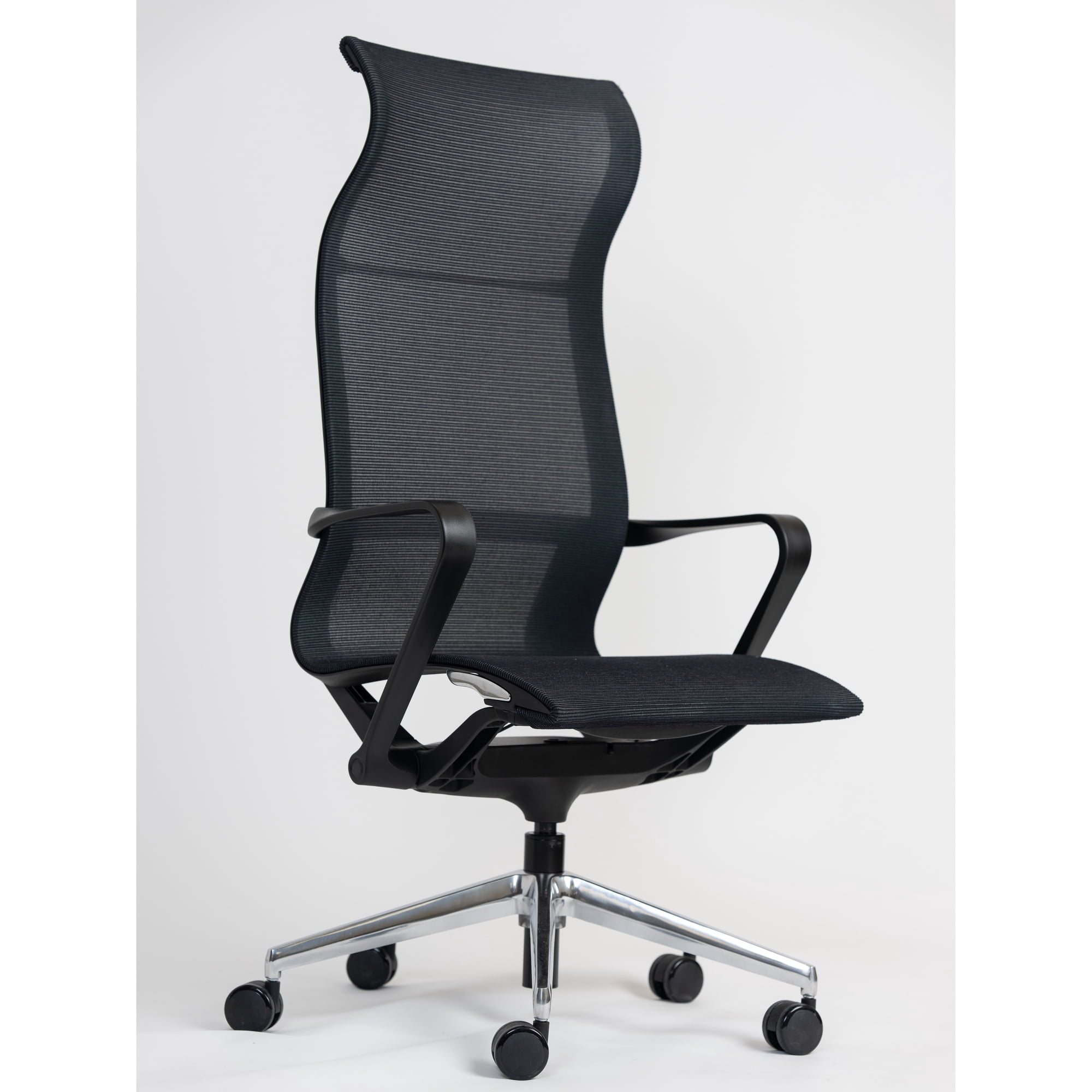
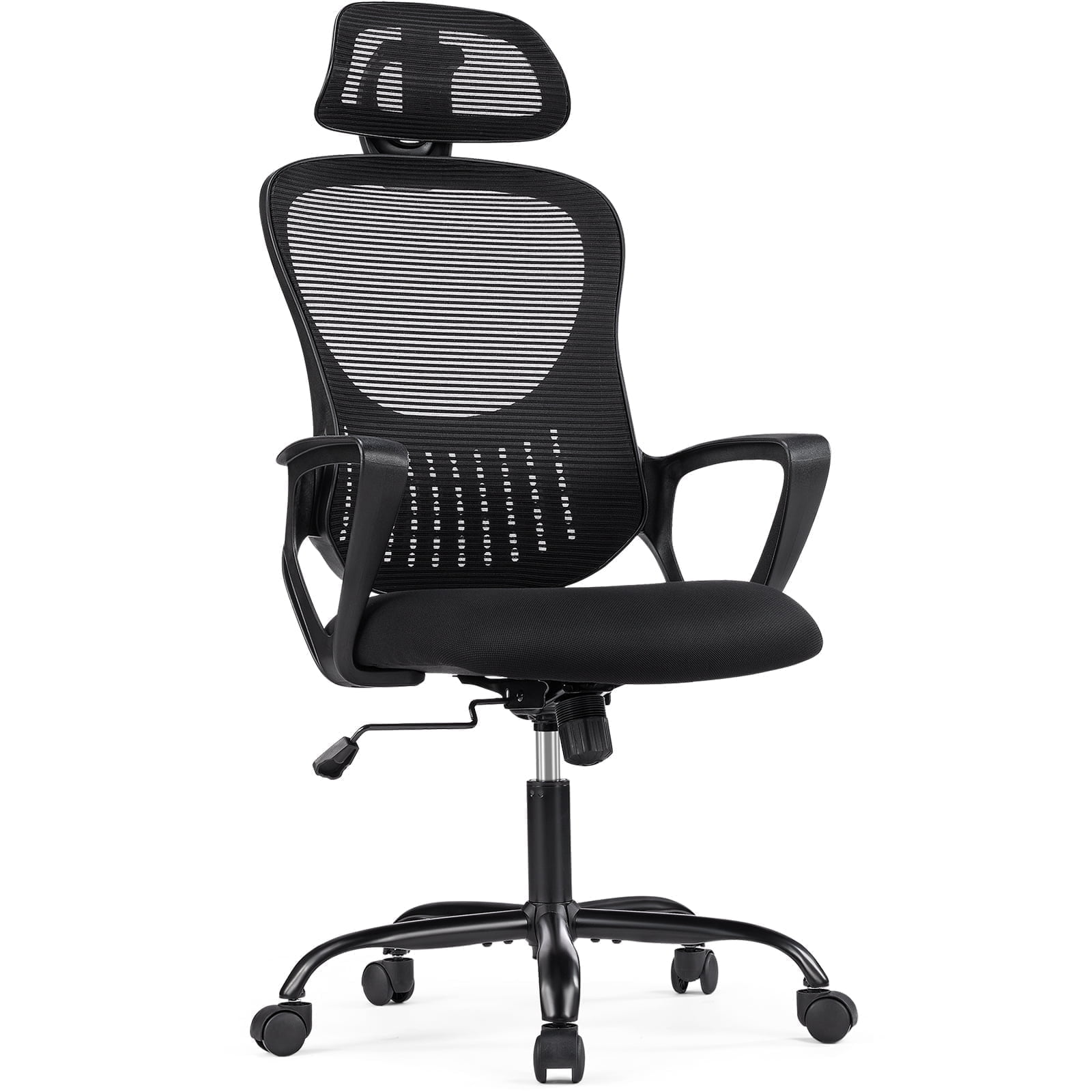
- Mesh High Back Chairs with Headrest: Excellent for airflow. Ideal for warmer climates or those who tend to get hot. The headrest is often a separate, cushioned unit attached to the mesh frame. Best for: Tech workers, home offices, all-day comfort.
- Leather High Back Chairs with Headrest: Classic executive look. Provides a plush, luxurious feel. Leather headrests are often larger and more padded. Requires maintenance but conveys authority. Best for: Corner offices, legal professionals, traditional settings.
- Fabric High Back Chairs with Headrest: A middle ground. Soft, available in many colors, and often more breathable than leather. Fabric headrests offer good grip, preventing your head from sliding. Best for: Creative studios, modern workspaces, comfort seekers.
4. Who Benefits Most from a Headrest?
While everyone can benefit, certain profiles find a headrest indispensable:
- Tall Individuals: Standard chairs often end mid-back. A high back with headrest ensures full spinal coverage.
- People with Chronic Neck or Shoulder Tension: The headrest provides a surface to release tension during micro-pauses.
- Multi-taskers: If you frequently turn to talk to colleagues or look at a second screen, a pivot-capable headrest offers momentary relief.
- Those Who Recline: If you use the recline feature for thinking or reading, a headrest is non-negotiable to avoid straining neck muscles.
Data Snapshot: A survey of 1,000 office workers found that those using chairs with adjustable headrests reported a 34% lower incidence of upper back stiffness compared to those using standard task chairs.
5. Maintaining Your High Back Chair with Headrest
To ensure longevity and consistent performance:
- Mechanism Care: For adjustable headrests, periodically tighten any loose bolts. Use a dry lubricant on moving parts if they squeak.
- Material Cleaning: For leather, use a mild cleaner and conditioner annually. For mesh, vacuum dust regularly. For fabric, spot-clean with appropriate upholstery cleaner.
- Weight Limit Awareness: Exceeding the chair's weight capacity can stress the frame and cause the headrest mechanism to fail. Always respect the manufacturer's guidelines.
Frequently Asked Questions About High Back Chairs with Headrests
Conclusion: Invest in Your Neck, Invest in Your Future
A high back office chair with headrest is more than an accessory—it's a long-term investment in your physical well-being. By supporting the cervical spine, it helps prevent chronic issues, boosts concentration, and subtly communicates a commitment to quality. Whether you choose breathable mesh or premium leather, prioritize adjustability. Your neck will thank you at the end of every workday.