
The Quiet Revolution: Why Rubber Wheels Belong Under Your Office Chair
Imagine gliding across your office floor in near-total silence. No more clatter every time you push back from your desk. No more anxiety about scratching your beautiful hardwood or laminate flooring. This is the promise of rubber wheels for office chairs—a simple upgrade that transforms your workspace experience.
Did you know? According to a 2023 survey by the Floor Covering Institute, over 60% of homeowners with hardwood floors have reported scratches from office chair wheels. Replacing standard plastic casters with rubber alternatives can virtually eliminate this risk.
Most office chairs come from the factory with hard nylon or polypropylene wheels. While inexpensive to produce, these wheels act like tiny bulldozers for dirt and grit—rolling over particles and pressing them into your floor. Rubber wheels, on the other hand, are designed with a softer tread that cushions your floor and dampens sound. Whether you're in a home office, a corporate suite, or a shared workspace, rubber casters provide three immediate benefits: floor protection, noise reduction, and smoother maneuverability.
Rubber vs. The World: A Material Breakdown
Not all rubber wheels are created equal. Manufacturers use different compounds and core constructions that affect performance, durability, and suitability for various floor types.
🔵 Thermoplastic Rubber (TPR)
- Eco-friendly: Often recyclable and free of toxic chemicals.
- Quiet operation: Naturally absorbs vibration.
- Non-marking: Leaves no scuffs on floors.
- Flexible: Good shock absorption.
- Budget-friendly: Affordable upgrade.
🔴 TPR Limitations
- Less durable: Can wear faster under heavy loads.
- Heat sensitivity: May soften in very warm environments.
- Not oil-resistant: Can degrade if exposed to oils.
- Pile carpet drag: Not ideal for thick carpets.
⚫ Polyurethane (PU) on Rubber Core
- Extreme durability: Resists abrasion and tearing.
- Load-bearing: Supports heavier users (300 lbs+).
- Smooth roll: Low rolling resistance on all surfaces.
- Hybrid performance: Combines hardness of plastic with grip of rubber.
- Long lifespan: Often outlasts the chair itself.
⚪ PU Limitations
- Higher cost: Premium material, premium price.
- Harder feel: Slightly less cushion than TPR.
- Can attract dust: Static can pull in lint.
5 Signs You Need to Switch to Rubber Wheels
- Your floors show track marks: Dark scuffs or fine scratches are telltale signs of hard plastic.
- Your chair sounds like a shopping cart: Rattling and squeaking mean the wheels are too hard.
- You feel every imperfection: Hard wheels transmit vibration from floor irregularities.
- You've recently installed new flooring: Protect your investment with gentle casters.
- You work in a quiet environment: Libraries, recording studios, or shared offices demand silence.
Anatomy of a Rubber Caster: What to Look For
When shopping for replacements, consider these technical aspects to ensure you get the perfect fit:
- Stem type: Most common is the grip ring stem (7/16" diameter, 7/8" length). However, some chairs use a plunger (brake) stem or a plate mounting system. Measure your current wheel before buying.
- Wheel diameter: Standard is 2 inches to 3 inches. Larger wheels roll more easily over carpet and cords.
- Core material: Nylon cores are lightweight and strong; metal cores are heavier but virtually indestructible.
- Durometer (hardness): Measured on the Shore A scale. For rubber wheels, 50A–70A offers a good balance of cushion and rollability.
Pros & Cons at a Glance
✅ Advantages of Rubber Wheels
- Floor protection: Safe for hardwood, laminate, tile, vinyl.
- Noise cancellation: Reduces rolling noise by up to 70%.
- Improved traction: Less sliding on smooth floors.
- Shock absorption: Gentler on your chair's mechanism.
- Easy cleaning: Wipe with a damp cloth.
❌ Considerations
- Higher rolling resistance: Slightly harder to push on plush carpet.
- Debris pickup: Can occasionally pick up small pebbles.
- Initial cost: More expensive than basic plastic.
- Stem compatibility: Must match exactly.
Installation: A 5-Minute Upgrade
Replacing office chair wheels is one of the simplest DIY improvements. Follow these steps:
- Tilt the chair to access the casters.
- Remove old wheel: For grip-ring stems, pull firmly while wiggling. For brake stems, press the release tab and pull.
- Insert new rubber wheel: Align the stem with the socket and push firmly until it clicks.
- Test spin: Ensure the wheel rotates freely.
- Repeat for all five casters.
Pro tip: If the new stem is slightly loose, wrap a thin layer of Teflon tape around it for a snug fit.
Frequently Asked Questions About Rubber Wheels
Conclusion: Roll Smarter, Not Harder
Your office chair is the most-used piece of furniture in your workspace. Don't let subpar wheels undermine its comfort and your floor's beauty. Rubber wheels for office chairs are a low-cost, high-impact upgrade that pays dividends in peace, quiet, and preservation.
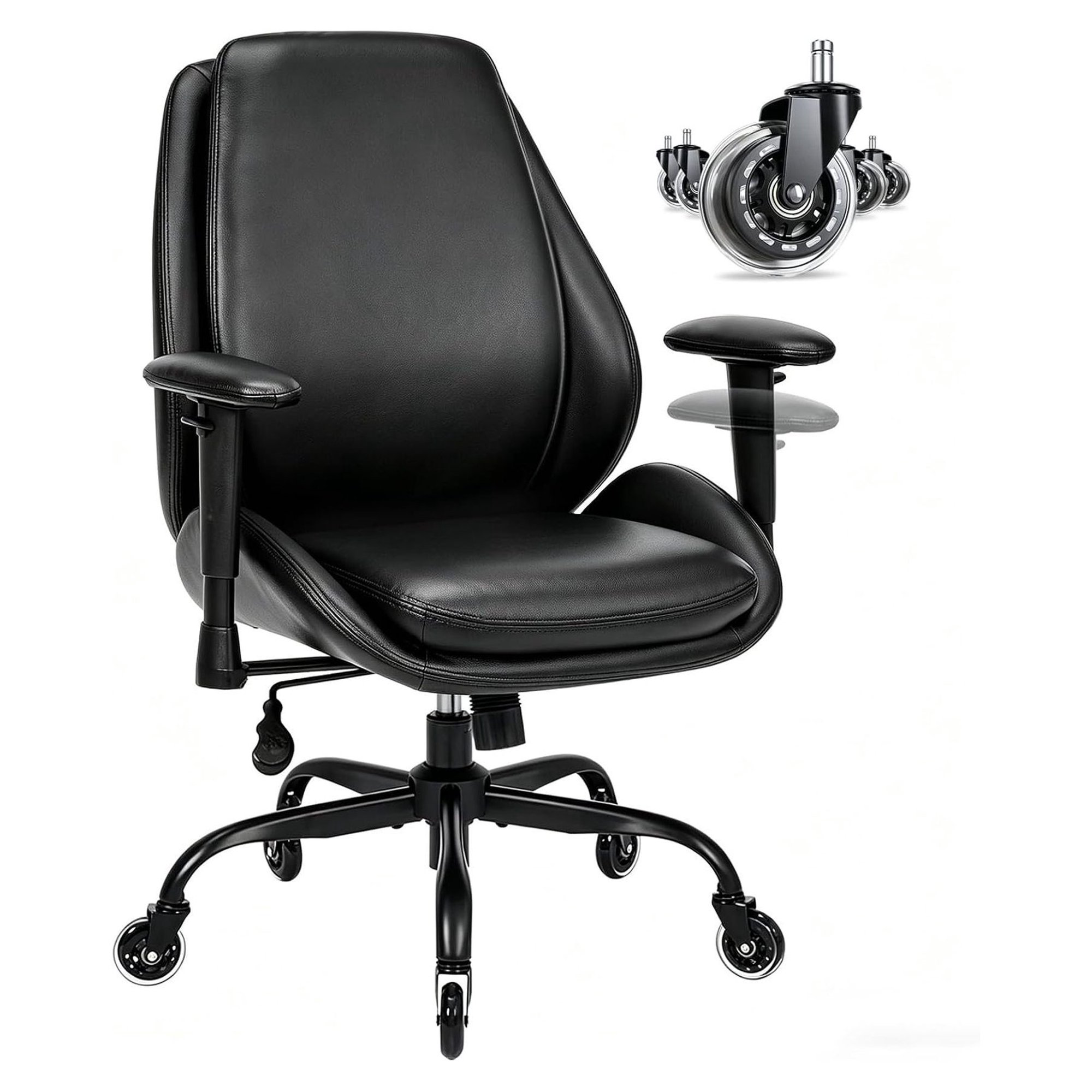
Check out the top-rated options in our product grid above—each selected for quality, durability, and floor-friendliness. Upgrade today and feel the difference.