
Investing in a Quality Office Chair: Your Backbone of Productivity
Think of your office chair like a professional-grade tool. A carpenter wouldn't use a bargain-bin hammer that might break, and you shouldn't trust your daily comfort and spinal health to a flimsy chair. A quality office chair is the foundation of your workspace — it supports you silently for thousands of hours. Unlike budget chairs that often feel "good enough" for a few months, a well-built chair maintains its support, doesn't develop annoying squeaks, and keeps its upholstery looking professional for years. This guide dives deep into what separates a genuinely high-quality chair from the rest, helping you make an investment that pays dividends in focus, health, and longevity.
Why it matters: A study in the Journal of Physical Therapy Science found that workers using poorly designed chairs reported 54% more low-back pain. A quality chair with proper adjustments isn't a luxury — it's a tool to prevent chronic issues and maintain energy through long workdays.
Anatomy of a Quality Office Chair: What to Look For
Not every expensive chair is a quality chair. Some use marketing hype rather than robust engineering. Here are the core components that define true quality — the parts you can't see in a product photo but will feel over years of use.
1. The Frame & Base: The Skeleton of Durability
- Base material: Look for a nylon composite with fiberglass reinforcement or polished aluminum. These resist cracking and bending. Avoid cheap plastic bases that can develop hairline fractures under heavy use.
- Gas lift cylinder: Quality chairs use Class 3 or Class 4 cylinders (rated for 250–500 lbs). They're tested for 20,000+ elevation cycles. A wobbly or sinking chair is a telltale sign of a low-grade cylinder.
- Casters: Dual-wheel casters with soft polyurethane tread roll smoothly on both carpet and hard floors without scratching. They also distribute weight better than single-wheel casters.
2. Foam and Padding: The Difference Between "Soft" and "Supportive"
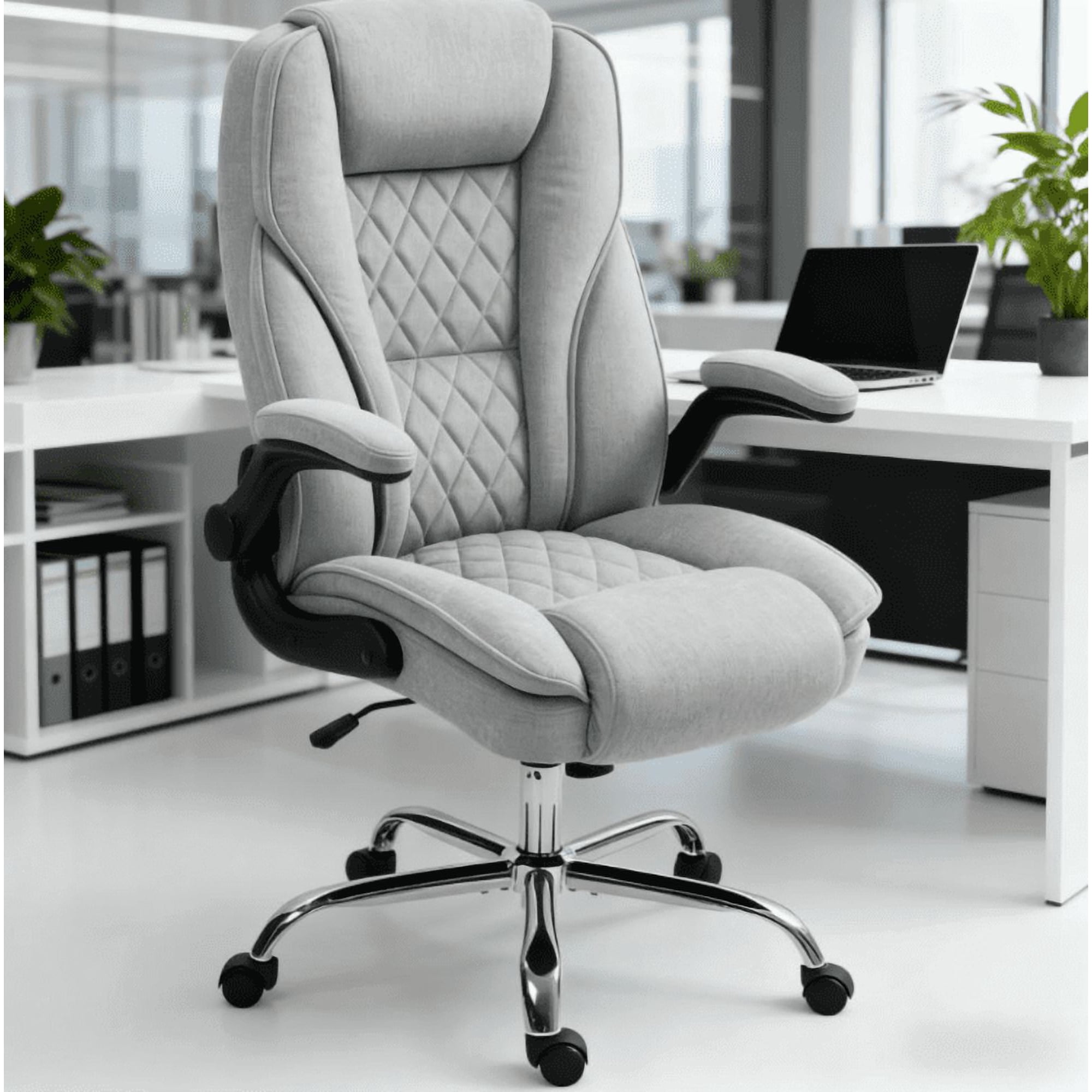
High-density foam (typically 2.5–3.5 lbs per cubic foot) retains its shape for years. Low-density foam (under 1.8 lbs) often develops a "bottomed out" feeling within months. Quality chairs often use cold-cured foam or memory foam layers over a firm support core, providing immediate comfort without sacrificing long-term resilience. A useful analogy: think of cheap foam as a fast-food burger — satisfying at first, but quickly leaving you unsupported. High-density foam is like a slow-cooked meal — consistently satisfying and nourishing.
3. Mechanisms and Adjustability: Smooth Operators
Quality chairs offer adjustments that actually stay where you set them. Key mechanisms include:
- Multi-functional tilt lock: Allows you to lock the chair in upright position or let it recline freely. The lever should feel crisp, not mushy.
- Tilt tension control: A strong, adjustable spring that matches your weight. On a quality chair, turning the knob produces a noticeable, progressive change in resistance.
- 4D armrests: Height, width, depth, and pivot adjustments. But more importantly, they should feel sturdy with minimal lateral play.
- Independent lumbar support: Not just a fixed bump. Quality chairs let you raise/lower and increase/decrease the depth of the lumbar curve to fit your spine.
4. Upholstery: Fabrics That Breathe and Wear Well
Quality office chairs use commercial-grade materials:
- Mesh: Look for a tight, even weave that provides "hammock-like" support without sagging. Premium mesh (e.g., from 3D Spacer or Pellicle) is stretchy yet resilient.
- Leather: Top-grain or full-grain leather develops a rich patina and lasts 15+ years. Avoid "bonded leather" which flakes within a few years.
- Fabric: High-performance polyester or wool blends with high "double rub" ratings (50,000+ Wyzenbeek) resist pilling and fading.
Data point: According to BIFMA (Business and Institutional Furniture Manufacturers Association) standards, a quality office chair mechanism must survive 100,000 tilt cycles without failure. That's roughly 10 years of normal use. Always check if the chair meets BIFMA standards — it's the industry benchmark for durability.
Quality vs. Price: Decoding the Investment
You might wonder, "Why does a quality chair cost $800 while a similar-looking one is $200?" The answer lies in materials, testing, and warranties. Below is a realistic breakdown of where your money goes:
| Price Tier | Typical Construction | Expected Lifespan | Warranty |
|---|---|---|---|
| $150 – $350 | Plastic base, basic foam (1.5 lb density), limited adjustments, single-wheel casters | 1–3 years | 1–2 years |
| $400 – $700 | Reinforced nylon base, medium-density foam, some ergonomic adjustments, better cylinder | 3–5 years | 2–5 years |
| $800 – $1,500 | Aluminum or reinforced base, high-density foam/cold cure, full adjustments (4D arms, seat depth), premium mesh/leather, Class 4 cylinder | 8–12 years | 10–12 years (frame) |
| $1,600+ | Top-grain leather, fully recyclable materials, advanced syncro-tilt mechanisms, designer aesthetics | 12–15+ years | 12+ years comprehensive |
Long-Term Value: Why "Buying Once" Saves Money
Imagine buying a $250 chair every three years because the foam flattens or the cylinder fails. Over 12 years, that's $1,000 spent on three mediocre chairs. Meanwhile, a single $900 quality chair still performs well into its second decade. The math is clear, but the real value is in the consistent ergonomic support you receive every single day, reducing the risk of back pain and the cost of chiropractic visits. A quality office chair is one of the few purchases that pays for itself through improved well-being and productivity.
Frequently Asked Questions About Quality Office Chairs
Conclusion: Choose Wisely, Sit Comfortably for Years
Selecting a quality office chair is a decision that impacts your daily comfort, long-term health, and even your focus. By looking beyond marketing claims and focusing on the skeletal structure — the frame, foam density, mechanism smoothness, and material grade — you can identify a chair that will serve you faithfully for a decade or more. Remember, the most expensive chair isn't always the best, but the cheapest almost always costs you more in the long run.
Your Quality Checklist
- ✔ Frame: Metal or reinforced nylon base, Class 3/4 gas lift
- ✔ Foam: High-density (2.5+ lb) or cold-cured foam
- ✔ Adjustments: Independent lumbar + seat depth + 4D arms
- ✔ Warranty: Minimum 5 years on mechanism, 10+ on frame
- ✔ Feel: Solid, quiet, stable when you test it
Invest in a chair that respects your body and your work. The right quality office chair isn't an expense — it's one of the smartest investments you'll make for your professional life.