
The Foundation of Productive Work: Seating That Supports You
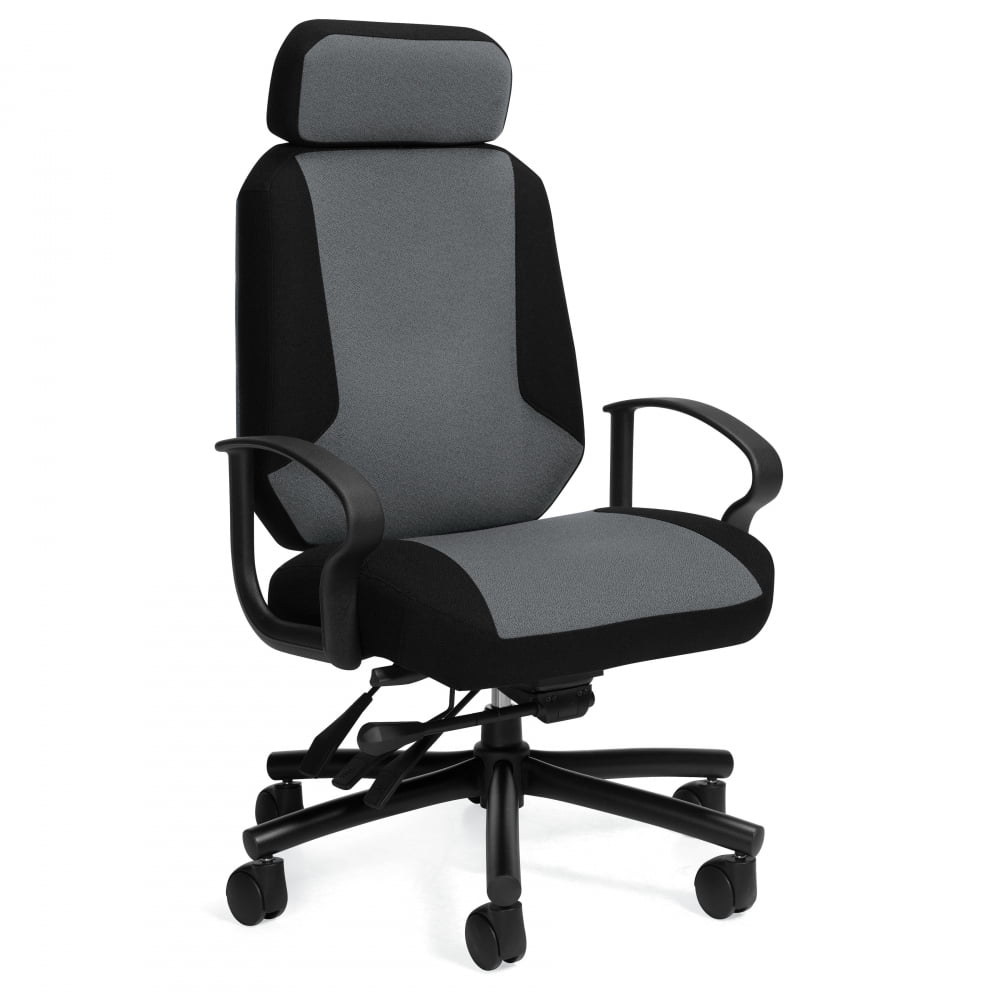
Imagine your office chair as the foundation of a house. If the foundation is weak, everything built on top—your focus, your comfort, your physical health—becomes unstable. For professionals who spend countless hours at a desk, a standard chair might seem sufficient at first glance. But over time, subtle squeaks, a wobbly base, or cushioning that loses its shape can signal a deeper issue: the chair wasn't built for the long haul. This is where the conversation about office chairs 300 lb capacity becomes essential.
These aren't just chairs for heavier individuals; they represent a category of seating built to a higher standard. A 300 lb weight rating is a hallmark of engineering that prioritizes durability, stability, and resilience. It means the manufacturer has used thicker steel in the frame, a wider and sturdier base, and a gas lift mechanism that won't fail under pressure. For the user, this translates to a piece of office furniture that feels solid, inspires confidence, and remains comfortable year after year. In fact, ergonomic studies suggest that a stable, properly rated chair can reduce micro-adjustments and fidgeting by up to 30%, allowing you to channel that energy into your work instead.
The 'Why' Behind the Number: A 300 lb capacity rating is more than a number—it's a promise. It often indicates compliance with industry standards like ANSI/BIFMA (Business and Institutional Furniture Manufacturers Association), which involves rigorous tests for stability, durability, and strength. When you choose a chair that meets these standards, you're choosing predictable, long-term performance.
Deconstructing Durability: The Anatomy of a 300 lb Capacity Chair
To truly appreciate the value of a heavy-duty chair, it helps to look under the hood—metaphorically speaking. While a standard office chair and a 300 lb capacity model might look similar from across the room, their internal architecture is vastly different. Let's break down the critical components that work together to provide that robust support.
1. The Gas Lift Mechanism: The Chair's Backbone
The gas lift (or pneumatic cylinder) is what allows you to adjust the seat height. In a chair rated for 300 lbs, this is not a generic, off-the-shelf part. It's typically a Class 3 or Class 4 gas lift, which has a larger piston diameter and thicker cylinder walls. Think of it as the difference between a bicycle pump and a hydraulic jack. A standard lift might handle occasional use, but a heavy-duty lift is designed to withstand constant pressure and vertical stress without leaking or failing. Always look for specifications that mention a "heavy-duty" or "industrial-grade" gas lift.
2. The 5-Star Base: A Foundation of Stability
The base is the chair's footprint. For a 300 lb capacity, a flimsy plastic base is a recipe for disaster. Quality chairs in this category feature bases made from one of two materials:
- Reinforced Nylon or Composite: Modern engineering has produced composites that are incredibly strong, lightweight, and rust-proof. They are often ribbed or thickened at stress points.
- Solid Metal (Steel or Aluminum): This is the gold standard for maximum durability. A polished aluminum base not only looks professional but provides a rock-solid foundation that won't crack or bend over time.
The base must also be wide enough to distribute weight evenly, preventing the chair from tipping, especially when leaning back.
3. Casters: The Unsung Heroes of Mobility
Casters are the point of contact with the floor, and they bear the full load. Standard casters can flatten, crack, or roll poorly under higher weights. Chairs built for 300 lbs typically use:
- Dual-Wheel Casters: Instead of a single wheel, these have two smaller wheels on the same stem. This doubles the contact surface area, reducing pressure on each individual wheel and allowing for smoother rolling on carpets.
- Larger Diameter Wheels: Bigger wheels roll more easily over carpet fibers and threshold strips, requiring less effort from the user.
- Material: Durable polyurethane is common, as it resists wear and won't mark up hard floors.
4. Frame and Upholstery: The Comfort Layer
The internal frame (often steel) supports the seat pan and backrest. In heavy-duty chairs, this frame is more substantial. The padding is also upgraded:
- High-Density Foam: This is crucial. High-density foam resists compression. A standard chair might feel "bottomed out" after a few months, whereas high-density foam in a 300 lb rated chair will maintain its shape and support for years. It's like the difference between a cheap mattress and a premium one.
- Wider Seat Dimensions: Many of these chairs offer seats that are 22 inches wide or more, providing ample room and eliminating the pinched feeling that can occur in narrower seats.
Pros and Cons at a Glance
✅ Advantages
- Superior Longevity: Components are built to last, resisting wear and tear.
- Enhanced Stability: No wobbling or tipping, even during active movement.
- Better for Posture: Wider seats and robust frames encourage better sitting habits.
- Higher Resale Value: Quality construction holds up over time.
- Peace of Mind: No worrying about component failure.
❌ Considerations
- Higher Initial Cost: You pay more upfront for better materials.
- Increased Weight: The chair itself is heavier and harder to move.
- Potentially Larger Footprint: May not be ideal for very compact spaces.
- Styling: Some heavy-duty models can look bulkier.
The Science of Support: Data-Backed Benefits
According to ergonomic research published by the National Institute for Occupational Safety and Health (NIOSH), a properly fitted and stable chair can reduce the risk of lower back disorders by up to 45%. For chairs with a 300 lb capacity, the "properly fitted" aspect often includes more adjustability to accommodate larger body frames. A study in the journal 'Applied Ergonomics' indicated that seat width and depth are critical for pressure distribution; a seat that's too narrow can increase pressure on the trochanters (hip bones) by over 30%. A 300 lb capacity chair, with its typically wider seat, mitigates this risk.
Furthermore, the stability provided by these chairs has a psychological component. A 2021 survey by the American Chiropractic Association found that 68% of respondents who used a heavy-duty chair reported feeling "more secure and focused" during their workday, compared to their previous standard chair. This sense of security reduces the subconscious need to brace oneself, allowing muscles to relax and further reducing fatigue.
Selection Guide: 5 Steps to Your Ideal Heavy-Duty Chair
Before browsing, measure your desk height and the area where the chair will sit. Note your own measurements: your height (to ensure proper back support) and your weight (to confirm the 300 lb rating is suitable, or if you need to look for 400 lb+ models).
Look for chairs with at least: adjustable seat height, seat depth adjustment (sliding pan), adjustable lumbar support, and 3D or 4D armrests. These features allow you to fine-tune the chair to your unique body dimensions, which is the essence of ergonomics.
A manufacturer's confidence in their product is reflected in the warranty. For a chair in this class, look for a minimum of 5 years on parts and mechanisms, and ideally 10+ years on the frame and base. A good warranty is your safety net.
Choose upholstery based on your climate and aesthetic. Breathable mesh is great for warmer offices, while premium fabric or bonded leather offers a softer feel and classic look. Ensure the material is rated for heavy use (e.g., a high "double rub" count for fabric).
If possible, try a similar model. Pay attention to how smoothly it rolls, how easily the recline mechanism moves, and whether the tension adjustment can be set to your preferred rocking resistance. The chair should move with you, not against you.