
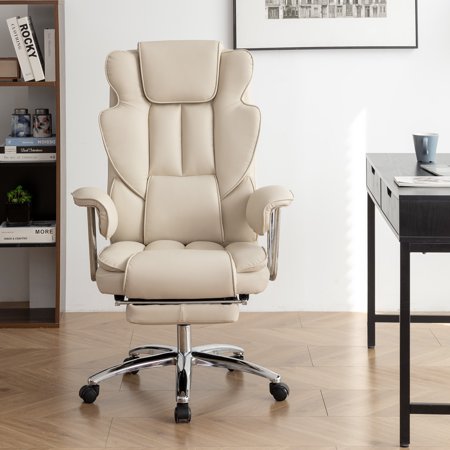
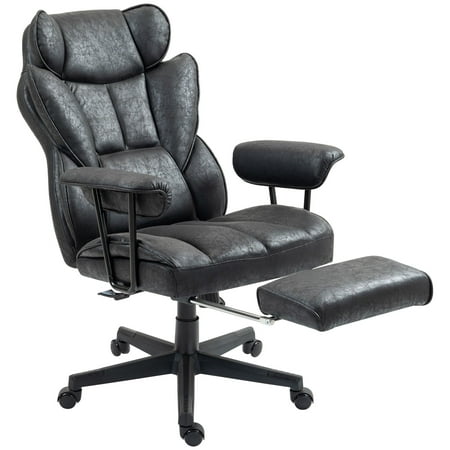
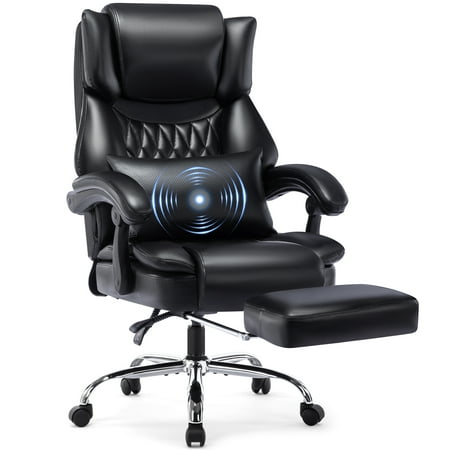
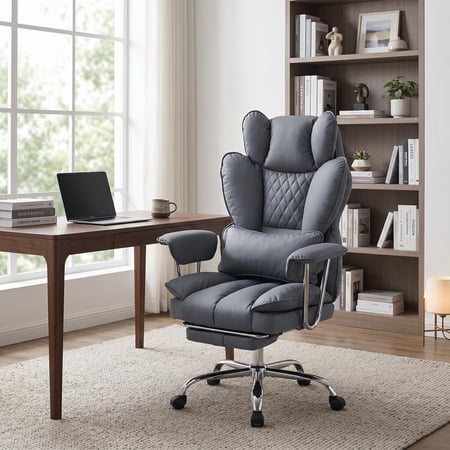
Why a Big and Tall Office Chair with Footrest is a Game Changer
If you’re over 6 feet tall or carry a larger frame, standard office chairs often feel like sitting on a child’s stool — the seat pan digs into your thighs, the armrests are too narrow, and your feet dangle without support. Adding a big and tall office chair with footrest solves these pain points. It’s not just about comfort; it’s about long-term health. According to ergonomic studies, proper leg support reduces lower back stress by up to 30% and improves blood circulation during long sitting hours.
Did you know? The average sitting time for a full-time office worker is 9.5 hours per day. For taller or heavier individuals, pressure on the thighs and spine is even greater. A chair with a built-in footrest allows you to shift positions, keeping your knees at a healthy angle and reducing the risk of deep vein thrombosis (DVT).
Engineering Meets Anatomy: What Makes a Quality Big & Tall Chair with Footrest?
Unlike regular office chairs, a true big and tall model with footrest must satisfy three core demands: structural integrity, anthropometric fit, and adjustable leg support. Below we break down the anatomy of a chair that won’t let you down.
1. Reinforced Frame & Weight Capacity
The backbone of any heavy-duty chair is its frame. Look for chairs with a steel or reinforced aluminum base, not plastic. A pneumatic cylinder rated for at least 350 lbs ensures smooth height adjustment without sudden drops. Some premium models feature dual-cylinder mechanisms for 500+ lb capacity. The five-star base should be at least 28 inches wide for stability, with heavy-duty casters (often metal-core) that roll easily on carpets.
- Steel frame: Prevents twisting or cracking under heavy loads.
- Class 4 or 5 gas lift: Certified for 350-500 lbs; look for BIFMA or SGS certification.
- Wide base: 28-30 inch diameter with non-tipping design.
- Casters: Hard-floor or carpet-specific; 3-inch dual-wheel for smooth rolling.
2. Seat Dimensions That Actually Fit
A common frustration for big and tall users is a seat that’s too narrow or shallow. For proper fit, the seat width should be at least 22-24 inches, and depth 20-22 inches. The waterfall edge (curved front) is crucial to prevent circulation restriction. When the footrest is deployed, the seat depth should still support your thighs without pressing behind the knees.
3. Types of Footrests: Flip-Out vs. Ottoman vs. Retractable
Not all footrests are created equal. Here’s a quick comparison based on our research:
| Footrest Type | Best For | Pros | Cons |
|---|---|---|---|
| Flip-out (under seat) | People who need occasional foot support | Space-saving, easy to tuck away | Usually unpadded, small surface |
| Padded Ottoman (recliner style) | Extended relaxation, napping | Extremely comfortable, full leg support | Takes space when extended, adds weight |
| Retractable sliding footplate | Tall users who need adjustable leg rest length | Adjustable distance, often padded | Mechanism can wear over time |
4. Lumbar Support for Tall Torsos
Standard chairs position lumbar support too low for tall individuals. A quality big and tall chair offers adjustable lumbar height and depth. Look for at least 4-5 inches of vertical adjustment. Some high-end models include air-bladder lumbar for customized pressure.
5. Material Durability: Fabric vs. Leather
Heavy-duty use requires robust upholstery. Commercial-grade fabric (nylon/polyester blends) is breathable and resists tearing. Top-grain leather exudes luxury and molds to the body, but requires conditioning. Faux leather often peels within 2 years, so we recommend avoiding it for big and tall applications.
Analogy: Think of a big and tall chair like a suspension bridge. The frame is the steel truss, the gas lift is the main cable, and the footrest is the observation deck. All components must work in harmony to bear the load. If one part fails, the whole structure collapses. Always invest in certified components.
6 Steps to Choose Your Perfect Big & Tall Footrest Chair
- Measure yourself: Your height (torso and leg length), weight, and hip width.
- Check capacity: Add 50-70 lbs margin to your weight (e.g., if you weigh 300 lbs, look for 350-400 lb capacity).
- Decide footrest style: Do you need it for short breaks or all-day leg elevation? Ottoman style for lounging; flip-out for work.
- Test adjustability: Lumbar, armrests (4D preferred), seat depth, and tilt tension.
- Read real user reviews: Focus on longevity feedback from people with similar stature.
- Verify warranty: Minimum 5 years on frame and mechanism, 2 years on upholstery.
According to the Human Factors and Ergonomics Society, individuals using a footrest report 22% less thigh pressure and 18% less lower back fatigue after a 6-hour sitting session. This is not a luxury—it’s an ergonomic necessity for larger bodies.
Health Benefits Beyond Comfort
A footrest isn’t just about propping your feet. For big and tall individuals, elevating the feet slightly reduces lumbar lordosis (swayback) and takes the load off the sacrum. It can also help with:
- Varicose vein prevention: Gravity-assisted blood flow back to the heart.
- Hip flexibility: Changing position relieves hip flexor tightness.
- Posture improvement: Prevents slouching to reach the floor.
Standard Chair vs. Big & Tall Footrest Chair: At a Glance
| Feature | Standard Office Chair | Big & Tall with Footrest |
|---|---|---|
| Weight capacity | 250 lbs typical | 350-500+ lbs |
| Seat width | 19-20 inches | 22-26 inches |
| Seat depth | 17-19 inches | 20-22 inches |
| Footrest included | Rarely | Flip-out or ottoman |
| Backrest height | 21-23 inches | 26-32 inches (high-back) |
Maintaining Your Heavy-Duty Footrest Chair
To ensure longevity, periodically check bolts and screws (especially on the footrest mechanism). Lubricate moving parts with silicone spray. Vacuum fabric upholstery and clean leather with a damp cloth. If the footrest is a sliding type, avoid standing on it — it’s for feet, not weight-bearing.