
Introduction: The Silent Guardian of Your Home Office
Imagine investing in a beautiful hardwood floor, only to see it marred by the daily grind of your office chair. It's a common problem: the constant swiveling and rolling act like fine sandpaper, gradually wearing down the finish and etching unsightly marks. An office chair mat for hardwood floor is more than just an accessory; it's a crucial investment in the longevity and beauty of your workspace. It provides a smooth, durable surface for your chair to glide on, protecting your floor from scratches, dents, and scuffs while also making movement effortless and quiet.
But with so many options on the market, finding the right one can feel overwhelming. Do you need a clear mat or a colored one? Polycarbonate or PVC? With or without a lip? This guide will walk you through everything you need to know, ensuring you choose a mat that not only protects your floor but also complements your work style and office aesthetic.
The Hidden Dangers: What Happens Without a Mat
It's easy to underestimate the damage an office chair can cause. It's not just about the heavy weight; it's the combination of weight, movement, and tiny particles.
- Micro-Abrasion and Scuffing: Even the softest casters pick up microscopic dust and grit from the floor. As you move, these particles act like sandpaper, creating a fine network of scratches that dull the floor's finish over time.
- Permanent Dents and Grooves: Under constant pressure, chair wheels can create permanent depressions or grooves in the wood, especially in softer wood species. This damage is often irreversible without sanding and refinishing.
- Finish Wear and Tear: The polyurethane or varnish layer protecting your wood is tough, but it's no match for daily abrasion. A chair mat distributes the weight and movement, preventing the finish from wearing thin in high-traffic areas.
- Noise Pollution: The rattle and rumble of plastic or hard rubber casters on wood can be a constant distraction. A quality mat dampens this noise, creating a quieter and more focused environment.
Anatomy of a Perfect Hardwood Floor Chair Mat
Not all mats are created equal. Choosing one for hardwood requires looking at specific features that a standard carpet mat simply doesn't have. Here’s what to look for:
1. Material Matters: Polycarbonate vs. PVC vs. Eco-Friendly
The material is the most critical factor. It determines durability, clarity, and safety for your floor.
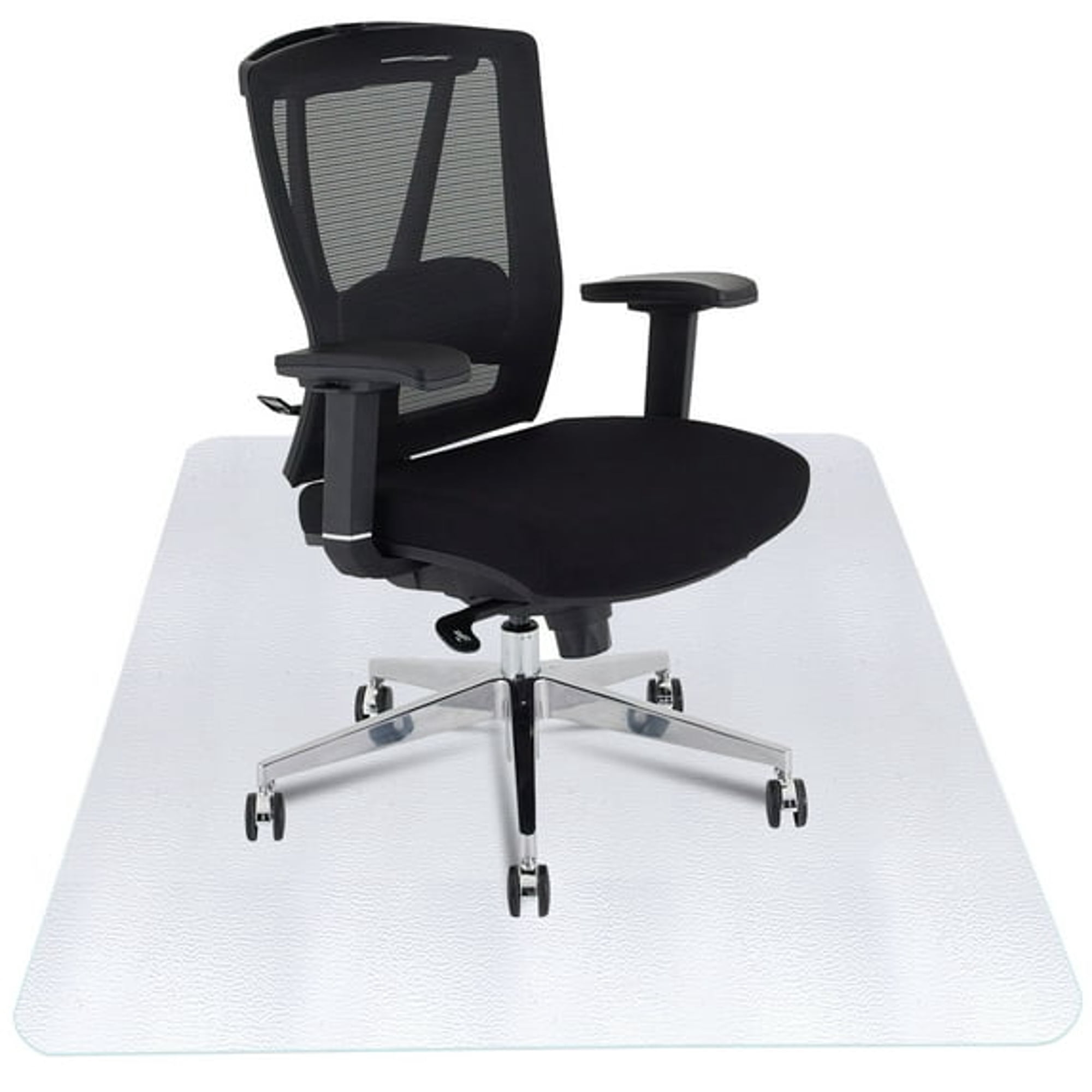
- Polycarbonate (The Premium Choice): Often considered the gold standard. It's incredibly strong, impact-resistant, and remains crystal clear without yellowing over time. It's also flexible enough to lay flat immediately. Think of it as the "tempered glass" of chair mats—a bit more expensive, but a lifetime investment.
- PVC (The Common Choice): This is the most common and affordable material. However, cheaper PVC mats can become brittle over time, crack, and sometimes discolor or "off-gas." Most importantly, some PVC formulations can react with certain hardwood floor finishes, causing cloudiness or damage. If choosing PVC, ensure it's specifically labeled as "safe for hardwood."
- Eco-Friendly / Bio-Based (The Responsible Choice): Made from recycled materials or plant-based resins, these mats are gaining popularity. They offer performance similar to polycarbonate with a significantly lower environmental footprint. They are typically non-toxic, odor-free, and safe for all floor types.
2. The Underside: Smooth Operator is Key
For hardwood, the underside of the mat must be completely smooth. Carpet mats use spikes or a grippy texture to anchor into fibers. On a smooth floor, this texture can create friction that damages the finish and makes the mat difficult to place. A good hardwood mat relies on its weight and the natural friction of a smooth, non-slip surface to stay in place without adhesive or aggressive grip.
3. Thickness and Stability
A mat that is too thin may not provide adequate protection and can curl or buckle. A mat that is too thick can be a tripping hazard and difficult for chair wheels to navigate. The sweet spot for hardwood floors is a thickness of about 1/8-inch to 3/16-inch (3-5 mm). This provides a robust platform while maintaining a low profile.
4. Shape and Lip: Desk Configuration
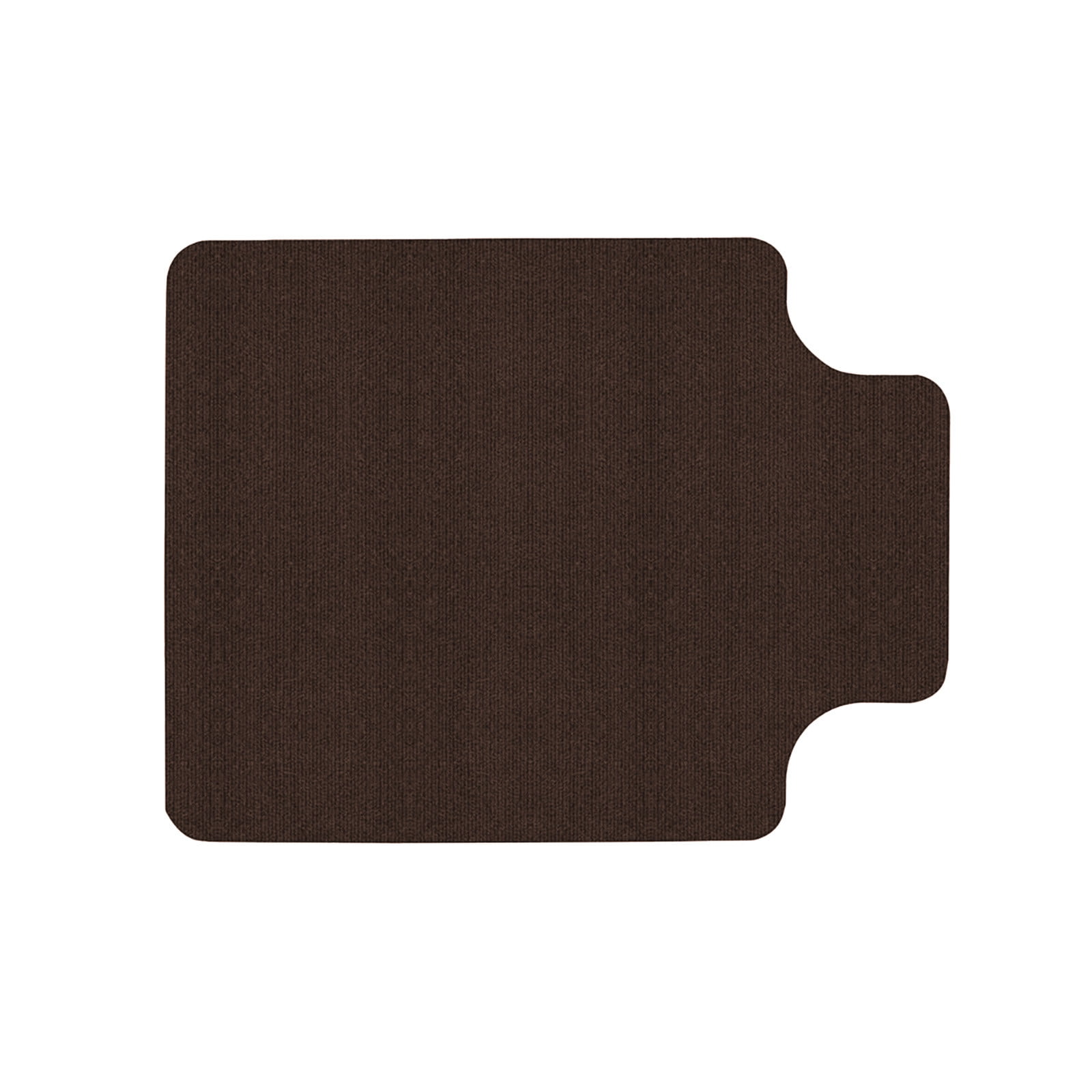
Consider your desk setup. If your desk sits against a wall and your chair tucks underneath, a lipped or contoured mat is essential. The "lip" is a curved extension that slides under the desk, protecting the area where your feet rest and where the chair's front casters roll. If your desk is in the middle of the room, a simple rectangle mat is perfectly sufficient and often more affordable.
5. Clarity and Aesthetics
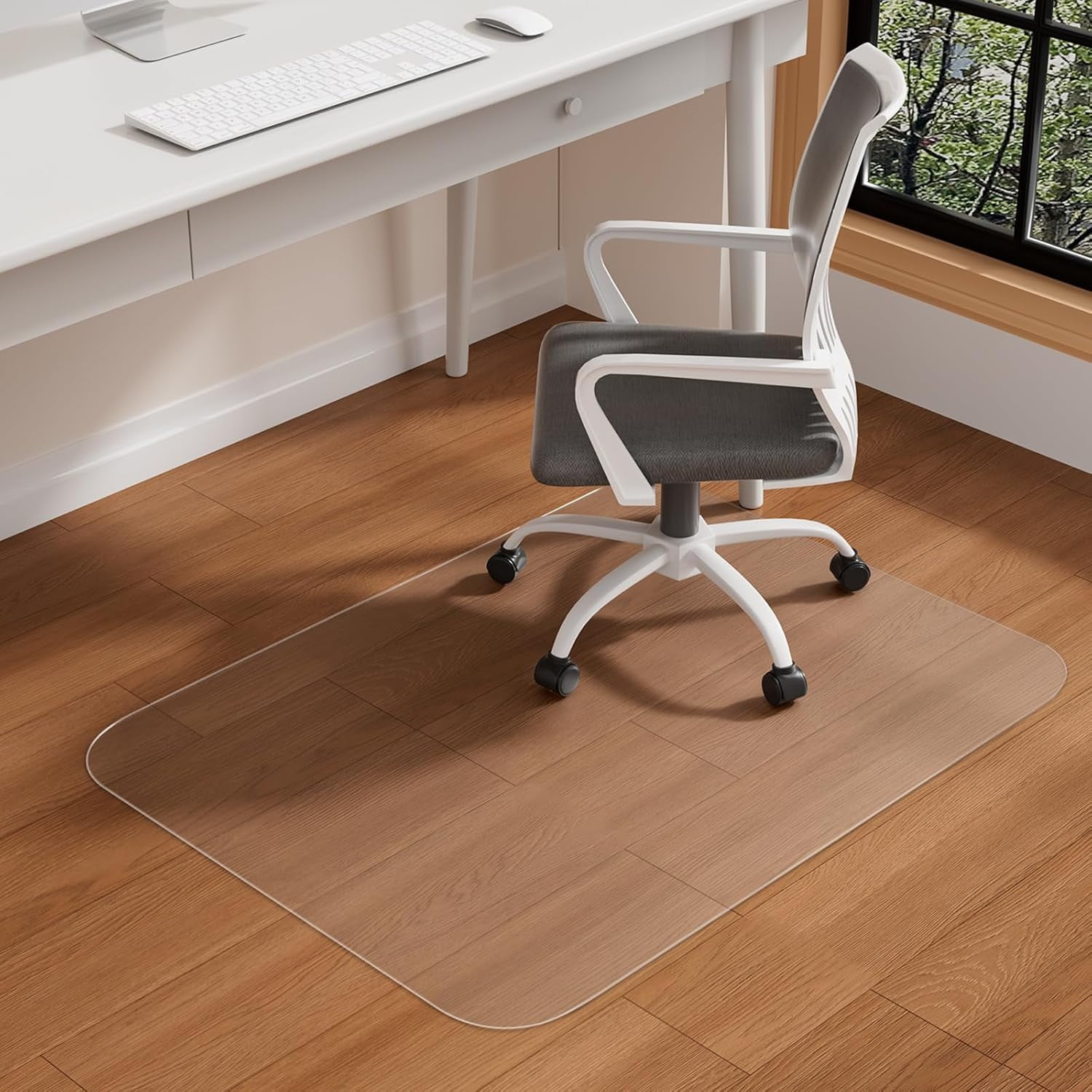
For many, the appeal of hardwood is its visual beauty. A clear, crystal mat allows the floor's grain and color to show through, making the mat virtually disappear. Tinted, textured, or colored mats can be a design choice but will obscure the floor. If you go for clarity, polycarbonate is the only material that guarantees it won't yellow with age.
Step-by-Step: Choosing Your Ideal Mat
Follow this simple guide to narrow down your options and make the perfect choice for your space.
- Step 1: Measure Your Space. Measure the area under your desk where your chair rolls. Consider the width of your chair's wheelbase and the distance you typically travel. A standard size is 36" x 48", but larger options are available for spacious offices. Don't forget to account for the "lip" if needed.
- Step 2: Assess Your Floor's Finish. Is your floor brand new with a fresh polyurethane coat, or is it older with a delicate wax finish? If unsure, a smooth polycarbonate mat is the safest, most universally compatible option.
- Step 3: Set Your Priorities. Ask yourself: What matters most? Is it budget (PVC), maximum durability and clarity (polycarbonate), or environmental impact (eco-friendly)? Your answer will guide your material choice.
- Step 4: Consider Your Chair's Casters. Hard plastic casters can be noisy and harsh. Pairing your new mat with softer, rollerblade-style urethane casters is a fantastic upgrade that provides an even smoother, quieter glide and offers the ultimate protection for both your mat and floor.
Pro Tip from Flooring Specialists: Place a doormat at the entrance of your home office. This simple step traps the majority of grit and debris before it ever reaches your chair mat, dramatically reducing the potential for scratches. Think of it as the first line of defense in a two-part protection system.
Maintenance: Keeping Your Mat and Floor Pristine
An office chair mat requires minimal care, but a little attention goes a long way in preserving both the mat and your floor.
- Daily/Weekly Cleaning: The most important step is to regularly sweep or vacuum the mat's surface. This removes the abrasive dust and dirt that can get trapped under your chair's wheels and cause micro-scratches. Use a vacuum without a beater bar to avoid scratching.
- Deep Cleaning: For smudges or spills, simply wipe the mat with a soft, damp cloth and a few drops of mild dish soap. Dry it immediately with a soft towel. Never use abrasive pads, bleach, or ammonia-based cleaners.
- Underneath Matters: Every few months, lift the mat and clean the floor underneath. You'll be surprised at the dust and debris that accumulates. This prevents grit from being trapped between the mat and the floor.
- Dealing with Curling Edges: If the edges of your mat start to curl, try cleaning the floor and the mat's underside. Sometimes a layer of dust prevents it from laying flat. If curling persists, a double-sided tape made for floors can be used sparingly on the corners.
Frequently Asked Questions (FAQ)
Conclusion: A Small Investment for Long-Term Peace of Mind
Your hardwood floor is a significant investment. Protecting it from the daily wear and tear of your office chair is not just about maintaining appearances; it's about preserving the value and integrity of your space. A high-quality office chair mat for hardwood floor is a simple, cost-effective solution that pays for itself many times over by preventing costly repairs and refinishing. By considering the material, shape, and your specific needs, you can find the perfect mat that offers silent, smooth rolling, invisible protection, and lasting durability, allowing you to focus on your work with complete peace of mind.