
Why an Office Bed Chair is the Secret Weapon for Productivity & Well-being
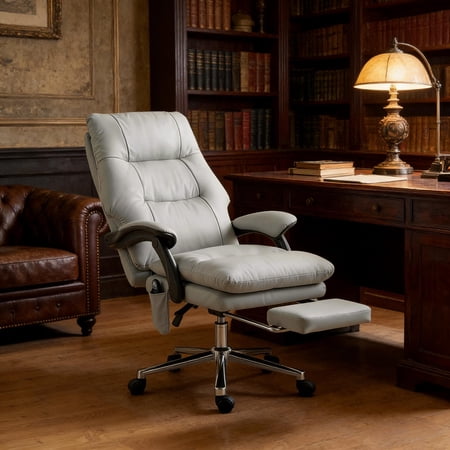
The modern workday is no longer confined to a rigid 9-to-5 structure. Especially for entrepreneurs, remote workers, and executives burning the midnight oil, the ability to recharge without leaving your workspace is a game-changer. An office bed chair—also known as a reclining office chair with an extendable footrest—bridges the gap between professional functionality and personal comfort.
Imagine this: you're in the middle of a complex project. Instead of hitting a wall of fatigue, you simply recline your chair, extend the built-in ottoman, and take a 20-minute power nap. You wake up refreshed, without the guilt of abandoning your desk. This isn't just luxury; it's strategic recovery. According to sleep researchers, even a short nap can improve alertness and performance for several hours afterwards.
The Rise of Multi-Functional Furniture: A 2023 survey by the International Workplace Group found that 65% of hybrid workers are investing in furniture that serves multiple purposes. The office bed chair is at the forefront of this trend, saving space and enhancing lifestyle flexibility.
1. The Anatomy of a High-Quality Office Bed Chair
Not all reclining chairs are created equal. A true office bed chair is engineered with specific components to ensure it performs both as a task chair and a rest station.
- The Recline Mechanism & Locking System: Look for a steel frame mechanism that allows infinite locking positions between upright and fully reclined (usually 135° to 170°). A pneumatic or tension-controlled lever ensures smooth, safe transitions.
- Integrated Extendable Footrest (Ottoman): This is the defining feature. It should be padded and wide enough to support your calves and feet comfortably. When not in use, it tucks neatly under the seat.
- Multi-Density Foam Cushioning: To prevent the "hammock effect" (where your hips sink too low), premium chairs use a combination of a firm support foam base and a soft, plush top layer for pressure relief.
- Sturdy 5-Star Base: Because of the shifting weight when reclined, a wider aluminum or heavy-duty nylon base provides stability and prevents tipping. Casters should be durable and suitable for your floor type.
2. Who Benefits Most from a Convertible Office Bed Chair?
The versatility of this chair makes it ideal for a variety of users and scenarios:
- The Home-Based Entrepreneur: When your office is also your sanctuary, a chair that converts into a lounger is perfect for weekend reading or meditation breaks.
- Executives with Back-to-Back Meetings: Use the full recline during a phone call or virtual meeting (with camera off!) to relieve spinal pressure.
- Gamers & Streamers: Long gaming sessions demand comfort. An office bed chair allows you to lean back during cutscenes or strategy discussions without leaving your setup.
- Individuals with Chronic Pain: The ability to change position frequently and even lie down briefly can alleviate back, hip, or sciatic nerve pain without interrupting workflow.
3. Key Features to Evaluate Before You Buy
To ensure your investment pays off, consider this checklist when comparing models:
| Feature | Why It Matters for an Office Bed Chair | What to Look For |
|---|---|---|
| Recline Angle & Leg Rest | Determines how flat you can lie and if legs are fully supported. | Near-flat recline (at least 150°), and a footrest that extends 10-15 inches. |
| Material & Breathability | Prevents sweating and discomfort during long periods of sitting or lying down. | Premium bonded leather or breathable mesh/fabric blends with ventilation. |
| Adjustability Range | Ensures ergonomic fit in upright mode and comfort in recline mode. | Seat height adjustment, tilt tension control, and 2D or 4D armrests. |
| Frame & Mechanism Durability | The moving parts endure significant stress. A weak mechanism will fail quickly. | Reinforced steel frame, class-3 or class-4 gas lift, and a mechanism tested for 150,000+ recline cycles. |
| Assembly & Space Requirements | These chairs can be heavy and require clearance behind the desk. | Check assembled dimensions. Allow at least 3 feet of wall clearance for full recline. |
4. Ergonomics vs. Comfort: Finding the Balance
A common misconception is that a chair comfortable for sleeping can't be good for your posture. The best office bed chairs disprove this. In the upright position, they must provide:
- Adjustable Lumbar Support: Crucial for maintaining the natural S-curve of your spine during typing and meetings.
- Seat Depth Adjustment: Ensures you can sit with your back against the lumbar support while leaving 2-3 finger widths between the seat edge and the back of your knee.
- Headrest Integration: A padded, adjustable headrest supports your neck in both upright and reclined positions.
Think of it as a high-performance car seat: it holds you firmly and correctly during the drive (work), but reclines comfortably when you're parked (rest).
5. Materials: Leather, Fabric, or Mesh for a Chair That Converts to a Bed?
Material choice affects hygiene, durability, and tactile comfort, especially if you plan to lie on it without a cover.
Premium Bonded/Top-Grain Leather
- Pros: Easy to wipe clean, looks professional, durable, and softens over time.
- Cons: Can be sticky in hot weather; may require conditioning.
- Best For: Executive offices, client-facing roles, easy clean-up.
Breathable Mesh & Fabric Blends
- Pros: Excellent airflow, stays cool, often more affordable.
- Cons: Can be harder to clean stains; mesh may sag over many years.
- Best For: Warm climates, home offices, all-day comfort.
6. Space Planning: Will It Fit Your Office?
Before purchasing, visualize the space. In its upright form, an office bed chair often has a similar footprint to a large executive chair. However, the magic happens when you recline.
- Measure Depth: When fully extended with the footrest out, the chair can be 65-75 inches deep (5.5 to 6+ feet). You need this clearance behind you.
- Wall Proximity: If your desk is against a wall, you won't be able to fully recline unless you pull the chair out first. Consider a chair with a "wall-hugger" mechanism if space is very tight.
- Room Flow: Ensure the fully extended chair doesn't block a doorway or walkway.