
More Than Just a Floor Protector: The Role of a Large Chair Mat
Imagine your office floor as the foundation of a house. No matter how beautiful the furniture is on top, a cracked or worn foundation compromises the entire structure. Similarly, your large office chair mat is the foundation of your daily work movement. It’s the silent partner that allows you to transition from typing to a phone call, or from your desk to a meeting area, without a second thought. But for executives and professionals with larger chairs or expansive workspaces, a standard-sized mat simply doesn't cut it. It's like putting a compact car mat in an SUV—it leaves too much exposed and restricts natural movement.
According to a study by the National Center for Biotechnology Information (NCBI), inefficient office setups can lead to micro-adjustments in posture that accumulate fatigue over an 8-hour day. A mat that is too small forces you to contort your movements or remain static, which can contribute to muscle stiffness. A generously sized mat, however, encourages micro-movements and allows your chair to follow you, not the other way around.
The Anatomy of a Perfect Large Office Chair Mat
Selecting the right mat involves more than just picking the biggest one. It's about understanding the interplay between your floor type, your chair's casters, and your work habits. Let's break down the critical components.
1. Material Science: Polycarbonate vs. PVC vs. Bamboo
The material dictates durability, feel, and floor safety. Think of it like choosing the sole of a shoe: a hard sole for concrete, a soft one for marble. Here’s how they compare:
✅ Polycarbonate (The Premium Choice)
- Durability: Virtually unbreakable and resistant to cracking.
- Clarity: Crystal clear and won't yellow over time.
- Performance: Excellent for both hard floors and low-pile carpet.
- Cost: The most expensive option, but a true "buy it for life" material.
🔄 PVC / Vinyl (The Versatile Standard)
- Durability: Good durability for home and standard office use.
- Flexibility: Can be flexible, which helps with shipping and fitting.
- Options: Available with carpet studs or smooth hard-floor backs.
- Cost: Mid-range, offering the best balance of price and performance.
🌱 Bamboo / Wood (The Aesthetic Choice)
- Appearance: Adds a warm, natural, and professional look.
- Durability: Very durable and rigid, but can be heavy.
- Surface: Works best on hard floors; not suitable for carpet.
- Maintenance: Requires occasional cleaning to prevent dirt buildup in grooves.
🛡️ Tempered Glass (The Modern Statement)
- Appearance: Ultra-modern, sleek, and transparent.
- Durability: Extremely hard and scratch-resistant, but can shatter under extreme impact.
- Performance: Best for hard floors; provides the smoothest rolling experience.
- Consideration: Heavy and requires a perfectly level floor.
2. Size & Shape: Mapping Your Movement
A "large" mat is a broad term. You need to measure your space and anticipate your movement. A common mistake is buying a mat that fits the chair but not the person.
- The 360-Degree Rule: Your mat should be large enough that when you swivel your chair 360 degrees, your knees and the chair arms never leave the protective surface. For an executive chair with a wide wingspan, this often means a mat that is 54” x 60” or larger.
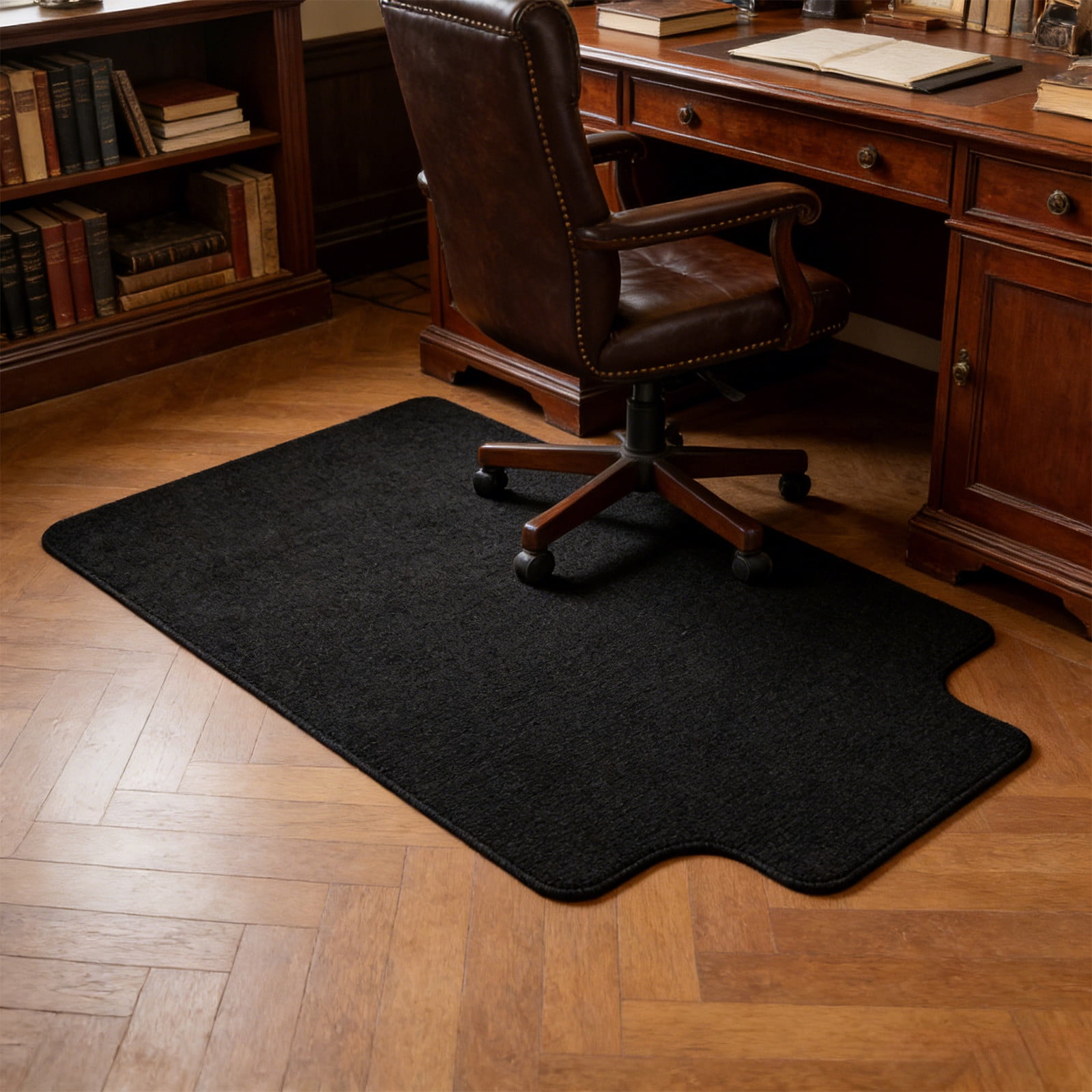
- Lip or No Lip: Mats come with a "lip" that extends under your desk to protect the area where your feet rest. For large mats, a contoured lip that fits snugly against your desk pedestal is a feature worth seeking out, as it prevents the mat from shifting and provides a seamless foot surface.
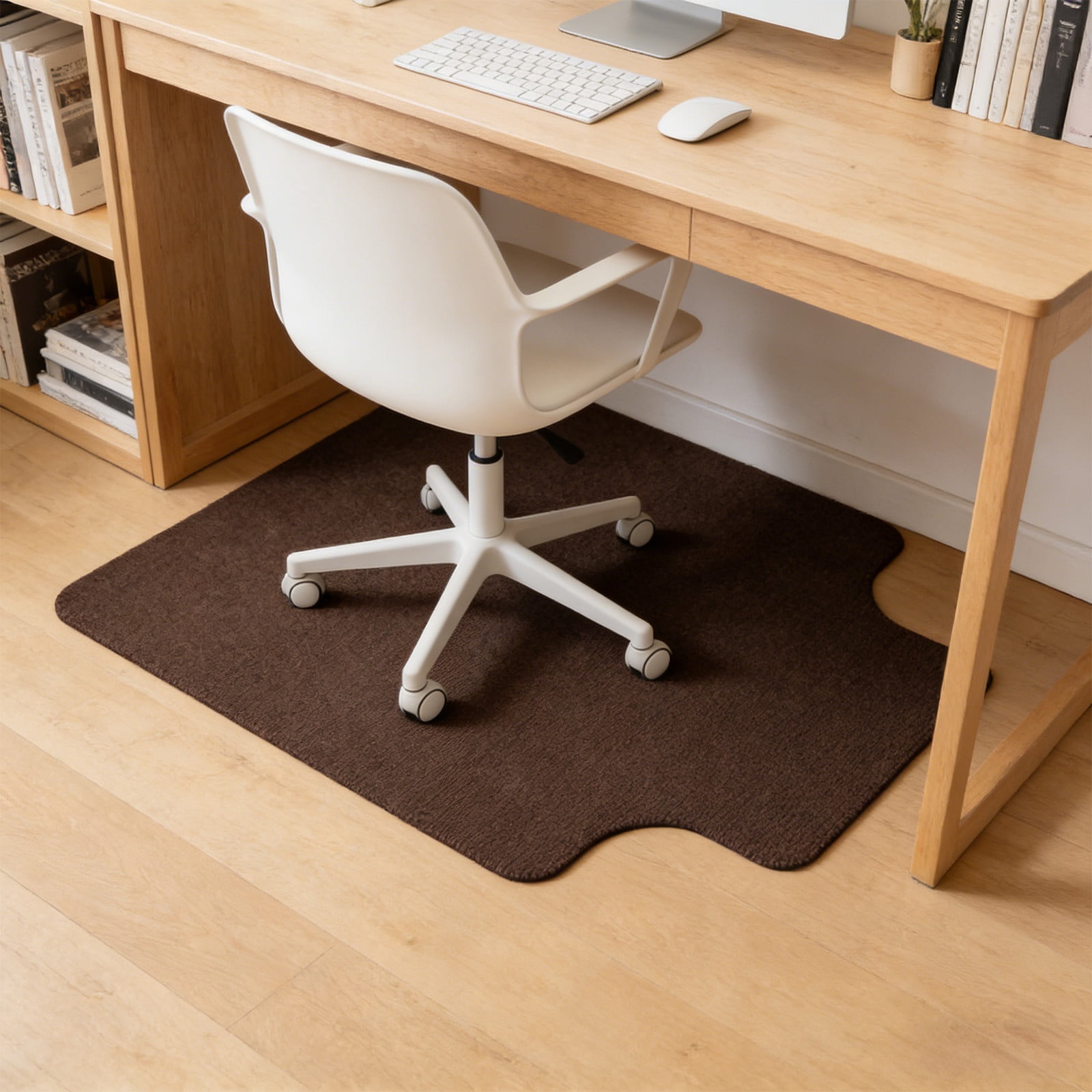
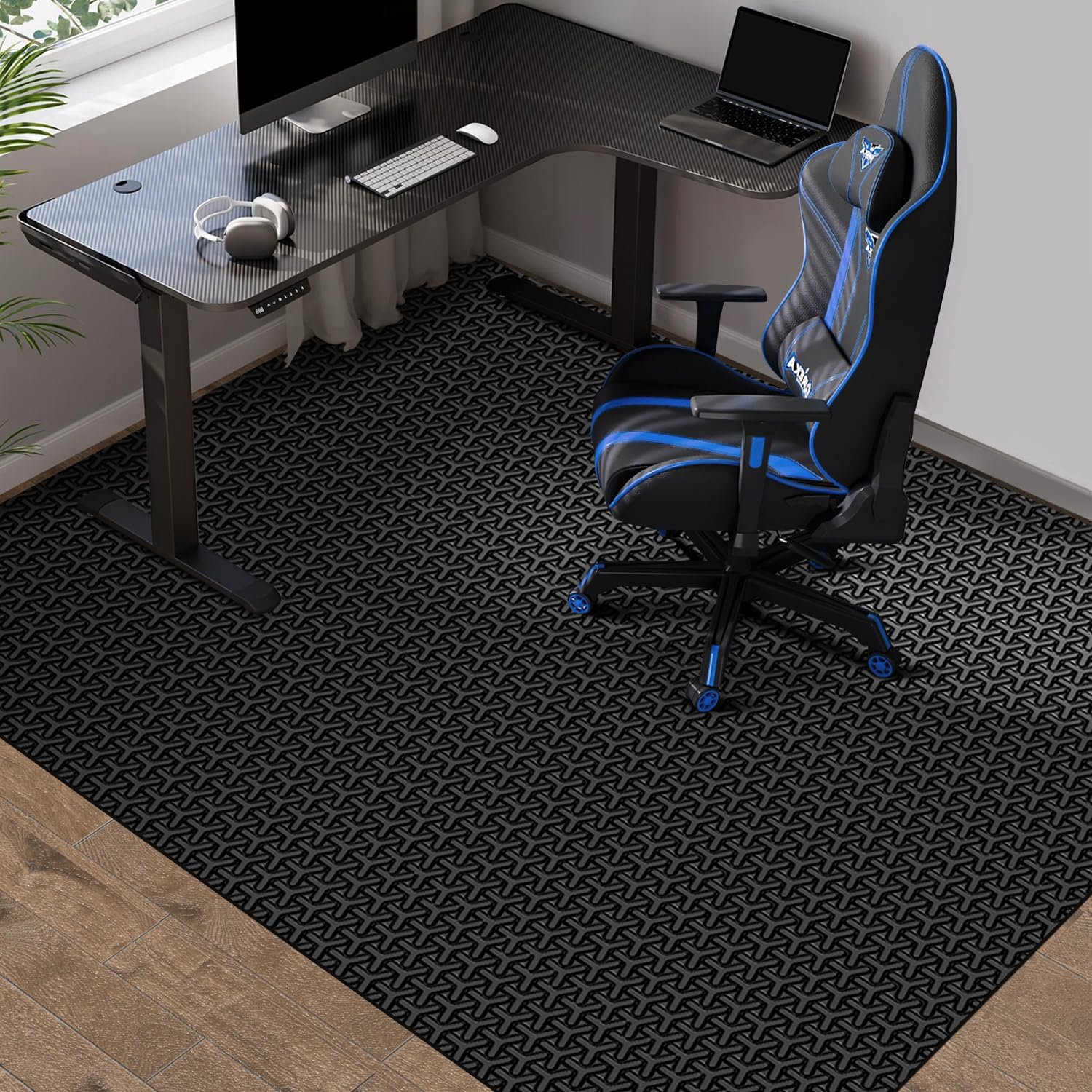
- Rectangle vs. Keyhole: Large rectangular mats offer maximum coverage and are perfect for a T-shaped desk setup. Keyhole-shaped mats (with a cutout for the desk) are designed for L-shaped desks, providing protection exactly where you need it without wasting material.
3. The Caster Compatibility Matrix
Not all wheels are created equal, and matching your chair's casters to your mat is crucial for longevity and ease of movement. Think of it as a dance partner: they need to be in sync.
- Standard Hard Casters: These are the most common. They work well on hard polycarbonate or PVC mats but can sometimes be noisy on glass or bamboo.
- Soft Rubber Casters (Roller Blade Style): These are the ideal partner for hard floors like wood, tile, or bamboo mats. They glide smoothly and silently. If you have a hardwood-compatible mat, consider upgrading your chair's casters to these for a premium feel.
- Carpet Casters: These often have a wider tread to distribute weight on carpet mats with studs. Using standard hard casters on a thick carpet mat can sometimes create drag.
Pro Tip: If your chair doesn't roll as smoothly as you'd like on your new large mat, the issue might be your casters, not the mat. Replacing them with high-quality, floor-appropriate casters is a cheap and effective upgrade.
4. The "Grip" Factor: Stability is Key
A large mat that slides around is not just annoying; it's a safety hazard. The underside of the mat is just as important as the top.
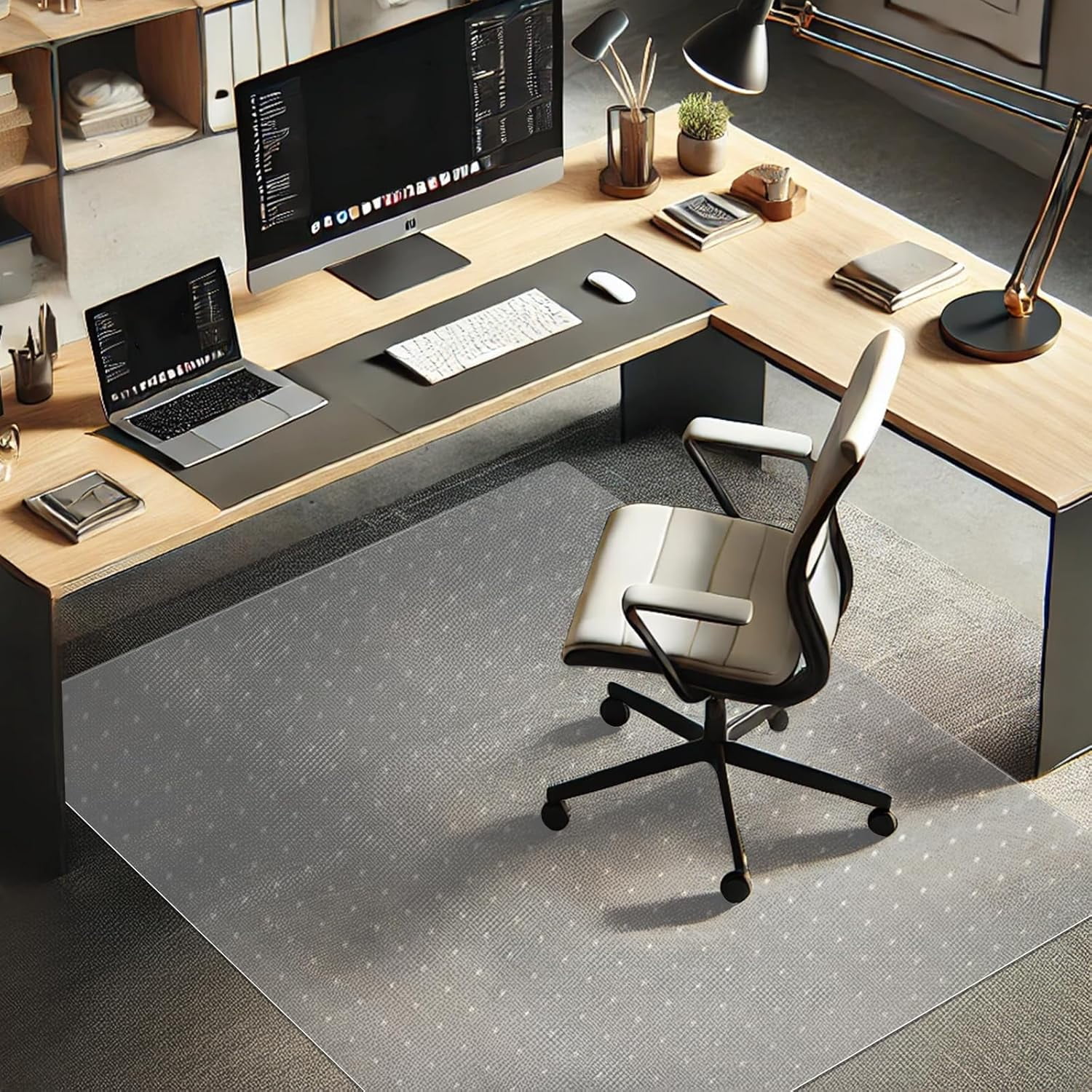
- For Carpet: Look for mats with a field of sturdy, sharp cleats or "teeth" that dig into the carpet fibers. The more cleats, the better the grip. A good test is to try to slide the mat with your foot after it's been in place for a few minutes—it shouldn't budge.
- For Hard Floors: Avoid cleats! They can scratch. Instead, look for a smooth, matte, or lightly textured backing that creates friction without suction. Some high-end mats use a special non-slip coating that grips the floor without adhesives.
- Mat curling: This is a common issue, especially with new PVC mats. To prevent curling, unroll the mat in a warm room and place heavy books or weights on the corners for 24-48 hours. Some premium mats are pre-conditioned to lie flat immediately.
5. Health and Ergonomics: The Unexpected Benefit
While the primary purpose is floor protection, a large mat offers subtle ergonomic advantages. A smooth, low-friction surface reduces the force required to move your chair. This means less strain on your legs, hips, and lower back when you reach for a file or turn to talk to a colleague. It encourages fluid movement, which is a key principle of active sitting. By allowing you to change positions easily, a good mat contributes to better circulation and reduced muscle fatigue throughout the day.
Frequently Asked Questions About Large Office Chair Mats
Conclusion: Invest in the Foundation of Your Workspace
Your office chair is the vehicle, but the large office chair mat is the road it travels on. A smooth, stable, and well-chosen road enhances every journey. By considering your floor type, the mat's material, the necessary size, and your chair's casters, you're not just buying a piece of plastic or bamboo; you're investing in the longevity of your flooring and the quality of your daily work experience. A large mat provides the freedom to move, the protection your floors deserve, and a polished, professional look for your executive office. Choose wisely, and enjoy the effortless glide.