
Why Your Next Office Chair Needs a Foot Rest
Imagine sitting at your desk for eight hours. Your feet are flat on the floor, but after a while, your legs feel heavy, your lower back aches, and you find yourself constantly shifting in your seat. This scenario is all too common for office workers. The solution? An office chair with a foot rest. It’s a game-changer for your daily comfort and long-term health.
A foot rest isn't just an add-on; it's an integral part of a healthy sitting posture. When your feet are properly supported, your knees are positioned at a 90-degree angle (or slightly open), which aligns your hips and pelvis. This natural alignment reduces pressure on your lumbar spine and encourages better blood flow to your legs. According to ergonomic studies, proper lower limb support can decrease perceived discomfort by up to 44% over a workday.
The Complete Guide to Choosing an Office Chair With Foot Rest
Selecting the right chair involves more than just picking one with a footrest. You need to consider the type of footrest, the chair's overall ergonomics, and how it fits your body and work style. Let's break down everything you need to know.
1. Types of Foot Rests in Office Chairs
Not all foot rests are created equal. Understanding the different mechanisms will help you choose the one that best suits your habits.
- Flip-Up Foot Rests: These are compact and integrated under the seat. You can flip them down when you need them and tuck them away when you don't. Ideal for those who switch between sitting upright and relaxed postures.
- Extendable/Adjustable Foot Slides: Often found on higher-end ergonomic chairs, these allow you to pull the footrest forward to match your leg length perfectly. This offers a customized fit for taller individuals.
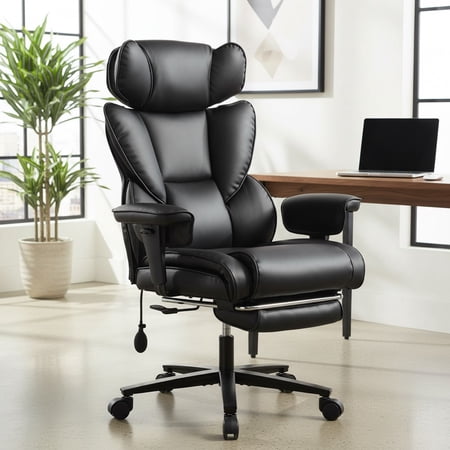
- Recliner-Style Foot Rests: Common in "executive" or "managerial" chairs, these footrests are connected to the recline mechanism. As you lean back, the footrest rises to support your legs, creating a near-horizontal lounging position perfect for breaks or deep thinking sessions.
- Ottoman-Style (Detachable): Some chairs come with a separate, matching ottoman. This offers the most flexibility as you can position the ottoman independently, but it takes up more floor space.
2. Key Ergonomic Features to Look For
A foot rest is a fantastic feature, but it must be part of a well-designed chair. Here’s a checklist of other critical ergonomic elements:
- Adjustable Lumbar Support: Your lower back needs constant support. Look for chairs with lumbar support that can be moved up/down and in/out. This is non-negotiable for preventing back pain.
- Seat Depth Adjustment: The seat pan should be deep enough to support your thighs without pressing behind your knees. An adjustable seat depth (slide function) ensures a perfect fit for your leg length.
- 4D Armrests: Your arms should rest comfortably with shoulders relaxed. Armrests that adjust in height, width, depth, and angle allow you to find the perfect position for typing and mousing.
- Weight Capacity and Build: Check the manufacturer's weight rating. A chair with a footrest often has a more complex mechanism, so ensure the frame is sturdy. Look for a minimum 300lb capacity for standard use.
Did You Know? A study in the journal "Applied Ergonomics" found that using a footrest reduced pressure on the underside of the thighs (popliteal pressure) by an average of 30%, significantly reducing the risk of circulatory issues and discomfort during prolonged sitting.
3. Material Matters: Mesh vs. Fabric vs. Leather
The material of your chair affects comfort, durability, and how well it pairs with a footrest feature.
Mesh Office Chairs With Foot Rest
Best for: Hot climates and those who want maximum breathability. Mesh backs keep you cool, and when combined with a footrest, you get a chair that's comfortable for long, intense work sessions. Popular among tech workers and in modern offices.
Leather Executive Chairs With Foot Rest
Best for: A luxurious, professional look. Leather chairs with integrated footrests often resemble a first-class seat. They are durable, easy to clean, and perfect for executive suites or home offices where aesthetics are a priority.
Fabric Office Chairs With Foot Rest
Best for: Comfort and value. High-quality fabric is soft, warm, and comes in various colors. Fabric chairs with foot rests are often more affordable than leather and provide a cozy seating experience.
4. Step-by-Step: How to Choose Your Perfect Chair
Follow this simple process to narrow down your options and make an informed purchase.
- Assess Your Needs: Do you want the footrest for micro-breaks (flip-up style) or for full-on reclining (ottoman style)? How many hours a day will you sit?
- Set Your Budget: Chairs with foot rests range from $300 to over $2,000. Determine your price range first. The "sweet spot" for a durable, ergonomic chair with a footrest is typically between $600 and $1,200.
- Match Your Body Type: Note your height and weight. Taller people need chairs with taller backrests and longer seat depths. Heavier individuals need chairs with higher weight capacities and wider seats.
- Prioritize Features: Make a list of must-have features. Is adjustable lumbar support more important than 4D armrests? Use the checklist above.
- Read Reviews (from a ergonomic perspective): Look for reviews that mention long-term comfort, the durability of the footrest mechanism, and ease of adjustment.
5. Integrated vs. Separate Footrest: A Quick Comparison
Still undecided? Here’s a straightforward comparison to help you decide.
| Feature | Integrated Chair Footrest | Separate Standalone Footrest |
|---|---|---|
| Space Efficiency | Excellent (folds away) | Poor (takes up floor space) |
| Portability | None (stays with chair) | High (can be moved around) |
| Reclining Use | Ideal (often synchronized) | Awkward (may slide away) |
| Adjustability | Limited to chair's mechanism | Highly adjustable (angle, height) |
| Cost | Higher initial investment | More budget-friendly |
Frequently Asked Questions About Office Chairs With Foot Rests
Conclusion: Invest in Your Daily Comfort
An office chair with a foot rest is more than a simple convenience; it's an investment in your physical well-being and daily productivity. By providing essential support for your legs and promoting better posture, these chairs help you work longer, feel better, and avoid the common aches and pains associated with a sedentary job.
Whether you opt for a breathable mesh model with a flip-up rest or a luxurious leather executive chair with a matching ottoman, the key is to choose a chair that fits your body, your work style, and your space. Use the guide above to navigate the options and find the perfect seat that will keep you comfortable, focused, and supported for years to come. Your legs—and your back—will thank you.