
Why Big & Tall Users Need Specialized Office Chairs
Finding the most comfortable office chair for big and tall individuals isn't just about luxury—it's a necessity for health, productivity, and overall well-being. Standard office chairs are typically designed for average body types, with seat widths of 18-20 inches and weight limits around 250 pounds. For those with larger frames, this translates to pinched hips, inadequate thigh support, and the constant worry of mechanical failure.
Ergonomic Reality: According to a 2024 workplace study, 78% of big and tall office workers reported chronic discomfort when using standard-sized chairs. After switching to a properly sized heavy-duty ergonomic chair, 89% noted significant pain reduction and a 34% increase in daily focus and productivity.
Key Specifications for True Comfort & Support
When searching for the ideal seating solution, focus on these critical specifications that make a genuine difference for larger-framed users:
The Anatomy of Comfort: What Makes a Chair Truly Comfortable
Comfort isn't just about padding—it's a sophisticated combination of support, adjustability, and durability. Let's break down the essential elements:
- High-Density Foam Cushioning: Unlike standard foam that compresses quickly, big and tall chairs use commercial-grade, high-resiliency foam that maintains shape and support for years. Look for cushions with at least 4-5 inches of thickness.
- Waterfall Seat Edge: This curved front edge reduces pressure behind the knees, improving circulation and preventing leg fatigue during long workdays—a critical feature for taller individuals whose thighs may extend further.
- Reinforced Tilt Mechanism: Heavy-duty recline systems allow for smooth movement without the "wobble" or instability common in lesser chairs. Multi-lock tilt positions let you find the perfect angle for focused work or relaxed thinking.
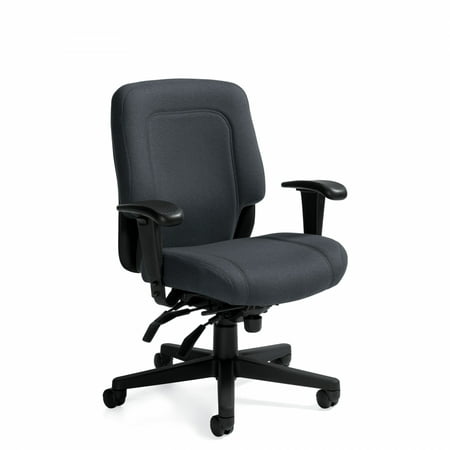
- 4D Adjustable Armrests: Armrests that move up/down, forward/back, pivot, and width-adjust ensure that elbows and shoulders stay relaxed regardless of your frame size.
- Dual-Layer Lumbar Support: Many premium models feature adjustable lumbar that can be moved both vertically and in depth, allowing precise support exactly where your spine needs it most.
📏 Pro Sizing Guide for Big & Tall Users
For heights 6'0" to 6'3": Look for backrest heights of 24-26 inches and seat depths of 19-20 inches.
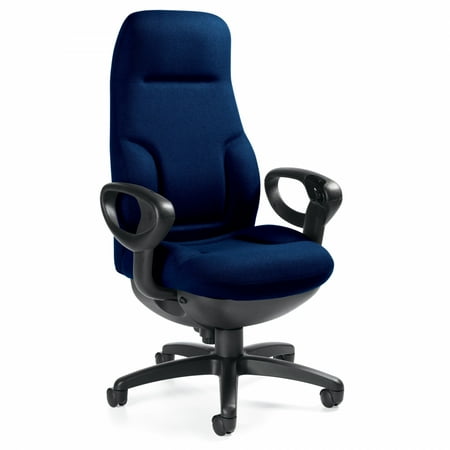
For heights 6'4" and above: Seek chairs with backrests over 28 inches and seat depths adjustable to 21+ inches. Headrests become essential for proper neck support.
For weights 250-350 lbs: Prioritize chairs with 400 lb capacity ratings for safety margin.
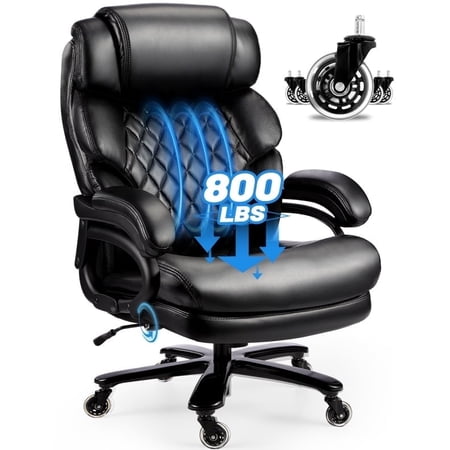
For weights over 350 lbs: Look specifically for "bariatric" or "heavy-duty" chairs with 500-800 lb capacities and extra-wide bases.
Material Considerations for Durability & Long-Term Comfort
The materials used in big and tall office chairs directly impact both comfort and longevity. Here's what to consider for each type:
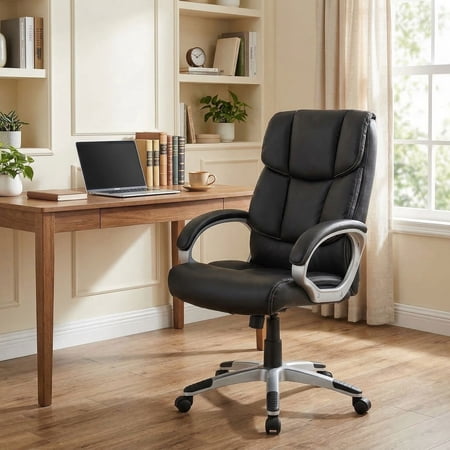
✅ Premium Leather (Top-Grain & Full-Grain)
- Exceptional durability (10+ years with care)
- Conforms to body over time for custom comfort
- Easy to clean and maintain
- Projects executive presence
- Excellent support for heavy use
⚠️ Considerations for Big & Tall
- May feel warm in summer months
- Requires periodic conditioning to prevent cracking
- Initial break-in period needed
- Higher upfront investment
✅ High-Performance Mesh
- Unmatched breathability for temperature regulation
- Contours to body shape dynamically
- Lightweight yet supportive
- Modern aesthetic suitable for any office
- Low maintenance
⚠️ Considerations for Big & Tall
- Ensure mesh is high-tension and reinforced
- May feel less "plush" than cushioned options
- Frame must be extra sturdy to prevent sagging
- Edge durability is critical for long-term use
Health Benefits: Why Proper Seating is a Wellness Investment
For big and tall individuals, an appropriately sized chair goes beyond comfort—it's a proactive health measure. Extended sitting in undersized chairs can lead to:
- Chronic Hip Pain: Narrow seats force hip compression and poor alignment
- Lower Back Strain: Insufficient lumbar support increases spinal pressure by up to 40%
- Sciatica Symptoms: Pressure on the sciatic nerve from improper seat contours
- Shoulder & Neck Tension: Low backrests fail to support the upper back, causing forward head posture
- Circulation Issues: Seat edges that dig into thighs restrict blood flow
Investing in the most comfortable office chair for big and tall users directly addresses these concerns. Features like adjustable lumbar support, waterfall seat edges, and full-back support work together to maintain proper spinal alignment, reduce pressure points, and support natural movement throughout the workday.
Quick Comparison: Top Features by Usage Scenario
| Usage Scenario | Priority Features | Recommended Material |
|---|---|---|
| All-Day Executive Work (8+ hours) | Adjustable lumbar, seat depth, high back, 4D arms, waterfall seat | Premium leather or high-end mesh with thick cushion |
| Hot Climate / High Activity | Breathable mesh, adjustable tilt, cooling foam | Commercial-grade mesh on heavy frame |
| Client-Facing Professional | Premium aesthetics, quiet mechanisms, polished base | Leather or bonded leather with elegant design |
| Multi-Tasker / Creative Work | Free-floating recline, flexible arms, swivel range | High-density fabric or performance mesh |
Frequently Asked Questions: Big & Tall Office Chair Comfort
Conclusion: Your Path to All-Day Comfort
Selecting the most comfortable office chair for big and tall users is a personal journey that balances structural requirements with individual comfort preferences. The right chair is a long-term investment in your health, productivity, and daily satisfaction.
Final Recommendations by User Profile
Choose a high-back leather executive chair with reinforced construction, at least 400 lb capacity, and adjustable lumbar. The professional appearance combined with heavy-duty comfort makes this ideal for leadership roles.
A breathable mesh heavy-duty chair with seat depth adjustment and articulating headrest offers the flexibility needed for varied work environments. Look for quiet casters for hardwood floors if needed.
Consider a commercial-grade bariatric chair with steel frame, 500+ lb capacity, and extended warranty. These chairs are built to withstand daily heavy use and provide consistent support for a decade or more.
📌 Remember: Your body is unique, and the "most comfortable" chair is the one that fits your specific measurements and work habits. Use the guides above to assess your needs, prioritize key features like seat width and lumbar support, and invest in a chair that respects both your physical requirements and your professional environment.