
The Challenge of Finding a Truly Comfortable Office Chair for Big and Tall Individuals
If you're over 6 feet tall or carry more than 250 pounds, you've probably experienced the frustration of standard office chairs. They pinch your hips, the backrest stops at your shoulder blades, and within months, you hear ominous creaking sounds. You're not alone. According to the Centers for Disease Control and Prevention (CDC), the average American man weighs nearly 200 pounds, and over 40% of adults are classified as obese. Yet most office chairs are designed for a "standard" user who simply doesn't exist in the real world.
The Reality Check: A standard office chair is engineered for someone weighing up to 250 pounds and standing 5'8" to 5'10". If you exceed either measurement, you're sitting on equipment never designed for your body. This isn't just uncomfortable—it's potentially unsafe. The good news? Manufacturers have recognized this gap and now produce exceptional comfortable office chairs for big and tall individuals that combine industrial-strength construction with genuine ergonomic science.
Think of it this way: wearing shoes that are two sizes too small is uncomfortable, but sitting in an undersized chair for 8 hours a day, 5 days a week, for years, creates cumulative damage. Your spine, hips, and circulation pay the price. A properly engineered big and tall chair isn't a luxury—it's a workplace necessity.
Anatomy of a Properly Engineered Comfortable Office Chair for Big and Tall Users
A chair built for larger individuals isn't just a standard chair with wider dimensions. It's a completely different engineering approach. Here's what separates genuine big and tall chairs from standard models with "plus-size" marketing labels:
1. The Foundation: Base and Casters
The base is your chair's foundation. Standard chairs often use nylon or plastic bases that can crack under sustained heavy load. Quality big and tall chairs feature:
- Solid metal bases: Aluminum or heavy-gauge steel, not plastic composites
- Reinforced五星脚: The five-point base should have thicker arms and reinforced junctions
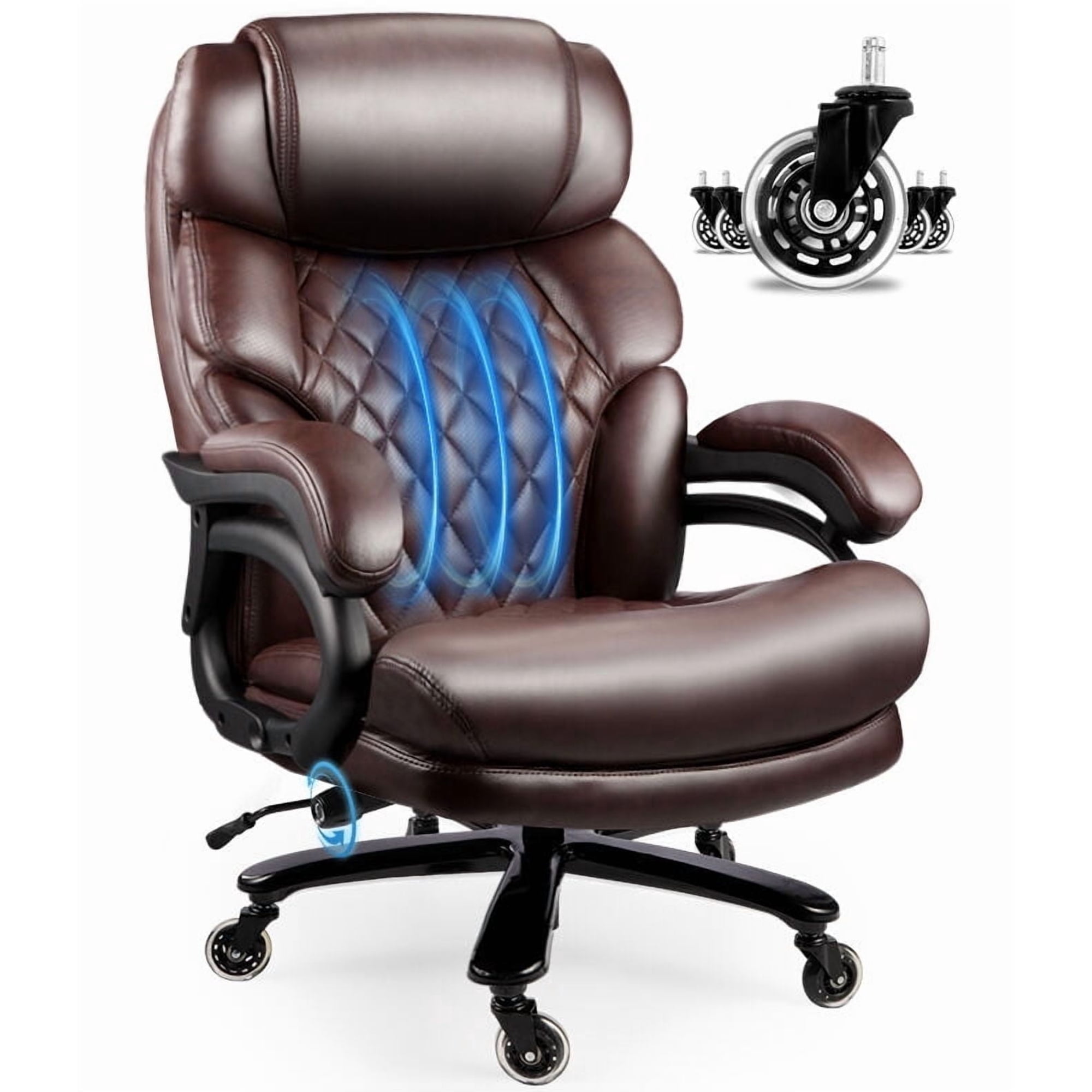
- Industrial casters: Look for dual-wheel casters with metal cores and soft polyurethane tread. These distribute weight better and roll smoothly even under 400+ pounds
- Larger caster wheels: 3-inch wheels instead of standard 2-inch provide better stability and floor protection
2. The Gas Lift: Your Chair's Spine
The gas cylinder is the most common failure point in budget chairs. It's the piston that raises and lowers your seat. Gas lifts are rated by class:
- Class 1-2: 150-200lb capacity (avoid for big and tall)
- Class 3: 250lb capacity (standard office chairs)
- Class 4: 400lb capacity (minimum for big and tall)
- Class 5: 500lb+ capacity (premium commercial grade)
Always verify the gas lift class. Some manufacturers list "heavy-duty cylinder" without specifications. Demand Class 4 or 5 for genuine safety and longevity.
3. Seat Construction: Width, Depth, and Density
The seat is where most big and tall chairs fail in comfort. Standard seats are too narrow, too short, and use foam that compresses completely under heavier weight, leaving you sitting on a plywood base.
Seat Width
Standard: 18-20 inches
Big & Tall: 22-28 inches
Extra width prevents hip pinching and allows proper thigh placement without overflow.
Seat Depth
Standard: 17-19 inches
Big & Tall: 20-22 inches
Deeper seats support longer femurs. Adjustable depth is ideal for customizing thigh support.
Foam Density
Standard: 1.5-2.0 lb density
Big & Tall: 2.5-3.5 lb density
High-density foam resists compression and maintains support for years.
4. Backrest Height and Lumbar Support
If you're over 6 feet tall, standard backrests stop mid-back, leaving your upper shoulders and neck unsupported. This forces you to slouch or lean forward, creating neck strain and upper back pain.
- Back height: Look for at least 28 inches from seat to top. Some tall models offer 30-32 inches.
- Headrest integration: Many big and tall chairs include adjustable headrests because the backrest itself supports shoulders, and a separate headrest supports the neck.
- Lumbar adjustment: Both height and depth adjustment are critical. Your lumbar curve is unique, and one-size-fits-all pillows won't suffice.
Why Standard Chairs Are a Health Risk for Big and Tall Individuals
Sitting in an improperly sized chair creates a cascade of health issues. Understanding these risks helps justify the investment in a proper comfortable office chair for big and tall professionals.
Circulation Problems and "Seat Bite"
When a seat pan is too narrow, the edges press into the sides of your thighs, compressing blood vessels and nerves. This causes:
- Numbness and tingling in legs and feet
- Increased risk of deep vein thrombosis (DVT) during long sits
- Restlessness and constant position shifting (which itself causes fatigue)
A waterfall edge (where the front of the seat curves down) relieves pressure behind the knees, but only works if the seat is wide enough for your hips.
Spinal Misalignment
Standard chairs position your hips too narrowly, rotating your pelvis backward. This flattens the natural curve of your lower spine, leading to:
- Lower back strain and disc compression
- Forward head posture (text neck) as you compensate
- Shoulder rounding and upper back tension
A 2022 study in the Journal of Ergonomics found that individuals over 250 pounds using standard chairs showed 40% higher spinal disc pressure compared to those using properly sized chairs.
Premature Chair Failure and Safety Risks
Beyond comfort, there's a safety dimension. Chairs pushed beyond their weight capacity can fail catastrophically. Gas cylinder explosions, while rare, do occur. Base cracks can cause sudden tipping. Wheel breakage can lead to falls. A comfortable office chair for big and tall use isn't just about cushioning—it's about structural integrity that protects you.
Material Choices: Leather, Mesh, or Fabric for Big and Tall?
The material debate becomes more nuanced when you're larger. Here's how each option performs specifically for big and tall users:
High-Grade Mesh: The Breathability Champion
Mesh is often recommended for larger individuals because it breathes. Heat buildup is a genuine concern when more body surface contacts the chair. However, not all mesh is equal:
- Look for reinforced mesh: Standard mesh can stretch or sag over time. Premium big and tall chairs use pique mesh or double-weave mesh with reinforced borders.
- Mesh alone isn't enough: The frame supporting the mesh must be industrial-grade. Mesh chairs for big and tall users need thicker gauge steel frames.
- Pros: Excellent airflow, modern appearance, typically lighter weight
- Cons: Can feel less "substantial," may not appeal to executives wanting leather aesthetics
Premium Leather: Durability and Professional Image
Full-grain or top-grain leather, when properly supported, offers exceptional durability:
- Thicker hides: Premium leather chairs use 1.2-1.4mm thick leather that resists tearing and stretching
- Foam matters more: Leather over high-density foam creates a supportive, long-lasting seat
- Maintenance: Leather requires conditioning but resists stains and cleans easily
- Warning: Avoid bonded leather or "leather match" (vinyl with leather dust). These crack and peel within 2-3 years under heavier use
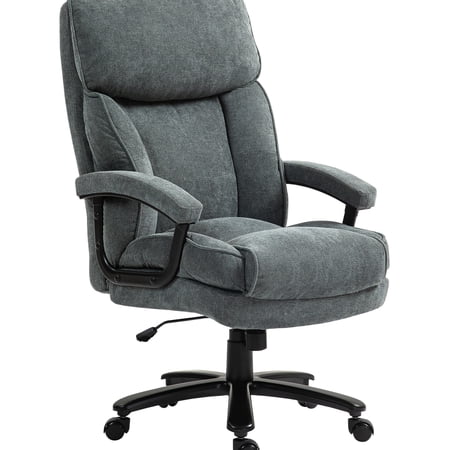
Commercial-Grade Fabric: The Practical Choice
High-end contract fabrics (like those used in luxury hotels and corporate offices) offer surprising benefits:
- Breathability: Better than leather, nearly as good as mesh
- Durability: Look for fabric with high double-rub ratings (100,000+ for heavy use)
- Stain resistance: Many are treated with stain-repellent finishes
- Color options: Far more variety than leather or mesh
Material durability comparison: Commercial fabric and premium leather both score high for big and tall applications when properly constructed.
Non-Negotiable Adjustment Features for Big and Tall Chairs
Adjustability isn't just about finding a comfortable position—it's about accommodating your unique dimensions. Here are the adjustments you must prioritize:
Seat Depth Adjustment (Slider Mechanism)
This feature allows you to move the seat pan forward or backward. Why it matters: Your thigh length determines how much seat you need. Too short, and your thighs hang unsupported. Too long, and the edge presses behind your knees. Look for at least 3 inches of seat depth adjustment.
Adjustable Lumbar Support (Height and Depth)
Your lumbar curve isn't at the same height as a 5'8" person's. You need lumbar support that moves up and down. Even better: lumbar that also adjusts in depth (how much it pushes forward). Some premium chairs offer air-bladder lumbar for infinite adjustment.
4D Armrests
Armrests should adjust in four directions: up/down, forward/back, left/right (width), and pivot angle. For broader shoulders, width adjustment prevents armrests from forcing your arms inward. For tall users, height adjustment ensures elbows rest at 90 degrees without shoulder shrugging.
Tilt Tension Adjustment with Weight-Sensing Mechanism
Standard tilt mechanisms often can't handle heavier weights—they either don't recline at all (too stiff) or collapse immediately (too loose). Look for chairs with:
- Heavy-duty tilt mechanisms rated for your weight class
- Adjustable tension that actually holds its setting
- Multi-position lock so you can recline and stay reclined safely
Understanding Weight Ratings: Why 400lbs Isn't Always 400lbs
Manufacturers test weight capacity differently. Some test statically (placing weights on the seat and leaving them). Others test dynamically (simulating real-world use with movement). Here's what you need to know:
- BIFMA standards: The Business and Institutional Furniture Manufacturers Association sets testing protocols. Look for chairs that meet or exceed BIFMA X5.1 (office chair standards) with additional heavy-duty testing.
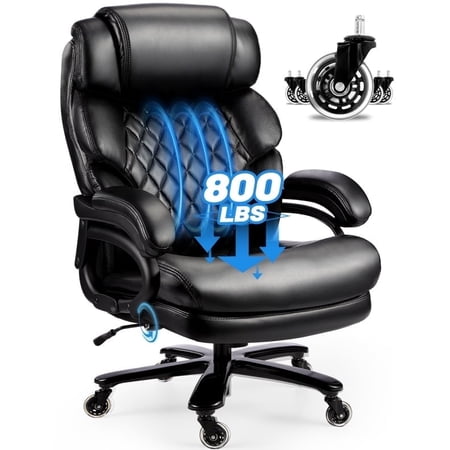
- Safety margin: A chair rated for 400 pounds has been tested at 400 pounds, but that doesn't mean it's comfortable at 400 pounds. The foam may compress completely, or the mechanism may feel unstable. If you weigh 350, look for a 500-pound rated chair.
- Distribution matters: Weight distribution (taller vs. wider) affects how the chair performs. A 6'4" 350-pound person distributes weight differently than a 5'10" 350-pound person. Taller individuals need higher backrests; wider individuals need broader seats.
Pro Tip: When shopping for a comfortable office chair for big and tall use, add 50-100 pounds to your actual weight as your search parameter. If you weigh 300, search for "400lb capacity office chairs." This ensures you're looking at chairs built with a safety margin, which translates to longer life and better daily comfort.
Investment Guide: How Much Should You Spend?
Big and tall chairs occupy a specific price tier. Here's what different budgets realistically buy:
| Price Range | What You Get | Typical Lifespan | Best For |
|---|---|---|---|
| $200-$400 | Basic reinforced frame, standard foam, limited adjustments, plastic base, Class 3 gas lift | 1-3 years | Occasional use, home office, lighter big and tall (under 250lbs) |
| $400-$700 | Metal base, Class 4 gas lift, higher density foam, better upholstery, 2D armrests, seat depth adjustment | 3-5 years | Daily full-time use, up to 350lbs |
| $700-$1,200 | Commercial grade, Class 5 gas lift, premium materials (leather or contract mesh), 4D armrests, advanced lumbar, extended warranties | 5-10+ years | Executive use, 400lbs+, long-term investment |
Extending the Life of Your Big and Tall Office Chair
Even the best chair needs maintenance. Here's how to protect your investment:
Monthly Checks
- Inspect casters for hair/debris buildup (clean with compressed air)
- Check all bolts and screws (tighten if needed)
- Test gas lift for smooth operation
- Wipe down upholstery with appropriate cleaner
Annual Maintenance
- Apply silicone lubricant to moving mechanisms (check manufacturer guidelines)
- Condition leather seats (if applicable)
- Deep clean fabric/mesh with upholstery attachment
- Inspect base for hairline cracks (especially if you've had the chair 5+ years)
Signs It's Time to Replace
- The chair no longer holds height (gas cylinder failing)
- Foam has compressed to the point you feel the seat base
- Casters are cracking or no longer roll smoothly
- The chair wobbles even after tightening bolts
- Upholstery is torn or excessively worn
Conclusion: Your Body Deserves Proper Support
Finding a genuinely comfortable office chair for big and tall individuals isn't about settling for something that "almost fits." It's about recognizing that your body deserves the same ergonomic consideration as anyone else's. The market has evolved, and there are now exceptional chairs engineered specifically for larger frames—chairs with reinforced components, generous proportions, and adjustments that actually accommodate your dimensions.
Think of the investment this way: spread over 5-10 years, even a $1,000 chair costs $100-$200 per year. That's less than $20 per month for the chair you spend 2,000+ hours sitting in annually. Compared to chiropractic bills, lost productivity from discomfort, or the cost of replacing cheap chairs every 18 months, a quality big and tall chair is one of the smartest investments you can make.
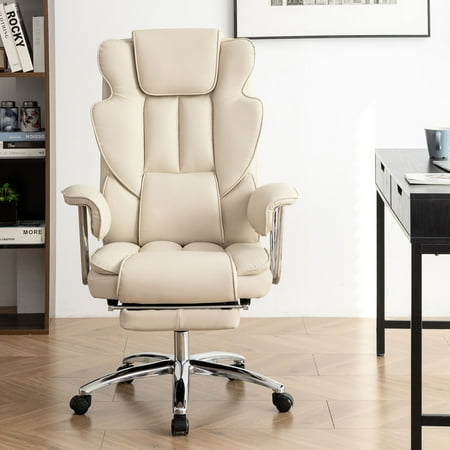
The chairs shown above represent the current market leaders in big and tall seating. Each has been selected based on weight capacity, adjustability range, material quality, and real-world user feedback from individuals who face the same challenges you do. Take your time, compare the specifications, and choose the chair that best matches your body dimensions and work style. Your back—and your productivity—will thank you.