
The Quest for the Throne: Why "Comfort" Is More Than a Soft Cushion
Imagine sitting in your car for a 10-hour road trip. At hour three, your lower back starts to ache. By hour six, you're shifting every ten minutes. That’s what a poor executive chair feels like—every single day. For leaders, managers, and remote executives, the chair isn't just furniture; it's the interface between your body and your work. The most comfortable executive office chair for long hours acts like a shock absorber for fatigue, a scaffold for your spine, and a climate control for your skin.
But here’s the catch: "comfortable" is subjective. A pillow-soft seat might feel great for five minutes, but after two hours, you'll sink into poor posture, fighting for stability. True, long-haul comfort is about sustained support. It’s the engineering that distributes your weight evenly, keeps your spine in a neutral position, and allows micro-movements without resistance. This guide dives deep into the anatomy of chairs built for marathon sessions—not sprints.
Beyond Cushions: The Engineering of All-Day Executive Comfort
To understand what makes a chair comfortable for 10+ hours, we have to look at three layers: the foundation (mechanism and frame), the interface (cushion and upholstery), and the adaptability (adjustments that move with you). Let's break down each layer with a fresh perspective—different from our previous guide.
1. The Foundation: Synchronized Motion & Weight Distribution
A static chair is the enemy of long hours. Your body craves movement, even if it's just a subtle recline. The most comfortable executive chairs feature a synchronized tilt mechanism. Think of it like the suspension system in a luxury car. When you lean back, the seat tilts upward slightly, keeping your feet planted and preventing the "shirt pulling" sensation. This maintains the angle between your torso and thighs (open ~90-110°) which is crucial for hip comfort.
2. The Interface: Multi-Density Foam and "Recovery"
Not all foam is created equal. The "sink-in" feeling of cheap foam leads to the dreaded "bottoming out" where you feel the hard plastic base. Chairs designed for extreme duration use multi-density foam. A firm, high-density support core (often HR foam) prevents sagging, while a softer top layer (infused with gel or viscoelastic material) conforms to your unique shape.
🌡️ Gel-Infused Memory Foam
Prevents heat retention (no swamp bottom) while providing contouring. It’s 2-3° cooler than standard memory foam, ideal for long sitting sessions where heat builds up.
🔄 Latex Core
Natural latex is bouncy and resilient. It offers immediate push-back, reducing the effort to shift positions. Great for those who fidget or move constantly.
⚙️ Suspension Mesh with Foam Edge
Some hybrids use a taut mesh membrane for breathability, combined with a foam-padded frame around the thighs to prevent the "hammock effect" cutting off circulation.
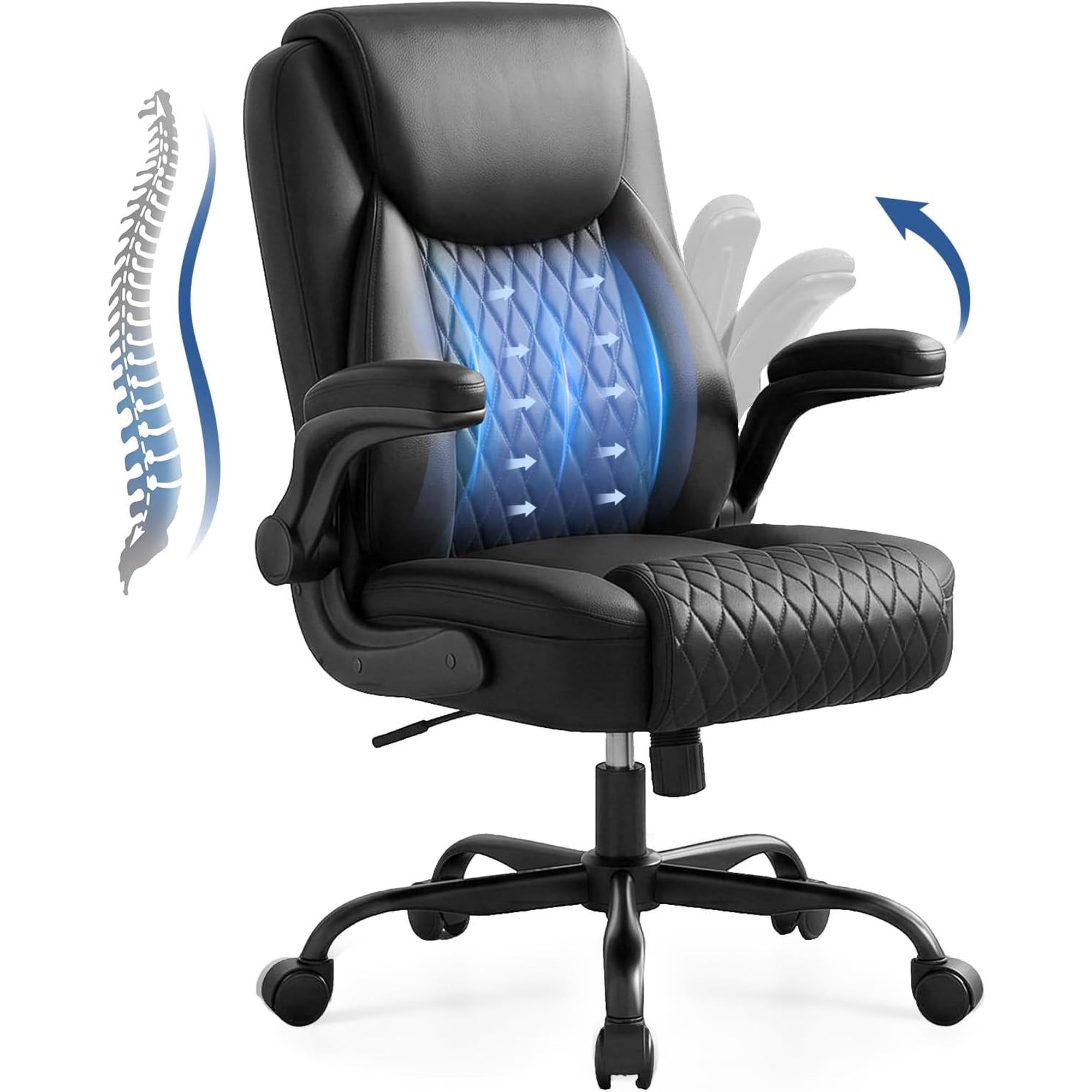
3. Adaptability: Lumbar That Lives With You
Static lumbar support is a relic. For long hours, you need dynamic, adjustable lumbar that moves as you shift from upright typing to relaxed reading. Look for chairs with an independent lumbar mechanism—either an air bladder (like in some high-end models) or a tension-controlled pad that rises and falls with your spine. According to a 2023 ergonomics study, chairs with 4-way lumbar (height + depth) reduced reported back fatigue by 58% compared to fixed lumbar chairs after an 8-hour simulated workday.
4. The "Waterfall" and Thigh Support
Numb legs are a clear sign of a comfort failure. The most comfortable executive office chair for long hours will have a seat depth adjuster (seat slider) and a pronounced waterfall edge. The seat should support about 3/4 of your thigh length, leaving 2-3 finger widths of space behind the knee. This ensures that the soft tissues behind your knees aren't compressed, maintaining blood flow to your lower legs.
5. Micro-Adjustable Armrests: The 4D Standard
Armrests aren't just for arms; they support your shoulders and neck. For marathon comfort, 4D armrests (up/down, left/right, forward/back, and pivot) are non-negotiable. They allow you to change positions—sometimes typing with elbows close, sometimes leaning back with arms wide. This variability prevents stiffness in the trapezius muscles.
📊 Data Point: The 15-Minute Rule
Ergonomists often use the "15-minute rule": if you feel the need to shift due to discomfort (not just habit) in under 15 minutes, the chair has pressure points. The top-tier executive chairs for long hours should allow you to remain undistracted for 45-60 minutes before a natural posture shift. This is achieved by a pressure-mapping score under 30 mmHg in the ischial tuberosities (sit bones).
Material Deep Dive: Breathability vs. Plushness
The classic debate: leather or mesh? For long hours, the answer is often premium perforated leather or a hybrid design. Full-grain leather looks prestigious, but if it's not breathable, you'll be sweating by lunch. Perforated leather allows airflow while maintaining the executive aesthetic. High-end mesh backs (like those from designers) offer unparalleled breathability but may lack the "hugged" feeling some executives prefer. The sweet spot? A mesh back for cooling, and a plush, leather-upholstered seat with a thick foam topper.
Final Consideration: The "Zero-Gravity" Recline
Inspired by NASA, zero-gravity position (where your legs are elevated above your heart) is appearing in executive chairs. While full zero-G requires a ottoman, some chairs now offer a near-zero gravity recline where the backrest goes to 135°+ and the seat tilts back, taking pressure off the spine. This is a game-changer for mental breaks during long days—a quick 10-minute recline can reset your focus for the next two hours.
Frequently Asked Questions About Long-Hour Executive Comfort
Conclusion: Invest in the Hours You Sit
Finding the most comfortable executive office chair for long hours is a personal journey, but the engineering principles are universal. Look for a chair that breathes, moves with you, and distributes pressure like a cloud. Don't be swayed by initial plushness; test for support resilience. Remember, you're not buying a chair; you're buying focus, health, and the energy to lead effectively from your desk. Prioritize multi-density foam, 4D armrests, and a synchronized mechanism. Your back—and your productivity—will thank you for years to come.