
Your Guide to Finding the Best Home Office Chair
Creating an effective and comfortable workspace at home starts with the foundation: your chair. A great home office chair is a silent partner in your productivity, supporting you through video calls, deep-focus work sessions, and creative brainstorming. But with countless options available, finding the right one can feel overwhelming. This guide simplifies the process, providing expert home office chair recommendations tailored to different needs, preferences, and budgets. We'll explore key features to look for and help you make a confident investment in your comfort and health.
Why This Matters: The transition to hybrid or fully remote work has made the home office a permanent fixture for millions. According to a recent study by the American Chiropractic Association, 85% of remote workers report experiencing physical discomfort, with back pain being the most common complaint. A properly chosen chair is a direct investment in preventing these issues.
Key Features for Your Home Office Chair
Unlike a traditional office where a facility manager might choose furniture, you are the decision-maker for your home setup. This means you can prioritize features that matter most to you. Here’s what to look for:
- Adjustable Seat Height: This is non-negotiable. Your feet should rest flat on the floor, and your thighs should be parallel to the ground. A pneumatic adjustment lever is the standard feature for this.
- Lumbar Support: The "secret sauce" for back health. Look for chairs with adjustable lumbar support that can be moved up/down or in/out to fit the curve of your lower back. Without it, you'll likely start slouching after an hour.
- Seat Depth and Width: A seat that's too deep can cut off circulation behind your knees. You should have about 2-4 inches of space between the back of your knees and the seat edge. The width should comfortably accommodate your hips without feeling cramped.
- Adjustable Armrests: Ideally, armrests should be adjustable in height and width. This allows you to keep your shoulders relaxed, your elbows at a 90-degree angle, and your wrists straight while typing. 4D armrests (adjustable in height, width, pivot, and depth) offer the ultimate customization.
- Recline Mechanism: The ability to tilt back slightly while maintaining support can help shift your weight and relieve pressure on your spine throughout the day. Look for a tilt tension knob that lets you control the resistance.
Decoding Chair Types: Which One is Right for You?
Navigating the different categories of office chairs is the first step in your search. Here's a breakdown of the most common types to help you narrow down your options.
Ergonomic Task Chairs
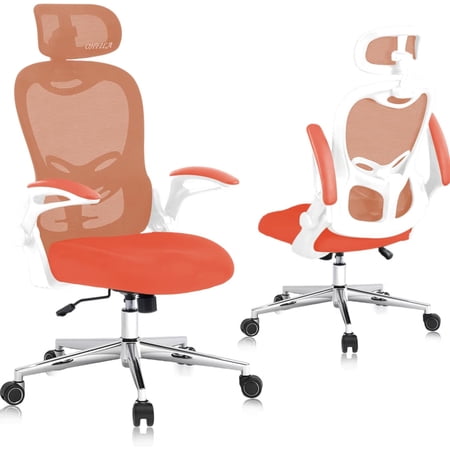
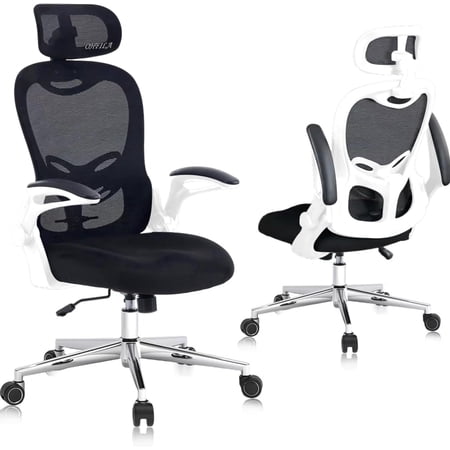
These are the workhorses of the home office. They prioritize adjustability and support over aesthetics. Think of them as a finely-tuned tool for your body. They are perfect for people who spend 6+ hours a day at their desk and want to minimize the risk of aches and pains. Key features include extensive adjustability, breathable mesh backs, and targeted lumbar support.
Executive Chairs
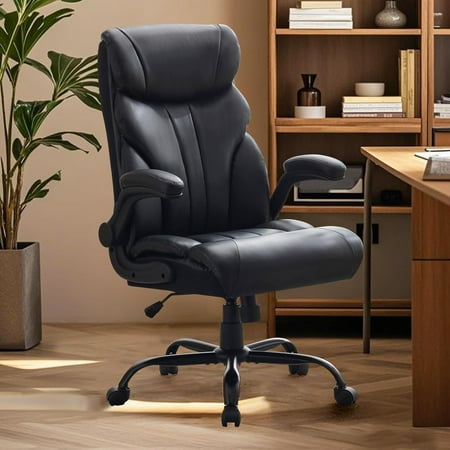
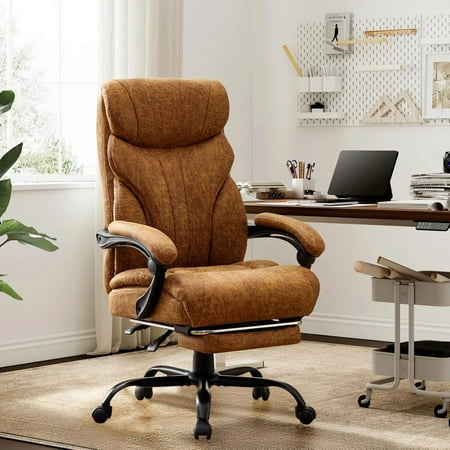
These chairs focus on a high-end, professional look and plush comfort. They are typically larger, made with leather or high-quality fabric, and feature high backs and thick padding. While stylish, they may not offer the same level of ergonomic adjustability as a dedicated task chair. They are an excellent choice for those who want a commanding presence in their home office and prioritize a luxurious feel.
Mesh Back Chairs
Mesh chairs are celebrated for their breathability. The mesh material conforms to your back, providing support without trapping heat, making them ideal for warmer environments. They often come in a more modern, minimalist style. The primary benefit is staying cool and comfortable during long workdays, though the seat cushion is usually foam, so the breathability applies mainly to the backrest.
Big & Tall Chairs
Designed for larger individuals, these chairs are built with reinforced frames, higher weight capacities (typically 350-500+ lbs), wider seats, and taller backrests. They provide the necessary support, stability, and comfort that standard chairs may lack. If you are a larger person, choosing a chair specifically designed for your dimensions is crucial for both safety and comfort.
Matching a Chair to Your Work Style
Just like your work responsibilities are unique, so is your sitting style. The best home office chair for a graphic designer will differ from the best one for a CEO who spends hours on calls. Consider your primary work habits:
- The "Focused Worker": You spend long hours typing and using the mouse. Prioritize adjustable armrests and seat depth to ensure proper posture for your hands and wrists. A chair with a forward-tilt function can also help you maintain an upright, active posture while working.
- The "Multi-Tasker": You're often on the phone, shifting between the computer and a notebook. A chair with a good swivel range and a comfortable recline function is key. Consider a headrest if you spend a lot of time leaning back while on calls.
- The "Video Conferencer": Since your chair is visible on camera, its style and condition matter. Choose a chair with a clean, professional appearance. A high back can look great on screen, and a quiet, smooth-swiveling mechanism is a plus for those "let me just turn to my other screen" moments.