
Why Your Hardwood Floor Deserves a Dedicated Office Chair Mat
Imagine investing thousands in gorgeous hardwood flooring, only to watch it get scarred by the daily grind of your office chair. Those distinctive “track marks,” dents, and scratches aren't just cosmetic—they reduce your home's value and can lead to costly refinishing. A hardwood office chair mat acts as an invisible shield, absorbing the abuse while letting your floor's natural beauty shine through. But not all mats are created equal: the wrong one can trap moisture, slide dangerously, or even yellow and crack. This guide walks you through everything you need to know—from material science to size selection—so you can make a choice that protects both your floor and your wallet.
Did you know? According to the National Wood Flooring Association, rolling office chairs are one of the top three causes of premature wear on hardwood floors. A quality chair mat can extend the life of your flooring by 8–10 years.
The Anatomy of a Great Hardwood Chair Mat
Selecting the right mat is like choosing a tire for your car: you need the right tread (grip), material (rubber vs. polycarbonate), and size for the job. Let's break down the critical components.
1. Material Science: Polycarbonate vs. Bamboo vs. Rubber
Your floor's finish and your aesthetic preference dictate the best material. Here's how they stack up:
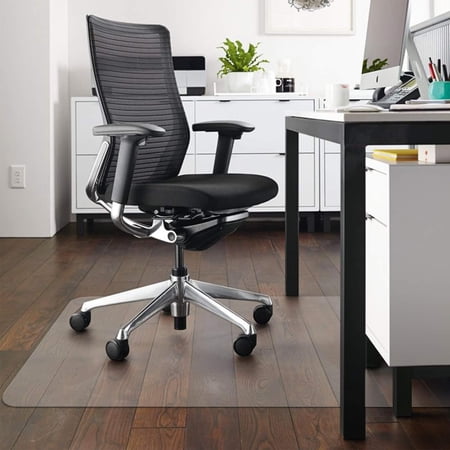
🔹 Polycarbonate (Premium Clear)
- Virtually unbreakable: Won't crack or yellow like acrylic.
- Optical clarity: Lets your wood grain show through perfectly.
- Grip without sticky residue: Uses natural static or small cleats.
- Longevity: Lasts 10+ years in a home office.
🔸 Bamboo / Wood (Aesthetic)
- Eco-friendly: Renewable resource with a warm look.
- Matches flooring: Can be stained to blend in.
- Requires maintenance: May need resealing; can scratch over time.
- Thicker profile: Might create a slight lip at edges.
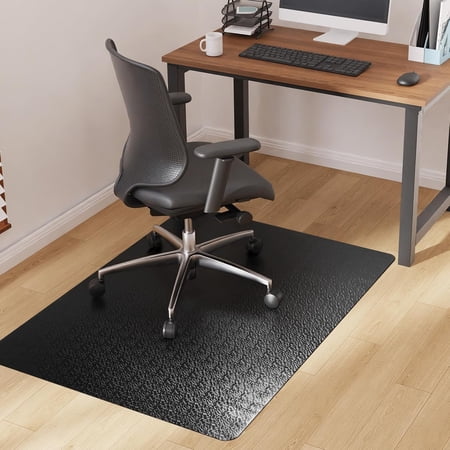
🔹 Rubber / PVC (Grip & Budget)
- Excellent anti-slip: Stays put even on smooth surfaces.
- Soft on casters: Reduces rolling noise.
- Less clarity: Usually opaque or textured.
- Off-gassing: Some have a temporary odor; look for low-VOC.
🔸 Acrylic / PET (Entry-level)
- Affordable: Lightweight and easy to move.
- Prone to cracking: Can shatter if dropped or under heavy chairs.
- Yellowing: UV exposure causes discoloration over 2-3 years.
2. Studs, Cleats, or Smooth? The Grip Debate
The underside of your mat is as important as the top. For hardwood, you never want a mat with aggressive spikes that can dent the wood. Instead, look for:
- Micro-clear grippers: Hundreds of tiny, soft dots that grip without marking. Ideal for delicate finishes.
- Natural adhesion: Heavy, flat polycarbonate mats that stay put by weight alone.
- Rolled edges: Prevents tripping and allows chair wheels to roll on/off smoothly.
Pro tip: If you have radiant floor heating, choose a mat specifically rated for heat tolerance—rubber can act as an insulator and trap heat.
3. Size & Shape: Rectangle, Lip, or Contoured?
Measure your workspace before buying. A common mistake is buying a mat that's too small, forcing your chair wheels onto bare wood.
| Shape | Best For | Typical Dimensions |
|---|---|---|
| Rectangle (standard) | Traditional desks against a wall | 36"x48", 45"x53" |
| Lip / Keyhole | L-shaped desks, you slide chair under desk | 50"x60" with 20"x12" cutout |
| Contoured / Rounded | Open spaces, executive setups | 46"x60" rounded edge |
Always add 6–8 inches of rolling clearance beyond your chair's wheelbase on all sides.
4. Thickness & Chair Compatibility
Thicker isn't always better. A 1/8" (3mm) mat is usually sufficient for home use. If you have a heavy big and tall executive chair (over 300 lbs), consider a 3/16" (5mm) mat to prevent warping. Also ensure your chair casters are “soft” or “hard floor” casters—metal or hard plastic wheels can still scratch even with a mat.
Beyond Protection: Health & Productivity Perks
A quality mat does more than guard wood. It creates a smooth, low-friction surface that reduces the force needed to move your chair. This translates to less strain on your legs and back when you reach for files or shift positions. Ergonomic studies suggest that effortless movement encourages micro-movements throughout the day, which boosts circulation and focus.
Real-World Data: The Cost of Skipping a Mat
Let's run the numbers: Refinishing a 200 sq. ft. hardwood office costs roughly $600–$1,200. A premium polycarbonate mat retails for $120–$250. That's a 5x to 10x return on investment. Plus, mats preserve the warranty on many pre-finished floors (manufacturers often void claims if damage is from chair casters).
Installation & Maintenance Made Simple
You've bought the mat—now what? Follow these steps for a flawless setup:
- Clean the floor thoroughly: Any grit underneath will act like sandpaper. Sweep and damp-mop, then let dry completely.
- Unpack and flatten: Mats often arrive rolled. Lay it flat, weighted at corners, for 24–48 hours. Warmth (sunlight or gentle room heat) speeds up relaxation.
- Position carefully: Slide it under the desk, ensuring the chair rolls fully on the mat. For lip mats, align the cutout with your desk pedestal.
- Clean regularly: Use a damp microfiber cloth; avoid ammonia-based cleaners that can cloud polycarbonate.
Maintenance secret: Every few months, lift the mat and vacuum underneath. Dust bunnies can scratch floors if trapped.
Frequently Asked Questions About Hardwood Office Chair Mats
Conclusion: Your Floor, Your Foundation
A hardwood office chair mat is a small investment that pays dividends in floor preservation, office aesthetics, and daily comfort. By matching material to your lifestyle—polycarbonate for invisible protection, bamboo for natural warmth, or rubber for industrial grip—you create a workspace that's both beautiful and functional. Remember to measure twice, clean underneath occasionally, and enjoy the smooth glide. Your hardwood (and your back) will thank you.