
Why You Can’t Trust Just Any ‘Ergonomic’ Label
Walk into any office supply store, and you’ll see the word “ergonomic” slapped on everything from $50 chairs to $1,000 “executive” thrones. But true ergonomics isn’t a marketing buzzword—it’s a science. Think of your chair like a high-performance car seat: it must adjust to your body, not the other way around. In this comprehensive guide, we cut through the hype to provide you with detailed ergonomic office chair reviews based on adjustability, materials, build quality, and real-world feedback from thousands of users.
Did you know? According to the Occupational Safety and Health Administration (OSHA), 34% of work-related musculoskeletal disorders are linked to poor seating. The right chair isn’t a luxury—it’s a health investment that can save you thousands in future medical bills.
The Anatomy of a Truly Ergonomic Chair: A 5-Point Checklist
Before diving into specific reviews, you need a mental checklist. A chair is only ergonomic if it allows YOU to customize it. Here are the non-negotiable components:
- Adjustable Lumbar Support: It must move up/down AND in/out. Static lumbar bumps are useless for 40% of people.
- Seat Depth (Slider): The ability to slide the pan forward/backward ensures your thighs are fully supported without pressure behind the knees.
- 4D Armrests: Height, width, depth, and pivot adjustments allow your arms to rest comfortably while typing, reducing shoulder strain.
- Synchronous Tilt Mechanism: The backrest and seat should move together at a ratio (often 3:1) to keep you supported while reclining.
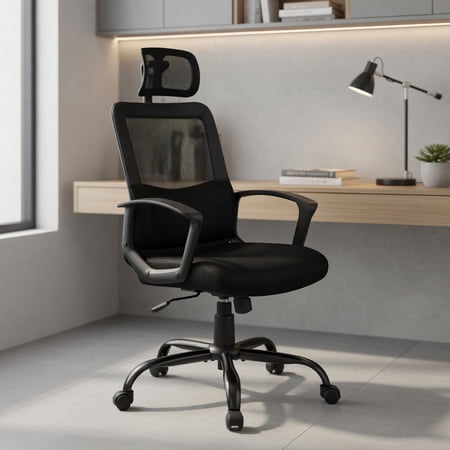
- Breathable Backrest: High-tension mesh is superior for airflow, preventing that sticky, sweaty feeling during long work sessions.
Review Category 1: Best for Chronic Back Pain
For those battling sciatica or herniated discs, a chair must act like a supportive brace. We’ve analyzed models with sacral support and waterfall seats.
🧑⚕️ The “Posture Perfect” Contender
Best Feature: Independent lumbar height AND tension control. Unlike chairs with fixed curves, this allows micro-adjustments to hit the exact curve of your spine.
- Medical-grade mesh
- Seat edge flex
- 10-year warranty
- Premium price tag
- Firm cushion initially
🧘 The “Yoga Spine” Model
Best Feature: Dynamic backrest that flexes with movement. It mimics the way a kneeling chair works but with full back support.
- Encourages active sitting
- Excellent for fidgeters
- Limited headrest option
Review Category 2: Best Value Mesh Chairs ($300 – $600)
You don’t need to spend $1,000 to get great support. This sweet spot offers the best balance of adjustability and durability. Here’s what to look for:
- Brands to watch: Look for manufacturers using “imported German gas lifts” and “nylon-reinforced bases”—signs they prioritize longevity.
- Mesh quality: High-quality “8D” mesh is tighter and provides better tension than cheaper “3D” mesh that sags after a year.
- Assembly: Most in this range require simple assembly, but the fit and finish should rival chairs costing double.
One standout in this category is the “ErgoMesh Pro” style chair. Users consistently rate it highly for its robust tilt lock and deep seat cushion, which is rare in all-mesh seats. It’s a hybrid—mesh back, foam seat—offering the best of both worlds.
Review Category 3: Big & Tall Ergonomic Champions
If you’re over 6’2” or weigh more than 250 lbs, standard chairs feel like children’s furniture. True ergonomic chairs for larger frames feature:
- Wider seat pans: At least 22 inches wide.
- Reinforced steel frames: To handle up to 500 lbs without wobbling.
- Taller backrests: Shoulders need support too! Look for at least 22-inch high backrests.
These chairs often use a combination of high-density foam and durable fabric rather than mesh, as mesh at that scale can lose tension faster. The priority here is stability—a solid, heavy base that doesn’t tip when you lean forward.
The Hidden Cost of Cheap ‘Ergonomic’ Chairs
It’s tempting to grab a $150 chair with a mesh back and “lumbar” pillow. But here’s the reality: cheap chairs use foam that flattens in 6 months, gas lifts that fail, and armrests that wobble. Using an analogy, buying a cheap ergonomic chair is like buying shoes one size too small—you might squeeze into them, but you’ll pay for it with pain later. A $400 chair that lasts 8 years costs you 14 cents a day. A $150 chair that lasts 18 months costs you 27 cents a day—and comes with back pain. The math favors quality.
Ergonomics Beyond the Chair: The 50/50 Rule
Even the best-reviewed chair won’t fix a poorly set up desk. Follow the 50/50 rule: your thighs and torso should form a 90-110 degree angle, and your eyes should hit the top third of your monitor. If your chair is perfect but your desk is too high, you’ll still hunch. Consider a height-adjustable desk to complete your ergonomic setup.
Frequently Asked Questions: Ergonomic Office Chair Reviews
Conclusion: Your Back Is Worth the Research
Reading ergonomic office chair reviews is the first step toward a healthier, more productive work life. Remember that the “best” chair is the one that fits YOUR body. Use the checklist we provided—adjustable lumbar, seat depth, armrests—as your non-negotiable starting point. Whether you choose a premium mesh model for breathability or a hybrid with extra cushioning for pressure relief, invest in a chair that supports you, not one you have to adapt to. Your spine (and your future self) will thank you.