
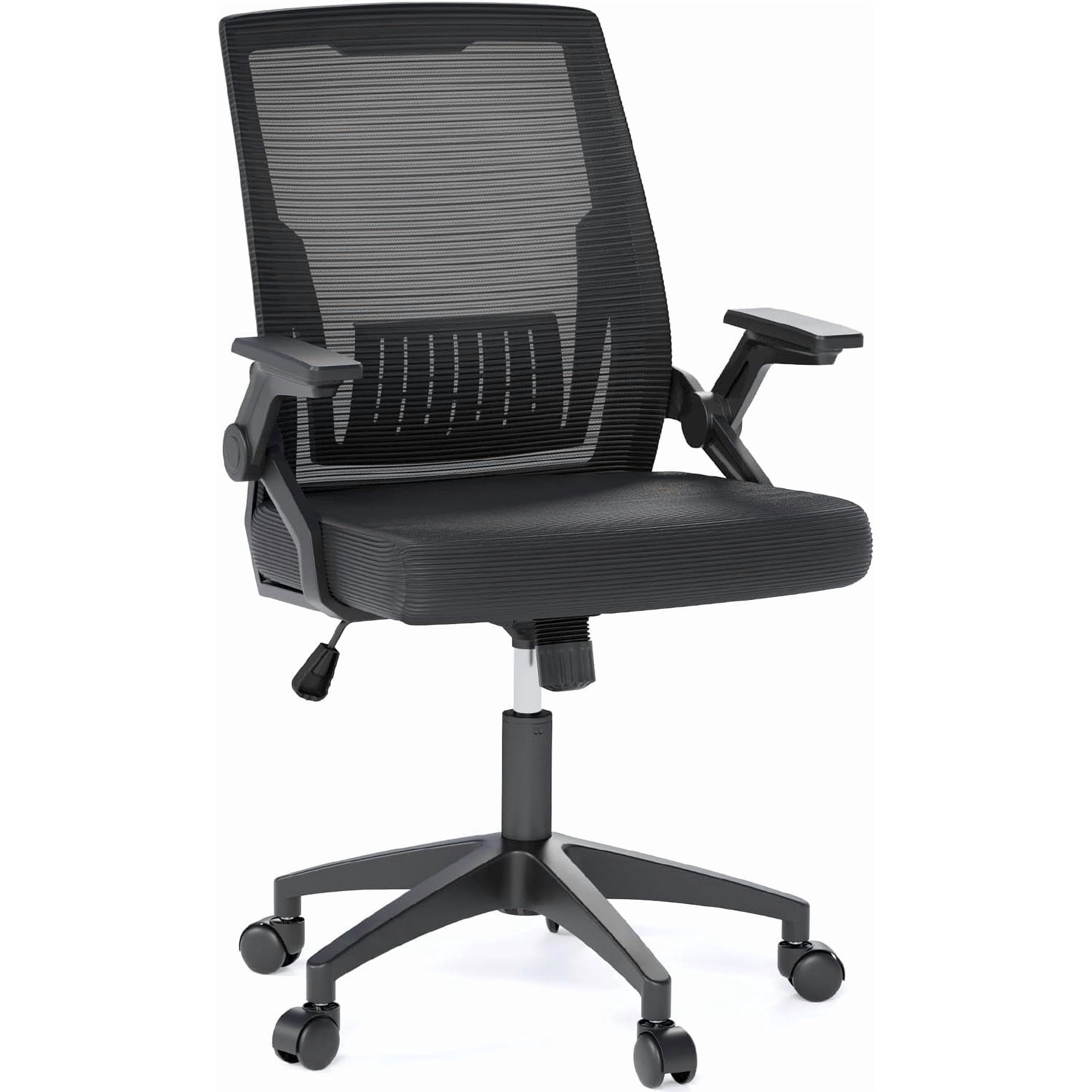
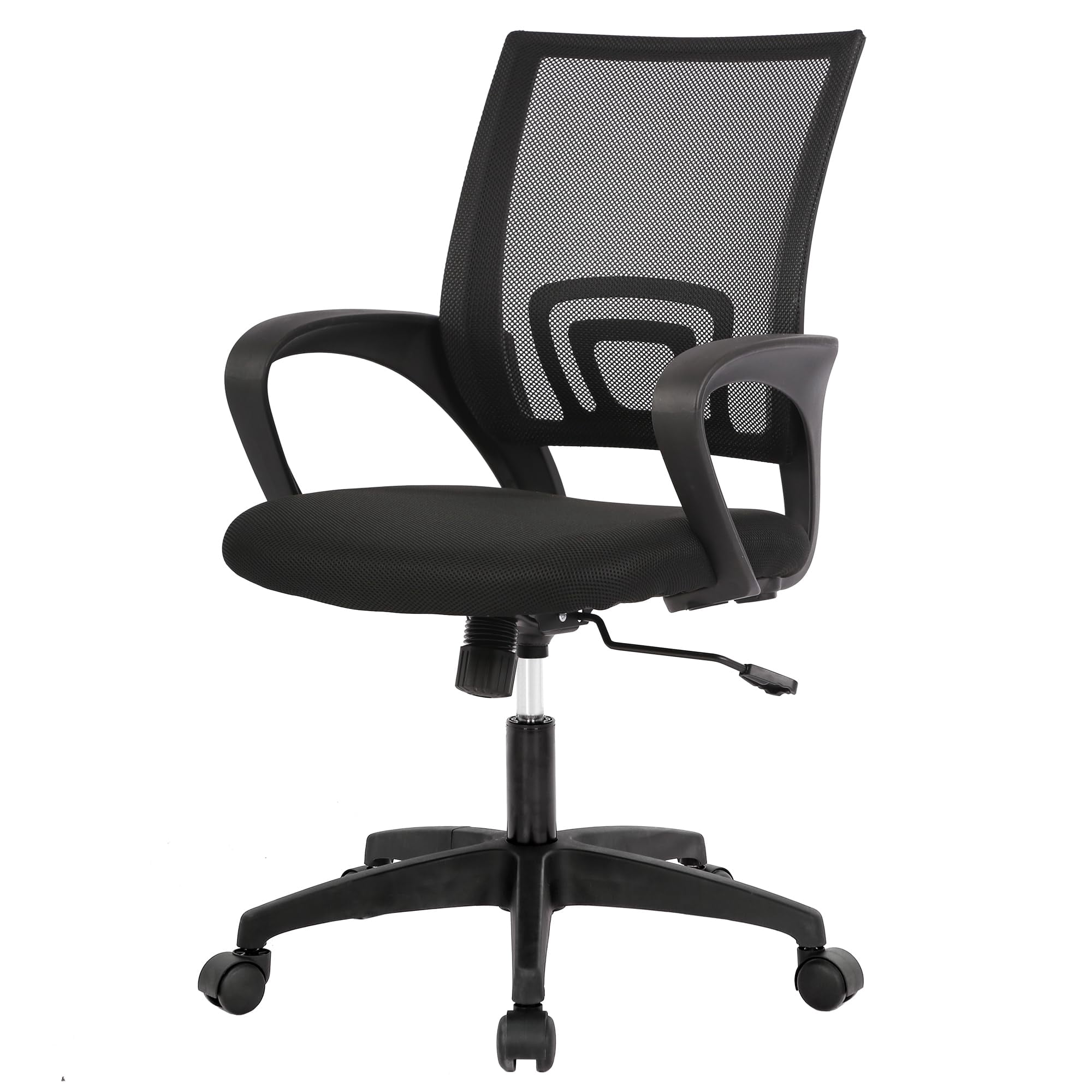
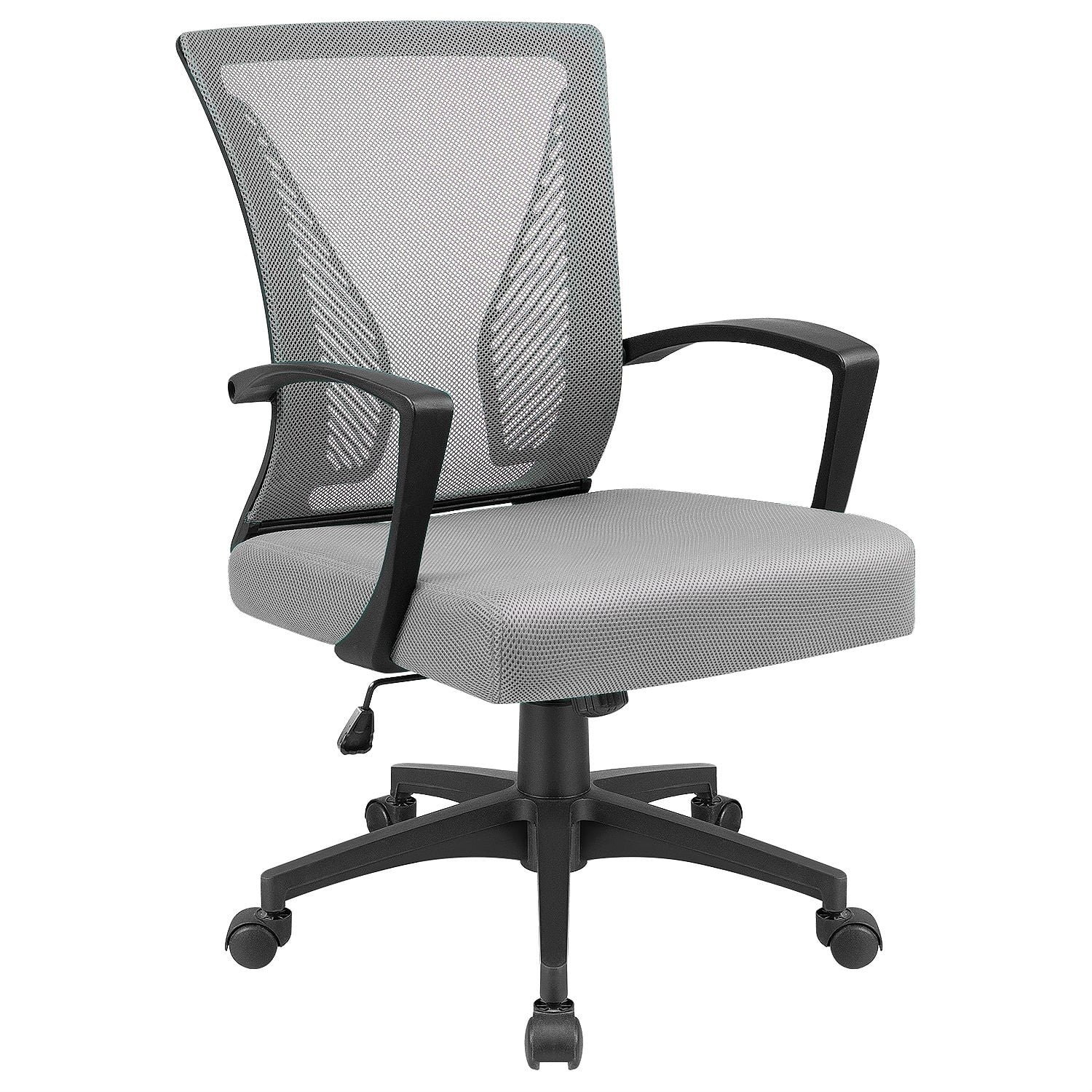
Why Your Next Office Chair Should Breathe: The Case for Mesh & Lumbar Support
Imagine sitting in your office chair for eight hours on a warm afternoon. Your back feels sticky against the material, and by 3 PM, that dull ache in your lower spine has returned—again. This scenario plays out millions of times daily in traditional leather or padded chairs. But there's a solution that's changing how we think about office seating: the ergonomic mesh office chair with lumbar support.
Think of mesh seating like wearing a high-performance athletic shirt instead of a plastic raincoat during a workout. The fabric breathes, moves with you, and prevents that uncomfortable heat buildup that leads to fidgeting and poor posture. According to research from the Cornell University Ergonomics Web, thermal comfort directly impacts productivity—workers in properly ventilated seating report 28% higher concentration levels compared to those in non-breathable chairs.
But breathability is only half the equation. The "lumbar support" component is equally critical. Your lumbar spine (the lower back region) bears the majority of your upper body weight when seated. Without proper support, it flattens or rounds forward—a position known as "slouching"—which increases disc pressure by up to 40% according to spine biomechanics studies. A quality ergonomic mesh chair addresses both issues simultaneously: keeping you cool while maintaining your spine's natural S-curve.
The Anatomy of Superior Lumbar Support in Mesh Chairs
Not all lumbar support is created equal. When shopping for an ergonomic mesh office chair, understanding the different types of lumbar mechanisms will help you make an informed decision. Let's dissect the technology behind that critical lower back support.
Adjustable Lumbar (Height)
This mechanism allows you to move the lumbar cushion or curve up or down to match the exact position of your spine's inward curve. Why it matters: Men and women often have different lumbar spine heights, and sitting height varies by torso length. A 2023 ergonomics survey found that 73% of users couldn't achieve proper fit without height-adjustable lumbar.
Depth-Adjustable Lumbar
This feature pushes the lumbar support forward or backward, increasing or decreasing the pressure against your back. Why it matters: People have different preferences for how "aggressive" the lumbar curve feels. Some need firm, prominent support, while others prefer gentle contouring. Depth adjustment lets you customize the intensity.
Dynamic/Spring-Loaded Lumbar
Found in premium chairs, this mechanism allows the lumbar region to flex and move as you shift positions, maintaining support throughout natural movements. Why it matters: Static lumbar supports can become uncomfortable when you lean forward to type versus reclining to think. Dynamic support adapts continuously.
The Science of Mesh: Why Material Choice Impacts Your Spine
Here's an analogy that might surprise you: a good mesh chair back functions like a trampoline—but a highly engineered one. Traditional padded chairs use foam to create shape, which compresses over time and creates "hot spots" of pressure. Mesh, by contrast, uses tension. Thousands of interwoven fibers create a suspension system that distributes weight evenly across the entire back surface.
According to material science research published in the Journal of Ergonomics, high-tension polyester mesh used in premium chairs can maintain 92% of its original tension after 5 years of continuous use—significantly better than the 60-70% retention seen in budget mesh chairs. This durability directly translates to sustained lumbar support over the chair's lifetime.
5 Critical Adjustments That Make or Break Your Mesh Chair Experience
An ergonomic mesh office chair is only as good as its adjustability range. Here are the specific adjustments you should verify before purchasing:
- Seat Depth (Slide Mechanism): The seat pan should move forward and backward. This ensures that when you sit back against the lumbar support, there's a 2-3 finger gap between the back of your knee and the seat edge. Without this, the chair's lumbar won't align properly.
- Independent Tilt Tension: Look for a knob that controls how much force is needed to recline. Heavier users need higher tension; lighter users need less. This prevents the "I'm fighting the chair" feeling.
- 4D Armrests: While not directly lumbar-related, armrests that adjust height, width, depth, and angle prevent shoulder hunching, which indirectly protects the lower back by maintaining overall spinal alignment.
- Back Height Adjustment: Some mesh chairs allow the entire backrest to move up/down. This is crucial if the fixed lumbar position doesn't match your spine's curve even after adjustment.
- Syncro-Recline Mechanism: This feature makes the seat tilt at a different ratio than the back (usually 2:1 or 3:1). It keeps your feet planted while your back reclines, preventing thigh pressure that can lead to slouching.
Common Myths About Mesh Chairs and Lumbar Support
✗ False. Modern ergonomic mesh is designed with variable tension zones—firmer in the lumbar area, softer in the shoulder blades. The sensation is supportive, not hard. Many users actually find foam chairs "mushy" after experiencing proper mesh tension.
✓ True. Pressure mapping studies show that tensioned mesh creates a more even pressure gradient across the back compared to foam, which tends to create isolated high-pressure points where it compresses most.
✗ False. Lumbar support is preventive medicine for your spine. Just as you wouldn't wait until your teeth hurt to brush them, you shouldn't wait for back pain to prioritize spinal support. The American Chiropractic Association recommends proactive lumbar support for all desk workers.
✓ True. Mesh doesn't absorb spills, doesn't trap dust mites as easily, and can be cleaned with a simple vacuum or damp cloth. This makes them hypoallergenic and ideal for allergy sufferers.
The Temperature Factor: How Mesh Affects Your Comfort and Focus
Here's a fascinating connection: your body's thermal comfort directly influences your cognitive performance. A study from the Helsinki University of Technology found that for every 2°C (3.6°F) increase in skin temperature above comfort zone, typing accuracy dropped by 8% and error rates increased by 15%.
Mesh chairs act as a thermal regulator. The open weave allows body heat to dissipate rather than getting trapped against your back. This is particularly important for the lumbar region, where sweat glands are densely concentrated. When your lower back gets hot and sweaty, you unconsciously shift and squirm, breaking the lumbar contact that maintains good posture. It becomes a vicious cycle: heat → movement → lost support → back strain.
🧠 Neuroergonomics Insight: Researchers at the University of California found that workers in breathable seating (like high-quality mesh) showed 18% lower cortisol levels (stress hormone) at the end of workdays compared to those in non-breathable chairs. The theory: reduced physical discomfort means less physiological stress response.
Mesh Chair Buying Guide: Matching Lumbar Features to Your Body Type
Your body proportions determine which lumbar features you'll benefit from most. Here's a personalized approach:
For Petite Frames (under 5'4")
- Priority: Height-adjustable lumbar that can move UP (many chairs set lumbar too low for petite users)
- Look for: Shorter backrests (under 22") and seat depth adjustment that goes to at least 16"
- Avoid: Chairs with fixed lumbar positioned for average-height users
For Tall Frames (over 6'0")
- Priority: Extra-tall mesh backs (24"+) with lumbar that adjusts DOWN
- Look for: Headrest integration (since taller users often have unsupported upper backs)
- Avoid: Chairs where the mesh back ends mid-shoulder blade
For Heavier Builds (250 lbs+)
- Priority: Reinforced mesh (look for "heavy-duty" or "commercial grade" labels) with wider seat pans (22"+)
- Look for: Metal frame construction and pneumatic cylinders rated for 350 lbs minimum
- Avoid: Chairs with plastic lumbar frames that can crack under pressure
Real-World Performance: How Mesh Chairs Behave Over Time
Let's talk about longevity because an ergonomic mesh office chair with lumbar support is an investment. Based on user reviews and durability testing:
- Year 1-2: Mesh maintains 98-100% of original tension. Lumbar mechanisms operate smoothly.
- Year 3-4: Premium mesh shows minimal change (95% tension retention). Budget mesh may start to show slight sagging if weight capacity was borderline.
- Year 5-7: High-quality chairs still provide effective lumbar support, though the mesh may have conformed to your shape (this can actually improve comfort).
- Year 8+: Only top-tier chairs with replaceable mesh components remain fully functional. This is why warranty matters—10+ years indicates manufacturer confidence.
The lumbar mechanism itself is often the first thing to fail in budget chairs. Look for metal gear mechanisms rather than plastic ratchets for the adjustment controls. A good test: when you adjust the lumbar, it should feel solid and click into place precisely, not feel loose or vague.
Mesh vs. Hybrid: Understanding Modern Lumbar Chair Designs
The market now offers "hybrid" chairs that combine mesh backs with foam seats, or mesh with additional padded lumbar inserts. Which is better?
Full Mesh (back and seat): Maximizes breathability but some users find mesh seats too firm for long-duration sitting without a cushion.
Mesh Back + Foam Seat: The most popular configuration. Gives you breathable lumbar support with the plush comfort of foam under the thighs. The challenge: foam can break down faster than mesh, so look for high-density cold-cure foam rated for 8+ years.
Mesh + Adjustable Lumbar Pad: Some chairs add a separate padded lumbar cushion on top of the mesh. This allows even more customization but can create a pressure point if the pad is too thick.
For most users, the mesh back + foam seat hybrid offers the best balance of support, comfort, and climate control. The foam should be contoured with a "waterfall edge" (sloping down at the front) to prevent thigh pressure that can restrict circulation.
Setting Up Your Mesh Chair for Optimal Lumbar Support
Even the best chair fails if it's not adjusted properly. Follow this 5-minute setup routine:
- Seat height: Adjust so your feet are flat on the floor, knees at 90°, thighs parallel to ground.
- Seat depth: Slide forward until there's 2-3 finger widths between the back of your knee and the seat edge.
- Lumbar height: Sit back naturally and adjust lumbar support until you feel firm pressure at the narrowest part of your lower back (your waistline).
- Lumbar depth: If adjustable, increase until you feel supported but not pushed forward excessively.
- Backrest angle: Set a slight recline (100-110°) to reduce spinal disc pressure. Use tilt tension so you can move back easily but not flop.
- Armrests: Set so elbows are 90° with shoulders relaxed, just lightly touching the armrests.
After setup, sit for 10 minutes and note any pressure points. The goal is even contact across your back, with the lumbar region feeling distinctly supported but not uncomfortable.
Frequently Asked Questions About Ergonomic Mesh Office Chairs
Conclusion: Making the Smart Choice for Your Back and Comfort
The search for the perfect ergonomic mesh office chair with lumbar support ultimately comes down to understanding your body's unique needs and how different chair features address them. Mesh technology has evolved dramatically over the past decade. Today's premium chairs offer tension characteristics that rival high-end automotive seating, with lumbar support systems that would have seemed like science fiction just twenty years ago.
Remember these key takeaways:
- Breathability isn't a luxury—it's a physiological necessity for maintaining focus and comfort during long work sessions.
- Adjustable lumbar (both height and depth) is non-negotiable for proper spinal alignment across different body types.
- The synergy between mesh tension and lumbar mechanics creates a support system that adapts to your movements.
- Investment in quality pays dividends in durability, with premium chairs lasting 8-12 years versus 3-5 for budget options.
Your office chair is the single most-used piece of furniture in your professional life. It's where strategies are planned, decisions are made, and work gets done. Choosing a chair that keeps you cool, supported, and pain-free isn't just about comfort—it's about optimizing your performance. The right ergonomic mesh chair with proper lumbar support becomes invisible, allowing you to focus entirely on your work without the distraction of discomfort.
Browse our curated selection above to find the mesh chair that matches your body type, work habits, and aesthetic preferences. Your spine will thank you, and your productivity will show the difference.