
The Unsung Hero of Your Home Office: The Clear Plastic Mat
When we build our dream office, we focus on the chair, the desk, and the monitor setup. But there's a silent guardian working beneath it all: the clear plastic office chair mat. It’s the first line of defense for your flooring, whether you have plush carpet that traps your chair wheels or pristine hardwood floors you want to keep that way for years.
Did You Know? According to flooring specialists, the continuous pressure and micro-movements from an office chair can cause permanent matting of carpet fibers and deep scratches in hardwood within just a few months. A quality chair mat absorbs this wear and tear, extending the life of your flooring by up to 10 years.
More Than Just a Protective Layer
A clear mat does more than just shield your floor. It creates a stable, consistent rolling surface. On carpet, it prevents your chair from sinking, which stops the casters from locking up and forcing you to strain your back to move. On hard floors, it provides a slightly textured surface that prevents the chair from sliding away unexpectedly while you sit down, adding an element of safety.
- Preserve Floor Integrity: Shields against scratches, dents, and stains from spills or wheel debris.
- Enhance Mobility: Provides a friction-optimized surface for effortless movement, reducing strain on your legs and core.
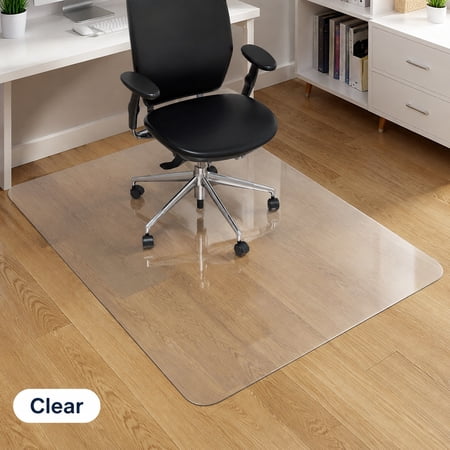
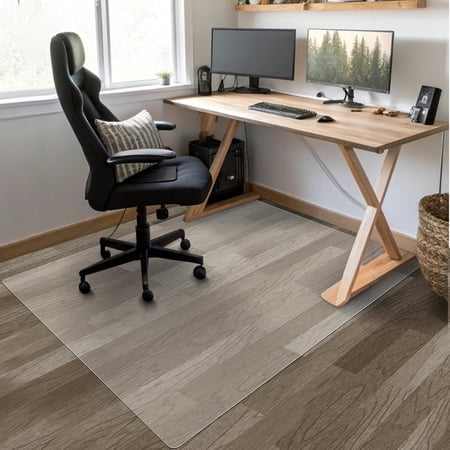
- Maintain Aesthetics: Clear designs are virtually invisible, letting your beautiful floor show through.
- Improve Ergonomics: By allowing free movement, you can easily reach different parts of your desk without stretching awkwardly.
- Cost-Effective: Replacing a $50-$100 mat is far cheaper than repairing or replacing flooring.
Clear Plastic vs. The Alternatives: Why Choose Clear?
You might wonder why you should choose a clear mat over a colored or textured one. The answer lies in versatility and aesthetics. A clear mat is a chameleon; it adapts to any room decor. Whether you have a dark walnut executive desk or a light oak modern setup, the mat won't clash. It's the minimalist's choice, offering protection without visual intrusion. While bamboo or vinyl mats offer style, only high-quality clear polycarbonate offers the durability and transparency of glass with the flexibility of plastic.
| Mat Material | Durability | Clarity | Best For | Price Indicator |
|---|---|---|---|---|
| Polycarbonate | Excellent (Crack-resistant) | High (Crystal Clear) | Heavy use, any floor type | $$$ |
| PVC / Vinyl | Good (Can crack over time) | Medium (May yellow) | Light use, budget setups | $ |
| Bamboo / Wood | Good | Opaque | Aesthetic, hard floors only | $$ |
| Tempered Glass | Excellent | High | Executive offices, low pile carpet | $$$$ |
Health and Safety: Rolling Without Resistance
The ergonomic benefits of a good chair mat are often overlooked. Think of your office chair like a shopping cart with a stuck wheel. You have to use more force to get it moving, twisting your torso and putting uneven pressure on your spine. A smooth mat eliminates this resistance. It allows for fluid, natural movement, which encourages micro-movements throughout the day. These small shifts in posture are crucial for spinal disc health and preventing the stiffness that comes from being locked in one position.
Reduced Joint Strain
Effortless rolling means less stress on knees and ankles when pushing back from the desk.
Better Posture
Easy movement encourages you to reposition, promoting dynamic sitting over static slouching.
Improved Safety
Non-slip backings on hard floor mats prevent the mat (and you) from sliding out of place.
Cleaner Air
On carpets, a mat prevents fibers from being ground up by wheels, reducing airborne dust and allergens.
Choosing the Right Thickness for Your Floor Type
One of the most common mistakes is buying a mat based on size alone, ignoring thickness and backing type. This is like buying tires without considering whether you drive on ice or asphalt. Here’s a detailed breakdown to ensure you get the perfect match for your floor.
Guide to Mat Backing and Thickness
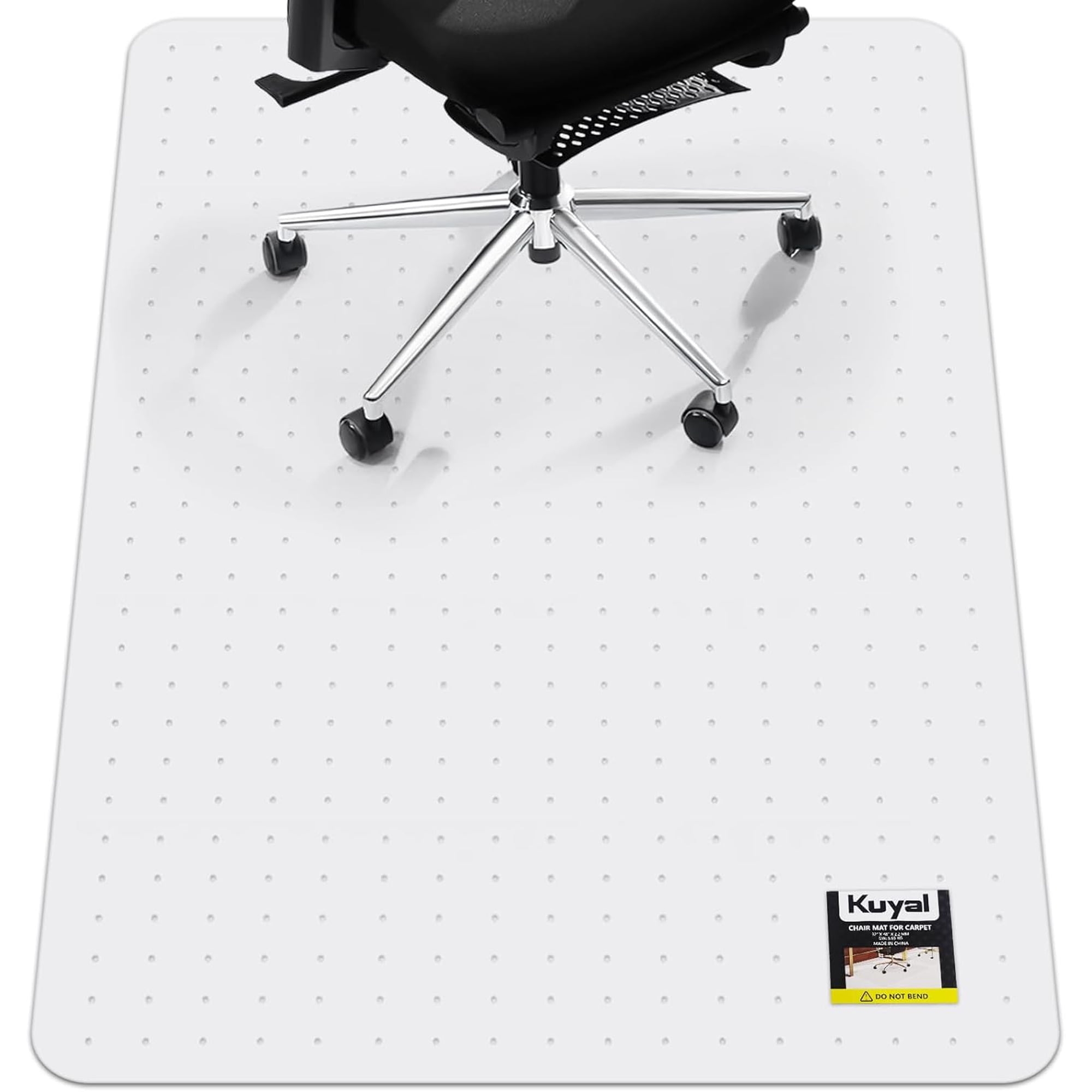
Look for a mat with a "cleat" or "spike" backing. These small points grip the carpet fibers to prevent the mat from shifting. A thickness of 1.5mm - 2.5mm is usually adequate.
This requires a heavy-duty mat. You need a thicker mat (3mm or more) with longer, more aggressive cleats to anchor into the deep carpet. If the mat is too thin, your chair will sink and the wheels will hit the carpet, making rolling difficult.
Never use a cleat-backed mat on hardwood! It will scratch the finish. You need a mat with a smooth or grippy (but non-abrasive) underside. These mats are often made of harder materials like polycarbonate to lie flat and resist curling. Thickness is less critical for stability, usually around 2mm.
Similar to hardwood, you need a smooth-backed mat. However, be cautious of mats that are too rigid, as they might not conform to slight grout lines. A flexible polycarbonate mat is a great choice here.
Material Science: Polycarbonate vs. PVC
When you search for a clear plastic mat, you'll primarily encounter two materials: Polycarbonate (often marketed as "virtually unbreakable") and PVC (vinyl). Understanding the difference is key to a long-lasting purchase.
Why Polycarbonate is the Premium Choice
Imagine the difference between a cheap plastic water bottle that crumples when you squeeze it and a tough, reusable one that can withstand a drop. That's the difference between PVC and polycarbonate. Polycarbonate is an amorphous thermoplastic with incredible impact resistance. It's the same material used in bulletproof glass and high-end eyewear. For a chair mat, this means:
- No Cracking: It can withstand the constant pressure of chair wheels and even heavy impacts without cracking.
- Lasting Clarity: It is naturally UV resistant and won't yellow or become hazy over time.
- Flatter Surface: It resists curling at the edges, a common and annoying problem with vinyl mats.
The Reality of PVC / Vinyl Mats
PVC mats are the entry-level option. While they are cheaper, they come with compromises. Think of a PVC mat like a flexible cutting board. It does the job, but over time, it will show wear. The primary issues are:
- Cracking and Curling: In colder temperatures or under constant stress, PVC can become brittle and crack. Edges are notorious for curling up, creating a tripping hazard.
- Yellowing: Over a few years, exposure to light and air can cause PVC to take on an unattractive yellow tint.
- Off-Gassing: New PVC mats often have a strong "plastic" smell due to volatile organic compounds (VOCs), which can be unpleasant in a small office.
The Verdict: While a PVC mat might suffice for a guest room or very light use, a polycarbonate mat is the true long-term investment for a primary workspace.
Size and Shape: Finding Your Perfect Fit
A mat that's too small is almost as bad as having no mat at all. You need to consider your desk setup and your natural movement range. Here’s a simple way to think about it using a "workspace zone" analogy.
The "Roll Zone" Measurement
Don't just measure the area under your chair. Sit in your chair and think about your workflow.
- The Primary Zone: This is the area directly in front of your desk where you spend most of your time. The mat must fully cover where your casters rest when you're typing.
- The Secondary Zone: Do you frequently push back to stand up or to talk to someone? The mat should extend far enough behind you to accommodate this movement without your back wheels rolling off the edge onto the bare floor.
- The Lateral Zone: Do you slide from one side of your desk to another to access different monitors or paperwork? You might need a wider "contour" shaped mat that provides extra coverage under the desk.
Standard sizes are often 36" x 48" or 46" x 60". Measure your space and add 12-18 inches to your calculated "roll zone" to be safe.
Standard Shapes
- Rectangular: The most common and versatile shape. Ideal for standard desk setups where you sit centrally.
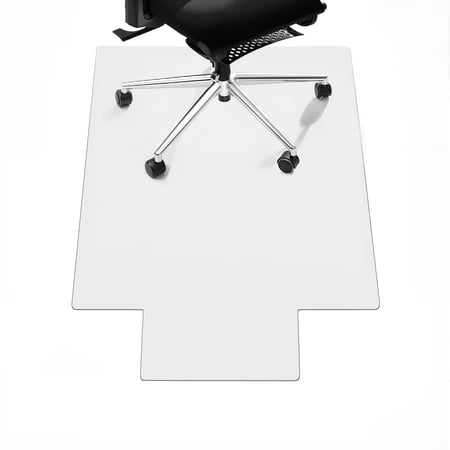
- Contour / Lip Shape: These mats have a curved cutout or a "lip" that is designed to slide partially under your desk. This allows you to get your chair closer to the desk and protects the floor right up to the edge of your workstation. Excellent for deep desks or L-shaped setups.
Frequently Asked Questions About Clear Plastic Office Chair Mats
Conclusion: A Small Investment for Long-Term Protection
Choosing the right clear plastic office chair mat is a simple decision with significant long-term benefits. It's about preserving the beauty and integrity of your flooring while enhancing your daily comfort and ergonomics. By considering your floor type, the mat's material (opting for polycarbonate when possible), and the correct size and shape, you're not just buying a piece of plastic; you're investing in a more functional, protected, and professional workspace.
Whether you need a heavy-duty mat for plush carpet in your home office or a sleek, smooth-backed protector for a hardwood-floored executive suite, the perfect mat is out there. Use the guide above to make an informed choice, and enjoy years of smooth, effortless rolling.