
The Essential Guide to Black Office Chairs with Arms
Imagine walking into an office where every element works in harmony—the lighting is perfect, the desk is organized, and your chair feels like it was custom-made for your body. That's the experience a well-chosen black office chair with arms can provide. Like a tailored suit that fits perfectly, the right chair with properly positioned armrests can transform your workday from exhausting to effortless.
In today's work environment, where the average professional spends over 1,800 hours per year seated, the importance of proper seating cannot be overstated. According to the Occupational Safety and Health Administration (OSHA), proper ergonomic seating can reduce work-related musculoskeletal disorders by up to 60% and increase productivity by 25%. The arms on your office chair play a crucial role in this equation—they're not just places to rest your elbows, but essential support structures that affect your entire upper body alignment.
Did You Know? A study published in the Journal of Physical Therapy Science found that properly adjusted armrests can reduce shoulder muscle activity by up to 20% during typing tasks. This reduction in muscle tension translates to less fatigue and greater endurance throughout the workday.
The Anatomy of Perfect Arm Support: What Makes Arms Essential
When most people shop for a black office chair with arms, they focus on the seat cushion or backrest, overlooking the critical role armrests play in daily comfort. Think of armrests as the suspension system in a luxury car—they absorb the minor vibrations and impacts of your workday, allowing your shoulders, neck, and upper back to remain relaxed and properly aligned.
The Four Dimensions of Armrest Adjustment
Modern black office chairs offer various levels of armrest adjustability. Understanding these options helps you select a chair that truly fits your body and work style:
Basic, non-adjustable arms fixed at a predetermined height and width. Suitable for short-term use or shared workspaces where adjustments aren't necessary.
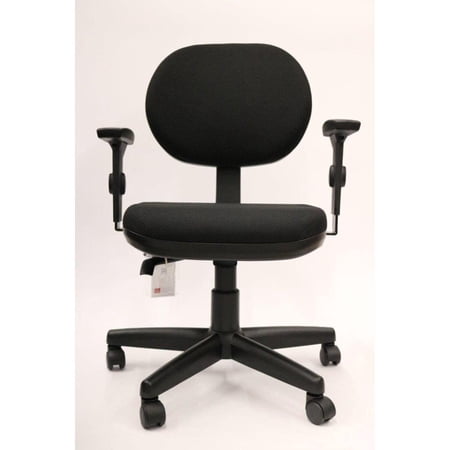
Allow vertical movement only. Users can raise or lower arms to match desk height and personal preference.
Offer height, width, and angle adjustments. Enable users to fine-tune arm position for optimal comfort.
The gold standard—height, width, angle, and depth adjustment. Allow complete customization for any body type or task.
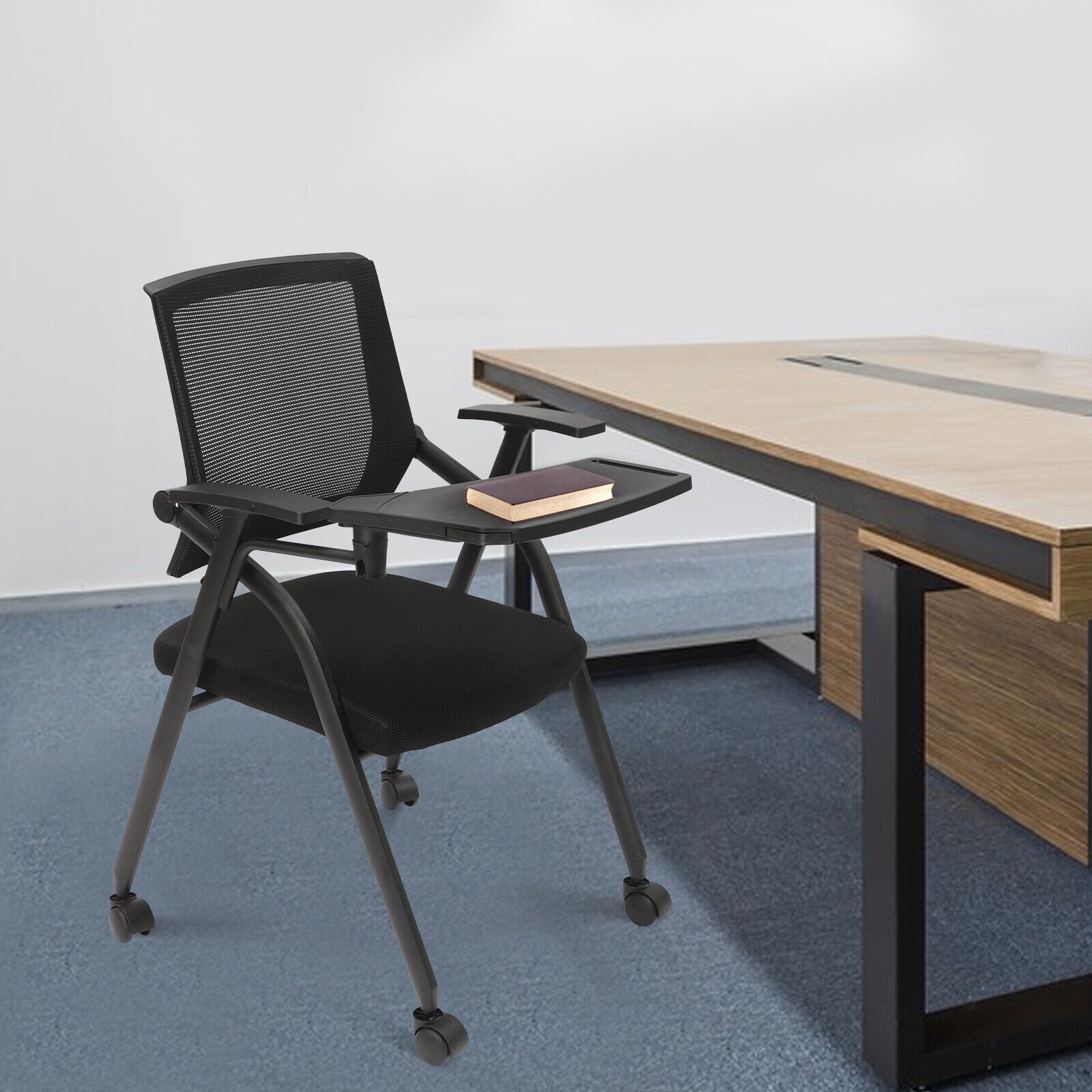
Fold or swing away when not needed. Perfect for spaces where chairs must slide under desks or for users who occasionally prefer armless positioning.
Rotate inward or outward, providing support during different activities like typing, reading, or reclining.
Material Matters: Armrest Padding and Durability
The material covering your chair's arms significantly impacts both comfort and longevity. Here's how different materials perform:
- Polyurethane (PU) Foam: Most common in mid-range chairs. Offers good initial comfort but may compress after 2-3 years of daily use. Density ratings of 50-60 kg/m³ provide optimal durability.
- Memory Foam: Premium option that conforms to arm shape. Distributes pressure evenly but can retain heat. Ideal for users who rest arms heavily while working.
- Gel-Infused Foam: Combines pressure relief with cooling properties. Excellent for warm environments or users who tend to get sweaty arms.
- Hard Plastic: Found on budget chairs. Provides minimal comfort but maximum durability. Often detachable for adding aftermarket pads.
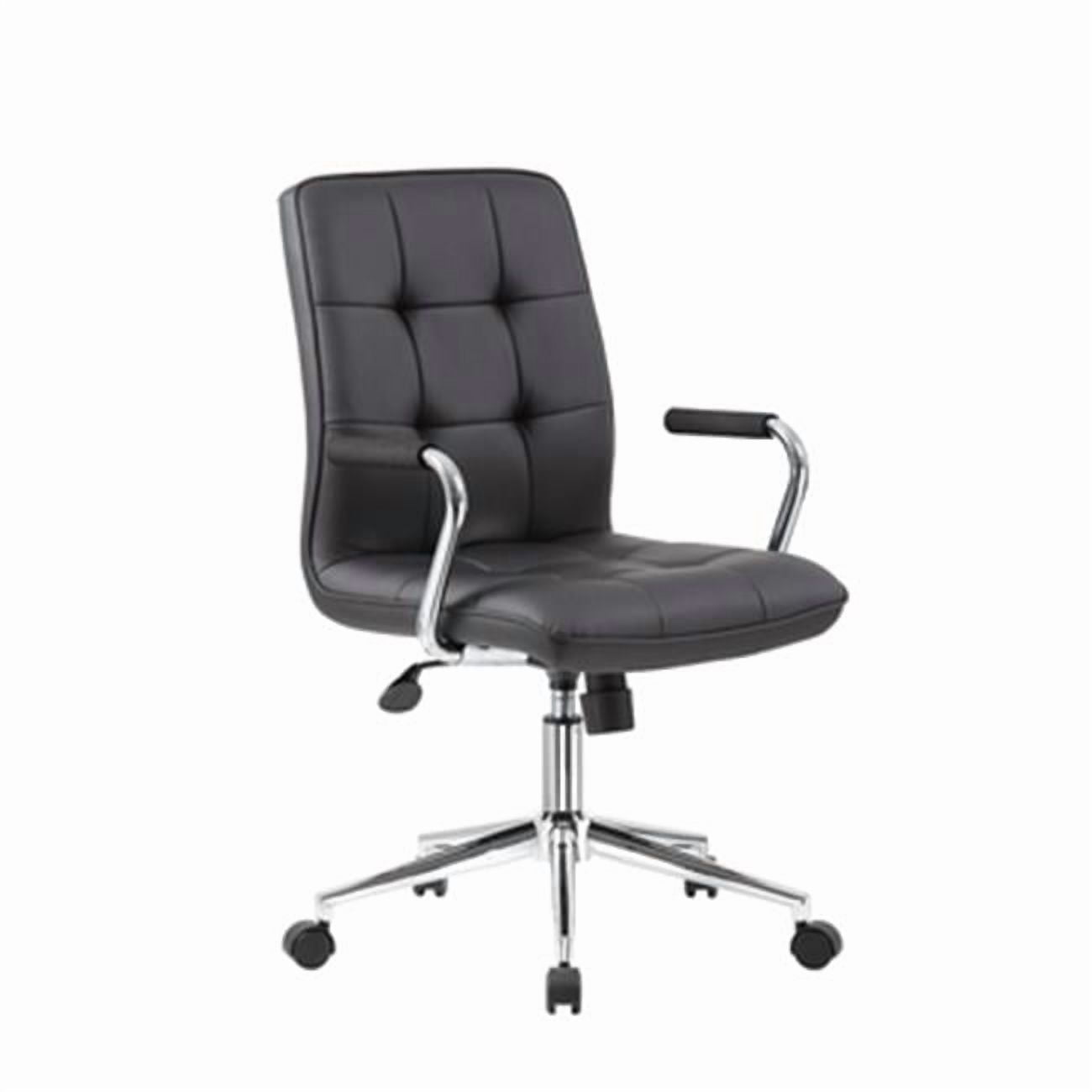
- Leather-Wrapped: Luxurious feel that develops a patina over time. Requires maintenance but offers premium aesthetic and comfortable surface.
The Ergonomic Impact: How Arms Affect Your Whole Body
Proper arm support creates a cascade of positive effects throughout your body. When your arms rest correctly:
Shoulder Relief
• Reduces trapezius muscle tension by up to 30%
• Prevents rounded shoulder posture
• Allows scapular muscles to relax
• Decreases risk of rotator cuff strain
• Maintains natural shoulder position
Neck Protection
• Minimizes forward head posture
• Reduces cervical spine compression
• Prevents tech neck syndrome
• Maintains neutral spine alignment
• Decreases tension headaches
Wrist & Hand Benefits
• Maintains neutral wrist position
• Reduces carpal tunnel pressure
• Prevents ulnar nerve compression
• Supports forearm weight
• Enhances typing precision
Finding Your Perfect Fit: A Step-by-Step Selection Guide
Choosing the ideal black office chair with arms requires methodical consideration. Follow this systematic approach:
- Measure Your Workspace: Measure desk height (standard is 28-30 inches), clearance under desk (minimum 24 inches for legroom), and available floor space. Your chair's arms must fit comfortably under the desk surface.
- Assess Your Body Dimensions: Measure from elbow to floor while sitting with 90-degree angles. This determines required armrest height range. Also measure shoulder width for proper armrest spacing.
- Identify Primary Tasks: List activities performed daily—typing, phone calls, reading, meetings. Different tasks require different arm positions. Multi-taskers benefit from 4D adjustable arms.
- Test Adjustment Range: When testing chairs, check if armrests adjust low enough to allow shoulders to relax and high enough to support forearms without raising elbows.
- Evaluate Padding Firmness: Press into armrest pads. They should compress slightly but return quickly. Overly soft pads cause instability; overly hard pads create pressure points.
- Check Stability: Sit in the chair and shift weight onto arms. The armrests should remain stable without wobbling or flexing excessively.
Common Armrest Mistakes and How to Avoid Them
Even with a quality black office chair with arms, incorrect setup can negate ergonomic benefits. Avoid these frequent errors:
- Setting Arms Too High: Causes shoulder elevation and trapezius tension. Your shoulders should remain relaxed, not hunched.
- Setting Arms Too Low: Encourages slouching and forward lean, straining lower back and neck.
- Ignoring Width Adjustment: Arms positioned too wide force shoulder abduction; too narrow causes internal rotation and rounded shoulders.
- Using Arms as Armor: Resting entire body weight on armrests during transitions or sitting—arms should support, not bear weight.
- Mismatched Armrests: Setting arms at different heights or angles creates asymmetrical posture and muscle imbalance.
Maintenance and Longevity: Keeping Your Chair's Arms in Top Condition
A quality black office chair with arms represents an investment. Protect that investment with proper maintenance:
Maintenance Schedule: Clean armrests weekly with appropriate cleaner (leather conditioner for leather, mild soap for fabric, isopropyl alcohol for plastic). Check adjustment mechanisms monthly for looseness. Tighten bolts every 6 months. Replace worn pads when cushioning compresses more than 25% of original thickness.
For PU foam armrests showing wear, consider aftermarket replacement pads or covers. Many manufacturers offer replacement parts for 5-7 years after purchase. Document your chair's model number and purchase date for future reference.
Special Considerations: Unique Needs and Solutions
Different users have different requirements. Here's how to address specific situations:
For Tall Users (6'2" and above): Look for chairs with extra height adjustment range (minimum 20-22 inches from floor to armrest top). Extended cylinders and tall-specific models accommodate longer limbs.
For Petite Users (5'4" and under): Seek chairs with lower minimum armrest heights (7-8 inches from seat). Some chairs designed specifically for smaller frames offer better proportioned armrests.
For Users with Broad Shoulders: Prioritize chairs with width-adjustable arms (3D or 4D). Standard fixed arms may force shoulders into uncomfortable positions.
For Left-Handed Users: Consider chairs with independently adjustable arms. The ability to set each arm differently accommodates mouse use and writing tasks.
The Psychology of Black: Why Color Matters in Office Seating
Beyond ergonomics, the color of your office chair influences both your psychology and how others perceive you. Black office chairs specifically offer unique psychological benefits:
- Authority and Professionalism: Black conveys competence and leadership. In client-facing roles, a black chair with arms projects confidence and attention to detail.
- Focus Enhancement: Dark colors minimize visual distractions, allowing you to concentrate on work rather than your environment.
- Timeless Appeal: Unlike trendy colors that may look dated, black remains perpetually stylish and appropriate for any office setting.
- Stain Camouflage: Black hides minor stains and wear better than lighter colors, maintaining a professional appearance longer.
- Versatility: Black coordinates with any color scheme, making it the safest choice for evolving office designs.
Frequently Asked Questions About Black Office Chairs with Arms
Conclusion: Making Your Final Decision
Selecting the perfect black office chair with arms is a decision that impacts your daily comfort, long-term health, and professional effectiveness. Like choosing a trusted colleague, your chair should support you through every task, anticipate your needs, and never become a source of distraction or discomfort.
Remember that the best chair isn't necessarily the most expensive or feature-packed option—it's the one that fits YOUR body, YOUR workspace, and YOUR work habits. Prioritize adjustability over brand names, quality construction over trendy features, and proper fit over aesthetic appeal. A well-chosen black office chair with arms should feel invisible during use, allowing you to focus entirely on your work while your body remains comfortably supported.
Quick Decision Matrix
Choose chairs with 4D armrests, offering complete customization for any body type or task requirement.
Select chairs with flip-up arms or tool-free adjustments, allowing quick adaptation between different users.
Prioritize chairs with at least height-adjustable arms and quality padding over fixed-arm models.
Balance aesthetics with ergonomics—black leather or premium mesh chairs offer both professional appearance and comfort.